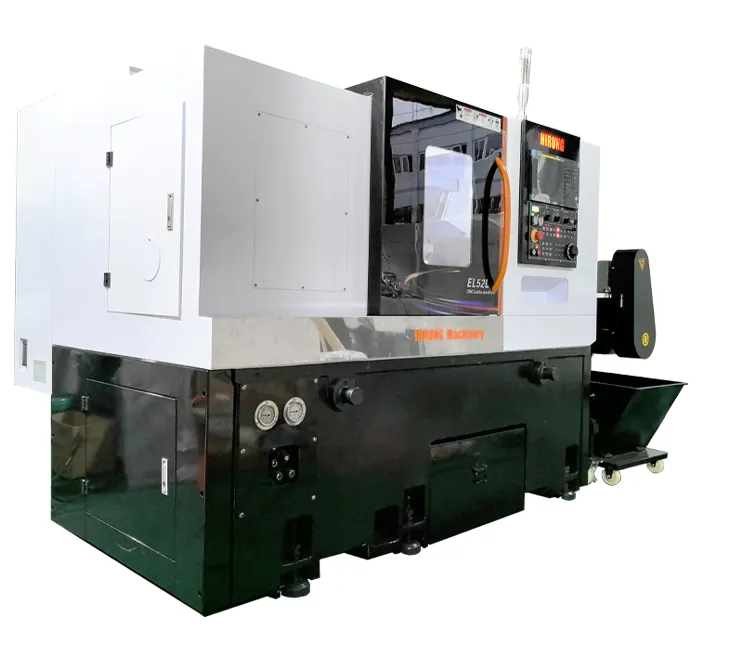
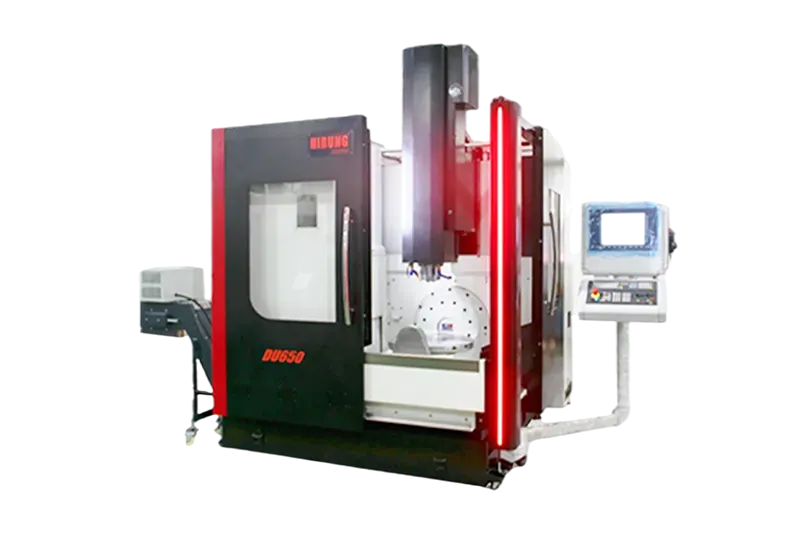
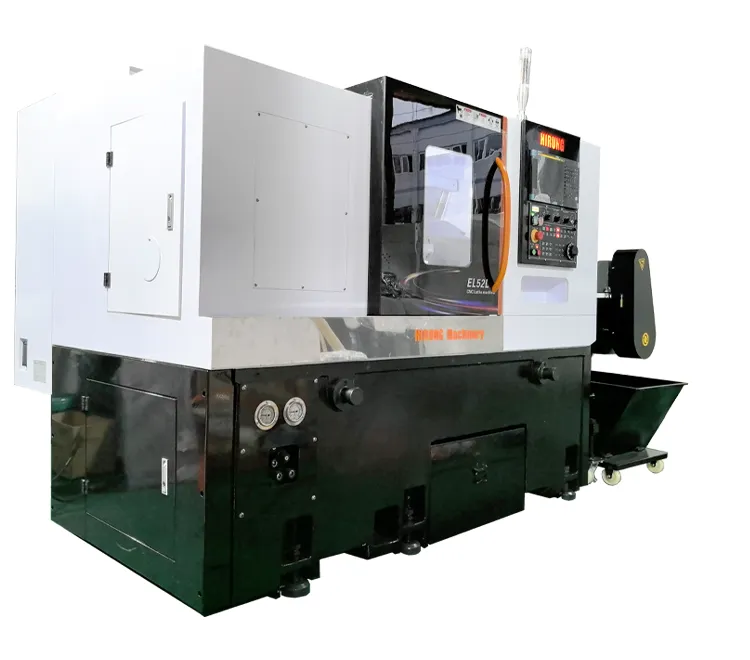
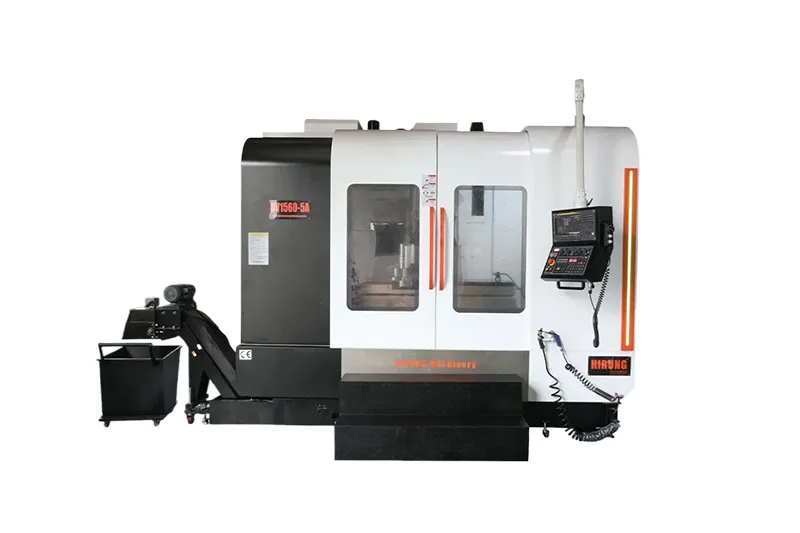
In the world of modern manufacturing, precision, efficiency, and complexity are no longer aspirations; they are requirements. At the heart of this revolution is the CNC milling machine, a powerhouse of technology that transforms digital concepts into tangible, high-precision parts. As a leading manufacturer of advanced CNC machinery, we at Hirung are often asked: what exactly does a CNC milling machine do?
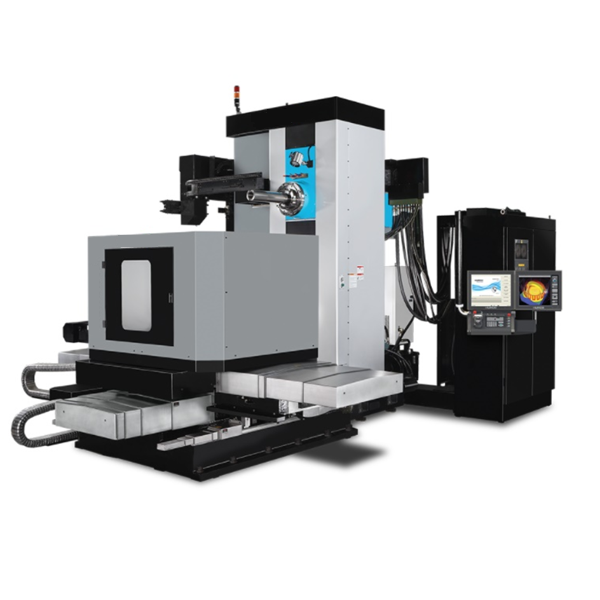
dlaycable will demystify the process, explore its vast capabilities, and showcase why it has become an indispensable tool across countless industries. We’ll go from the basic concept to the intricate applications, giving you a complete understanding of this transformative technology.
The Core Concept: From Digital Design to Physical Part
At its core, CNC milling is a subtractive manufacturing process. Imagine starting with a solid block of material (like aluminum, steel, or plastic) and carving away everything that isn’t your final product. A CNC milling machine automates this carving process with incredible accuracy.
Let’s break down the name:
- CNC (Computer Numerical Control): This is the “brain” of the operation. Instead of a human manually turning cranks and levers, a computer controller reads a digital design file and translates it into precise movements for the machine.
- Milling: This is the “action” of the process. It involves a multi-toothed rotating cutting tool that moves along multiple axes to remove material from a stationary workpiece.
In essence, a CNC milling machine uses computer commands to direct a rotating cutter to precisely chip away at a workpiece, shaping it into a desired, often complex, final part.
The Step-by-Step CNC Milling Process
The journey from a simple idea to a finished component follows a clear, technology-driven path. Understanding this process highlights the integration of digital design and physical production.
Step 1: The Digital Blueprint (CAD Design)
Every project begins with a 2D or 3D digital model. This is created using Computer-Aided Design (CAD) software. The CAD file is the exact blueprint, defining every curve, angle, and hole of the final part.
Step 2: Creating the Instructions (CAM & G-Code)
The CAD model is then imported into Computer-Aided Manufacturing (CAM) software. The CAM software is crucial; it generates the toolpaths (the exact route the cutting tool will take) and converts these paths into a special machine language called G-code. G-code is the set of specific instructions—like coordinates, tool speed, and feed rate—that the CNC machine’s controller will execute.
Step 3: Machine Setup
An operator securely fastens the block of raw material (the workpiece) onto the machine’s worktable. They then load the appropriate cutting tool(s) into the machine’s spindle. This stage is critical, as the stability and quality of the machine—from the rigidity of the frame to the precision of the spindle—directly impact the final part’s quality. This is where a robustly built machine, like a Hirung VMC (Vertical Machining Center), proves its worth.
Step 4: The Automated Machining (Execution)
The operator loads the G-code into the CNC controller. With the press of a button, the machine comes to life. The controller reads the G-code line by line, and the spindle begins to rotate as it moves along the X, Y, and Z axes (and sometimes more) to cut away material, precisely following the programmed toolpaths until the final part is complete.
Key Components of a High-Performance CNC Mill
A CNC milling machine is a sophisticated assembly of high-precision components working in perfect harmony. Understanding these parts helps in appreciating what makes a machine reliable and accurate.
- The Controller: The machine’s brain. It reads the G-code, processes the commands, and controls the motors to orchestrate the machine’s movements.
- The Spindle: The heart of the machine. It’s a high-speed motor that holds and rotates the cutting tool. The quality of the spindle determines the surface finish and cutting power.
- The Cutting Tools: The “hands” that do the work. These come in various shapes and sizes (e.g., end mills, face mills, drills) designed for different materials and cutting operations.
- The Worktable (or Bed): The foundation where the workpiece is mounted. A flat, rigid bed is essential for stability and accuracy.
- The Axis System: The muscles of the machine. A system of motors and precision ball screws drives the movement of the table and spindle along different axes (typically X, Y, and Z).
What Can You Create with a CNC Milling Machine? (Applications & Industries)
The versatility of CNC milling is staggering. If a part can be designed in CAD and is made from a machineable material, it can likely be produced on a CNC mill. This has made it a cornerstone technology in numerous sectors:
- Aerospace: Manufacturing of complex, lightweight, and high-strength components like turbine blades, structural brackets, and instrumentation panels where precision is a matter of safety.
- Automotive: From prototyping new engine blocks to mass-producing transmission components and creating the molds for plastic parts, CNC milling is essential.
- Medical: Creating custom orthopedic implants (like knee or hip replacements), high-precision surgical instruments, and components for medical devices that require biocompatible materials and perfect accuracy.
- Electronics: Machining custom enclosures, connectors, and heat sinks that dissipate heat from sensitive components.
- Prototyping & Custom Parts: Rapidly producing one-off prototypes for fit and function testing or creating custom parts for specialized machinery.
The Unmatched Advantages of CNC Milling
Why do industries rely so heavily on CNC milling? The benefits are clear and compelling, offering a significant leap over traditional manual methods.
Precision & Accuracy
CNC machines operate with tolerances as fine as a few microns (a fraction of the width of a human hair). This level of accuracy is virtually impossible to achieve manually and is crucial for parts that must fit together perfectly.
Repeatability & Consistency
Once a program is perfected, a CNC mill can produce hundreds or thousands of identical parts with no deviation. This consistency is fundamental to quality control in mass production.
Complexity & Versatility
Modern 5-axis CNC machines can create incredibly complex geometries, undercuts, and organic shapes that would be unthinkable with manual processes. This frees designers and engineers to create more innovative and efficient products.
Automation & Efficiency
CNC mills can run for hours with minimal operator supervision, drastically increasing productivity and reducing labor costs. This “lights-out” manufacturing capability is a game-changer for production efficiency.
Choosing the Right Partner for Your CNC Needs
Understanding what a CNC milling machine does is the first step. The next is realizing that the quality of the final part is directly dependent on the quality of the machine that creates it. When you invest in CNC technology, you are investing in the foundation of your production capability.
At Hirung, we don’t just sell machines; as a direct manufacturer with a deep commitment to R&D and quality control (certified by ISO9001 and CE), we build partnerships. Our extensive range of CNC Milling Machines, including our highly regarded VMC series, is engineered for rigidity, reliability, and precision. We understand that our clients need more than just hardware; they need a machine that performs flawlessly day in and day out, backed by expert support.
Whether you are entering the world of CNC for the first time or looking to upgrade your production floor, partnering with an experienced manufacturer ensures you have the right tool and the right expertise to turn your designs into reality. We invite you to explore our solutions and discover how Hirung can empower your manufacturing future.