The creation of a custom automotive wheel is a masterful blend of artistry and engineering precision. What begins as a solid block of forged aluminum alloy is transformed, through a meticulous process, into a high-performance, aesthetically stunning component. The heart of this transformation is the CNC (Computer Numerical Control) milling machine. This technology allows for the subtractive manufacturing of complex geometries with incredible accuracy, turning a digital design into a tangible, perfectly balanced wheel.
At Hirung, we don’t just build the machines; we understand the applications that drive modern manufacturing. Machining a wheel is not merely about removing material. It’s about achieving impeccable surface finishes, maintaining structural integrity, and ensuring every dimension is within microns of its specification. hirung delves into the comprehensive process of machining a wheel with a CNC milling machine, sharing insights from the perspective of those who engineer the very equipment that makes it possible.
Why Choose CNC Milling for Wheel Manufacturing?
While other methods like casting exist, CNC milling from a forged blank offers unparalleled advantages, particularly for the high-performance and custom aftermarket sectors. The primary benefit is superior material strength. The forging process aligns the grain structure of the aluminum, creating a dense, robust blank free from the porosity that can be found in cast parts. Milling preserves this enhanced structural integrity.
Furthermore, CNC milling provides virtually limitless design freedom. Intricate spoke patterns, complex concavity, and fine details that would be impossible or prohibitively expensive to cast can be programmed and executed with precision. This allows for bespoke, one-of-a-kind creations. The process also guarantees exceptional accuracy and repeatability, ensuring that a set of four wheels are not just visually identical but dynamically balanced for a smooth, safe ride at any speed.
What is the Essential Equipment for Milling a Wheel?
To successfully machine a wheel, a specific set of high-performance equipment is non-negotiable. The quality of the final product is directly tied to the capability of the tools used in its creation.
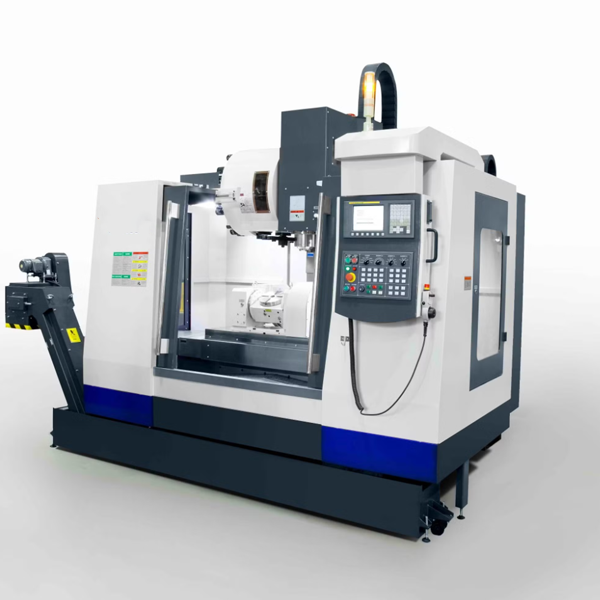
- The CNC Milling Machine: A 5-axis or 4-axis Vertical Machining Center (VMC) is ideal. The additional axes allow the cutting tool to approach the workpiece from various angles, enabling the machining of complex curves and undercuts on the wheel face in a single setup. A machine with a rigid frame, high-speed spindle, and a sophisticated control system is crucial for minimizing vibration and achieving a flawless surface finish.
- Workholding Fixture: A custom, robust fixture is essential to hold the wheel blank securely. This fixture must provide rigid clamping without deforming the part or obstructing the tool path. Often, a multi-stage fixture is used—one for machining the face and another for the back side.
- Cutting Tools: A selection of specialized carbide end mills is required. This includes large-diameter face mills for clearing large areas of material, ball-nose end mills for creating the smooth, contoured surfaces of the spokes, and smaller detail cutters for fine engraving or sharp corners.
- CAD/CAM Software: Sophisticated Computer-Aided Design (CAD) software is used to create the 3D model of the wheel. This model is then imported into Computer-Aided Manufacturing (CAM) software, which generates the G-code—the complex toolpath instructions that the CNC machine will follow.
- Metrology Tools: Precision measurement tools, such as Coordinate Measuring Machines (CMMs) or digital calipers, are vital for in-process inspection and final quality assurance to verify that all dimensions meet the design specifications.
Which Materials Are Best Suited for CNC-Milled Wheels?
The choice of material is critical for balancing weight, strength, and durability. Forged aluminum alloys are the industry standard for high-performance milled wheels. The table below outlines common choices and their characteristics.
| Alloy Grade | Key Characteristics | Primary Use Case |
|---|---|---|
| 6061-T6 Aluminum | Excellent strength-to-weight ratio, great corrosion resistance, highly machinable. The most common choice. | High-performance aftermarket, street, and track day wheels. |
| 7075-T6 Aluminum | Significantly stronger than 6061, comparable to many steels, but more susceptible to corrosion. | Professional motorsport and aerospace applications where maximum strength is critical. |
| Magnesium Alloys | Extremely lightweight (lighter than aluminum), but more costly and requires special handling due to flammability. | Top-tier racing series (e.g., F1) where reducing unsprung mass is the highest priority. |
What is the Step-by-Step Process for Machining a Wheel?
The journey from a forged blank to a finished wheel is a multi-stage process where each phase builds upon the last. Precision at every step is paramount.
Phase 1: Digital Design and Programming (CAD/CAM)
It all begins in the digital realm. A designer uses CAD software to create a detailed 3D model of the wheel, defining every curve, spoke, and lug hole. This model is then passed to a manufacturing engineer who uses CAM software. In the CAM environment, the engineer defines the entire machining strategy: selecting the right tools, setting cutting speeds and feeds, and generating the precise toolpaths for each operation. Simulation software is used to verify the program, preventing potential collisions and optimizing the process for efficiency and quality.
Phase 2: Machine and Workpiece Setup
The forged aluminum blank is loaded into the CNC milling machine and secured in the custom workholding fixture. This step is critical; the blank must be perfectly centered and clamped with immense force to resist the cutting pressures. The machine operator then sets the work offsets, telling the machine’s control system the exact location of the workpiece. Finally, all the required cutting tools are loaded into the machine’s automatic tool changer, and their lengths and diameters are precisely measured.
Phase 3: The Roughing Operation
This is where the dramatic transformation begins. The roughing program is executed, using large, robust cutting tools to remove the bulk of the excess material quickly. The goal here is not a fine finish but efficient material removal. The CNC machine follows the pre-programmed toolpaths, carving out the basic shape of the wheel face and spokes from the solid blank. This process can generate a significant amount of heat and aluminum chips, which are managed by a high-pressure coolant system.
Phase 4: The Finishing and Detailing Operation
Once the rough shape is established, the machine switches to the finishing programs. Smaller, more precise tools like ball-nose end mills are used with a much finer step-over. This is the most time-consuming phase, where the machine carefully sculpts the final, smooth contours of the design. The spindle speed is often increased while the feed rate is reduced to achieve a mirror-like surface finish. This phase also includes drilling the lug nut holes, milling the center bore to precise specifications, and engraving any logos or text.
Phase 5: Quality Control and Post-Processing
After the machining is complete, the wheel is removed from the machine for a thorough inspection. A CMM or other metrology tools are used to verify that every critical dimension is within tolerance. The wheel is then deburred to remove any sharp edges, followed by surface finishing treatments like polishing, powder coating, or anodizing to achieve the desired look and add a protective layer.
What are the Key Challenges in Wheel Machining and How Can They Be Overcome?
Machining wheels presents unique challenges that require advanced solutions. Chatter and Vibration are primary enemies. These can leave behind poor surface finishes and even damage the tool or workpiece. Overcoming this requires a CNC machine with a highly rigid construction, like the heavily ribbed cast iron frames found in Hirung VMCs, which dampens vibrations effectively. Smart toolpath strategies in CAM software, such as trochoidal milling, also help maintain a constant tool engagement to minimize chatter.
Another challenge is Heat Management. Aluminum can become “gummy” when hot, causing it to weld to the cutting tool and ruin the finish. A high-volume, high-pressure coolant system directed precisely at the cutting zone is essential to flush away heat and chips. The choice of tool coatings (like TiN or DLC) also reduces friction and heat buildup.
Finally, achieving a Flawless Surface Finish across complex 3D surfaces demands exceptional machine kinematics and control. High-speed machining capabilities, coupled with advanced look-ahead features in the CNC control, allow the machine to navigate complex toolpaths smoothly without pausing or creating dwell marks. This is where the quality of the machine’s drives, ball screws, and control system truly shines.
How Does the Right CNC Machine Elevate Wheel Production?
While the process is complex, the capability of the CNC machine itself is the ultimate limiting factor. This is where Hirung’s engineering philosophy makes a tangible difference. Our Vertical Machining Centers are designed from the ground up for the rigidity and precision that demanding applications like wheel manufacturing require.
The foundation of a Hirung machine is its massive, stress-relieved Meehanite cast iron frame. This provides the superior damping characteristics needed to absorb cutting forces and eliminate vibration, which is the key to achieving those pristine surface finishes. We equip our machines with high-torque, high-speed spindles and precision-ground ball screws to ensure both powerful material removal during roughing and delicate accuracy during finishing. Paired with industry-leading CNC control systems, our machines provide the advanced processing power needed for smooth, high-speed 5-axis contouring.
Choosing a Hirung machine is an investment in capability. It means you are not just acquiring a tool, but a complete, reliable solution engineered to overcome the inherent challenges of complex machining. It’s the confidence of knowing your equipment has the stability and precision to turn your most ambitious wheel designs into reality, flawlessly and repeatedly.
Your Partner in Precision Wheel Manufacturing
Machining a custom wheel is a testament to the power of modern CNC technology. It is a process where design, software, and hardware must work in perfect harmony. From the initial CAD model to the final polishing, every step requires an unwavering commitment to precision. Understanding this process reveals why the quality of the CNC milling machine is not just a contributing factor—it is the cornerstone of success.
At Hirung, we are proud to build the robust and accurate machinery that empowers manufacturers to push the boundaries of performance and design. If you are looking to enter or elevate your capabilities in the world of custom wheel production, we invite you to explore how our advanced manufacturing solutions can become your greatest competitive advantage.