When selecting a CNC machine, one of the most fundamental decisions is choosing between a vertical machining center (VMC) and a horizontal machining center (HMC). The primary difference lies in the orientation of the spindle: a VMC has a vertically oriented spindle, while an HMC’s spindle is horizontal. This single distinction leads to a cascade of differences in functionality, application, productivity, and cost. Understanding these nuances is crucial for any manufacturing business aiming to optimize its production floor, and this guide will walk you through everything you need to know to make an informed decision.
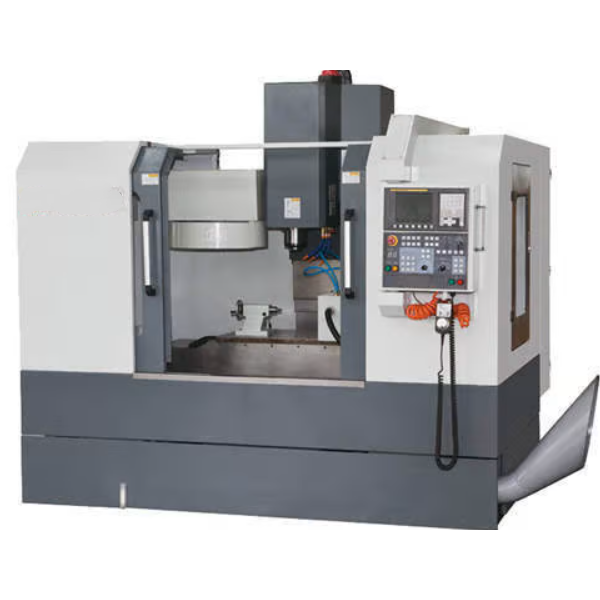
What is a Vertical Machining Center (VMC)?
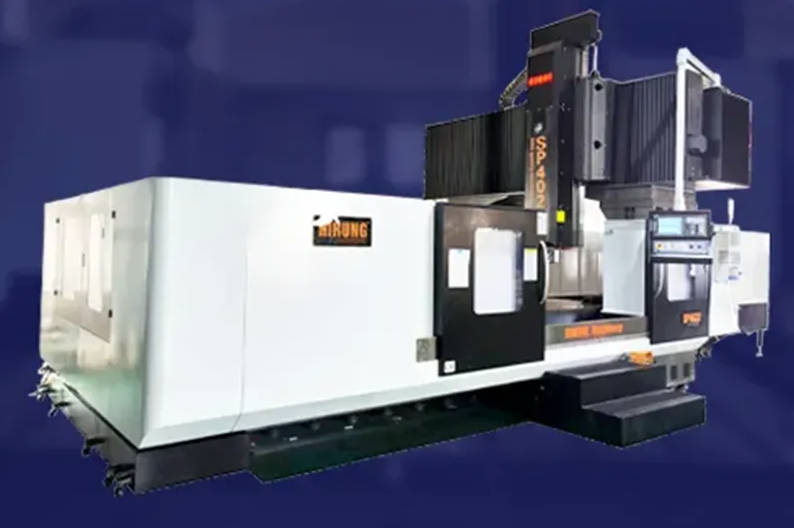
A Vertical Machining Center (VMC) is characterized by its vertically oriented spindle that holds and rotates the cutting tool. The workpiece is secured flat on top of the machine’s table, which moves along the X and Y axes, while the spindle moves up and down along the Z-axis. This setup is highly intuitive and offers excellent visibility of the cutting process, making it easier for operators to monitor the job and make adjustments. Gravity works to its advantage by helping to hold the workpiece firmly against the table, which can simplify fixturing for many applications.
VMCs are the most common type of CNC milling machine found in workshops around the world. They are exceptionally versatile and excel at producing parts that require machining on one or two faces, such as plates, molds, and dies. Their relatively simpler design and smaller footprint make them a cost-effective solution for small-to-medium-sized shops, prototyping, and low-to-mid-volume production runs. At Hirung, we have spent decades perfecting our line of Vertical Machining Centers to deliver unmatched precision and reliability for these exact applications.
What is a Horizontal Machining Center (HMC)?
A Horizontal Machining Center (HMC), as the name implies, features a horizontally oriented spindle. Instead of being laid flat, the workpiece is typically mounted on a vertical tombstone fixture that sits on a rotating B-axis table. This configuration is the HMC’s greatest strength. It allows the machine to access multiple sides of a part—often four or even five—in a single setup. The cutting tools approach the workpiece from the side, which has a profound impact on the machine’s operation and efficiency.
This horizontal orientation provides a significant, built-in advantage for chip management. As material is cut away, gravity naturally pulls the chips down and away from the workpiece and cutting zone, leading to better tool life, improved surface finishes, and a more stable cutting process. HMCs are production powerhouses, often equipped with pallet-changing systems and large tool magazines, making them ideal for high-volume, complex, and automated “lights-out” manufacturing of parts like engine blocks, transmission cases, and large industrial components. Our advanced Horizontal Machining Centers are engineered for this level of productivity, offering the rigidity and automation capabilities modern manufacturing demands.
Key Differences: VMC vs. HMC Head-to-Head Comparison
While spindle orientation is the defining difference, its effects ripple through every aspect of the machine’s performance. Let’s break down the critical distinctions that will guide your choice.
1. Spindle Orientation and the Role of Gravity
The fundamental design of each machine dictates its operational strengths. On a VMC, the vertical spindle and downward cutting force work with gravity to press the workpiece into the fixture, enhancing stability for heavy cuts on flat surfaces. The operator can easily see what’s happening, which is a major plus for setup and one-off jobs. Conversely, an HMC‘s horizontal spindle means cutting forces are applied sideways. While this requires more robust fixturing, it also opens the door to multi-sided machining on a rotating pallet, a capability that VMCs generally lack without a 4th/5th-axis add-on.
2. Chip Evacuation and Management
This is a critical, often underestimated difference. On an HMC, chips naturally fall away from the part and into a conveyor system below. This efficient chip evacuation prevents “re-cutting” (when the tool cuts already-removed chips), which can damage the tool and mar the part’s surface finish. It also reduces heat buildup in the cutting zone. On a VMC, chips can pile up on top of the workpiece, especially in deep pockets or bores. This requires powerful coolant systems or high-pressure air blasts to clear the area, adding a layer of complexity and potential for error to the process. For materials that produce long, stringy chips like aluminum, the HMC’s superior chip management is a massive advantage.
3. Workpiece Size, Weight, and Complexity
The machine’s structure influences the type of work it can handle. VMCs are generally better suited for smaller, flatter, and lighter parts. While large VMCs exist, loading and unloading extremely heavy workpieces can be challenging due to crane access being blocked by the machine’s bridge-like structure. HMCs, on the other hand, are built to handle larger, heavier, and more cubic-shaped parts. Their open design and pallet systems often make it easier to load heavy components. More importantly, the ability to machine multiple faces of a complex part without re-fixturing drastically reduces setup time and improves dimensional accuracy between features.
4. Productivity and Cycle Times
When it comes to high-volume production, the HMC is the clear winner. This is due to two main features: tombstone fixturing and automatic pallet changers (APCs). A tombstone can hold multiple parts, or allow access to multiple sides of a single part. An APC allows a finished part on one pallet to be swapped with a new, raw part on a second pallet in seconds. This means the spindle is cutting almost continuously, as the operator can safely load and unload parts on the idle pallet while the machine is running. A VMC requires the machine to be stopped for every part change, leading to significantly more downtime and lower overall throughput in a production environment.
5. Fixturing and Workholding
Workholding on a VMC is straightforward, typically involving vises, clamps, and plates bolted directly to the table. Setup is quick and simple for 2D or 3-sided parts. HMCs utilize a more complex but powerful system. The tombstone fixture is a large, multi-sided block onto which parts are mounted. This tombstone is then placed on the machine’s integrated B-axis rotary table. While the initial setup of a tombstone is more involved and requires careful planning, it pays huge dividends by enabling multiple operations on multiple parts in a single, uninterrupted cycle.
6. Tooling Capacity
Because HMCs are designed for complex, multi-operation jobs, they are typically equipped with much larger tool magazines. It’s common for an HMC to have an Automatic Tool Changer (ATC) that holds 60, 90, 120, or even more tools. This allows a single job to utilize a wide variety of tools for drilling, tapping, boring, and milling without any manual intervention. VMCs usually have smaller ATCs, often in the range of 20-40 tools, which is sufficient for less complex work but can be a limitation for highly involved parts.
7. Accuracy and Rigidity
Both machine types can produce highly accurate parts. However, the structural design can give one an edge depending on the task. HMCs are often built with a more rigid, robust frame to handle the forces of heavy-duty cutting on large workpieces. Their superior thermal stability and chip management also contribute to consistent accuracy over long production runs. VMCs, with gravity assisting workholding, can offer excellent stability for heavy face milling operations. Ultimately, the precision of any machine, vertical or horizontal, comes down to the quality of its construction, components, and maintenance—a principle we embed in every Hirung machine.
8. Cost and Initial Investment
There is a significant price difference between the two. A VMC is almost always the less expensive option. Its simpler design, smaller footprint, and fewer complex components (like built-in rotary tables and pallet changers) result in a lower initial purchase price. This makes VMCs highly accessible for startups, small job shops, and R&D departments. An HMC represents a much larger capital investment, often two to three times the cost of a comparable VMC. However, for the right application—high-volume or complex part production—its incredible productivity can deliver a lower cost-per-part and a faster return on investment over the machine’s lifetime.
9. Footprint and Floor Space
Manufacturing floor space is a valuable commodity. VMCs typically have a more compact, vertical design that consumes less floor space than an HMC of a similar work envelope. HMCs require more room not just for the machine itself, but also for the pallet changing system, chip conveyors, and the area needed for the operator to access and load the tombstone fixtures. This is a practical consideration that must be factored into any purchasing decision.
VMC vs. HMC: A Quick Comparison Table
To summarize the key points, here is a side-by-side comparison table:
| Feature | Vertical Machining Center (VMC) | Horizontal Machining Center (HMC) |
|---|---|---|
| Spindle Orientation | Vertical (perpendicular to table) | Horizontal (parallel to table) |
| Primary Advantage | Lower cost, simple setup, good visibility | High productivity, superior chip control |
| Chip Evacuation | Fair; chips can pile up, requiring coolant/air | Excellent; gravity aids removal |
| Workpiece Type | Smaller, flatter parts, molds, dies | Large, heavy, cubic parts, production components |
| Productivity | Ideal for low-to-mid volume, prototyping | Ideal for high-volume, automated production |
| Setup Complexity | Simple and fast for single-sided work | More complex (tombstones) but fewer setups needed |
| Multi-Sided Machining | Requires optional 4th/5th axis add-on | Standard capability with integrated B-axis |
| Footprint | Smaller, more compact | Larger, requires more floor space |
| Initial Cost | Lower | Higher |
Which Machine is Right for Your Business? Ask These Questions
Choosing between a VMC and an HMC isn’t about which is “better,” but about which is better for you. Your decision should be driven by a clear analysis of your specific production needs. Before you invest, ask your team these critical questions:
- What types of parts will you be machining? Are they generally flat with features on one side (VMC-friendly), or are they complex, cubic parts requiring work on four or five faces (HMC territory)?
- What is your typical production volume? Are you a high-mix, low-volume shop that needs flexibility and fast setups (VMC)? Or are you running hundreds or thousands of the same part where cycle time is critical (HMC)?
- What is your budget? Can you justify the higher initial investment of an HMC for a long-term ROI, or is the lower upfront cost of a VMC a more strategic fit for your current business?
- How much floor space do you have available? Have you measured your facility to ensure you can accommodate the larger footprint of an HMC and its peripherals?
- What are your automation and growth goals? If your goal is to move towards “lights-out” manufacturing and maximum automation, an HMC with a pallet changer is purpose-built for that future.
Partner with Hirung for Your Machining Needs
The decision between a vertical and a horizontal machining center is one of the most significant a manufacturing business can make. It impacts everything from part cost and quality to overall shop floor efficiency. The right choice is the one that aligns perfectly with your parts, your processes, and your business goals.
At Hirung, we don’t just sell machines; we provide solutions. With over two decades of experience in the design and manufacturing of high-end CNC machine tools, we have a deep understanding of the challenges our customers face. We build a complete portfolio of both high-performance Vertical Machining Centers and production-focused Horizontal Machining Centers. Our team of expert engineers is ready to help you analyze your unique application and guide you toward the machine that will not just meet your needs today, but empower your growth for years to come.
Ready to find the perfect CNC solution for your facility? Contact our engineering team today for a personalized consultation and a detailed quote.