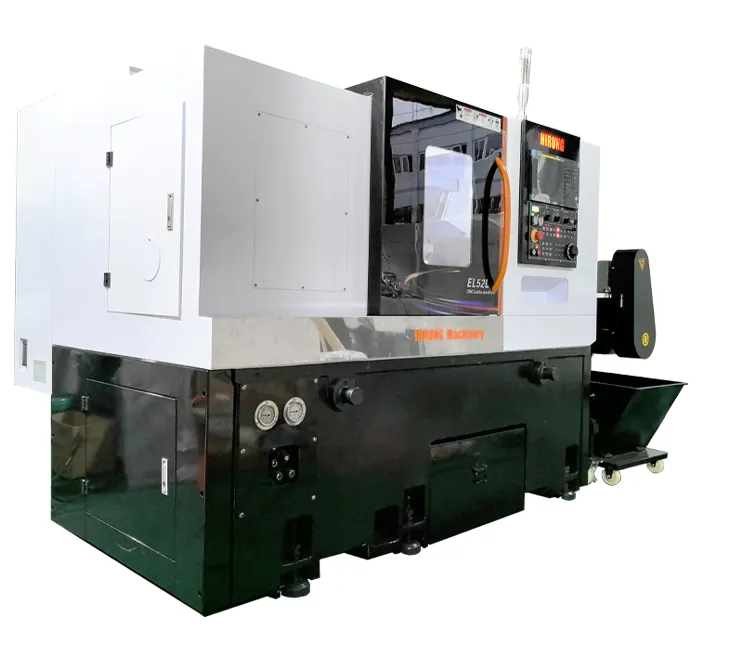
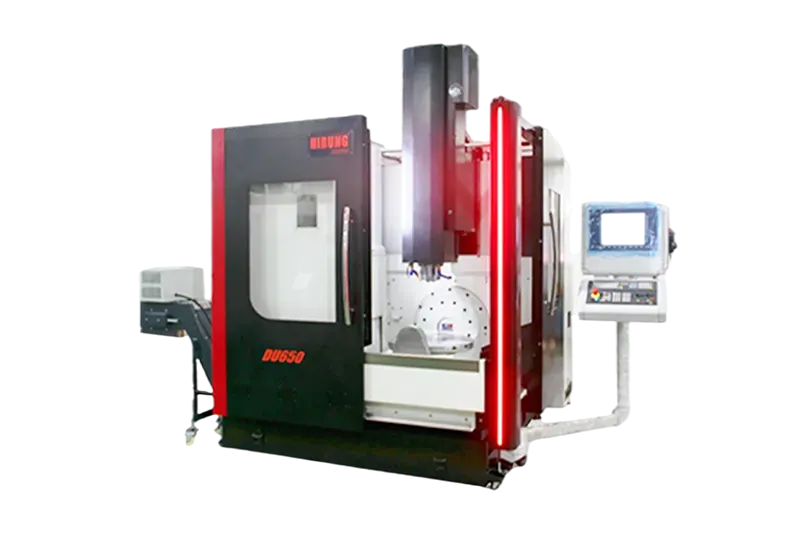
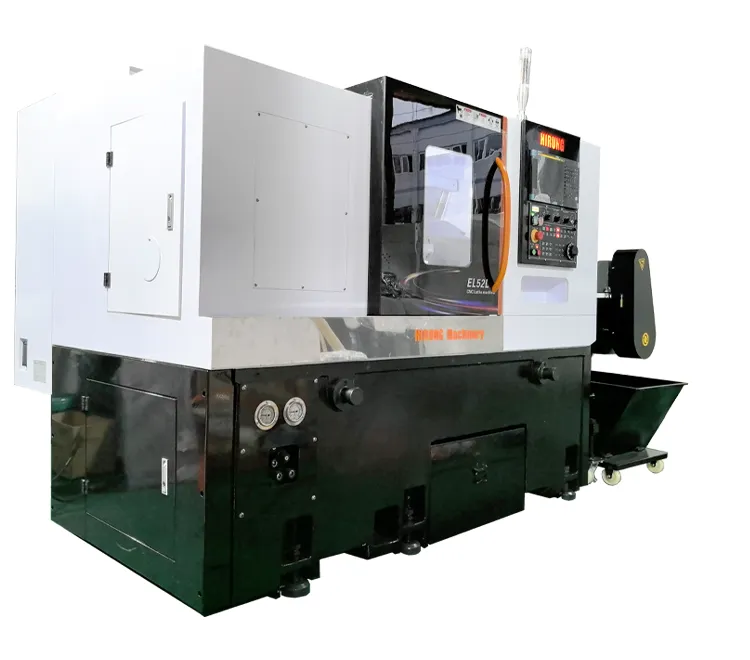
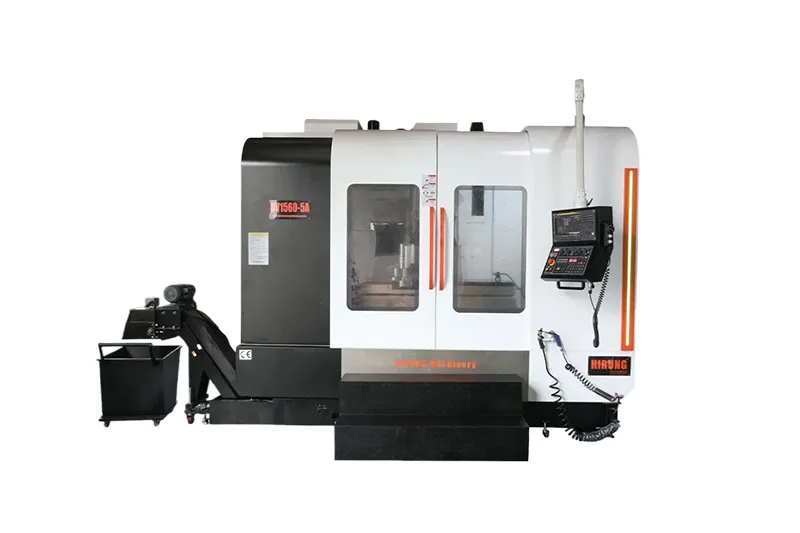
Yes, a VMC is unequivocally a type of CNC machine. This is the most crucial takeaway for anyone new to the manufacturing industry. A Vertical Machining Center (VMC) is a specific category of CNC milling machine where the cutting tool’s spindle is oriented vertically. Think of “CNC” as the brain and “VMC” as a specific type of body. The CNC (Computer Numerical Control) is the automation system that sends programmed instructions, while the VMC is the physical machine that executes those instructions to cut and shape a workpiece.

This distinction is fundamental to understanding modern manufacturing. While all VMCs are CNC machines, not all CNC machines are VMCs. The world of CNC is vast, encompassing lathes (CNC turning centers), grinders, routers, and horizontal machining centers (HMCs), all united by the commonality of being controlled by a computer. At Hirung, with over 15 years of hands-on experience in precision parts manufacturing, we utilize a wide array of CNC machines, with VMCs being a cornerstone of our milling operations due to their versatility and precision. This guide will demystify the relationship between these terms, explore their differences, and help you understand when a VMC is the right choice for a manufacturing project.
Demystifying the Acronyms: What is CNC (Computer Numerical Control)?
To truly grasp the concept of a VMC, one must first understand the technology that drives it. Computer Numerical Control (CNC) is not a machine itself but rather the method of automation. It refers to the process of using a dedicated computer, or controller, to read a set of pre-programmed instructions (often in a language called G-code and M-code) and translate them into precise, automated movements of a machine tool. This technology replaced manual, labor-intensive operations that required a machinist to physically turn wheels and pull levers to control the machine’s cuts.
Imagine CNC as the central nervous system. It dictates the what, where, and how fast of the entire machining process. This system controls various aspects of the machine, including:
- Movement of the axes (X, Y, Z): Directing the cutting tool and/or the workpiece along specific paths.
- Spindle Speed: Controlling how fast the cutting tool rotates (in RPM).
- Feed Rate: Determining how quickly the cutting tool moves through the material.
- Tool Changes: Activating the automatic tool changer to swap out different tools for different operations.
- Coolant Flow: Turning coolant on and off to lubricate the cut and evacuate chips.
Therefore, any machine that utilizes this computer-driven automation to perform its function can be classified as a CNC machine. This includes CNC lathes, CNC routers, CNC plasma cutters, and, of course, CNC milling machines like the VMC.
So, What Exactly is a VMC (Vertical Machining Center)?
Now that we’ve established CNC as the control system, let’s define the machine. A VMC, or Vertical Machining Center, is a CNC milling machine distinguished by its vertical spindle orientation. The spindle is the part of the machine that holds and rotates the cutting tool (like an end mill, drill, or tap). In a VMC, this spindle is positioned vertically, perpendicular to the worktable where the workpiece is mounted. The cutting action happens on the top face of the workpiece as the tool moves along the X and Y axes, and the spindle moves up and down along the Z-axis.
This vertical setup is one of the most common and versatile configurations in the machining world. It offers excellent visibility for the operator, making setup and monitoring easier, especially for simpler, one-off parts or prototypes. Most VMCs operate on at least three axes (X, Y, and Z), but more advanced models, like the 5-axis machines we use at Hirung, incorporate additional rotational axes (A and B) to machine complex geometries and angled features in a single setup. This versatility makes VMCs a workhorse in nearly every machine shop, capable of producing everything from simple brackets to complex aerospace components.
The Core Relationship: How VMC and CNC Work Together
The relationship between VMC and CNC is a classic example of a specific item belonging to a broader category. It’s a “part-of-a-whole” connection, best understood with an analogy:
CNC is the pilot; the VMC is the airplane.
The pilot (CNC) has all the flight plan information (the G-code program), understands how to operate the controls, and makes the critical decisions. However, without the airplane (the VMC), the pilot cannot fly or perform any action. Conversely, the airplane (VMC) is a powerful piece of machinery with wings, engines, and landing gear (spindle, motors, and worktable), but it is inert and useless without the pilot (CNC) to command it.
In practice, a CAD/CAM programmer creates a digital design and generates a toolpath program (G-code). This program is loaded into the VMC’s CNC controller. The controller then interprets the code and sends electrical signals to the machine’s servo motors, which drive the movement of the table and spindle with incredible precision. The synergy is perfect: the VMC provides the physical power and structure to cut metal, while the CNC provides the intelligent, repeatable, and highly accurate control to do it perfectly every time.
VMC vs. HMC: Which Type of CNC Machine is Better?
A common point of comparison when discussing VMCs is their counterpart: the HMC (Horizontal Machining Center). Both are CNC milling machines, but their different spindle orientations make them suitable for different types of work. Understanding their differences is key to optimizing a manufacturing process, a decision our engineers at Hirung make daily based on part geometry, volume, and material.
The primary difference, as the names suggest, is that an HMC has a horizontally oriented spindle. This seemingly simple change has significant implications for the entire machining process. While there’s no universally “better” machine, each has distinct advantages.
| Feature | Vertical Machining Center (VMC) | Horizontal Machining Center (HMC) |
|---|---|---|
| Spindle Orientation | Vertical (perpendicular to the worktable) | Horizontal (parallel to the worktable) |
| Chip Evacuation | Chips can pool on the workpiece, requiring coolant/air blast. Can lead to re-cutting of chips. | Superior. Gravity helps chips fall away from the part and into the chip conveyor. |
| Workpiece Visibility | Excellent. Easy for operators to see the cutting process and perform setups. | Limited, as the workpiece and tombstone fixture often obstruct the view. |
| Workholding | Typically holds one part in a vise or fixture on the table. | Uses a “tombstone” fixture on a rotary pallet, allowing multiple parts to be machined on 4 sides in one setup. |
| Best for | Single-sided operations, mold/die work, prototypes, flat parts, and lower volume jobs. | High-volume production, parts requiring machining on multiple sides, and heavy-duty cutting. |
| Cost & Footprint | Generally lower initial cost and smaller footprint. | Higher initial investment and larger footprint. |
What are the Key Components of a VMC?
To appreciate how a VMC operates under CNC, it helps to know its core anatomy. While designs vary, all VMCs share fundamental components that work in concert to achieve precision machining.
The CNC Controller: The Machine’s Brain
This is the user interface and the processing unit—the CNC part of the VMC. It’s where the operator loads the program, sets tool and work offsets, and monitors the machining process. Modern controllers from brands like Fanuc, Haas, or Siemens are incredibly powerful, offering graphical displays, on-the-fly editing, and advanced probing cycles to ensure accuracy.
Spindle and Tool Holder: The Heart of the Operation
The spindle is arguably the most critical component. It comprises the motor, drive system, and the taper that holds the tool holder. Its quality determines the machine’s ability to achieve high speeds (for fine finishing) and high torque (for heavy material removal). The tool holder is what actually grips the cutting tool (e.g., an end mill), and it is clamped into the spindle. The entire assembly moves up and down on the Z-axis.
The Worktable and Fixturing: Securing the Part
This is the flat, often T-slotted surface where the workpiece is mounted. The workpiece must be held rigidly in place using fixturing, which can be as simple as a machine vise or as complex as a custom-built hydraulic clamping system. The table provides the motion for the X and Y axes, moving the workpiece underneath the stationary-but-spinning cutting tool.
When Should You Choose a VMC? Applications and Advantages
Given its unique characteristics, a VMC is the ideal choice for a wide range of applications. Its ease of use and lower cost make it a favorite for job shops, prototyping, and single-sided work. At Hirung, our VMCs are constantly running, producing parts for diverse industries.
Common applications include:
- Mold and Die Making: The precision and surface finishing capabilities of VMCs are perfect for creating the intricate cavities and cores of injection molds and stamping dies.
- Prototyping and R&D: When a single, high-accuracy part is needed quickly, the fast setup time and operator visibility of a VMC are invaluable.
- General Machining: This includes a vast range of parts like brackets, plates, housings, and manifolds that primarily require machining on one face.
- Secondary Operations: A part made on a CNC lathe might be moved to a VMC to have holes drilled, slots milled, or faces finished.
The main advantages of choosing a VMC for a project are its simplicity and accessibility. The open design allows operators to easily set up jobs and inspect parts. For many common tasks, especially those that don’t require complex multi-sided machining, a VMC provides the most cost-effective and efficient solution. This is why it remains one of the most popular and essential pieces of equipment in any precision machining facility.
Conclusion: VMC is a Powerful and Specific Type of CNC Technology
So, to answer the initial question definitively: Yes, a VMC is a type of CNC machine. It’s crucial to see “CNC” as the overarching control technology and “VMC” as a specific machine architecture defined by its vertical spindle. This fundamental understanding is the first step toward navigating the complex but fascinating world of precision manufacturing.
Every CNC machine, whether it’s a Vertical Machining Center, a Horizontal Machining Center, or a 5-axis powerhouse, offers a unique set of capabilities. The art and science of manufacturing lie in choosing the right tool for the job. At Hirung, our deep expertise across the full spectrum of CNC technology allows us to analyze your project’s specific requirements—from geometry and material to volume and tolerances—to select the perfect process. Understanding this core relationship between the control (CNC) and the machine (VMC) is key to making informed decisions and achieving outstanding results.