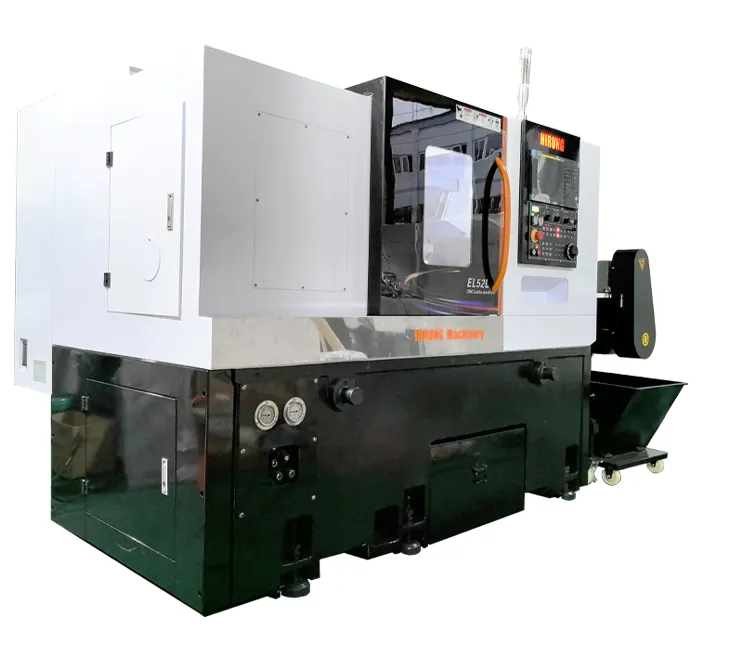
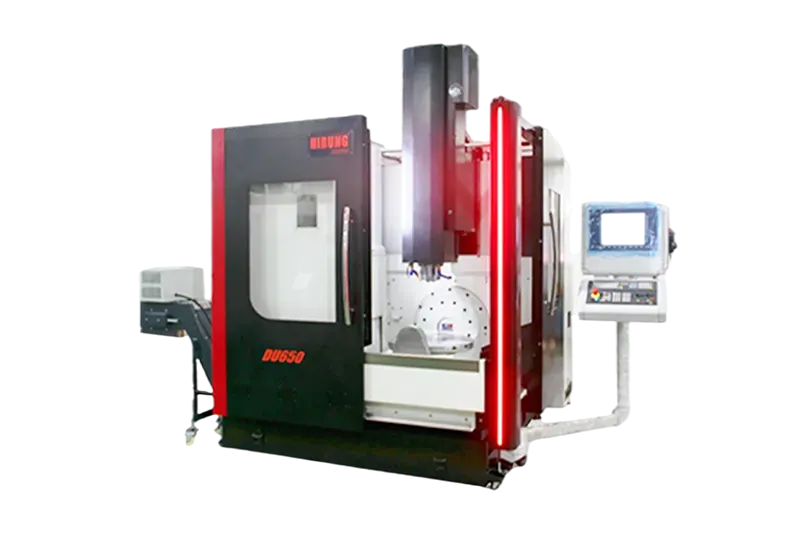
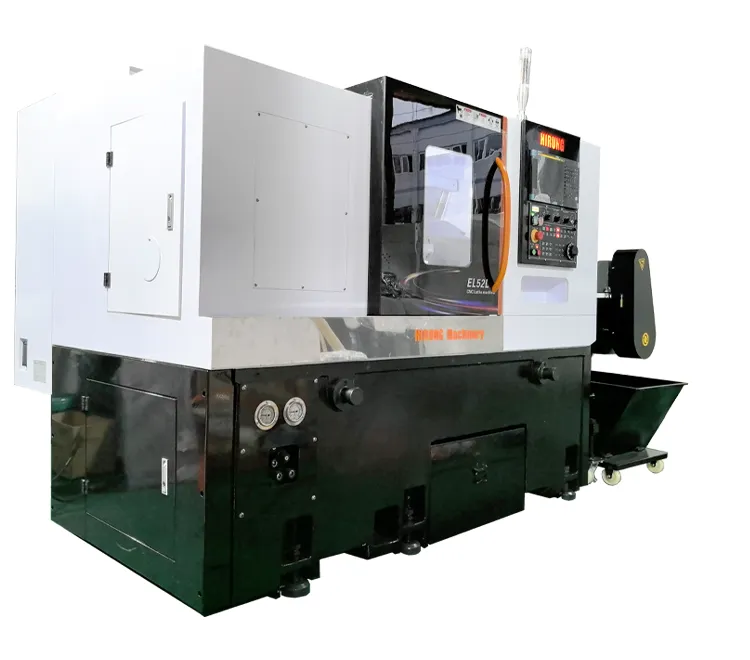
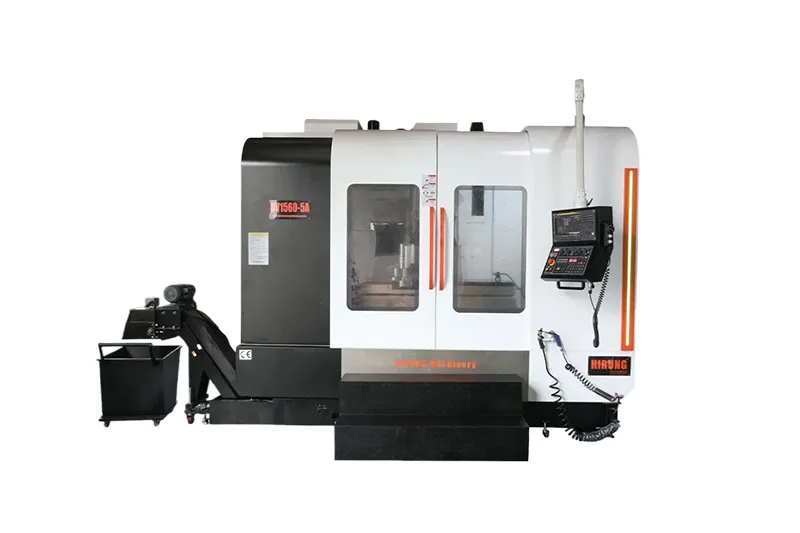
A vertical CNC machine, more commonly known as a Vertical Machining Center (VMC), is a computer-numerically controlled (CNC) machine tool where the primary cutting spindle is oriented vertically. This design allows gravity to assist in holding the workpiece firmly on the machine’s table while tools approach from above to perform operations like milling, drilling, tapping, and boring. As a leading manufacturer of high-precision CNC machines, we at Hirung see VMCs as the workhorses of the modern machine shop, valued for their versatility, precision, and relative ease of use for a vast range of applications.

Unpacking the Definition: What Exactly is a Vertical Machining Center (VMC)?
While the term “vertical CNC” accurately describes the machine’s spindle orientation, “Vertical Machining Center” provides a more complete picture. The “machining center” designation implies a crucial feature: an automatic tool changer (ATC). This system allows the machine to automatically swap between different cutting tools (like drills, end mills, and taps) without manual intervention. This automation is the key to complex, multi-operation machining in a single setup, drastically reducing production time and minimizing human error.
The entire process is orchestrated by the CNC controller—the machine’s brain. This sophisticated computer interprets a program, typically written in a language called G-code, which contains precise instructions for every movement. The G-code dictates the tool’s path (X, Y, and Z coordinates), spindle speed, feed rate, and when to change tools or activate coolant. This digital precision is what enables VMCs to produce identical parts with incredible accuracy and repeatability, a cornerstone of modern manufacturing.
The Core Components of a Vertical CNC Machine
Understanding a VMC begins with knowing its fundamental parts. Each component is engineered for rigidity, precision, and durability to withstand the immense forces of metal cutting.
The Spindle: The Heart of the Machine
The spindle is the assembly that holds and rotates the cutting tool. In a VMC, its vertical orientation is its defining characteristic. The quality of the spindle—its speed (measured in RPM), power (torque), and the precision of its bearings—directly impacts the machine’s cutting ability, surface finish quality, and overall accuracy. High-speed spindles are ideal for finishing and working with materials like aluminum, while high-torque spindles are necessary for heavy cuts in tough materials like steel or titanium.
The Machine Bed and Column: The Foundation
The bed is the massive, heavy base of the machine, and the column is the vertical structure that supports the spindle. Typically made from high-grade cast iron, these structures are the foundation of the machine’s stability. Their primary role is to provide extreme rigidity and vibration damping. Any flex or vibration during a cut would be transferred to the workpiece, resulting in poor accuracy and surface finish. A robust frame, like those on Hirung VMCs, ensures that the machine can handle aggressive cutting while maintaining micron-level precision.
The Worktable
The worktable is where the workpiece is secured using clamps, vises, or custom fixtures. This table moves along the X-axis (left and right) and Y-axis (front and back). The combination of the table’s X/Y movement and the spindle’s Z-axis (up and down) movement allows the tool to reach any point on the top surface of the workpiece. The size and weight capacity of the table determine the maximum size of the part that can be machined.
The Automatic Tool Changer (ATC)
As mentioned, the ATC is what elevates a vertical mill to a “machining center.” It consists of a tool magazine (which can hold anywhere from 12 to 60+ tools) and a mechanical arm. When the G-code calls for a tool change, the ATC arm rapidly retrieves the next tool from the magazine, swaps it with the one in the spindle, and stores the old tool. This entire process takes only a few seconds, enabling seamless, uninterrupted machining cycles.
The CNC Controller
This is the user interface and nerve center of the VMC. Operators use the controller to load programs, perform machine setup (like setting tool and work offsets), and monitor the machining process in real-time. Leading controller brands like Fanuc, Siemens, and Mitsubishi offer advanced features for high-speed machining, complex 3D contouring, and user-friendly operation. The choice of controller can significantly affect the machine’s performance and ease of use.
How Does a Vertical CNC Machine Work? From Design to Part
The journey from a digital concept to a physical part involves a clear, systematic workflow that showcases the power of digital manufacturing.
- CAD (Computer-Aided Design): An engineer or designer creates a 3D model of the part using CAD software (e.g., SolidWorks, AutoCAD). This digital blueprint contains all the precise geometric details of the final component.
- CAM (Computer-Aided Manufacturing): The 3D CAD model is imported into CAM software. Here, a programmer defines the machining strategy—selecting the right tools, setting cutting speeds and feeds, and generating the optimal toolpaths. The CAM software then translates these strategies into the G-code that the VMC can understand.
- Machine Setup: An operator securely fastens a block of raw material (the workpiece) onto the VMC’s table. They then load all the required cutting tools into the ATC magazine and use a probe or manual methods to tell the controller the exact location of the workpiece and the length of each tool. This setup is critical for accuracy.
- Machining Process: The operator loads the G-code program and starts the cycle. The VMC executes the program flawlessly: the spindle spins up, the coolant system floods the cutting area to cool the tool and flush away chips, and the machine’s axes move in perfect coordination to guide the tool along its programmed path, cutting away material to create the final shape.
- Quality Inspection: Once the cycle is complete, the finished part is removed and inspected using precision measuring tools (like calipers, micrometers, or a CMM) to ensure it meets the required dimensional tolerances.
Vertical vs. Horizontal CNC: Which is Right for the Job?
A common question in machining is when to use a vertical machine versus a horizontal one. The choice depends entirely on the part’s geometry, size, and production volume. The primary difference is the spindle orientation, which leads to several key operational distinctions.
Key Differences Explained
The most significant difference is chip evacuation. In a VMC, chips can pile up on top of the workpiece, potentially interfering with the cut or causing tools to break. This often requires powerful coolant or air blasts to clear them. On a Horizontal Machining Center (HMC), the horizontal spindle means chips naturally fall away from the part and into the chip conveyor below. This makes HMCs ideal for heavy material removal and deep pocket milling.
VMCs are generally better for single-sided, plate-like workpieces. The setup is intuitive because you can easily see and access the top of the part. HMCs, which typically come with a built-in fourth-axis rotary table and a pallet-changing system, excel at machining multiple sides of a cubic or tombstone-fixtured part in a single setup, making them highly efficient for high-volume production.
| Feature | Vertical CNC (VMC) | Horizontal CNC (HMC) |
|---|---|---|
| Spindle Orientation | Vertical (perpendicular to the table) | Horizontal (parallel to the table) |
| Chip Evacuation | Gravity works against it; chips can pile up | Excellent; gravity helps chips fall away |
| Workpiece Visibility | Excellent; easy to see and set up | Often obscured by the part or fixture |
| Ideal Part Type | Single-sided work, die/mold making, plate work | Cubic parts, multi-sided machining, high-volume production |
| Footprint & Cost | Generally smaller and less expensive | Larger footprint and higher initial investment |
| Prototyping & Small Runs | Highly suitable due to easy setup | More suitable for established, high-volume production |
Exploring the Types of Vertical CNC Machines
VMCs are not a one-size-fits-all solution. They are categorized by the number of axes of motion they possess, which determines their complexity and machining capabilities.
3-Axis VMCs
The most common type is the 3-axis VMC. It operates on three linear axes: X (left-right), Y (front-back), and Z (up-down). These machines are perfect for parts that can be machined from a single direction, such as plates, brackets, and simple molds. They are the foundation of nearly every machine shop, prized for their simplicity, reliability, and cost-effectiveness. The majority of general machining work can be accomplished on a 3-axis machine.
4-Axis VMCs
A 4-axis VMC adds a rotational axis (the A-axis) to the standard X-Y-Z motion. This is typically achieved by adding a rotary table that sits on the main worktable. This fourth axis allows the workpiece to be rotated, enabling machining on different sides of a part without having to manually unclamp and re-fixture it. This dramatically improves accuracy and reduces setup time for parts with features on multiple faces, like an engine camshaft or a part with holes on its sides.
5-Axis VMCs
The pinnacle of VMC technology is the 5-axis machine. It adds two rotational axes to the three linear axes. This can be achieved through a trunnion-style table that tilts and rotates (A and C axes) or by an articulating spindle head that swivels and tilts (B and C axes). 5-axis simultaneous machining allows the cutting tool to remain perpetually normal (perpendicular) to the workpiece surface. This is essential for creating complex, organic shapes like turbine blades, orthopedic implants, and intricate aerospace components with unmatched efficiency and surface finish. Hirung’s advanced 5-axis VMCs are engineered to provide the stability and precision required for these demanding applications.
Common Applications and Industries Served by VMCs
Thanks to their versatility, VMCs are indispensable across a wide spectrum of industries. Their ability to precisely shape metal and plastics makes them a cornerstone of manufacturing.
- Aerospace: Machining structural components, brackets, and fittings from aluminum and titanium alloys where precision and strength are non-negotiable.
- Automotive: Producing engine components, transmission parts, suspension elements, and molds for interior plastics.
- Medical: Creating custom surgical instruments, orthopedic implants (like knee and hip joints), and components for medical devices from materials like stainless steel and titanium.
- Mold & Die: A primary application for VMCs is milling injection molds and stamping dies with complex cavities and high-polish surface finish requirements.
- Electronics: Manufacturing custom heat sinks, enclosures, and chassis for electronic equipment.
Key Advantages of Using a Vertical CNC Machine
Why have VMCs become so ubiquitous in manufacturing? The answer lies in a blend of practical and economic benefits.
- Ease of Use and Setup: The open design and excellent visibility of the work area make setting up jobs on a VMC more straightforward than on an HMC, especially for less experienced operators.
- High Precision and Repeatability: The CNC control ensures that every part is machined to the exact same specifications, time after time. This consistency is vital for quality control in mass production.
- Cost-Effectiveness: VMCs generally have a lower initial purchase price and a smaller footprint than their horizontal counterparts, making them a more accessible entry point into CNC machining for many shops.
- Versatility: From simple 2D profiling to complex 5-axis contouring, a VMC can be configured to handle an enormous variety of tasks, making it a highly flexible asset.
Choosing the Right Vertical CNC for Your Needs: A Hirung Perspective
Selecting the right VMC is a critical investment. As manufacturers, we advise clients to look beyond just the price tag and consider the complete picture of their application requirements.
First, consider the size and weight of your typical workpiece. This will determine the required table size (X and Y travel) and weight capacity. Next, analyze the material you will be cutting. Machining hard steels or exotic alloys requires a machine with a rigid structure, a high-torque spindle, and a robust coolant system. For aluminum, high spindle speeds are more important. Finally, evaluate the complexity of your parts. Will a 3-axis machine suffice, or do the geometries demand the multi-sided capabilities of a 4-axis or the complex contouring of a 5-axis machine?
Answering these questions will guide you to a machine that is not just capable, but also efficient and profitable for your specific work. Consulting directly with an experienced manufacturer like Hirung can provide invaluable insight. We can help you analyze your parts and production goals to recommend a VMC configuration that delivers the best performance, reliability, and return on investment for years to come.
Conclusion: The Enduring Power of the Vertical CNC Machine
The vertical CNC machine is more than just a piece of equipment; it is a fundamental enabler of modern innovation. From the simplest bracket to the most complex medical implant, the VMC provides the precision, efficiency, and versatility needed to turn digital designs into tangible realities. Its straightforward design, combined with the power of advanced CNC controls and multi-axis capabilities, has secured its place as an essential tool in workshops around the globe. As technology continues to evolve, the VMC will undoubtedly evolve with it, becoming even faster, smarter, and more capable, continuing to shape the world one precise cut at a time.