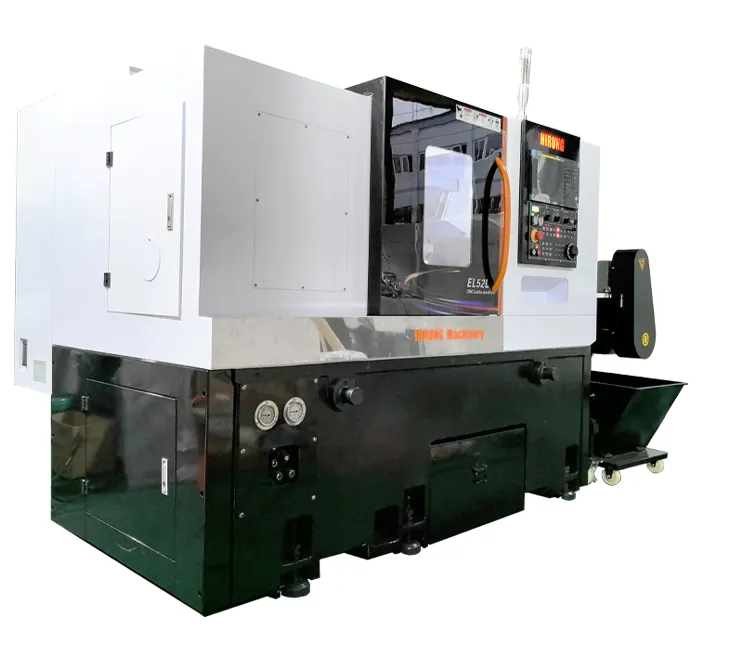
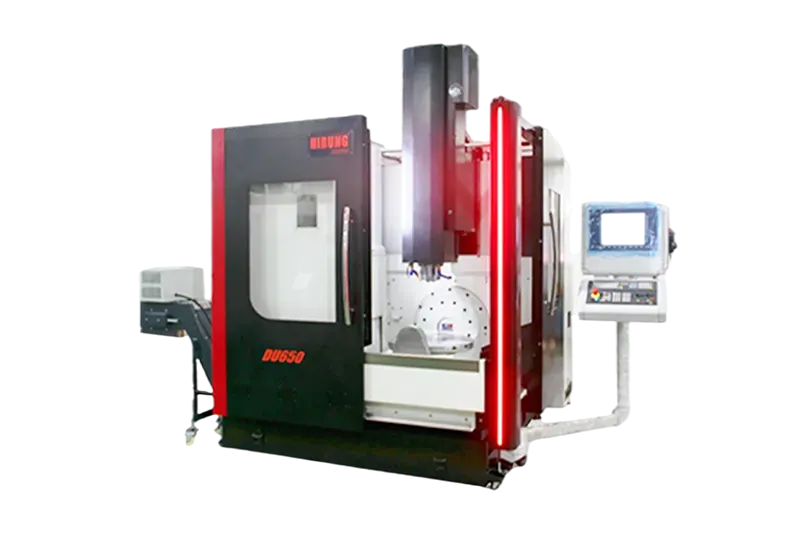
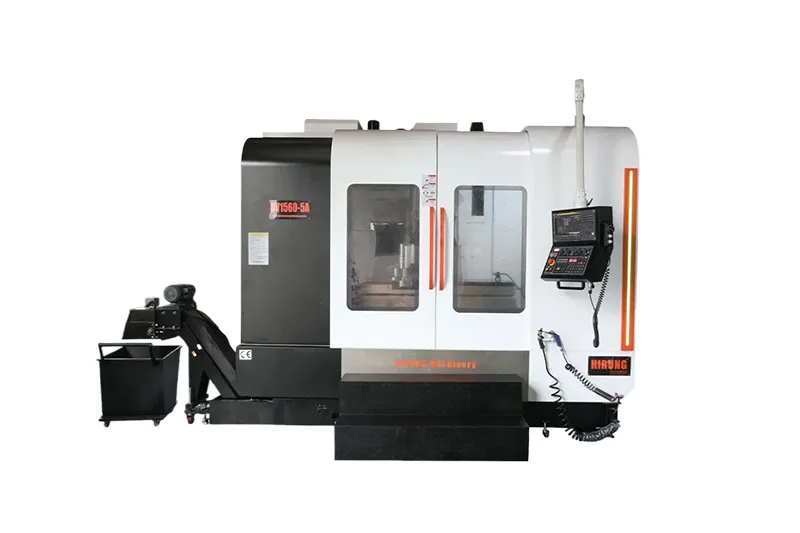
When upgrading a production line, a HIRUNG VMC represents a superior long-term investment because its lower Total Cost of Ownership (TCO) and higher production output lead to a significantly greater Return on Investment (ROI). This value is achieved through precision engineering, durable components, and advanced technology that minimize downtime, reduce material waste, and maximize throughput. The analysis moves beyond the initial purchase price to reveal how sustained profitability is the true measure of an optimal choice.
What Defines the True Cost of a VMC? Moving Beyond the Initial Price Tag
When evaluating a Vertical Machining Center (VMC) for a production line upgrade, the most common mistake is to fixate on the initial purchase price. This figure, while significant, is merely the tip of the iceberg. A seemingly “cheaper” machine can quickly become a financial burden, accumulating costs that far exceed its initial savings. The more insightful and strategically sound approach is to analyze the machine’s Total Cost of Ownership (TCO).
TCO provides a comprehensive financial estimate designed to help buyers determine the direct and indirect costs of a product over its entire service life. It accounts for everything from installation and operation to maintenance and eventual disposal. Understanding TCO reveals that a VMC built with superior components and engineering, like those from HIRUNG, often presents a far more lucrative investment despite a potentially higher upfront cost. This is because quality engineering directly translates to lower operational costs, minimal downtime, and greater long-term reliability.
Deconstructing the Total Cost of Ownership (TCO) of a VMC
To accurately assess the financial impact of a new VMC, it is essential to break down its TCO into three primary categories: the initial investment, ongoing operational expenses, and the often-underestimated costs associated with maintenance and downtime.
The Initial Investment: More Than Just the Machine
The initial capital outlay is the most visible cost. It naturally includes the price of the VMC itself. However, it also encompasses a range of associated expenses that must be factored in for a complete picture. These include logistics costs for shipping and delivery, fees for professional installation and commissioning, the initial purchase of essential tooling and workholding fixtures, and the cost of training operators and maintenance staff on the new equipment. While this is a one-time expenditure, it sets the financial baseline for the investment.
Operational Expenses: The Daily Costs of Production
Once the machine is running, it begins to incur operational costs. These are the recurring expenses required to keep the VMC producing parts. Key among them are energy consumption, which can be substantial for powerful machinery running multiple shifts. Other costs include the continuous consumption of cutting fluids and lubricants, as well as the replacement of consumable tooling like inserts, drills, and end mills.
This is an area where efficiency makes a tangible difference. A high-efficiency machine like a HIRUNG VMC, engineered with optimized servo motors and modern drive systems, can result in significantly lower electricity bills over thousands of hours of operation. This incremental saving, when projected over the machine’s lifespan, contributes positively to its overall ROI.
Maintenance and Downtime: The Hidden Profit Killers
The most damaging and often miscalculated costs are those related to maintenance and downtime. Every minute a machine is not running is a minute of lost revenue. Unplanned downtime disrupts production schedules, can lead to missed deadlines and penalty clauses, and damages customer confidence. The costs include not only the lost production but also the expenses for emergency repairs, express shipping of spare parts, and technician labor.
This is precisely where HIRUNG’s commitment to quality provides its greatest financial advantage. By building machines to rigorous standards with premium components—such as high-rigidity Meehanite cast iron frames, precision bearings from FAG/NSK, and robust linear guideways from THK/HIWIN—the fundamental reliability of the machine is dramatically increased. This design philosophy minimizes the frequency of unexpected breakdowns. Paired with a commitment to comprehensive service, it ensures that when maintenance is required, it is swift and effective, protecting your production and profitability.
Calculating the “Return” in ROI: Where a HIRUNG VMC Excels
A complete ROI analysis must balance the costs (TCO) with the returns. The “return” is generated through a combination of increased revenue and significant cost savings. A high-performance VMC does not just cost less to own over time; it actively generates more profit through its superior capabilities.
Increased Throughput and Production Capacity
The single most effective way to boost revenue is to produce more parts in less time. A machine’s ability to reduce cycle times directly correlates with its profitability. A VMC that can shave seconds off every part will produce hundreds or thousands more units over the course of a year, creating substantial additional revenue from the same operational hours.
HIRUNG VMCs are engineered for this specific purpose. Features like high-speed direct-coupled spindles reduce vibration and improve power transmission, enabling more aggressive cutting parameters. The machine’s rigid C-type structural design and high-performance servo systems allow for faster acceleration/deceleration and higher feed rates without sacrificing accuracy. For applications requiring extensive drilling and tapping, the T-series models are optimized for lightning-fast tool changes and tapping cycles, further maximizing parts per hour.
Enhanced Precision and Reduced Scrap Rates
Every part that is scrapped due to a lack of precision represents a total loss. This loss includes the cost of the raw material, the wasted machine time that could have been used on a good part, the consumed tooling, and the associated labor. High scrap rates are a direct drain on profitability.
Investing in a machine built for precision is a direct investment in waste reduction. HIRUNG’s adherence to strict assembly tolerances and use of high-precision components ensure exceptional accuracy and repeatability, part after part. This reliability means operators can run jobs with confidence, knowing the machine will hold tolerance. The result is a drastic reduction in scrap, which immediately improves the bottom line by saving material and freeing up machine capacity.
Unlocking New Business Opportunities and Capabilities
A superior VMC is not just about performing existing work more efficiently; it is a gateway to new, higher-margin markets. The capability to machine complex geometries, work with difficult materials, and hold tighter tolerances allows a shop to compete for lucrative contracts in demanding industries like aerospace, medical devices, and high-performance automotive.
By upgrading to a HIRUNG VMC, a business is not just replacing a machine—it is upgrading its capabilities. This strategic move can fundamentally alter its market position, transforming it from a general-purpose shop into a specialist provider of high-value components. This expansion of service offerings is a powerful driver of long-term growth and profitability.
A Comparative Analysis: The Long-Term Financial Impact
To illustrate the financial difference over time, consider a hypothetical 10-year comparison between a standard, low-cost VMC and a premium-quality HIRUNG VMC. While the initial price of the standard machine is lower, the accumulated costs and suppressed revenue potential reveal the superior long-term value of the HIRUNG investment.
| Financial Factor | Standard / Low-Cost VMC | HIRUNG VMC |
| Initial Purchase Price | Lower | Higher |
| Annual Maintenance & Repair Costs | Higher (due to lower quality components) | Lower (due to superior build and reliability) |
| Estimated Annual Downtime Cost | Significant (frequent, unplanned stops) | Minimal (high reliability, quick support) |
| Cost of Scrap & Rework | Higher (inconsistent precision) | Lower (high repeatability and accuracy) |
| Throughput & Revenue Potential | Standard | Higher (faster cycle times, more uptime) |
| Estimated 10-Year TCO | High | Lower |
| Estimated 10-Year ROI | Moderate | Substantially Higher |
What are the Intangible Benefits that Boost Long-Term Value?
Beyond the quantifiable metrics of TCO and ROI, investing in a high-quality VMC yields several intangible benefits. These advantages, while harder to measure, contribute significantly to a company’s success, culture, and long-term stability.
Improved Operator Morale and Skill Development
Machinists are craftsmen who take pride in their work. Forcing them to work with unreliable or underperforming equipment leads to frustration, stress, and reduced job satisfaction. Conversely, providing them with a reliable, precise, and high-performance machine like a HIRUNG VMC empowers them to do their best work. It shows that the company values quality and is invested in their success. This fosters a more positive work environment and provides an opportunity for operators to develop valuable skills on modern, advanced manufacturing technology.
Enhanced Brand Reputation and Customer Trust
Your company’s reputation is built on its ability to deliver high-quality parts on schedule. Frequent downtime and inconsistent quality damage this reputation, leading to lost customers and a struggle to win new business. By investing in top-tier machinery, you are investing in dependability. The ability to consistently meet or exceed customer expectations for quality and delivery builds a powerful brand image. Owning and operating premium equipment like a HIRUNG VMC can even become a key selling point, signaling to potential clients that you are a serious, quality-focused partner.
Future-Proofing Your Production Line
An investment in machinery should be a long-term, strategic decision. A VMC with robust construction and advanced technological capabilities ensures that your production line remains competitive for years to come. It will be capable of handling not only today’s jobs but also the more complex and demanding requirements of future projects. This “future-proofing” prevents the need for a premature and costly replacement cycle, securing your capital investment and ensuring it continues to be a productive asset well into the future.
Making the Optimal Choice for Your Upgrade
The decision to upgrade a production line is a critical financial inflection point. The question should not be, “Which VMC has the lowest price tag?” but rather, “Which VMC will deliver the greatest net profit and strategic advantage over its entire service life?” When viewed through the comprehensive lens of Total Cost of Ownership and long-term Return on Investment, the answer becomes clear.
The HIRUNG VMC stands out as the optimal choice because it is engineered for sustained profitability. Its foundation of superior build quality, precision performance, and steadfast reliability directly translates into lower operating costs, minimal downtime, and higher revenue-generating throughput. It is an investment in efficiency, quality, and future capability—the essential pillars for long-term manufacturing success.