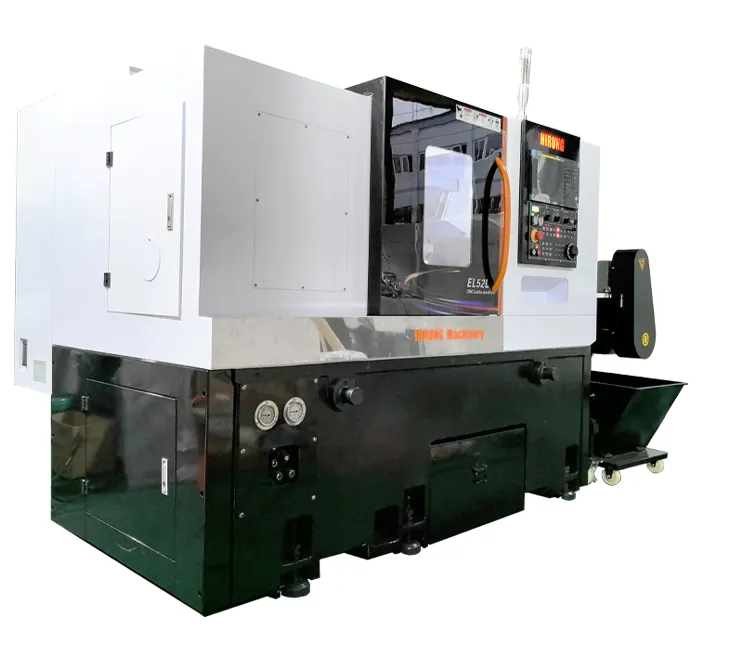
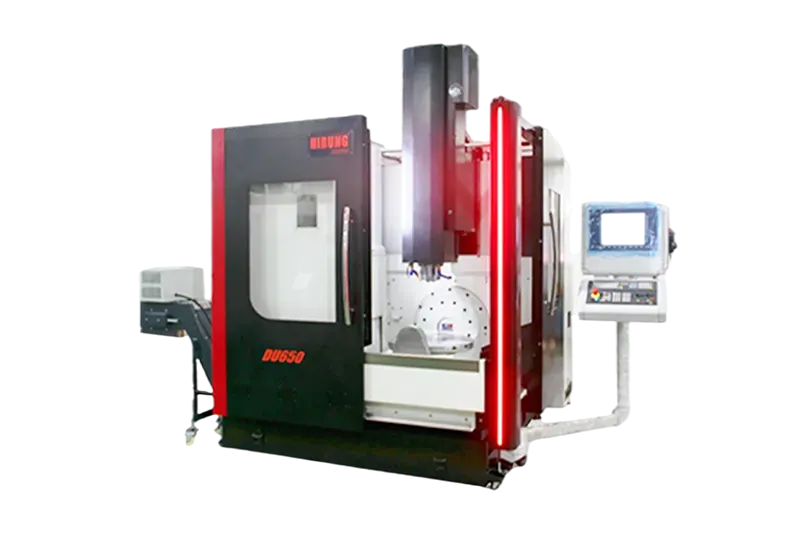
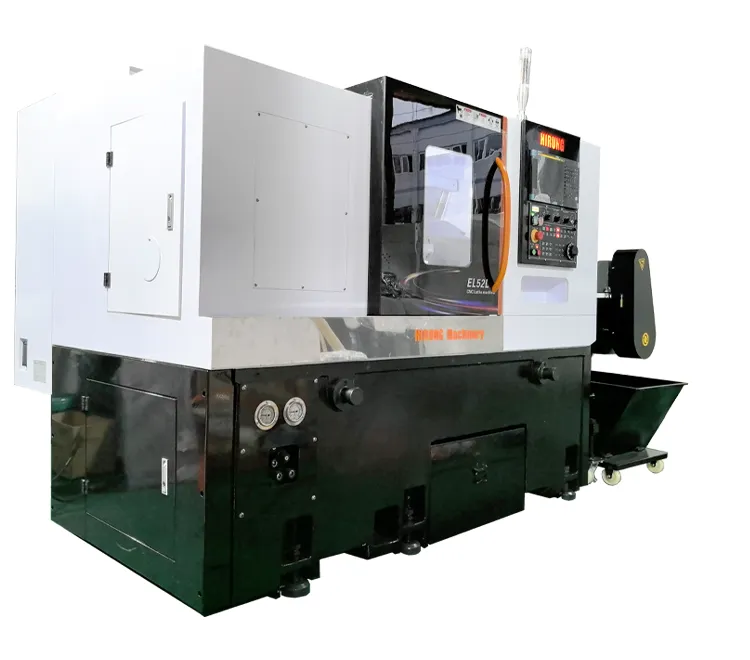
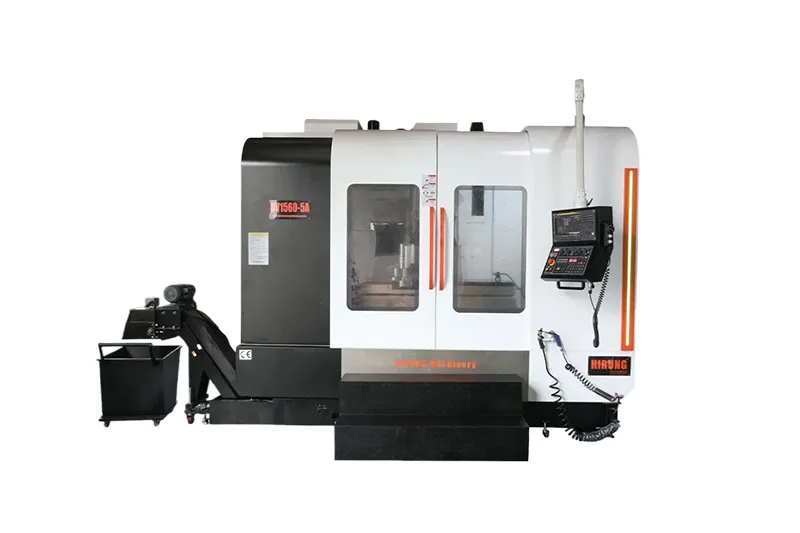
Investing in a high-end CNC machine requires a strategic evaluation beyond the initial price. The top 5 factors to consider when buying a high-end CNC machine are: 1. Machine Performance and Specifications aligned with your specific application, 2. The Control System and Software Ecosystem that serves as the machine’s brain, 3. The underlying Build Quality and Rigidity which dictate accuracy and lifespan, 4. The Total Cost of Ownership (TCO) and potential Return on Investment (ROI), and 5. The Manufacturer’s Support and Service Infrastructure, which ensures long-term operational success. A thorough analysis of these five areas will transform a major capital expenditure into a powerful, revenue-generating asset for your business.
Table of Contents
- 1. Machine Performance and Specifications: Aligning Power with Purpose
- 2. The Control System & Software Ecosystem: The Brain of the Operation
- 3. Build Quality and Rigidity: The Foundation of Precision
- 4. Total Cost of Ownership (TCO) and ROI: Beyond the Initial Price Tag
- 5. Manufacturer Support and Service Infrastructure: Your Long-Term Partner
- Conclusion: Making an Informed Investment for Future Growth
- Frequently Asked Questions (FAQ)
1. Machine Performance and Specifications: Aligning Power with Purpose
The heart of any CNC machine is its performance capability. However, “performance” is not a one-size-fits-all metric. A machine that excels at high-volume aluminum part production may be unsuitable for machining hardened steel molds. The first step is to move past glossy brochures and dive deep into how specific technical specifications directly support your manufacturing goals. This ensures you’re not overpaying for capabilities you don’t need or, worse, under-investing in a machine that can’t meet your future demands.
What are Your Core Application Needs? (Material, Complexity, Volume)
Before you even look at a machine, look at your parts. A detailed audit of your current and anticipated work is non-negotiable. What materials will you primarily be cutting? Machining Inconel or Titanium requires a machine with high torque at low RPMs and a rigid structure to handle immense cutting forces, whereas machining aluminum benefits from high spindle speeds for faster material removal rates. How complex are your parts? Parts with undercuts and complex contours will almost certainly require 5-axis machining capabilities to be completed in a single setup, drastically reducing cycle times and improving accuracy. What is your expected production volume? High-volume production demands features like a fast automatic tool changer (ATC) and high rapid traverse rates to minimize non-cutting time, while a job shop focused on prototypes might prioritize flexibility over sheer speed.
Decoding Key Specifications: Beyond the Brochure Numbers
Once your application is clearly defined, you can translate those needs into technical specifications. It’s crucial to understand the relationship between these numbers and on-the-floor performance. For instance, spindle horsepower alone is a vanity metric; you must look at the power-torque curve. Does the spindle provide sufficient torque at the RPM range you’ll actually be using for your materials? A machine’s rapid traverse rate might look impressive, but if its acceleration/deceleration rates are poor, it will never actually reach those top speeds on typical toolpaths. Don’t be swayed by a single impressive number; evaluate the complete performance profile.
| Specification | What It Means for Performance | Key Question to Ask |
|---|---|---|
| Spindle Speed & Torque | Speed (RPM) is for surface finish and cutting soft materials. Torque is for hogging out tough materials like steel and exotics. | What is the torque rating at the low-to-mid RPM range I will use most? |
| Axis Travel (X, Y, Z) | Defines the maximum part size the machine can accommodate. | Does the work envelope fit my largest current part with room for future growth? |
| Rapid Traverse Rates | The speed at which the machine moves when not cutting. Reduces cycle time. | How are the acceleration/deceleration rates? High rapids are useless without good dynamics. |
| Tool Changer Capacity/Speed | More tools mean more complex jobs can run unattended. Speed (tool-to-tool time) impacts overall cycle time. | Is the capacity sufficient for my most complex parts? How much time is spent on tool changes per cycle? |
3-Axis, 4-Axis, or 5-Axis? Making the Right Kinematic Choice
The number of axes is one of the most significant decisions you’ll make. A 3-axis machine (X, Y, Z) is the standard for simpler parts like plates and blocks. A 4-axis machine adds a rotational axis (A or B), allowing for work on multiple sides of a part without a new setup. A 5-axis machine provides two rotational axes, enabling simultaneous, complex contouring and the ability to machine five sides of a cube in a single clamping. While the initial investment for a 5-axis machine is higher, the ROI can be massive through reduced setup times, fewer fixtures, improved accuracy (by eliminating tolerance stack-up from re-fixturing), and the ability to take on more lucrative, complex work.
2. The Control System & Software Ecosystem: The Brain of the Operation
If the machine’s iron is its body, the CNC control is its brain. In the high-end market, the control system is far more than a simple user interface; it’s a sophisticated computing platform that dictates ease of use, processing speed, accuracy, and integration capabilities. Choosing the right control is as important as choosing the right machine, as it will define your shop’s workflow and digital connectivity for years to come.
Why is the CNC Control So Important?
A high-end CNC control directly impacts your bottom line. Its processing power, or “block processing time,” determines how quickly it can read ahead in the G-code program. This is critical for high-speed machining with complex 3D toolpaths, where a slow control can cause the machine to stutter, leaving tool marks on the finished part and reducing accuracy. Furthermore, the user interface and onboard software features can dramatically reduce setup times. Features like advanced conversational programming, intuitive probing cycles, and robust tool management systems empower operators to be more efficient and less prone to error.
Comparing Major Control Platforms: Fanuc, Siemens, Heidenhain, and Others
In the world of high-end CNC, a few names dominate. Fanuc is renowned for its legendary reliability and widespread market presence, making it easy to find experienced operators. Siemens is often praised for its powerful processing capabilities and user-friendly, PC-like interface, making it a favorite for complex 5-axis machining. Heidenhain is a top choice in the mold and die industry, celebrated for its exceptional accuracy and surface finish control. When evaluating these, consider not just the features, but also the skill set of your local labor pool and the expertise of the machine tool builder’s application engineers with that specific control.
Software Compatibility and Your Digital Workflow (CAD/CAM/ERP)
A modern CNC machine does not operate in a vacuum. It must seamlessly integrate into your shop’s digital workflow. How well does the machine’s control communicate with your existing CAD/CAM software? Ensure your CAM provider has a robust, well-developed post-processor for the specific machine and control combination you’re considering. A bad “post” can lead to inefficient code or even dangerous machine crashes. Furthermore, consider its readiness for Industry 4.0. Can the control easily output performance data (uptime, cycle times, alarm states) to be monitored by an ERP or MES system? This connectivity is essential for data-driven process optimization and future-proofing your investment.
3. Build Quality and Rigidity: The Foundation of Precision
You can have the fastest spindle and the smartest control, but if they are mounted on a weak, unstable frame, you will never achieve consistent accuracy or good tool life. Build quality and machine rigidity are the unsung heroes of precision manufacturing. This factor is all about the fundamental physics of cutting metal—managing vibration, thermal expansion, and cutting forces. In a high-end machine, this is where a significant portion of your investment goes.
How Does Machine Construction Impact Accuracy and Tool Life?
Every cutting operation generates vibration. A rigid machine structure effectively dampens that vibration, preventing “chatter” that ruins surface finish and drastically shortens the life of your expensive cutting tools. A well-built machine is also thermally stable. As a machine runs for hours, motors and cutting processes generate heat, which can cause metal components to expand and compromise positional accuracy. High-end machines combat this with features like cooled ballscrews, temperature-controlled spindles, and sophisticated compensation systems. This stability is the difference between holding a tolerance of +/- 0.01mm on the first part and holding it on the 1000th part at the end of a long shift.
Cast Iron vs. Welded Steel: What’s Under the Hood?
The base material of the machine is a critical indicator of its quality. The vast majority of high-end machine tools are built on a meehanite cast iron base. Cast iron offers superior vibration damping characteristics compared to a welded steel fabrication—it acts like a sponge for cutting harmonics. It also has excellent thermal stability and can be cast into complex, ribbed structures that provide maximum stiffness. While welded frames are cheaper and faster to produce, they are more prone to flexing under heavy loads and transmitting vibration. When you see a machine’s weight listed, a heavier machine is often a more rigid machine due to a substantial cast iron foundation.
Linear Guides vs. Box Ways: A Critical Decision for Your Application
The debate between linear guides and box ways is about the trade-off between speed and rigidity. Linear guides are essentially roller bearings that run on profiled rails. They offer very low friction, allowing for high rapid traverse and acceleration rates. They are ideal for applications where speed is paramount, such as machining aluminum. Box ways, on the other hand, are large, flat, scraped surfaces that mate together with a thin film of oil. They offer a much larger contact area, providing exceptional rigidity and vibration damping. This makes them the preferred choice for heavy-duty cutting in tough materials like steel and titanium, where cutting forces are extreme. The right choice depends entirely on your primary application.
4. Total Cost of Ownership (TCO) and ROI: Beyond the Initial Price Tag
A high-end CNC machine is a significant capital investment, and its price tag is only the beginning of the story. A savvy buyer focuses not on the purchase price, but on the Total Cost of Ownership (TCO) and the potential Return on Investment (ROI). This holistic financial analysis is what separates a successful investment from an expensive liability. It’s about understanding every cost associated with the machine over its entire lifespan and accurately projecting the value it will generate.
What is the True Cost of a High-End CNC Machine?
The sticker price is just the down payment. To understand the true cost, you must account for all ancillary expenses required to make the machine operational and keep it running efficiently. These “hidden” costs can easily add 20-50% to the initial purchase price. A comprehensive TCO calculation must include:
- Purchase Price: The base cost of the machine and any included options.
- Shipping, Rigging, and Installation: High-end machines are heavy and require specialized movers and technicians for leveling and commissioning.
- Tooling and Workholding: A new machine, especially a 5-axis one, will require a significant investment in high-quality tool holders, cutters, vises, and fixtures.
- Training: Budget for comprehensive training for both operators and maintenance staff.
- Ancillary Equipment: This can include a more powerful air compressor, a coolant management system, or a mist collector.
- Maintenance and Consumables: Factor in the costs of preventive maintenance schedules, spare parts, coolant, and way oil over several years.
Calculating Your Potential Return on Investment (ROI)
Once you understand the TCO, you can begin to project the ROI. This isn’t just about how many parts you can make; it’s about the total value the machine brings to your business. Your ROI calculation should quantify benefits such as: Increased Throughput (how many more parts can you ship per day?), Reduced Labor Cost Per Part (through automation, faster cycle times, and fewer setups), New Market Opportunities (what high-margin, complex jobs can you now bid on?), and Improved Quality and Reduced Scrap (how much money will you save by making good parts the first time, every time?). By assigning a dollar value to these improvements, you can project how many months or years it will take for the machine to pay for itself and begin generating pure profit.
Financing Options and Tax Implications
Don’t overlook the strategic use of financing and tax incentives. Many machine tool builders and third-party lenders offer financing options that can preserve your working capital for other business needs. Additionally, in many countries, capital equipment purchases are eligible for significant tax deductions, such as Section 179 or bonus depreciation in the United States. These deductions can effectively lower the net cost of the machine by a substantial amount. Always consult with your accountant to understand the specific tax advantages available to your business.
5. Manufacturer Support and Service Infrastructure: Your Long-Term Partner
When you buy a high-end CNC machine, you are not just buying a piece of equipment; you are entering into a long-term relationship with the manufacturer or dealer. The quality of their post-sale support is arguably the most critical factor for long-term success. Every minute your machine is down is a minute you are losing money. A strong support infrastructure is the insurance policy on your investment.
Who Will Support Your Machine When It Matters Most?
Imagine your half-million-dollar machine goes down on a critical job. Who do you call? Is their technical support line answered by an expert who can diagnose problems remotely, or does it go to a call center? Where are their service technicians located? A manufacturer with a network of local, factory-certified technicians can provide a much faster on-site response than one whose technicians are all based hundreds of miles away. Before you buy, ask for references and talk to other local shops who own that brand of machine. Their experience with service and support will be invaluable.
Evaluating Service Contracts, Parts Availability, and Technician Response Time
When you are in the quoting stage, scrutinize the details of the warranty and available service contracts. What is covered? What is the guaranteed response time? More importantly, investigate their parts infrastructure. Does the manufacturer keep a large inventory of common replacement parts in-country, or will you have to wait for a part to be shipped from overseas? A machine can be down for weeks waiting for a simple component if the logistics are not in place. A manufacturer who has invested heavily in a local parts depot demonstrates a serious commitment to their customers’ uptime.
The Overlooked Value of Application Engineering and Training
Excellent support goes beyond just fixing what’s broken. The best manufacturers provide robust application support. Their application engineers are experts who can help you optimize your manufacturing processes, reduce cycle times, and get the absolute most out of your new machine. They can assist with everything from initial process development to complex programming challenges. Likewise, comprehensive training is vital. Ensure the purchase includes training for your operators on the new control and for your maintenance team on basic preventive maintenance procedures. A well-trained team is your first line of defense against downtime.
Conclusion: Making an Informed Investment for Future Growth
Purchasing a high-end CNC machine is one of the most impactful decisions a manufacturing business can make. By moving beyond the sticker price and conducting a disciplined evaluation of machine performance, the control system, build quality, total cost of ownership, and manufacturer support, you transform the decision from a daunting expense into a strategic investment. This methodical approach ensures you acquire not just a machine, but a powerful manufacturing solution that will drive precision, efficiency, and profitability for many years to come, securing your competitive edge in a demanding market.
Frequently Asked Questions (FAQ)
How long does a high-end CNC machine last?
A well-maintained, high-end CNC machine from a reputable builder can have a productive lifespan of 20 years or more. The key is adherence to a strict preventive maintenance schedule and using the machine within its designed capabilities. The mechanical iron can last for decades; it’s more likely that the control system will become technologically obsolete before the machine itself wears out.
What’s the difference between a high-end CNC and a hobbyist machine?
The primary differences are rigidity, precision, power, and duty cycle. High-end machines use heavy cast iron frames, powerful spindles, high-precision ballscrews, and sophisticated control systems designed to run 24/7 while holding extremely tight tolerances. Hobbyist machines use lighter aluminum or steel frames, less powerful spindles, and simpler motion systems, making them suitable for light-duty work but not for the rigors of industrial production.
Should I buy a new or used high-end CNC machine?
This depends on your budget and risk tolerance. A new machine comes with a full warranty, the latest technology, and complete manufacturer support. A used machine can offer significant cost savings, but it comes with risks. A thorough inspection by an independent, qualified technician is essential. You must also verify parts availability and the willingness of the original manufacturer to support an older model. For mission-critical production, the peace of mind that comes with a new machine is often worth the premium.
Main Keyword: Buying a High-End CNC Machine. Long-Tail Keywords: factors to consider when buying a high-end cnc machine, how to choose the right cnc machine for my business, cnc machine investment guide, 5-axis cnc machine buying criteria, cnc machine TCO and ROI calculation, cnc machine control system comparison, importance of cnc machine rigidity, cnc machine service and support contracts, what specifications are crucial for a cnc machine, why is build quality non-negotiable in cnc machines.