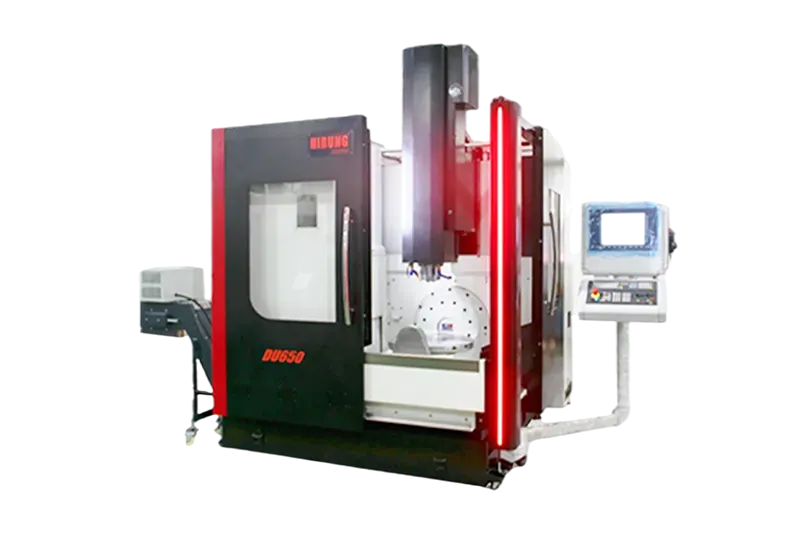
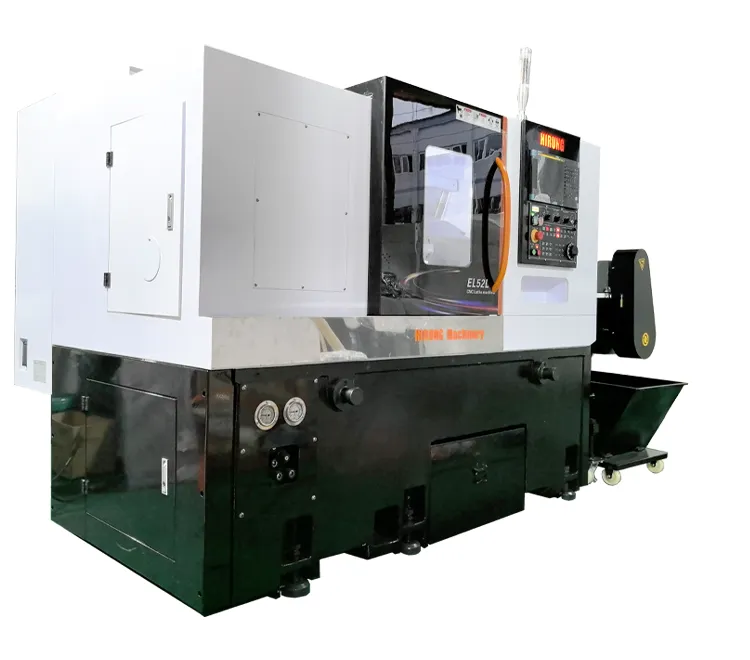
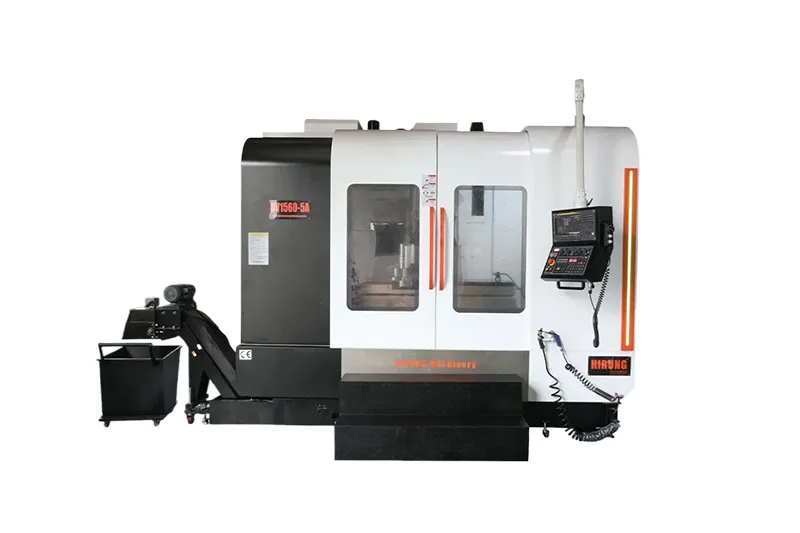
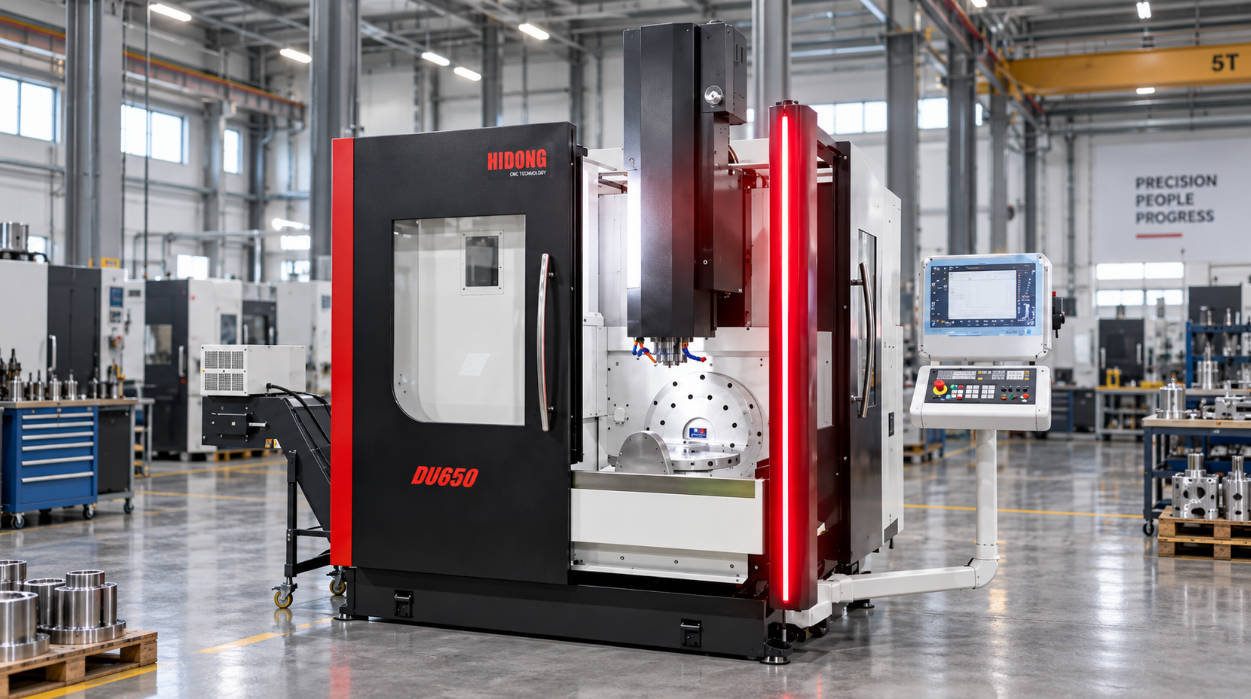
When machining large, heavy components where precision and rigidity are paramount, a double-column VMC (Vertical Machining Center) is the superior choice due to its inherently stable, closed-frame bridge design that minimizes deflection and vibration. For smaller to medium-sized parts, general-purpose applications, or when shop floor footprint and initial investment are primary constraints, a traditional single-column VMC offers a versatile and cost-effective solution. Understanding the fundamental structural differences and how they translate to performance is critical for making an informed investment that aligns with your specific manufacturing needs.
The decision between these two machine architectures is not merely about size; it’s a strategic choice that directly impacts part quality, cycle times, tool life, and ultimately, your profitability. Large component machining, prevalent in industries like aerospace, energy, and die/mold manufacturing, pushes the limits of machine tool capabilities. In this high-stakes environment, selecting the right machine frame is the foundation upon which all other machining parameters are built. This article provides an in-depth analysis of both machine types, exploring the core principles of rigidity and helping you determine the right configuration for your large-part machining challenges.

Table of Contents
- What is the Fundamental Difference? The Tale of Two Frames
- The Core Issue: Why is Rigidity the Deciding Factor in Large Machining?
- Head-to-Head Comparison: Single Column vs. Double Column VMC
- When Should You Choose a Double Column VMC?
- When is a Single Column VMC the Smarter Choice?
- Beyond the Frame: Other Critical Factors to Consider
- Conclusion: Making an Informed Investment in Rigidity and Capability
What is the Fundamental Difference? The Tale of Two Frames
At the heart of the debate lies a fundamental difference in structural design. The way the machine supports the spindle and resists cutting forces dictates its performance envelope, especially when dealing with the significant mass and cutting forces involved in large component machining. The choice between a single or double column frame is the most significant factor determining a VMC’s inherent rigidity.
The Single Column (C-Frame) VMC: The Versatile Workhorse
The vast majority of VMCs in the world are single-column, or “C-frame,” machines. As the name suggests, the machine’s structure—comprising the base, column, and headstock—forms a shape resembling the letter ‘C’. The worktable moves in the X and Y axes, while the spindle (Z-axis) moves up and down along the column. This design is popular for its simplicity, smaller footprint, and lower manufacturing cost.
However, the C-frame’s primary weakness is its open-front design. The unsupported distance from the column to the spindle is known as the “throat.” When heavy cutting forces are applied, especially at the farthest extension of the Y-axis, this open structure can act like a lever, leading to minute bending and twisting of the column. This phenomenon, known as frame deflection or “nodding,” can compromise dimensional accuracy and introduce vibration, particularly on larger parts that utilize the full work envelope.
The Double Column (Bridge-Style) VMC: The Rigidity Behemoth
A double-column VMC, also known as a bridge-style or gantry machine, features a “closed-frame” design. The machine has two large, parallel columns that support a cross-rail or bridge. The spindle travels along this bridge (X-axis) and moves up and down (Z-axis), while the entire table typically moves beneath it (Y-axis). This construction creates a fully supported, box-like structure that is inherently more rigid and stable.
By closing the frame, the double-column design effectively eliminates the “throat” and the associated leverage effect found in C-frame machines. Cutting forces are distributed symmetrically through the two columns and down into the machine base. This results in dramatically increased structural rigidity, superior vibration damping, and enhanced thermal stability. This robust framework is the key reason why double-column machines excel at machining large, heavy workpieces with exceptional precision.
The Core Issue: Why is Rigidity the Deciding Factor in Large Machining?
For small parts, the minor deflection of a C-frame machine might be negligible. But when machining a large aerospace structural component, a massive mold base, or a wind turbine gearbox housing, rigidity becomes the single most important machine characteristic. Lack of rigidity manifests in three critical ways: deflection, thermal instability, and vibration.
How Machine Deflection Destroys Accuracy
Machine deflection is the physical distortion of the machine’s frame under the stress of cutting forces. In a single-column VMC, heavy roughing cuts can cause the column to bend away from the workpiece by a few thousandths of an inch. While this sounds small, on a large part with tight tolerance features, this deflection leads directly to dimensional errors. A double-column machine’s bridge structure resists these forces far more effectively, ensuring the tool tip remains precisely where the CNC program commands it to be. This means better geometric accuracy (straightness, flatness, and squareness) over the entire large work surface.
The Overlooked Role of Thermal Stability
Large machining operations often involve long cycle times and significant heat generation from the spindle, motors, and the cutting process itself. This heat can cause a machine’s structure to expand and distort, a phenomenon known as thermal growth. The symmetrical, balanced design of a double-column machine helps it manage this heat more predictably. The thermal growth tends to be more uniform and primarily in the vertical direction, which can be more easily compensated for. In contrast, a C-frame’s asymmetrical heating can cause complex, non-linear distortion, making it much harder to maintain tolerance over long runs.
Vibration Damping for Superior Surface Finish
Vibration, or “chatter,” is the enemy of a good surface finish and extended tool life. It occurs when the cutting tool bounces against the workpiece due to a lack of system rigidity. The massive, closed-frame construction of a double-column VMC provides exceptional vibration damping. By absorbing and dissipating the energy from the cut, it allows for smoother, chatter-free machining. This translates directly into superior surface finishes that may reduce or eliminate the need for secondary finishing operations, and it significantly increases the life of expensive cutting tools.
Head-to-Head Comparison: Single Column vs. Double Column VMC
To simplify the decision, here is a direct comparison of the key attributes of each machine type when considered for large component machining.
| Attribute | Single Column (C-Frame) VMC | Double Column (Bridge-Style) VMC |
|---|---|---|
| Structural Rigidity | Moderate; prone to deflection (“nodding”) under heavy load due to open frame. | Excellent; closed-frame design provides superior resistance to cutting forces. |
| Workpiece Size/Weight | Best for small to medium parts. Large versions exist but have performance trade-offs. | Specifically designed for very large and heavy workpieces. |
| Accuracy & Tolerance | Good for general purposes. Accuracy can degrade at the extremes of the work envelope. | Exceptional; maintains high precision and tight tolerances across the entire large table. |
| Surface Finish | Good; susceptible to chatter during heavy cuts. | Superior; high vibration damping results in excellent finishes, even with aggressive cutting. |
| Cutting Capability (MRR) | Limited by frame rigidity. Heavy cuts can induce vibration and deflection. | High; enables aggressive roughing and high material removal rates (MRR) without sacrificing quality. |
| Shop Floor Footprint | Relatively compact and space-efficient for its work envelope. | Very large; requires significant floor space and often a specialized foundation. |
| Initial Investment (Cost) | Lower to moderate. Highly accessible for most shops. | Significantly higher; a major capital investment. |
When Should You Choose a Double Column VMC?
Investing in a double-column machining center is a strategic decision driven by specific application requirements. If your work involves any of the following scenarios, the higher cost is justified by the immense capability and quality improvements.
Scenario 1: Machining Heavy and Large Workpieces
This is the primary driver. If you are machining components like large mold and die bases, aerospace structural spars, oil & gas equipment, or machine frames, a double-column is essential. The table and foundation are designed to handle immense weight without distortion, and the bridge structure ensures the spindle remains perpendicular to the table across travels that can exceed several meters. A C-frame machine, even a large one, would struggle to maintain accuracy and stability with such workpieces.
Scenario 2: When High-Precision and Tight Tolerances are Non-Negotiable
Industries like aerospace and high-end mold making demand tolerances that are difficult to achieve on less rigid machines. For example, machining a large mold for an automotive dashboard requires near-perfect flatness and complex contours that must match precisely. The inherent rigidity of a double-column VMC minimizes deflection and thermal drift, ensuring that the finished part perfectly matches the CAD model. The stability allows for fine finishing passes that hold sub-thousandth-of-an-inch tolerances reliably.
Scenario 3: For Heavy-Duty Cutting and High Material Removal Rates (MRR)
Time is money, especially on large parts where cycle times can be measured in days, not hours. A double-column machine’s rigidity allows it to be paired with a high-torque, high-power spindle to perform extremely aggressive roughing operations. The ability to take deeper axial and radial cuts without inducing chatter not only shortens cycle times dramatically but also improves tool life. This high MRR capability is a key factor in the machine’s overall profitability and return on investment.
When is a Single Column VMC the Smarter Choice?
Despite the clear advantages of bridge-style machines for large parts, the C-frame VMC remains the backbone of the manufacturing industry for several compelling reasons. It is often the more practical and economically sound choice for a wide range of applications.
Application 1: General-Purpose Machining and Job Shops
For job shops that handle a wide variety of parts of different sizes and materials, the versatility and affordability of a single-column VMC are unmatched. Most jobs do not involve massive workpieces or require the extreme precision of a double-column machine. The C-frame VMC provides an excellent balance of capability, cost, and flexibility, making it the ideal choice for producing everything from small brackets and fixtures to medium-sized plates and housings.
Application 2: When Shop Floor Space is at a Premium
The physical footprint of a double-column machine is substantial. It requires not only a large area of floor space but also significant overhead clearance and often a deep, reinforced concrete foundation. For many shops, especially those in leased facilities or with crowded floors, this is simply not feasible. A single-column VMC offers a much more compact and space-efficient solution, allowing shops to maximize their production capacity within a limited area.
Application 3: Budgetary Constraints and Faster ROI
The financial barrier to entry for a double-column VMC is significant. The initial purchase price can be several times that of a high-quality single-column machine of a similar work envelope. For businesses without a consistent stream of large, high-precision work, justifying this capital expenditure can be impossible. The lower cost and wider applicability of a C-frame machine lead to a faster return on investment (ROI), making it a much safer and more accessible investment for most small to medium-sized enterprises.
Beyond the Frame: Other Critical Factors to Consider
While the frame is the most important factor for rigidity, a high-performance machine is a sum of its parts. When evaluating options for large component machining, consider these factors in conjunction with the frame type.
Spindle Power and Torque
A rigid frame is useless without a spindle capable of leveraging it. For large component machining, especially in hard metals, look for a spindle with high torque at low RPMs for roughing, and high horsepower at high RPMs for finishing. Gearbox-driven or built-in motor spindles are common on high-end machines.
Control System and Software Features
Modern CNC controls offer advanced features crucial for large, complex parts. Look for high-speed machining functions (look-ahead, smooth interpolation), advanced thermal compensation software, and robust tool-path verification to prevent costly crashes on irreplaceable workpieces.
Tool Changer and Automation Capabilities
Long cycle times on large parts make automation essential. A reliable, high-capacity automatic tool changer (ATC) is a must. For even greater efficiency, consider options for pallet changers or robotic integration, which are often more readily available and integrated on higher-end double-column platforms.
Conclusion: Making an Informed Investment in Rigidity and Capability
The choice between a single-column and a double-column VMC for large component machining is a classic case of “the right tool for the job.” It is not about one being definitively better than the other, but about which one aligns with your specific technical and business needs.
If your business revolves around the production of large, heavy, and high-value components where precision, surface finish, and cycle time are critical competitive factors, the investment in a double-column machining center is not a luxury—it is a necessity. Its superior rigidity provides a stable and reliable platform that translates directly into higher quality parts and greater productivity.
Conversely, if your work is more varied, with parts that are generally smaller and less demanding of ultimate precision, or if you are constrained by budget and floor space, the single-column VMC remains an incredibly capable and cost-effective workhorse. By carefully analyzing your current and future workpiece requirements, you can make a strategic investment that provides the right level of rigidity, capability, and value for years to come.
Anchor Text Suggestions
- What is the fundamental difference in VMC frames?
- Understanding the single column C-Frame VMC
- Exploring the double column bridge-style VMC
- Why rigidity is the most important factor in large machining
- How machine deflection affects part accuracy
- The role of thermal stability in precision machining
- How vibration damping improves surface finish
- Comparison table: Single vs. Double Column VMC
- When to choose a double column VMC
- Machining large and heavy workpieces
- Applications requiring high precision and tight tolerances
- Benefits of high material removal rates (MRR)
- When a single column VMC is the better choice
- VMCs for general-purpose job shops
- Considering shop floor space limitations
- Calculating ROI for CNC machine tools
- Other factors beyond the machine frame
- Choosing the right spindle power and torque
- Evaluating CNC control systems and software
- The importance of tool changers and automation
- Conclusion: Investing in the right CNC capability
Double Column VMC, Single Column VMC, Large Component Machining, CNC Machine Rigidity, C-Frame VMC, Bridge-Style VMC, Gantry VMC, Machine Deflection, CNC Accuracy, Vibration Damping CNC, High Material Removal Rate, Aerospace Machining, Mold and Die Machining, Double Column vs Single Column, VMC Comparison, Choosing a CNC Machine, CNC for heavy parts, Thermal Stability in Machining