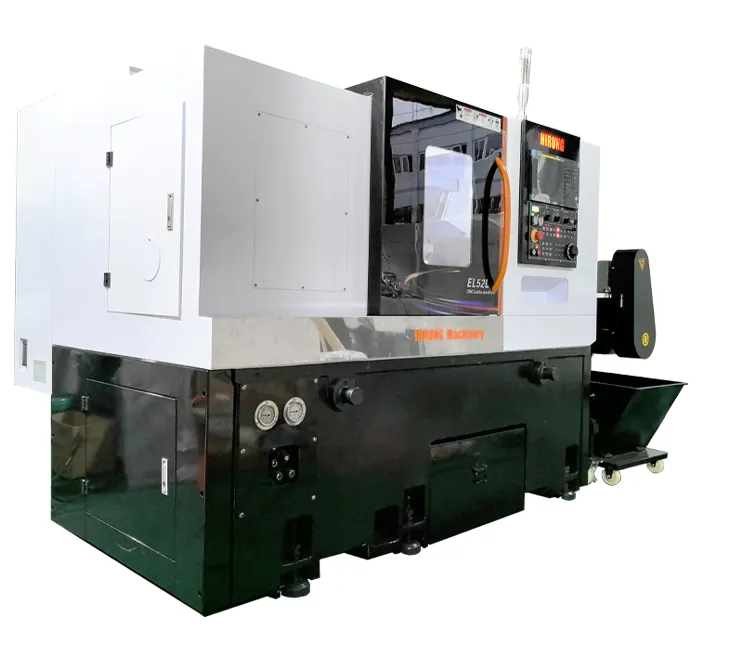
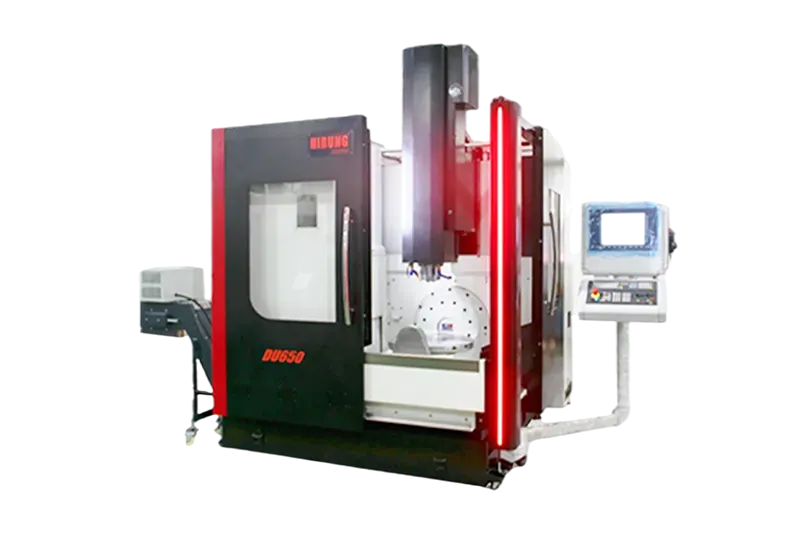
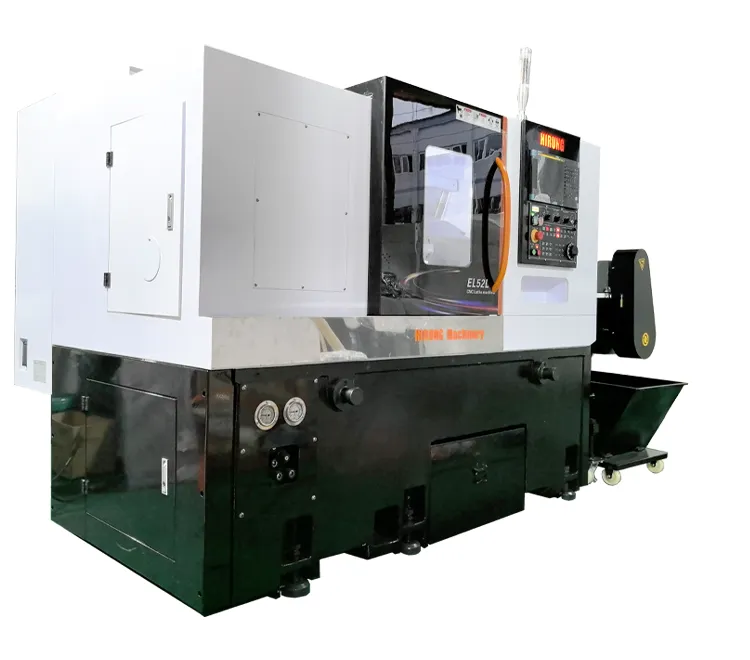
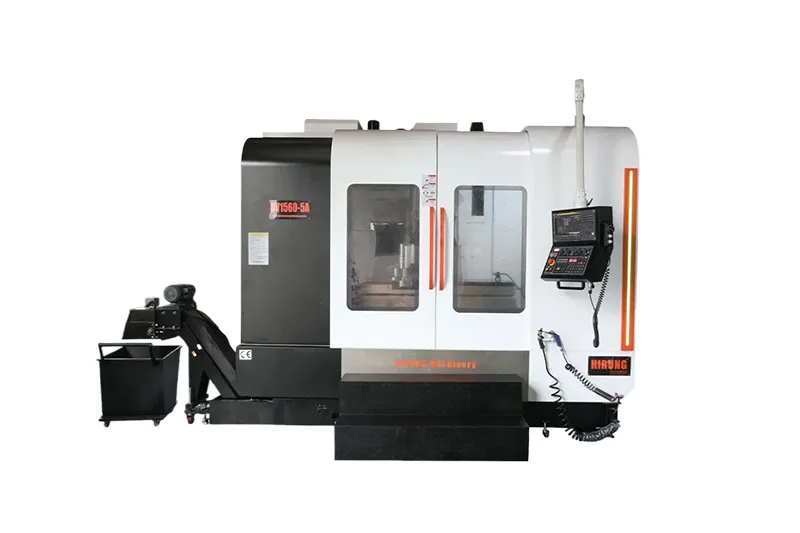
The future of CNC machining is being reshaped by the convergence of intelligent technologies, primarily driven by Artificial Intelligence (AI), the Internet of Things (IoT), and advanced automation. Key trends to watch include the rise of hybrid additive-subtractive manufacturing, the mainstream adoption of multi-axis machines for complex geometries, and a strong push towards sustainable, energy-efficient operations. This evolution is transforming traditional workshops into smart, data-driven ecosystems where machines can predict failures, optimize processes in real-time, and operate with minimal human intervention, fundamentally changing the landscape of modern manufacturing.

Table of Contents
- 1. The Intelligent Machine: AI and Machine Learning Integration
- 2. The Autonomous Factory: Advanced Automation and Robotics
- 3. The Connected Ecosystem: IoT and Industry 4.0
- 4. Beyond Subtractive: The Rise of Hybrid Manufacturing
- 5. Complexity as the New Standard: Advanced Multi-Axis Machining
- 6. The Digital Proving Ground: Simulation and Digital Twins
- 7. Green Manufacturing: Sustainability in CNC Machining
- 8. The Evolving Skillset: The Machinist of Tomorrow
- Conclusion: A Converged and Intelligent Future
1. The Intelligent Machine: AI and Machine Learning Integration
Perhaps the most transformative trend in the future of CNC machining is the deep integration of Artificial Intelligence (AI) and Machine Learning (ML). This isn’t science fiction; it’s happening now and is set to accelerate. AI is moving the CNC machine from a pre-programmed tool to a cognitive partner in the manufacturing process. Instead of simply following G-code, intelligent machines can now learn, adapt, and make decisions to improve efficiency, quality, and reliability.
Predictive Maintenance and Self-Correction
Historically, machine maintenance has been either reactive (fixing something after it breaks) or preventative (performing maintenance on a fixed schedule). AI introduces predictive maintenance, a far more intelligent approach. By embedding sensors that monitor temperature, vibration, acoustics, and power consumption, ML algorithms can analyze this data in real-time to detect subtle anomalies that precede a component failure. The system can then alert operators to a potential issue—such as a failing spindle bearing or a worn-out tool—before it causes catastrophic downtime. Some advanced systems are even capable of self-correction, automatically adjusting cutting parameters to compensate for tool wear, ensuring consistent part quality until the tool can be replaced.
Real-Time Process Optimization
How can a CNC machine achieve the perfect cut every time? AI provides the answer through real-time optimization. Algorithms can monitor the cutting process millisecond by millisecond, listening for tool chatter or sensing unexpected resistance. Based on this feedback, the machine can instantly adjust feed rates, spindle speeds, and cutting depths to maximize material removal rates without compromising surface finish or tool life. This dynamic adjustment leads to significantly shorter cycle times, reduced tool costs, and a higher degree of consistency across large production runs, moving beyond the static parameters set in the initial CAM program.
Generative Design and Advanced CAM
The influence of AI begins even before a chip is cut. Generative design software uses AI algorithms to explore thousands of potential design variations for a part, optimizing for specific criteria like weight, strength, and material usage. The resulting designs are often organic, lattice-like structures that are impossible for a human to conceive but are perfectly suited for manufacturing on advanced 5-axis CNC machines. This synergy between AI-driven design and advanced machining allows for the creation of lighter, stronger, and more efficient components, particularly in the aerospace, automotive, and medical industries.
2. The Autonomous Factory: Advanced Automation and Robotics
Automation in CNC machining is not new, but its next evolution focuses on creating flexible, autonomous systems that can operate with minimal human oversight. The goal is to increase throughput, improve consistency, and free up skilled human operators for more value-added tasks like programming, quality control, and process improvement.
The Rise of Collaborative Robots (Cobots)
Traditional industrial robots are powerful but require extensive safety caging, separating them from human workers. Collaborative robots, or cobots, are designed to work safely alongside humans. In a CNC environment, a cobot can be tasked with loading raw material into a machine and unloading finished parts, a repetitive and physically demanding job. This frees the machinist to supervise multiple machines, perform in-process inspections, or prepare the next job. Because they are easier to program and more flexible than their industrial counterparts, cobots are making automation accessible even to smaller job shops.
Towards “Lights-Out” Manufacturing
The ultimate vision of automation is “lights-out” manufacturing, where a facility can run 24/7 without a human presence on the shop floor. This is becoming increasingly viable thanks to the convergence of robotics, AI-powered monitoring, and automated quality control. A fully integrated system might involve robotic arms loading parts, CNC machines with self-correcting capabilities performing the work, and automated CMM (Coordinate Measuring Machine) systems inspecting the finished components. Any deviations trigger alerts for remote monitoring, ensuring the process remains stable and productive around the clock.
3. The Connected Ecosystem: IoT and Industry 4.0
The concept of Industry 4.0, or the fourth industrial revolution, is built on connectivity. CNC machines are no longer isolated islands of production but are becoming interconnected nodes in a larger digital ecosystem, communicating with other machines, software systems, and people.
What is the Role of IoT in CNC Machining?
The Internet of Things (IoT) is the network of sensors and data transmitters embedded within CNC machines. These sensors collect a massive amount of data on every aspect of the machine’s operation: cycle times, tool usage, machine status, error codes, and environmental conditions. This data is streamed to a central platform where it can be analyzed to provide a holistic view of the entire shop floor. Managers can track Overall Equipment Effectiveness (OEE), identify production bottlenecks, and make data-driven decisions to improve workflow and profitability.
Cloud-Based CNC and Remote Management
Connecting CNC machines to the cloud unlocks powerful new capabilities. It allows for the centralized storage and management of CAM programs, ensuring that every machine is running the latest, correct version. More importantly, it enables remote monitoring and diagnostics. A shop owner or production manager can check the status of every machine in their facility from a laptop or smartphone, no matter where they are. This is invaluable for managing multiple facilities or troubleshooting issues without needing to be physically present on the shop floor.
4. Beyond Subtractive: The Rise of Hybrid Manufacturing
For decades, manufacturing has been dominated by two distinct philosophies: subtractive (removing material, like CNC machining) and additive (adding material, like 3D printing). The future lies in merging them.
Combining Additive and Subtractive in One Machine
Hybrid manufacturing systems integrate both additive (often using Directed Energy Deposition or Powder Bed Fusion) and subtractive (milling, turning) capabilities into a single machine platform. A part can be built up layer-by-layer using 3D printing and then critical features can be precision-machined to achieve tight tolerances and fine surface finishes—all in a single setup. This process can be used to build complex internal features that would be impossible to machine traditionally or to repair high-value components by adding material to worn areas and then machining it back to its original specifications.
Benefits of Hybrid CNC Systems
The advantages of this approach are immense. It drastically reduces the number of setups and machine transfers, which in turn minimizes the potential for error and shortens lead times. It opens up new design possibilities for creating parts with optimized internal structures for strength or fluid flow. For repair applications, it is far more cost-effective than manufacturing a new part from scratch, particularly for expensive components in the aerospace or energy sectors.
| Aspect | Traditional CNC Machining | Future CNC Machining (Smart) |
|---|---|---|
| Operation | Relies on pre-programmed G-code; static parameters. | AI-driven; real-time optimization and self-correction. |
| Maintenance | Reactive or scheduled preventative maintenance. | Predictive maintenance based on real-time sensor data. |
| Connectivity | Often operates as a standalone unit. | Fully integrated into an IoT ecosystem (Industry 4.0). |
| Process | Strictly subtractive (material removal). | Hybrid capabilities (additive + subtractive). |
| Human Role | Machine operator and setup technician. | Process orchestrator, data analyst, system supervisor. |
5. Complexity as the New Standard: Advanced Multi-Axis Machining
While 3-axis CNC machines remain the workhorses of the industry, 5-axis and other multi-axis machines are becoming increasingly mainstream. These machines can move a part or the cutting tool along five or more axes simultaneously. This capability allows for the machining of highly complex geometries—such as turbine blades, impellers, or medical implants—in a single setup. By eliminating the need to re-fixture the part for different operations, 5-axis machining improves accuracy, reduces setup time, and enables the creation of parts that were previously impossible or prohibitively expensive to produce.
6. The Digital Proving Ground: Simulation and Digital Twins
Why risk a costly crash or a scrapped part on a real machine when you can perfect the process in a virtual environment? Advanced CAM software now includes highly realistic simulation capabilities that can verify the entire machining process, including toolpaths, tool changes, and machine kinematics. This prevents collisions and identifies potential issues before they reach the shop floor. The next step in this evolution is the Digital Twin—a dynamic, virtual replica of a physical CNC machine. The digital twin is fed real-time data from its physical counterpart, allowing it to mirror the machine’s exact state. This technology can be used to test new programs, optimize parameters in a risk-free environment, and even troubleshoot problems remotely by seeing a perfect virtual representation of what is happening on the real machine.
7. Green Manufacturing: Sustainability in CNC Machining
As environmental regulations become stricter and customers demand more sustainable practices, the CNC industry is responding. The trend towards “green manufacturing” focuses on several key areas. This includes developing more energy-efficient machines and spindles that consume less power during operation and standby modes. There is also a major push towards Minimum Quantity Lubrication (MQL) or even dry machining, which drastically reduces the consumption of petroleum-based coolants, lowering both costs and environmental impact. Furthermore, intelligent toolpaths generated by modern CAM software can reduce cutting forces, which not only extends tool life but also lowers energy consumption.
8. The Evolving Skillset: The Machinist of Tomorrow
One of the most critical aspects of the future of CNC machining is the human element. The role of the machinist is undergoing a profound transformation. The manual skills of turning dials and listening to the machine, while still valuable, are being augmented by a new set of digital skills. The machinist of tomorrow will be a hybrid technician, programmer, and data analyst. They will need to be comfortable working with robotics, interpreting data from IoT systems, and managing complex CAM software. Addressing this evolving skills gap through training and education will be paramount for any company looking to embrace these future trends.
Conclusion: A Converged and Intelligent Future
The future of CNC machining is not defined by a single technology but by the convergence of many. AI, automation, IoT, and hybrid manufacturing are not separate trends but interconnected pillars of a new manufacturing paradigm. This future is one of smart, autonomous, and connected systems that produce parts with unprecedented speed, precision, and efficiency. For businesses, embracing this technological shift is no longer an option but a necessity for staying competitive. The journey from a traditional machine shop to a smart factory is underway, heralding an exciting and transformative era for precision engineering.
Anchor Text Suggestions
- Article Outline / ToC Links: Use the headings in the Table of Contents as anchor text for internal page navigation.
- Internal Link (Services): “Explore our advanced 5-axis machining services” linked from the section on Multi-Axis Machining.
- Internal Link (Blog): “Read more about the benefits of generative design” linked from the AI section.
- Internal Link (Technology): “Discover our commitment to Industry 4.0” linked from the IoT section.
- External Link (Authoritative Source): “Learn more about the principles of Industry 4.0” linked to a reputable source like McKinsey or a major manufacturing association.
- Internal Link (Careers): “See our open positions for skilled machinists” linked from “The Machinist of Tomorrow” section.
Future of CNC machining, CNC machining trends, advancements in CNC technology, AI in CNC machining, Industry 4.0 manufacturing, lights-out CNC manufacturing, hybrid additive-subtractive manufacturing, 5-axis machining benefits, what is a digital twin in manufacturing, sustainable machining, collaborative robots in CNC, predictive maintenance CNC, smart factory, CAM software simulation, future of machinists