In the rapidly evolving landscape of precision manufacturing, the terminology can often feel like a moving target. If you are currently evaluating the leap to a 5-axis machining center, you have likely encountered terms like “multi-axis,” “3+2 positioning,” and “simultaneous 5-axis” used almost interchangeably.
However, when you are looking to invest hundreds of thousands of dollars into your shop’s future, “almost” isn’t good enough. You need to know exactly what you are buying and why it matters for your specific production goals. This guide is designed to peel back the marketing jargon and give you a sincere, technical look at the differences between 5-axis and multi-axis machining, helping you decide which path leads to the highest ROI for your business.
I. Introduction: Beyond the Buzzwords
The modern machine shop is under more pressure than ever. Parts are getting more complex, tolerances are tightening, and lead times are shrinking. To stay competitive, many shop owners realize that traditional 3-axis milling is no longer sufficient for high-end aerospace, medical, or automotive components.
As you begin your research into advanced equipment, the term “Multi-Axis” often appears as a catch-all. But here is the reality: while every 5-axis machine is a multi-axis machine, not every multi-axis machine is a 5-axis center. Understanding this distinction is the first step in ensuring you don’t over-invest in features you don’t need—or worse, under-invest and end up with a machine that can’t handle your most complex jobs.
II. Defining the Terms: Is There a Difference?
To clear the air, we must first establish a clear hierarchy of definitions. Multi-axis machining is a broad umbrella term that encompasses any CNC process utilizing more than the standard three linear axes (X, Y, and Z); this includes 4-axis, 5-axis, and even complex 6-axis or mill-turn configurations.
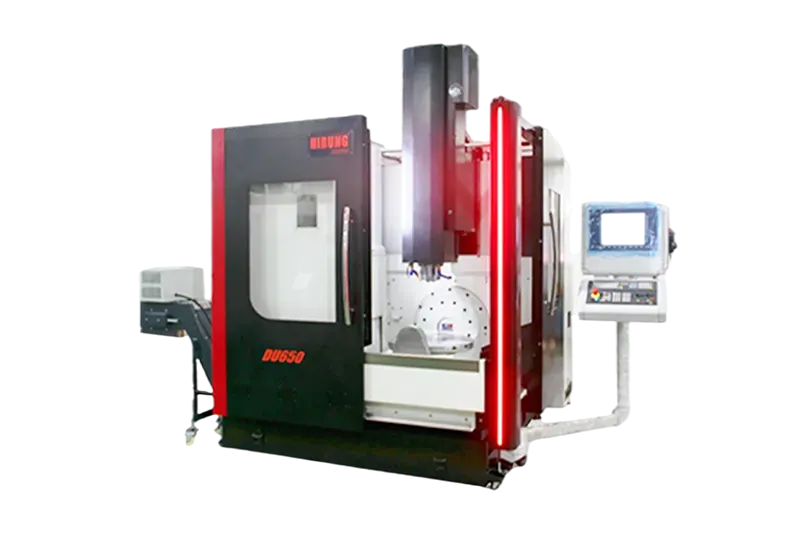
When we speak specifically about a 5-axis CNC machining center, we are referring to a machine that adds two rotational axes to the three linear ones. These are typically designated as the A, B, or C axes.
- Linear Axes: X (left/right), Y (front/back), Z (up/down).
- Rotational Axes: A (rotation around X), B (rotation around Y), and C (rotation around Z).
A 5-axis machine uses two of these rotational axes in combination with the three linear ones. The confusion arises because “multi-axis” is a category, while “5-axis” is a specific tool within that category. For a procurement officer or shop foreman, the goal is to identify if your parts require the specific kinematics of a 5-axis setup or if a simpler multi-axis solution (like a 4-axis rotary table) would suffice.
III. The Core of the Comparison: Simultaneous vs. Positional (3+2)
This is perhaps the most critical distinction for any potential buyer to understand. Not all “5-axis” work is created equal.
What is 3+2 Machining (Positional)?
Often referred to as “indexed” or “positional” 5-axis, this method uses the two rotational axes to orient the cutting tool or the workpiece into a fixed position. Once the part is tilted, the rotational axes are locked, and the actual cutting is performed by the X, Y, and Z axes.
3+2 machining, also known as positional 5-axis machining, involves locking the two rotational axes into a specific orientation while the X, Y, and Z axes perform the cutting, whereas simultaneous 5-axis machining allows all five axes to move in concert for complex, organic geometries.
What is Simultaneous 5-Axis Machining?
In “True” 5-axis machining, all five axes move at the same time during the cutting process. This is essential for parts with curved, organic surfaces that cannot be reached by a fixed tool. Think of an impeller blade; the tool must tilt and rotate continuously as it travels along the blade’s surface to maintain the correct angle.
Why the Distinction Matters for You
If your goal is to reduce the number of setups for a rectangular part with features on five sides, 3+2 machining is incredibly efficient. However, if you are carving aerospace turbine blades or complex medical implants, simultaneous 5-axis is non-negotiable.
IV. Why Users Seek 5-Axis Machining Centers (The Value Proposition)
Investing in a 5-axis center is a strategic pivot. It changes how you think about manufacturing. Here is why most of our partners make the switch:
1. The “Done-in-One” Philosophy
In a 3-axis environment, a complex part might require five or six different setups. Each time a human operator touches the part to move it to a new fixture, you introduce the risk of “stacking errors”—small deviations in alignment that ruin the part’s final tolerance.
The primary benefit of a 5-axis machining center is the “Done-in-One” capability, which reduces setups, minimizes human error during part transfers, and allows for the use of shorter, more rigid cutting tools for superior surface finishes.
2. Enhanced Precision and Tool Life
When you can tilt the part or the spindle, you can use shorter cutting tools. Why does this matter? Shorter tools are more rigid. They vibrate less, leading to:
- Significantly better surface finishes (reducing the need for hand-polishing).
- Higher cutting speeds and feeds.
- Longer tool life, which lowers your consumable costs over time.
Comparison Table: 3-Axis vs. 5-Axis Capabilities
| Feature | 3-Axis Machining | 5-Axis Machining |
| Setups Required | Multiple (often 4-6 for complex parts) | Single (“Done-in-One”) |
| Geometric Complexity | Limited to prismatic shapes | High (Organic, undercut, curved) |
| Tool Length | Long tools often needed for deep reaches | Short, rigid tools via tilting |
| Risk of Human Error | High (due to frequent re-fixturing) | Low (automated positioning) |
| Surface Finish | Average (stepped finish on curves) | Superior (smooth transition) |
V. Choosing the Right Configuration for Your Shop
Once you decide you need 5-axis capability, you face another choice: the machine’s architecture. The two most common designs are Trunnion-style and Swivel-Head machines. Choosing the wrong one can limit your part size or weight capacity.
Trunnion-Style Machines
In a trunnion machine, the table itself tilts and rotates (A and C axes). The spindle remains vertical or horizontal.
- Pros: Better for heavy torque, easier to reach underparts, large work envelope for smaller parts.
- Cons: The weight of the part is limited by the table’s motor capacity.
Swivel-Head (B-Axis) Machines
In this configuration, the spindle head tilts, and the table usually rotates (B and C axes).
- Pros: Ideal for very large, heavy parts (since the part doesn’t have to tilt).
- Cons: The tilting head can sometimes have interference issues in tight spaces compared to a trunnion.
Trunnion-style machines are ideal for heavy, bulky parts where the table rotates, while swivel-head (or B-axis) machines are better suited for large, long parts where the spindle itself tilts to provide the rotational movement.
Machine Architecture Comparison
| Machine Type | Best For… | Component that Moves | Weight Capacity |
| Trunnion | Small to Medium, high-precision parts | The Table (Tilts & Rotates) | Lower (limited by table) |
| Swivel-Head | Large, heavy, or long components | The Spindle (Tilts) | Very High (part stays flat) |
VI. Identifying Your Needs: When Should You Invest?
We often see shops rush into 5-axis because it “sounds like the future,” but an idle 5-axis machine is a liability. You should consider the investment when:
- Your Scrap Rate is High: If you are losing money because of alignment errors between setups, the 5-axis pays for itself in reduced waste.
- You are Quoting Complex Work: If you find yourself turning down aerospace or medical contracts because your 3-axis machines can’t handle the geometries, it’s time to upgrade.
- Labor Shortages: 5-axis machines allow one operator to produce a finished part in one cycle, whereas 3-axis machines require constant manual intervention to move parts from fixture to fixture.
VII. Conclusion: Making the Move to Multi-Axis
So, are 5-axis CNC and Multi-Axis the same? Technically, no. Multi-axis is the world you are entering, and 5-axis is the specific, high-performance vehicle that will take you there.
Choosing a 5-axis machining center is about more than just adding axes; it’s about adding capability, precision, and a massive competitive advantage. It requires a shift in mindset—from “how do I hold this part?” to “how can I machine this part in one go?”
If you are ready to explore how a 5-axis center can transform your production floor, the next step is a deep dive into your specific part geometries and a look at your current ROI. We are here to help you navigate those technical specifications with sincerity and expertise.