Choosing the right CNC lathe machine requires matching the machine’s turning diameter, machining length, spindle bore, spindle power, bed structure, turret type, control system, accuracy level, and automation options with the parts you need to produce. A suitable CNC lathe should handle your workpiece size, material, tolerance, production volume, and long-term machining requirements.
The right CNC lathe machine is not simply the largest or lowest-priced model. It is the machine that matches your part geometry, material, tolerance, cycle time, and production strategy.
For manufacturers producing shafts, flanges, bushings, sleeves, connectors, discs, rings, threaded parts, and other rotational metal components, a CNC lathe machine is one of the most important production assets. It can improve turning accuracy, reduce manual operation, support repeat production, and handle complex machining tasks with stable performance.
However, CNC lathe selection can be difficult because different models vary in bed structure, spindle bore, chuck size, guideway design, turret capacity, control system, and optional functions such as tailstock, hydraulic chuck, live tooling, or automatic bar feeding.
This CNC lathe machine buying guide explains how to choose the right model from a practical B2B purchasing perspective. It covers key specifications, machine types, selection factors, common mistakes, and supplier evaluation points before investment.
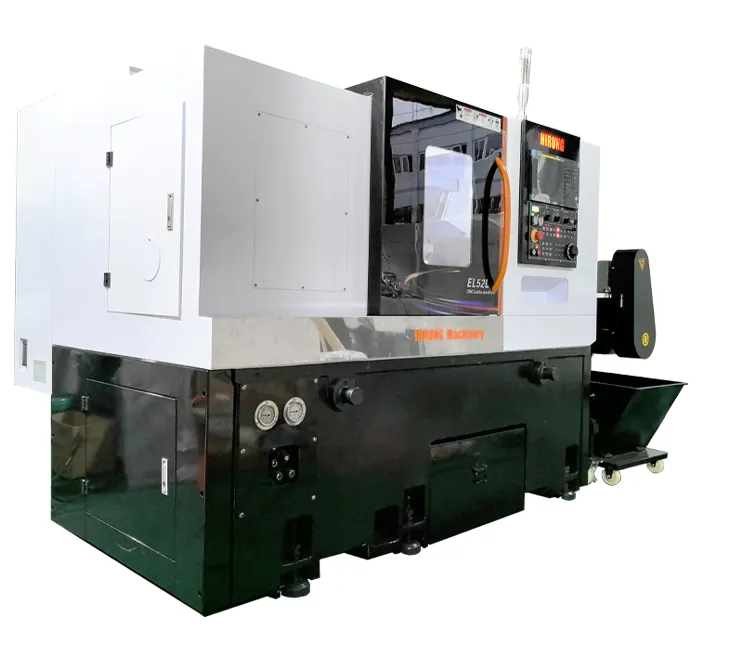
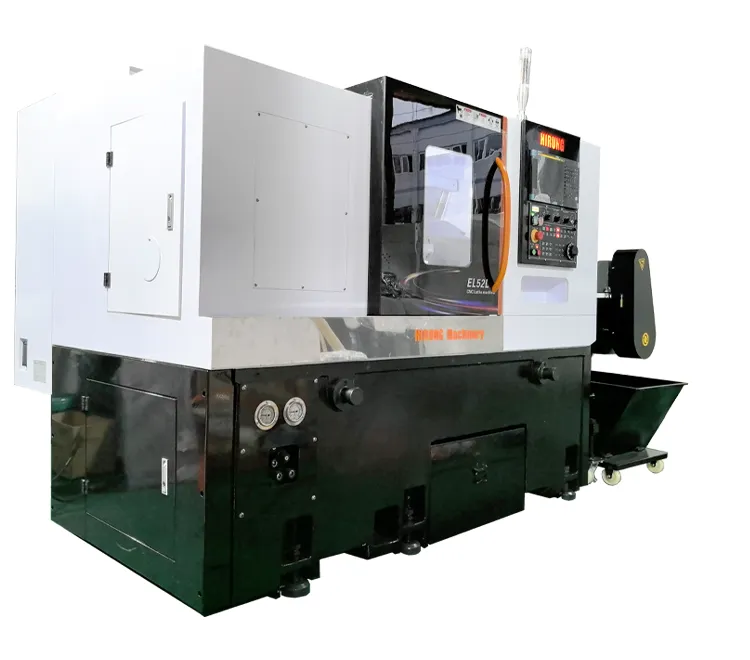
If you are comparing production-oriented CNC turning equipment, you can also review the CNC Lathe Machine EL Series as a reference for industrial turning applications.
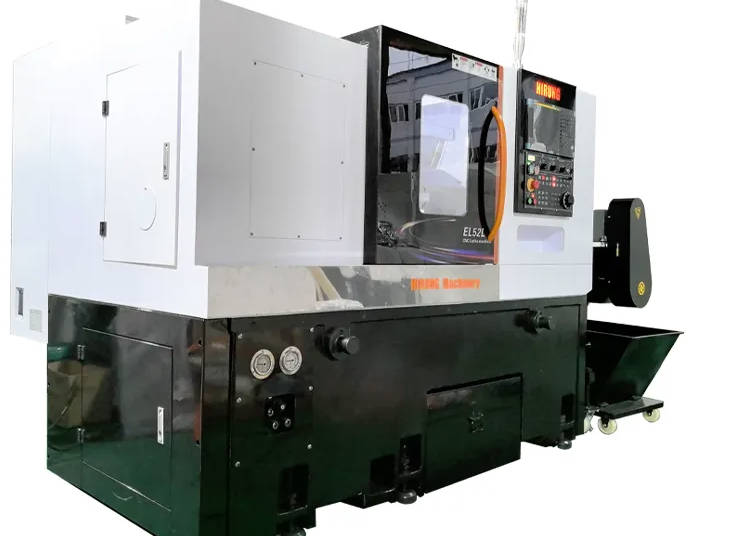
What Is a CNC Lathe Machine?
A CNC lathe machine is a computer-controlled turning machine used to remove material from a rotating workpiece. The workpiece is held by a chuck or fixture and rotates around the spindle, while cutting tools move along programmed paths to perform turning, facing, boring, threading, grooving, drilling, and other operations.
Compared with a conventional manual lathe, a CNC lathe provides better repeatability, higher automation, more consistent accuracy, and easier batch production. It is widely used in automotive, machinery, hydraulic, electrical, aerospace, mold, and general metalworking industries.
Common CNC lathe applications include:
| Application Area | Typical Parts |
|---|---|
| Automotive manufacturing | Shafts, hubs, bushings, sleeves, brake components |
| Machinery manufacturing | Flanges, rollers, threaded parts, coupling parts |
| Hydraulic and pneumatic industry | Valve bodies, piston rods, fittings, connectors |
| Electrical and electronics industry | Metal housings, connectors, precision sleeves |
| General metalworking | Rings, discs, pins, bushings, custom turned parts |
| Energy and industrial equipment | Pump parts, pipe fittings, rotating components |
A CNC lathe machine is most suitable for parts with rotational geometry that require turning, threading, boring, grooving, or end-face machining.
Why CNC Lathe Selection Matters for Manufacturers
For metal parts manufacturers, CNC lathe selection directly affects machining accuracy, productivity, part consistency, operator efficiency, tool life, and long-term operating cost. A machine that is too small may not handle your workpieces. A machine with insufficient spindle bore may limit bar material processing. A machine with weak rigidity may cause vibration, poor surface finish, or unstable dimensions.
Choosing the wrong CNC lathe can lead to several production problems:
| Wrong Selection Issue | Possible Result |
|---|---|
| Small turning diameter | Larger workpieces cannot be machined |
| Insufficient machining length | Long shafts or rods cannot be processed efficiently |
| Small spindle bore | Bar stock size is limited |
| Weak spindle power | Low cutting efficiency on steel or hard materials |
| Poor machine rigidity | Chatter, poor surface finish, unstable tolerance |
| Inadequate turret capacity | Frequent tool changes and lower productivity |
| Wrong bed structure | Reduced efficiency or poor heavy-cutting performance |
| Weak supplier support | Longer downtime and higher maintenance risk |
A CNC lathe is not only a machine purchase. It is a production decision. The right model should support current orders while also providing enough flexibility for future part types, materials, and production volume.
Step 1: Define the Parts You Need to Machine
Before comparing CNC lathe models, you should first define your workpieces. CNC lathe selection should begin with the part, not the machine catalog.
Key questions include:
- What is the maximum workpiece diameter?
- What is the maximum turning length?
- What materials will be machined most often?
- Are the parts made from bar stock, forged blanks, castings, or individual billets?
- Do the parts require external turning, internal boring, threading, grooving, drilling, or tapping?
- What tolerance and surface finish are required?
- Will the machine be used for prototypes, small batches, or repeat production?
- Do you need automatic loading, bar feeding, or robotic integration in the future?
A CNC lathe machine should be selected according to part diameter, part length, material, process flow, and production volume before considering price.
For example, shaft parts may require long machining length and tailstock support. Flange parts may require larger swing diameter and strong chuck clamping. Bar-fed production may require a suitable spindle bore and bar feeder compatibility. High-volume production may require faster turret indexing, reliable chip removal, and stable automatic clamping.
Step 2: Choose the Right CNC Lathe Type
There are different CNC lathe types for different applications. Understanding the main options can help buyers avoid selecting a machine that does not match their production needs.
| CNC Lathe Type | Main Features | Suitable Applications |
|---|---|---|
| Flat bed CNC lathe | Simple structure, good accessibility, often suitable for larger or heavier workpieces | General turning, repair work, heavy parts, long shafts |
| Slant bed CNC lathe | Better chip removal, compact structure, faster operation, commonly used for production | Batch production, precision turning, automated machining |
| CNC turning center | May include turret, live tooling, C-axis, sub-spindle, or automation options | Complex parts, multi-process turning and milling |
| Horizontal CNC lathe | Workpiece rotates horizontally, most common lathe configuration | General shaft, sleeve, disc, and flange machining |
| Vertical CNC lathe | Workpiece is mounted vertically, often used for large heavy discs or rings | Large diameter, heavy workpieces |
For most metal parts manufacturers, flat bed CNC lathes and slant bed CNC lathes are common choices. The decision depends on workpiece size, required productivity, rigidity, budget, and automation needs.
Flat Bed vs Slant Bed CNC Lathe: Which Should You Choose?
Flat bed and slant bed designs are among the most common choices in CNC lathe selection. Each has advantages depending on the production environment.
| Comparison Item | Flat Bed CNC Lathe | Slant Bed CNC Lathe |
|---|---|---|
| Structure | Horizontal bed structure | Inclined bed structure |
| Chip removal | May require more manual cleaning | Chips fall more easily into conveyor area |
| Operator access | Good access for setup and large workpieces | Good visibility and compact layout |
| Rigidity | Often suitable for heavy or long workpieces | Strong structure for production turning |
| Automation | Usually simpler | Commonly used with hydraulic chuck, turret, bar feeder |
| Production efficiency | Suitable for flexible or general turning | Better for repeat production and faster cycles |
| Typical use | Long shafts, large parts, general machining | Batch parts, precision turning, automated production |
A flat bed CNC lathe is often suitable for general turning and larger workpieces, while a slant bed CNC lathe is commonly preferred for repeat production, chip control, and higher machining efficiency.
The right choice depends on your part size, production frequency, loading method, and required level of automation.
Step 3: Check Swing Diameter and Maximum Turning Diameter
Swing diameter and maximum turning diameter are critical specifications. They determine whether the machine can physically handle your workpiece.
- Swing over bed refers to the maximum diameter that can rotate over the bed.
- Swing over carriage refers to the diameter that can rotate over the carriage.
- Maximum turning diameter refers to the practical diameter the machine can cut.
Buyers should pay attention to the maximum turning diameter rather than only the swing over bed. A workpiece may rotate inside the machine, but the tool path, turret position, chuck, and fixture may reduce the actual machinable diameter.
| Specification | Why It Matters | Buyer’s Evaluation Point |
|---|---|---|
| Swing over bed | Shows maximum clearance over the machine bed | Useful for understanding machine capacity |
| Swing over carriage | Shows clearance over the moving carriage | Important for larger diameters |
| Maximum turning diameter | Indicates actual machining capability | More practical than swing value alone |
| Chuck size | Affects clamping range and workpiece size | Must match part diameter and weight |
| Tool clearance | Prevents interference during machining | Important for complex tool paths |
If your production includes flanges, rings, or disc parts, maximum turning diameter and chuck size become especially important.
Step 4: Match Machining Length with Workpiece Requirements
Maximum turning length determines how long a workpiece can be machined. This is essential for shafts, rods, pins, rollers, and long cylindrical parts.
When evaluating machining length, consider:
- Finished part length
- Raw material length
- Chuck clamping allowance
- Tool approach and retract space
- Tailstock or steady rest requirements
- Possible future workpiece length
For long shaft machining, the machine should not only have enough travel but also provide stable support. Tailstock, steady rest, and proper clamping methods may be required to reduce deflection and vibration.
| Workpiece Type | Key Machine Requirement |
|---|---|
| Short bushings and sleeves | Moderate turning length, good spindle accuracy |
| Flanges and discs | Larger turning diameter, strong chuck clamping |
| Long shafts | Longer bed, tailstock, stable support |
| Heavy billets | Strong spindle, rigid bed, sufficient chuck capacity |
| Bar-fed parts | Suitable spindle bore and bar feeder compatibility |
Step 5: Evaluate Spindle Bore, Chuck Size, and Bar Capacity
Spindle bore is one of the most important specifications for buyers who process bar stock. It determines the maximum bar diameter that can pass through the spindle.
If the spindle bore is too small, you may need to cut materials into shorter blanks before machining, which can increase labor cost, setup time, and material handling.
| Specification | Meaning | Why It Matters |
|---|---|---|
| Spindle bore | Diameter through the spindle | Determines bar stock capacity |
| Chuck size | Diameter of the chuck | Affects clamping range and workpiece stability |
| Spindle nose type | Spindle interface standard | Affects chuck and fixture compatibility |
| Draw tube capacity | Related to hydraulic chuck/bar feeding | Important for automated production |
| Bar feeder compatibility | Whether bar feeding can be added | Useful for batch production |
For small turned parts made from bar stock, spindle bore and bar feeder compatibility are often more important than maximum swing diameter. For larger individual parts, chuck size, spindle power, and machine rigidity may matter more.
Step 6: Choose Suitable Spindle Power, Speed, and Torque
The spindle determines cutting capability, material compatibility, and machining efficiency. Different materials and part types require different spindle characteristics.
| Material / Application | Spindle Requirement | Reason |
|---|---|---|
| Aluminum and brass | Higher spindle speed | Supports faster cutting and smoother finish |
| Carbon steel | Balanced speed and torque | Handles general turning operations |
| Stainless steel | Stable torque and rigidity | Helps reduce cutting vibration and tool wear |
| Cast iron | Strong rigidity and chip control | Supports stable roughing and finishing |
| Large-diameter parts | Higher torque at lower speed | Improves heavy cutting capability |
| Small precision parts | Stable high-speed performance | Supports fine finishing and repeatability |
Spindle speed alone does not determine performance. A high-speed spindle may not be suitable for heavy steel cutting if torque is insufficient. A high-torque spindle may not be the right choice for small high-speed parts if the production requires short cycle times and fine finishing.
For CNC lathe selection, spindle bore, spindle torque, chuck size, and machine rigidity should be evaluated together rather than separately.
Step 7: Select the Right Turret and Tooling Configuration
The turret holds cutting tools and indexes them automatically during machining. Turret type and tool capacity affect cycle time, process flexibility, and production efficiency.
Common turret options include:
| Turret Configuration | Main Features | Suitable Applications |
|---|---|---|
| Gang tool system | Fast tool change, simple structure | Small parts, high-speed production |
| 4-station turret | Basic tool capacity | Simple turning processes |
| 8-station turret | More flexible for common parts | General metal parts production |
| 10/12-station turret | Higher tool capacity | Multi-process parts and batch production |
| Powered turret / live tooling | Supports milling, drilling, tapping on lathe | Complex turned-milled parts |
If the part requires multiple tools, such as roughing, finishing, grooving, threading, boring, drilling, and chamfering, a larger turret can reduce manual tool changes and improve efficiency.
For complex parts that need side drilling, milling flats, keyways, or off-center holes, live tooling or a turning center may be more suitable than a basic CNC lathe.
Step 8: Consider Tailstock, Steady Rest, and Support Options
Long or slender workpieces often require additional support during turning. Without proper support, the part may deflect, vibrate, or produce poor surface finish.
| Support Option | Function | Suitable Parts |
|---|---|---|
| Tailstock | Supports the far end of long workpieces | Shafts, rods, long pins |
| Hydraulic tailstock | Improves convenience and repeatability | Batch shaft production |
| Steady rest | Supports long or flexible parts at intermediate points | Long shafts, tubes, slender components |
| Follow rest | Supports workpiece near the cutting area | Slender turning applications |
If your production includes long shafts, rollers, or thin rods, do not evaluate the lathe by turning length alone. Support options are also critical for stable machining.
Step 9: Evaluate Bed Structure, Guideways, and Rigidity
Machine rigidity affects cutting stability, accuracy, surface finish, and tool life. A rigid CNC lathe can reduce vibration and maintain better dimensional consistency during both roughing and finishing.
Important rigidity factors include:
- Bed casting structure
- Guideway type
- Carriage design
- Spindle housing rigidity
- Turret clamping force
- Machine weight and balance
- Thermal stability
- Foundation and installation quality
Common guideway types include linear guideways and box guideways.
| Guideway Type | Advantages | Suitable Applications |
|---|---|---|
| Linear guideway | Fast movement, lower friction, good responsiveness | Precision parts, lighter cutting, faster cycles |
| Box guideway | Strong rigidity, better heavy cutting support | Steel parts, heavy turning, large workpieces |
| Hybrid structure | Balances speed and rigidity | Mixed production environments |
There is no single guideway design suitable for every factory. Buyers should select according to material, cutting depth, part weight, and required cycle time.
Step 10: Review the CNC Control System
The CNC control system affects programming, operation, training, troubleshooting, and integration with your workshop. For production environments, the control system should be reliable, operator-friendly, and compatible with your existing programming workflow.
When evaluating the control system, consider:
- Operator familiarity
- Programming convenience
- Support for turning cycles
- Compatibility with CAM software
- Tool offset and compensation functions
- Diagnostics and alarm display
- Data transfer and network options
- Local service and spare parts availability
If your operators already use a specific control system, choosing a familiar system may reduce training time and programming errors. For more complex parts, control functions such as threading cycles, canned cycles, macro programming, and live-tooling support may be important.
Step 11: Match the CNC Lathe to Production Volume
A CNC lathe used for occasional repair work has different requirements from a lathe used for daily batch production. Production volume affects the importance of automation, chip removal, hydraulic clamping, turret capacity, bar feeding, and machine durability.
| Production Type | Recommended Focus |
|---|---|
| Prototype or repair work | Flexibility, easy setup, accessible machine structure |
| Small batch production | Moderate automation, stable accuracy, quick setup |
| Medium batch production | Efficient turret, reliable clamping, good chip removal |
| High-volume bar parts | Spindle bore, bar feeder, fast cycles, automation support |
| Heavy-duty turning | Rigid bed, high torque, strong chuck and support options |
| Mixed production | Flexible tooling, suitable control system, broad capacity |
If you need continuous production, evaluate not only the machine itself but also the full machining process: loading, clamping, tooling, coolant, chip removal, inspection, and maintenance.
For buyers considering a machine for repeat turning production, the EL Series CNC lathe machine can be reviewed as a product reference for common industrial turning requirements.
Key CNC Lathe Machine Specifications to Compare
Before purchasing a CNC lathe, compare the following specifications carefully.
| Specification | Why It Matters | Buyer’s Evaluation Point |
|---|---|---|
| Maximum turning diameter | Determines part diameter capacity | Must fit current and future workpieces |
| Maximum turning length | Determines part length capacity | Important for shafts and rods |
| Swing over bed | Shows rotation clearance | Useful for large-diameter parts |
| Spindle bore | Determines bar stock capacity | Critical for bar-fed production |
| Chuck size | Affects clamping range | Must match workpiece diameter and weight |
| Spindle speed | Affects cutting efficiency | Match material and part size |
| Spindle torque | Affects heavy cutting | Important for steel and large parts |
| Turret stations | Determines tool capacity | Match process complexity |
| Bed type | Affects chip removal and rigidity | Choose flat bed or slant bed by application |
| Guideway type | Affects speed and heavy cutting | Match production style |
| Control system | Affects usability and programming | Check operator familiarity and service support |
| Tailstock option | Supports long workpieces | Important for shaft machining |
| Chip conveyor | Supports production stability | Useful for continuous machining |
| Supplier support | Affects downtime risk | Check training, service, and spare parts |
Common Mistakes When Buying a CNC Lathe Machine
Mistake 1: Choosing Only by Price
A low initial price may result in higher downtime, limited capacity, weak support, or lower production efficiency. Buyers should compare total production value instead of purchase price alone.
Mistake 2: Ignoring Spindle Bore
For bar stock production, spindle bore can determine whether the machine fits your material supply method. A small spindle bore may reduce efficiency and increase preparation work.
Mistake 3: Selecting the Wrong Bed Type
Flat bed and slant bed CNC lathes serve different production needs. Choosing the wrong structure may affect chip removal, loading convenience, and cycle time.
Mistake 4: Underestimating Tool Requirements
If your parts require many operations, a small turret may create bottlenecks. Tool capacity should match the actual process plan.
Mistake 5: Not Considering Long Workpiece Support
Long shafts and slender parts may require tailstock or steady rest support. Turning length alone does not guarantee stable machining.
Mistake 6: Overlooking After-sales Service
A CNC lathe is a long-term production machine. Installation, training, troubleshooting, spare parts, and technical support should be included in supplier evaluation.
How to Choose a Reliable CNC Lathe Machine Supplier
A reliable CNC lathe supplier should help you select the right machine based on your parts, not just provide a quotation. Before purchasing, provide the supplier with part drawings, material information, production volume, tolerance requirements, and any special process needs.
When evaluating a supplier, consider:
- Does the supplier understand turning applications?
- Can they recommend a suitable model based on your parts?
- Are machine specifications clearly explained?
- Can they discuss spindle, chuck, turret, bed, and control system options?
- Do they provide installation and operator training?
- Are spare parts and technical support available?
- Can they support future automation or production expansion?
- Do they provide practical communication during the selection process?
A good supplier should help identify whether you need a flat bed lathe, slant bed lathe, turning center, tailstock, larger spindle bore, live tooling, or automation support.
If you are sourcing a CNC lathe for metal parts production, you can compare your requirements with the CNC Lathe Machine EL Series to evaluate whether the machine structure and configuration fit your application.
Practical CNC Lathe Selection Checklist
Use this checklist before requesting a quote:
| Checklist Item | Confirmed? |
|---|---|
| Maximum workpiece diameter is defined | Yes / No |
| Maximum turning length is confirmed | Yes / No |
| Main materials are listed | Yes / No |
| Bar stock or individual blank processing is confirmed | Yes / No |
| Required spindle bore is calculated | Yes / No |
| Chuck size requirement is clear | Yes / No |
| Tolerance and surface finish requirements are defined | Yes / No |
| Tool quantity per part is estimated | Yes / No |
| Need for tailstock or steady rest is reviewed | Yes / No |
| Flat bed or slant bed requirement is considered | Yes / No |
| Control system preference is confirmed | Yes / No |
| Production volume is estimated | Yes / No |
| Automation or bar feeder needs are considered | Yes / No |
| Supplier service capability is reviewed | Yes / No |
This checklist can help buyers communicate more clearly with machine suppliers and avoid incomplete quotations.
FAQ
1. How do I choose the right CNC lathe machine?
To choose the right CNC lathe machine, define your workpiece diameter, turning length, material, tolerance, process requirements, and production volume. Then compare spindle bore, chuck size, bed type, turret capacity, control system, rigidity, and supplier support.
2. What is the most important specification in a CNC lathe machine buying guide?
The most important specifications usually include maximum turning diameter, maximum turning length, spindle bore, chuck size, spindle power, turret capacity, bed structure, guideway type, and CNC control system. The priority depends on your parts and production process.
3. Should I choose a flat bed or slant bed CNC lathe?
Choose a flat bed CNC lathe for general turning, larger workpieces, and flexible machining. Choose a slant bed CNC lathe for repeat production, better chip removal, faster operation, and improved automation compatibility in many applications.
4. What spindle bore do I need for a CNC lathe?
The required spindle bore depends on the maximum bar stock diameter you plan to process. If you use bar feeding, the spindle bore and draw tube capacity should match your raw material size and automation requirements.
5. Is a CNC lathe machine suitable for shaft parts?
Yes, a CNC lathe machine is widely used for shaft parts. For long shafts, you should consider maximum turning length, bed rigidity, tailstock support, steady rest options, spindle torque, and proper clamping methods.
6. What is the difference between a CNC lathe and a CNC turning center?
A CNC lathe mainly performs turning operations, while a CNC turning center may include additional functions such as live tooling, C-axis control, sub-spindle, automatic tool changing, or integrated milling and drilling capabilities.
7. How much does a CNC lathe machine cost?
The cost of a CNC lathe machine depends on machine size, bed structure, spindle bore, chuck size, turret configuration, control system, automation options, accuracy requirements, and supplier service. Buyers should evaluate total production value, not only initial price.
Conclusion
Choosing the right CNC lathe machine requires a clear understanding of your workpieces, materials, tolerance requirements, production volume, and long-term manufacturing goals. The right model should provide suitable turning diameter, machining length, spindle bore, chuck capacity, spindle performance, turret configuration, rigidity, and reliable service support.
For B2B manufacturers, a CNC lathe is not just a machine tool. It is a core production asset that affects efficiency, part quality, delivery stability, and operating cost. Before purchasing, define your parts, compare the key specifications, avoid common selection mistakes, and work with a supplier that understands real turning applications.
To evaluate a practical turning solution for your production needs, review the CNC Lathe Machine EL Series and compare its configuration with your workpiece size, material, and machining process.