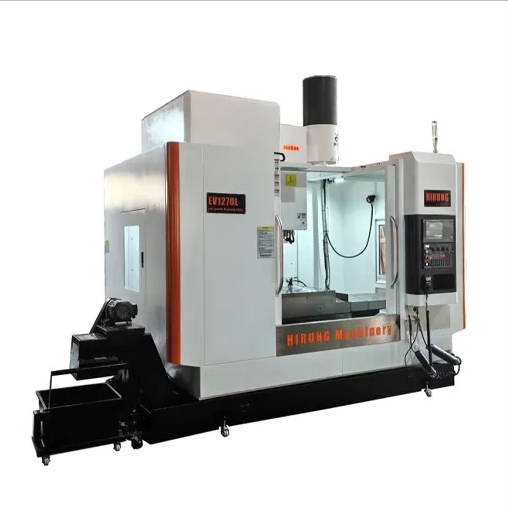
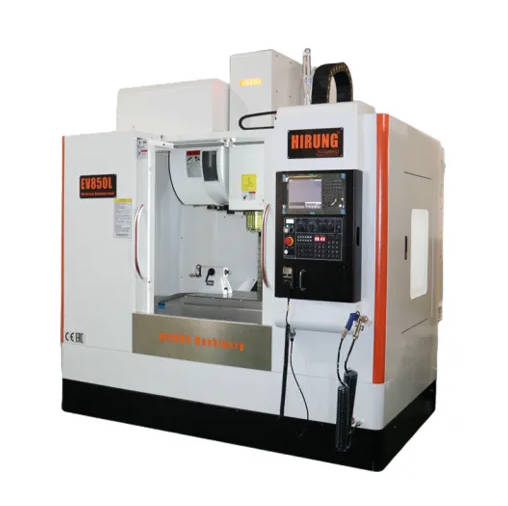
I. Introduction: The Strategic Choice of a VMC in 2026
As we move through 2026, the global manufacturing sector is facing a unique set of challenges: rising labor costs, a drive toward carbon neutrality, and an unprecedented need for “smart” integration. For any business looking to invest in a Vertical Machining Center (VMC), the decision-making process has evolved. It is no longer just about the iron and the motors; it is about how that machine fits into a specific business model.
The best Vertical CNC Machining Center for a small shop is defined by its versatility, ease of conversational programming, and compact footprint, whereas the best VMC for a large factory is defined by its Overall Equipment Effectiveness (OEE), 24/7 thermal stability, and seamless integration into automated pallet systems.
Choosing the wrong machine can be a multi-million dollar mistake. A small shop that buys a high-end, specialized high-speed production machine may find itself burdened by complex maintenance and software fees they don’t need. Conversely, a large factory that tries to scale using entry-level toolroom machines will likely suffer from inconsistent tolerances and frequent downtime. This guide breaks down the best options for both ends of the spectrum in the 2026 market.
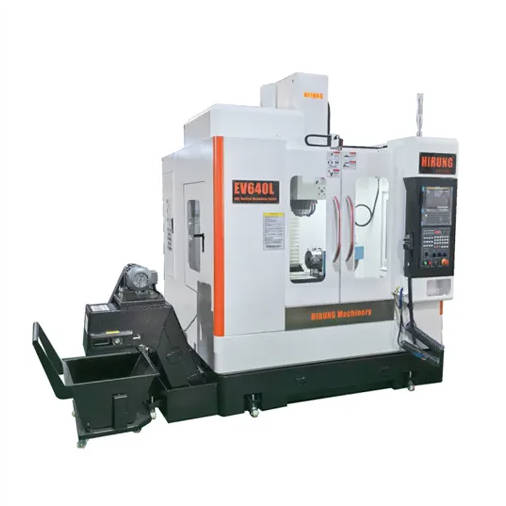
II. Defining the Needs: The Divergent Requirements
Before looking at specific models, we must understand the fundamental differences in operational goals between these two types of facilities.
1. Small Shops (Job Shops / Prototyping)
In a small shop environment, the “part of the day” could be anything from a custom automotive bracket to a medical device prototype.
- Versatility is King: The machine must be able to switch from milling aluminum to drilling stainless steel with minimal setup time.
- Ease of Use: Many small shops do not have a dedicated CAM department. Therefore, conversational programming—where the operator can program the part directly at the machine control—is a high-value feature for small shops in 2026.
- Power & Space: Small shops often operate in leased spaces with limited electrical “juice.” Machines that offer high performance on single-phase or low-amperage three-phase power are highly sought after.
2. Large Factories (Tier 1 & 2 Suppliers)
Large-scale manufacturing facilities operate on the principle of “Velocity.”
- OEE & Cycle Times: When producing 50,000 units, a 5-second reduction in tool-change time translates to thousands of dollars in added profit.
- Lights-Out Reliability: Large factories require machines that can run through the night without human intervention. This requires advanced chip management and high-pressure coolant systems.
- Digital Ecosystems: In 2026, a factory-grade VMC must “talk” to the MES (Manufacturing Execution System) and ERP (Enterprise Resource Planning) via 5G or MTConnect protocols to provide real-time data on spindle health and part counts.
III. Best VMCs for Small Shops: Versatility and Value
For the small shop owner in 2026, the goal is to maximize the “ROI per Square Foot.” Here are the top contenders:
1. Haas VF-2SS (Super Speed)
The Haas VF series remains the “gold standard” for American job shops. The 2026 iteration features a faster control processor and an improved AI-driven tool life management system.
- Why it wins: Massive community support, easy-to-find parts, and a control interface that is nearly universal in the industry.
2. Hurco VM Series
Hurco has long been the leader in conversational programming. Their 2026 “Max5” control allows an operator to take a 3D model and generate a toolpath in minutes without leaving the machine floor.
- Why it wins: It drastically reduces the “Time to First Part,” which is the most critical metric for a prototype shop.
3. Tormach 1100MX (The “Prosumer” Bridge)
For boutique shops or R&D labs, the Tormach 1100MX offers industrial features (like a BT30 spindle and servo motors) at a fraction of the cost.
- Why it wins: It allows shops to enter the CNC market with a low capital expenditure while still maintaining enough rigidity for professional-grade parts.
IV. Best VMCs for Large Factories: High-Volume Precision
When the goal is 24/7 production with micron-level tolerances, the following brands dominate the 2026 landscape:
1. Mazak VCN-700
Mazak’s “MAZATROL SmoothG” AI control is designed for massive data throughput. The VCN-700 is built with high-rigidity castings and integral spindles that minimize heat displacement during long runs.
- Why it wins: It is specifically designed for “Smooth” integration with Mazak’s Multi-Pallet Pool (MPP) systems.
2. Okuma GENOS M-Series
Okuma is unique because they build their own motors, drives, and controls (The OSP Control). This “Single Source” philosophy ensures that every component is perfectly tuned for the other.
- Why it wins: The Okuma Thermo-Friendly Concept is the industry’s most reliable solution for maintaining 24/7 precision, as it uses sensors to automatically compensate for the expansion and contraction of the machine frame due to ambient temperature changes.
3. Makino Slim3n
In the world of high-volume automotive and electronics, the Makino Slim3n is the master of “Floor Space Efficiency.” These machines are narrow, allowing factories to line them up side-by-side to maximize spindle density.
- Why it wins: Ultra-high-speed spindles and legendary reliability in high-pressure, high-debris environments.
V. Technical Comparison: Small Shop vs. Large Factory Specs
| Feature | Small Shop VMC (Typical) | Large Factory VMC (Typical) |
| Spindle RPM | 8,000 – 12,000 RPM | 15,000 – 30,000+ RPM |
| Tool Capacity | 20 – 30 Stations | 60 – 120+ Stations (via Chain) |
| Spindle Drive | Belt or Direct Drive | Built-in Motor (Chilled) |
| Chip Management | Standard Auger / Manual Clean | High-Volume Conveyors & Washdown |
| Connectivity | Standard Wi-Fi / USB | 5G, MTConnect, OPC UA |
| Automation | Cobot Ready (Optional) | Integrated Pallet Pool / Gantry |
VI. The 2026 Automation Bridge: Options for Every Budget
A significant trend in 2026 is that automation is no longer exclusive to giant factories.
- For Small Shops: The rise of Plug-and-Play Cobots. Companies like Universal Robots and Fanuc now offer kits that allow a small shop to automate the loading of a standard VMC in less than a day. This allows a single operator to manage multiple machines, effectively doubling the shop’s capacity without increasing headcount.
- For Large Factories: The focus is on Linear Pallet Systems (LPS). A single LPS can feed 10 or more VMCs, allowing for “Lights-Out” manufacturing where the factory runs completely unmanned for 16 hours a day.
VII. Solving Common Buyer Doubts (FAQ)
1. Is a used high-end machine better than a new mid-range machine?
In 2026, the answer is usually “New is better.” While a 10-year-old Makino is still a great piece of iron, it lacks the cybersecurity protocols and AI-driven energy-saving features required by modern supply chains. Old controls are also harder to connect to modern cloud-based monitoring software.
2. Should I jump straight to 5-axis?
If your parts require machining on 5 sides, a 3+2 VMC (which uses a 4th/5th axis trunnion) is often a better investment than a full simultaneous 5-axis machine for most shops. It offers the benefit of reduced setups without the extreme cost and programming complexity of full 5-axis motion.
3. How does the 2026 “Green Initiative” affect my choice?
Many governments now offer tax credits or subsidies for VMCs that utilize IE4/IE5 high-efficiency motors and regenerative braking systems. If you are a large factory, these energy savings can account for 15% of your machine’s operating cost over its lifetime.
4. What is the real difference in maintenance?
Small shop machines are often designed to be “user-serviceable,” with easy access to filters and belts. Large factory machines often require specialized factory technicians to calibrate linear motors or service complex built-in spindles.
VIII. Making the Decision: The ROI Matrix
To decide which VMC is right for you, use the following logic:
- Buy the Small Shop VMC if: Your average batch size is under 100 pieces, you have a wide variety of materials, and you need to be able to program at the machine.
- Buy the Large Factory VMC if: You are running the same part for months at a time, you have strict “Cost-per-Part” targets, and you plan to integrate the machine into a robotic cell.
The most successful manufacturers in 2026 are those who calculate ROI based on “Total Cost of Ownership” (TCO), which includes electricity, software subscriptions, and maintenance, rather than just the initial purchase price.
IX. Conclusion: Future-Proofing Your Shop
Whether you are a startup job shop or a global manufacturing powerhouse, the Vertical Machining Center remains the backbone of the production floor. In 2026, the “Best” machine is the one that minimizes your specific bottlenecks—whether that bottleneck is programming time (Small Shop) or spindle uptime (Large Factory).
As automation becomes more accessible, the lines between these two segments will continue to blur. However, the core principles of rigidity, precision, and support remain constant. Always prioritize a manufacturer with a strong local service presence to ensure your spindle never stays silent for long.