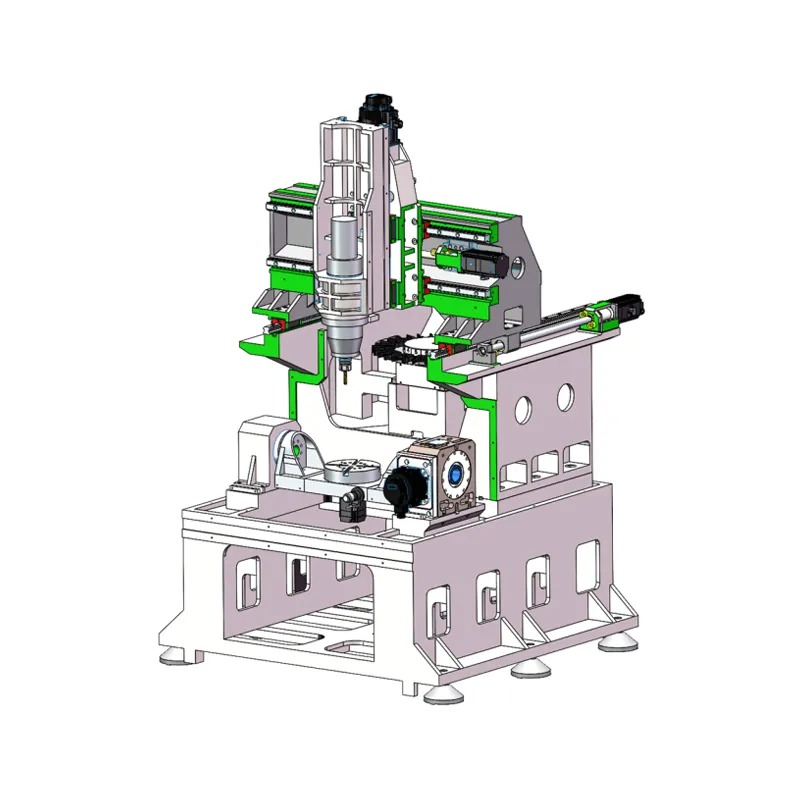
In the world of modern manufacturing, few technologies have been as transformative as Computer Numerical Control (CNC) milling. These powerful machines are the unsung heroes behind countless products we use daily, from the intricate components in your smartphone to critical parts in aerospace engineering. But how do they turn a solid block of metal into a finished part with microscopic accuracy?’
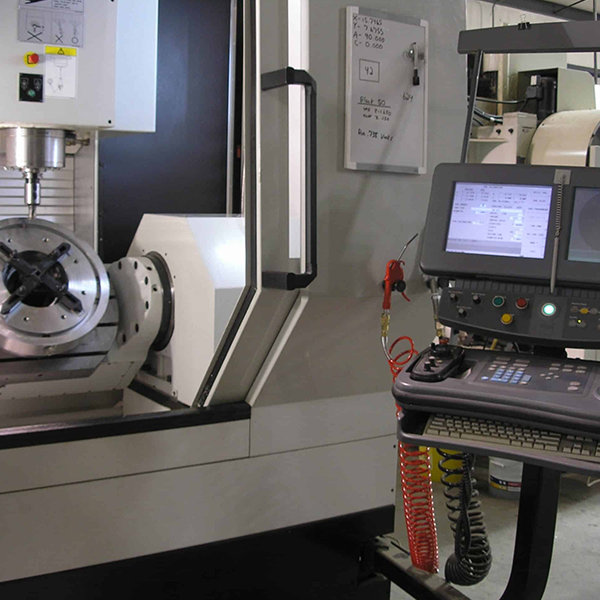
At Hirung, we don’t just build and sell these machines; we live and breathe the principles of high-precision manufacturing. As a leading brand in China’s CNC machine tool industry, we believe that understanding the core process is key to appreciating the power of quality engineering. Hirung will pull back the curtain and explain exactly how a CNC milling machine works, from digital design to physical creation.
What Exactly Defines a CNC Milling Machine?
At its heart, a CNC milling machine is a subtractive manufacturing tool. This means it creates a desired shape by systematically removing material from a solid workpiece. Think of it as an incredibly precise, automated sculptor. Unlike a manual milling machine that requires a human operator to constantly turn cranks and levers to guide the cutting tool, a CNC milling machine is directed by a computer.
The “CNC” stands for Computer Numerical Control. The computer reads a specific set of instructions, known as G-code, which dictates every movement, speed, and action the machine takes. This automation is what allows for the production of parts with a level of complexity, repeatability, and precision that is simply impossible to achieve by hand. It’s the bridge between a digital design file and a tangible, perfectly formed object.
Which Core Components Make CNC Milling Possible?
A CNC milling machine is a symphony of sophisticated components working in perfect harmony. While designs vary, every machine relies on a few fundamental parts to achieve its task. Understanding these components helps clarify how the entire system functions.
The Controller: The Brain of the Operation
The CNC controller is the central nervous system of the machine. It reads the G-code from the program file and translates these digital commands into electrical signals. These signals then activate the motors that drive the machine’s axes, control the spindle speed, and manage the coolant systems. The sophistication of the controller directly impacts the machine’s processing speed and ability to handle complex toolpaths.
The Spindle and Cutting Tool: The Muscle and the Teeth
The spindle is a high-speed rotating assembly that holds the cutting tool. Its power (torque) and rotational speed (RPM) are critical factors determining what materials can be cut and how quickly. The cutting tool itself, often an end mill, is the part that makes direct contact with the workpiece, shearing away material with its sharp flutes. The variety of cutting tools available is vast, each designed for specific materials and cutting operations (e.g., roughing, finishing, drilling, tapping).
The Worktable and Bed: The Foundation of Stability
The workpiece is securely clamped onto the worktable, or bed. The entire structure of the machine, from the bed to the column, forms its foundation. The mass and rigidity of this foundation are paramount. Any vibration or flex during the high-force milling process will compromise accuracy. This is why at Hirung, we construct our machines from high-rigidity Meehanite cast iron, ensuring maximum stability and vibration damping for superior surface finishes and dimensional precision.
The Axis System: The Nerves and Limbs
To move the cutting tool or the worktable, CNC mills use a multi-axis system. The most basic configuration is 3-axis (X, Y, and Z), allowing for movement left-to-right, front-to-back, and up-and-down. More advanced 4-axis and 5-axis machines introduce rotational axes (A and B), allowing the tool to approach the workpiece from virtually any angle. This system of high-precision ball screws and linear guideways, driven by servo motors, is what executes the controller’s commands with micron-level accuracy.
How Does the CNC Milling Process Unfold, Step-by-Step?
The journey from an idea to a finished part follows a clear and logical workflow. This process ensures that the final product perfectly matches the original design intent.
- Step 1: CAD Design (The Blueprint). The process begins in a digital environment with Computer-Aided Design (CAD) software. An engineer or designer creates a 2D or 3D model of the final part. This digital model contains all the geometric information needed for manufacturing.
- Step 2: CAM Programming (The Strategy). The CAD file is then imported into Computer-Aided Manufacturing (CAM) software. Here, a programmer defines the manufacturing strategy. This includes selecting the right cutting tools, setting cutting speeds and feed rates, and generating the toolpaths—the exact route the cutting tool will take to machine the part.
- Step 3: G-Code Generation (The Language). Once the strategy is set, the CAM software post-processes the toolpaths and generates the G-code. This is the alphanumeric language the CNC machine’s controller understands. Each line of code is a specific instruction, like `G01 X50 Y25 Z-2 F200;` which tells the machine to move to specific coordinates at a certain feed rate.
- Step 4: Machine Setup (The Preparation). A skilled operator prepares the CNC milling machine. This involves securely fixing the raw material (workpiece) to the machine’s table, loading the correct cutting tools into the tool magazine, and setting the “work offset” or “zero point” (the reference point from which all G-code coordinates are measured).
- Step 5: The Machining Cycle (The Execution). The operator loads the G-code program into the controller and initiates the cycle. The machine takes over, executing the code line by line. It automatically changes tools, activates coolant to lubricate and cool the cutting area, and meticulously moves the axes to carve the workpiece into the final part. The operator’s role shifts to monitoring the process, ensuring everything runs smoothly and safely.
What Kinds of CNC Milling Machines Exist?
CNC milling machines are not one-size-fits-all. They come in various configurations, each suited to different types of work. As manufacturers of a diverse range of machines, Hirung helps clients select the perfect solution for their needs. Here are the most common types:
| Machine Type | Description | Best For | Hirung Example |
|---|---|---|---|
| Vertical Machining Center (VMC) | The spindle is oriented vertically. The cutting tool points straight down, and the table moves in the X and Y axes while the spindle moves in the Z axis. | Flat parts, die/mold making, drilling, and most general-purpose 2.5D and 3D work. They are very common and versatile. | Our VMC Series, renowned for its high precision and efficiency. |
| Horizontal Machining Center (HMC) | The spindle is oriented horizontally. They often feature a rotating pallet system, allowing one part to be machined while another is being set up. | Cubic or blocky parts, production runs, and parts requiring machining on multiple sides. Gravity helps chips fall away, improving tool life. | Our HMC Series, designed for high-volume, high-rigidity production. |
| 5-Axis Machining Center | In addition to the three linear axes (X, Y, Z), it has two rotational axes (A and B or C). This allows the cutting tool to approach the workpiece from any direction. | Highly complex parts with curved surfaces and deep cavities, such as turbine blades, medical implants, and impellers. It enables “single setup” machining. | Our advanced 5-Axis Gantry Machining Centers. |
Why is CNC Milling a Game-Changer for Manufacturing?
The adoption of CNC milling technology provides profound advantages that have reshaped entire industries. The benefits go far beyond simply automating a manual process.
- Unmatched Precision & Repeatability: A CNC machine can execute the same program thousands of times, producing identical parts with tolerances measured in microns. This consistency is crucial for quality control and assembling complex products.
- Enhanced Complexity & Capability: 5-axis machines can create geometric forms that would be impossible to produce with traditional methods. This capability unlocks new design possibilities for engineers and designers.
- Increased Efficiency & Speed: With optimized toolpaths, automatic tool changers, and high-speed spindles, CNC machines dramatically reduce cycle times compared to manual work. They can run 24/7 with minimal supervision, maximizing productivity. This focus on efficiency and stability is a core principle behind every Hirung machine.
- Superior Safety: By enclosing the machining process and automating the dangerous work of material cutting, CNC machines significantly improve operator safety.
Choosing a Partner in Precision: The Hirung Advantage
Understanding how a CNC milling machine works is the first step. The next, and most crucial, is choosing a partner who can help you leverage that technology to its fullest potential. At Hirung, our commitment is built on three pillars: High Precision, High Rigidity, and High Stability.
Our deep R&D and manufacturing experience mean we don’t just sell you a machine; we provide a robust, reliable, and precise manufacturing solution tailored to your needs. From our versatile Vertical Machining Centers to our powerful 5-axis gantry systems, every machine we build is a testament to our dedication to quality. By understanding the intricate process of CNC milling, you can better appreciate the value of a well-engineered machine—and that is the foundation upon which Hirung is built.