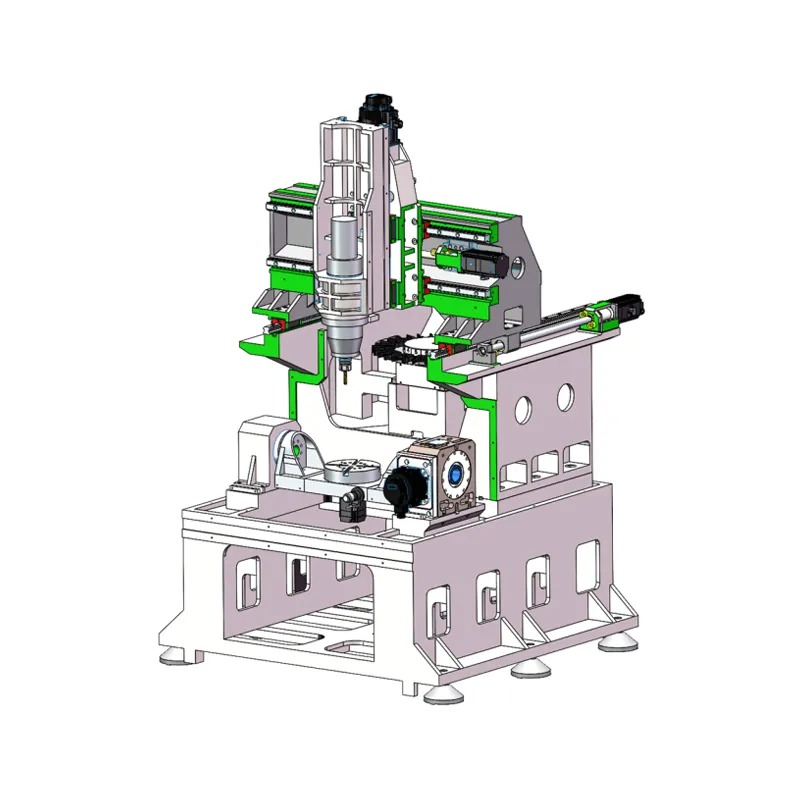
For any manufacturing business, from a startup workshop to a large-scale production facility, the decision to invest in a CNC milling machine is significant. One of the first and most crucial questions that arises is: “How much does a CNC milling machine cost?” The answer, however, is not a single number. The price is influenced by a vast array of factors, much like the cost of a vehicle can range from a budget-friendly sedan to a high-performance supercar.

As a dedicated manufacturer of high-precision CNC machinery at Hirung, we believe in empowering our clients with knowledge. This guide will demystify the pricing landscape, break down the key cost drivers, and help you understand the total investment required to bring the right CNC milling capabilities into your operation.
What Are the General Price Ranges for CNC Milling Machines?
To begin, it’s helpful to categorize CNC milling machines into broad tiers. This gives you a ballpark understanding of the investment levels associated with different capabilities. Keep in mind these are general estimates, and prices can vary significantly based on brand, features, and origin.
| Machine Tier | Estimated Price Range (USD) | Typical Use Case |
|---|---|---|
| Hobbyist / Desktop | $2,000 – $15,000 | Prototyping with soft materials (wood, plastic, aluminum), education, personal projects. Limited in power and rigidity. |
| Benchtop / Prosumer | $15,000 – $40,000 | Small job shops, advanced prototyping, R&D departments. Can handle a wider range of materials but may have limitations on production speed and volume. |
| Industrial / Production (VMC) | $40,000 – $300,000+ | Full-scale manufacturing, high-volume production, demanding materials (steel, titanium). These are the robust, high-precision machines that form the backbone of modern industry, such as the VMCs and 5-axis centers we build at Hirung. |
Which Core Factors Determine a CNC Mill’s Price Tag?
The final invoice for a CNC mill is a sum of its parts and capabilities. Understanding these individual components will help you evaluate quotes and determine which features are essential for your needs and which are optional upgrades. Here’s a breakdown of the most significant cost drivers.
How Does the Machine’s Type and Axis Configuration Influence Cost?
The fundamental design of the machine is the primary price determinant. The more complex the movement and the more axes it has, the higher the cost.
- 3-Axis Vertical Machining Centers (VMCs): These are the most common type of industrial mill. The spindle is vertically oriented and moves in the X, Y, and Z axes. They offer a fantastic balance of capability and cost for a wide range of parts.
- 4-Axis Mills: A 4-axis machine adds a rotary axis (A-axis) to a 3-axis VMC, allowing the workpiece to be rotated. This enables machining on multiple sides of a part in a single setup, increasing efficiency and reducing errors, but adding to the machine’s cost.
- 5-Axis Mills: These machines can move on three linear axes and two rotational axes simultaneously. They are essential for producing highly complex parts with intricate geometries, such as aerospace components or medical implants. The complexity of the kinematics, software, and controls makes them a premium investment.
Why Do Machine Size and Work Envelope Matter for Your Budget?
Simply put, larger machines cost more. The “size” of a CNC mill is defined by its travels (the maximum distance the cutting tool can move along the X, Y, and Z axes) and the size of the worktable. A machine with a larger work envelope requires a more massive and rigid frame, more powerful motors, and longer ball screws, all of which contribute to a higher price. It’s crucial to select a machine with a work envelope that can accommodate the largest parts you plan to produce, with a little room to spare for future growth.
What Is the Spindle’s Role in Determining Machine Value?
The spindle is the heart of the milling machine. Its specifications have a direct impact on performance and price.
- Spindle Speed (RPM): Higher-speed spindles (e.g., 12,000, 15,000, or even 20,000+ RPM) allow for faster cutting in softer materials and better surface finishes, but they cost more than standard 8,000 RPM spindles.
- Spindle Power (Horsepower): A more powerful spindle can handle heavier cuts and machine tougher materials like steel and titanium without stalling. Higher horsepower equals higher cost.
- Spindle Taper (BT, CAT, HSK): The taper type defines how tool holders are held in the spindle. High-speed and high-precision tapers like HSK are more expensive than the more common CAT or BT tapers but offer better rigidity and performance.
How Much Do CNC Controls and Software Add to the Price?
The CNC controller is the brain of the operation. Premium, well-known controllers from brands like Fanuc, Siemens, or Heidenhain add significant cost but offer unparalleled reliability, processing speed, and a wealth of advanced features. More economical machines might use proprietary control systems that are capable but may lack the advanced functionality or widespread support of the industry leaders. The investment in a high-end controller often pays for itself through ease of use, programming efficiency, and long-term reliability.
What About Options Like Tool Changers and Coolant Systems?
Optional features can significantly enhance a machine’s productivity and automation, but they also add to the initial price. An Automatic Tool Changer (ATC) is a critical feature for production environments. A machine with a 24-station side-mount tool changer will cost more than one with a 16-station “umbrella” style changer. Likewise, high-pressure through-spindle coolant systems, chip conveyors, and probing systems for in-process measurement are valuable additions that increase the upfront investment but can drastically reduce cycle times and improve part quality.
Does Higher Precision and Repeatability Justify a Higher Cost?
Absolutely. The cost of a machine is directly related to the precision of its construction. Achieving tight tolerances (high accuracy) and the ability to hit the same position every time (high repeatability) requires premium components like high-grade ball screws, linear guideways, robust castings, and sophisticated thermal compensation systems. For industries like aerospace, medical, and mold-making, this level of precision is non-negotiable and justifies the higher price tag.
Should You Invest in a New or a Used CNC Mill?
A used machine can offer a lower initial purchase price, making it an attractive option for businesses on a tight budget. However, this comes with risks: unknown history, potential for costly repairs, outdated technology, and the lack of a warranty or manufacturer support. A new machine from a reputable manufacturer like Hirung provides the latest technology, a full warranty, comprehensive training and support, and the peace of mind that comes with a reliable, peak-performance asset.
What Are the Total Costs of Ownership Beyond the Sticker Price?
The price on the quote is just the beginning. A smart investment considers the Total Cost of Ownership (TCO). Failing to budget for these additional expenses can be a costly mistake. At Hirung, we believe in transparency and encourage our clients to plan for the full scope of the investment.
| Additional Cost Category | Description | Estimated Cost Impact |
|---|---|---|
| Shipping & Rigging | Cost to transport the machine to your facility and hire professional riggers to move it into position. | $2,000 – $10,000+ depending on size and distance. |
| Installation & Training | Technician time to set up, level, and commission the machine, plus training for your operators. Hirung often includes this in our service package. | $1,000 – $5,000 if not included by the manufacturer. |
| Tooling & Workholding | You need tool holders, end mills, drills, vices, clamps, and fixtures to make parts. This is a significant and ongoing expense. | $5,000 – $20,000+ for an initial package. |
| CAM Software | Software to create the G-code toolpaths from your 3D models. | $3,000 – $15,000 per seat for professional software. |
| Maintenance & Consumables | Budget for routine maintenance, coolant, way oil, and replacement parts. | Variable; plan for 1-3% of machine cost annually. |
| Facility Upgrades | You may need a concrete pad, upgraded electrical service (3-phase power), or an air compressor. | Highly variable, from minor to significant expense. |
How Can You Find the Perfect Balance of Cost and Performance?
Choosing a CNC milling machine is not about finding the cheapest option; it’s about finding the best value. This is the core philosophy at Hirung. We focus on providing our clients with machines that deliver exceptional performance, unwavering reliability, and a low total cost of ownership over the long term.
Our approach is consultative. We don’t just sell you a machine; we partner with you to understand your applications, production goals, and budget constraints. Our range of high-performance Vertical Machining Centers and 5-Axis Machining Centers are built with high-quality components and strict quality control to ensure they deliver the precision and stability you need, year after year. By investing in a Hirung machine, you’re investing in productivity, efficiency, and the dedicated support of a team committed to your success.
Making a Smart Investment in Your Next CNC Milling Machine
The cost of a CNC milling machine is a complex equation with many variables. By breaking it down into its core components—machine type, size, spindle, controller, and features—and by planning for the total cost of ownership, you can move forward with confidence. The right machine is a powerful engine for growth, enabling you to produce higher quality parts, faster and more efficiently than ever before.
Ready to explore your options? Contact the Hirung team today for a no-obligation consultation. We’ll help you navigate the choices and provide a detailed quote tailored to your specific manufacturing needs.