Choosing the right CNC vertical machining center for metal parts production requires matching the machine’s travel size, table capacity, spindle performance, rigidity, tool magazine, control system, accuracy requirements, and production volume with the actual parts you need to machine. A suitable vertical machining center should not only fit your current workpieces but also support stable accuracy, efficient cycle times, and long-term production needs.
The right CNC vertical machining center is not simply the largest or most expensive model. It is the machine that matches your part size, material, tolerance, process flow, and expected production output.
For manufacturers producing aluminum parts, steel components, molds, fixtures, automotive parts, machinery parts, or precision metal components, a CNC vertical machining center is often one of the most practical and flexible machine tools. However, different models vary significantly in machine structure, spindle configuration, table size, cutting capability, and automation options.
This guide explains how to choose a CNC vertical machining center for metal parts production from an engineering and purchasing perspective. It will help you understand the key specifications, common selection mistakes, and supplier evaluation points before investing in a new machine.
If you are evaluating a production-ready VMC solution, you can also review the CNC Vertical Machining Center EV Series to understand typical machine configurations for industrial metal parts machining.
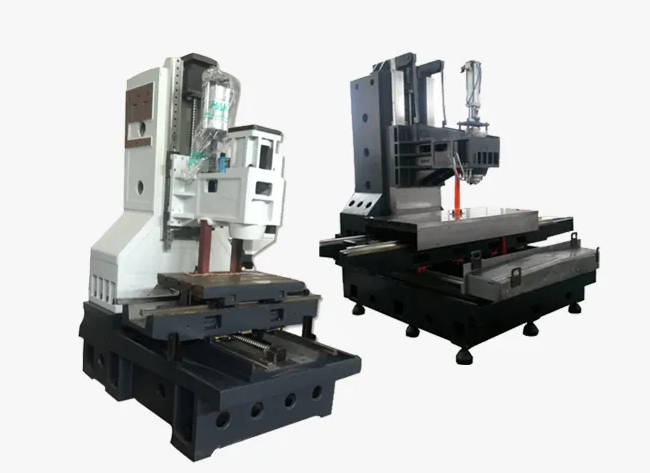
What Is a CNC Vertical Machining Center?
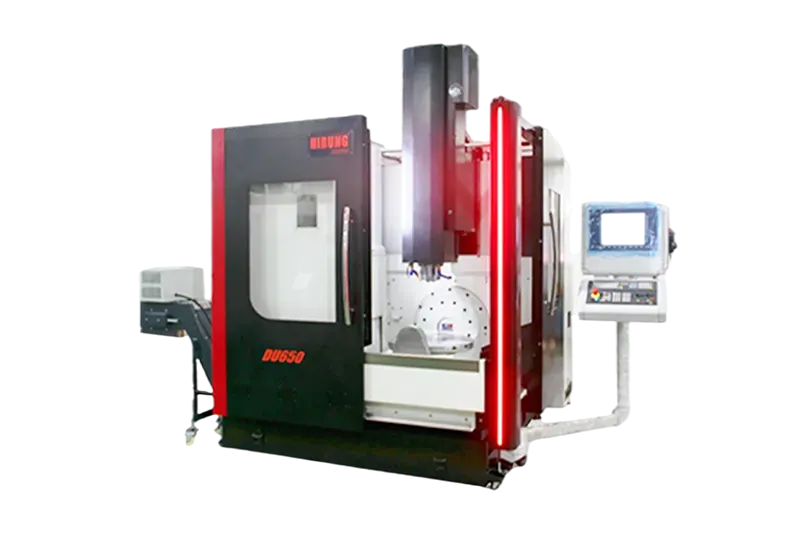
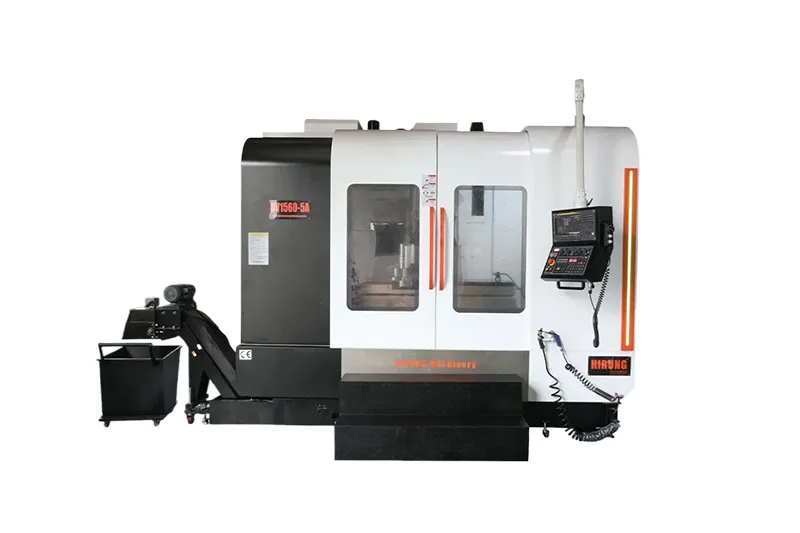
A CNC vertical machining center, often called a VMC, is a computer-controlled machine tool with a vertically oriented spindle. The cutting tool moves relative to the workpiece to perform milling, drilling, tapping, boring, contouring, slotting, and other machining operations.
In most vertical machining centers, the workpiece is fixed on the worktable while the spindle moves along the X, Y, and Z axes. This structure makes the machine suitable for a wide range of metal parts, especially components that require face milling, hole machining, pocket machining, and multi-process milling operations.
A CNC vertical machining center is commonly used for:
| Application Area | Typical Parts |
|---|---|
| Automotive manufacturing | Engine brackets, housings, covers, plates, transmission parts |
| Machinery manufacturing | Base plates, structural components, mounting blocks, fixtures |
| Mold and die production | Mold plates, inserts, cavities, core components |
| Electronics and electrical equipment | Aluminum housings, heat sink parts, precision plates |
| General metalworking | Flanges, blocks, brackets, custom metal components |
| Aerospace and precision industries | Lightweight aluminum parts, high-accuracy components |
A vertical machining center is most suitable when your parts require milling, drilling, tapping, and surface machining on relatively accessible workpiece surfaces.
Why Choosing the Right VMC Matters for Metal Parts Production
For metal parts manufacturers, the CNC vertical machining center directly affects machining accuracy, surface finish, productivity, delivery time, operating cost, and production stability. A machine that is too small may limit your workpiece size. A machine with insufficient rigidity may struggle with heavy cutting. A spindle that does not match your material may reduce efficiency or tool life.
Choosing the wrong machine can lead to several problems:
| Wrong Selection Issue | Possible Result |
|---|---|
| Insufficient travel size | Parts cannot be machined in one setup |
| Weak spindle power | Low cutting efficiency for steel or hard materials |
| Poor machine rigidity | Vibration, poor surface finish, unstable accuracy |
| Small tool magazine | Frequent manual tool changes and lower productivity |
| Inadequate table load | Safety risks or workpiece deformation issues |
| Low control system compatibility | Programming and operation difficulties |
| Lack of supplier support | Longer downtime and higher maintenance risk |
For B2B buyers, the purchasing decision should not focus only on the initial machine price. A CNC vertical machining center is a production asset. Its real value depends on machining stability, utilization rate, service life, and whether it can support your production orders over the long term.
Step 1: Define Your Metal Parts Before Choosing the Machine
Before comparing machine models, you should first analyze the parts you need to produce. This is the foundation of VMC selection.
Key questions include:
- What materials will you machine most often?
- What are the maximum part length, width, and height?
- What are the typical part weight and clamping method?
- What tolerances and surface finish requirements are needed?
- Do the parts require drilling, tapping, boring, contouring, or heavy milling?
- Will you produce prototypes, small batches, or repeat production orders?
- Do you need future capacity for larger or more complex parts?
A CNC vertical machining center should be selected according to the workpiece and process requirements first, not according to a catalog model alone.
For example, aluminum parts may require higher spindle speed and fast movement, while steel parts may require stronger rigidity, higher torque, and stable heavy cutting capability. Mold plates may require excellent accuracy and surface finish, while general machinery parts may prioritize table size, load capacity, and reliability.
Step 2: Match Machine Travel with Workpiece Size
Machine travel is one of the first specifications buyers check. It usually refers to the movement range of the X, Y, and Z axes. The travel size determines the maximum machining area of the machine.
However, you should not simply choose a machine whose travel is equal to your workpiece size. You need to consider clamping space, tool movement clearance, fixtures, rotary tables, and machining allowance.
| Specification | What It Means | Selection Advice |
|---|---|---|
| X-axis travel | Left-right movement range | Should cover workpiece length plus fixture clearance |
| Y-axis travel | Front-back movement range | Should cover workpiece width plus safe machining space |
| Z-axis travel | Vertical movement range | Must consider part height, tool length, holder, and fixture |
| Table size | Workpiece support area | Should be larger than the part and fixture footprint |
| Distance from spindle nose to table | Available vertical machining space | Important for tall parts and long tools |
For metal parts production, it is usually safer to leave reasonable extra travel instead of selecting a machine at the absolute limit of your largest part. If the machine is always working near its travel limit, setup flexibility and machining safety may be reduced.
Step 3: Evaluate Table Size and Load Capacity
The machine table must support the size and weight of your workpiece, fixture, vise, rotary table, or clamping system. If the table is too small, the part may not be clamped safely. If the load capacity is insufficient, accuracy and machine life may be affected.
For many production workshops, table capacity is especially important when machining steel parts, castings, molds, and large metal blocks.
When evaluating the table, consider:
- Maximum workpiece size
- Workpiece weight
- Fixture and clamping weight
- Number and spacing of T-slots
- Ease of loading and unloading
- Whether multiple parts can be machined in one setup
If you plan to use multi-part fixtures, the table must be large enough to hold several workpieces while still allowing tool access. This can improve productivity, especially for repeat production.
Step 4: Choose the Right Spindle Speed, Power, and Torque
The spindle is one of the most important components of a CNC vertical machining center. It directly affects cutting performance, surface finish, material compatibility, and machining efficiency.
Different metal materials require different spindle characteristics.
| Material / Application | Spindle Requirement | Reason |
|---|---|---|
| Aluminum parts | Higher spindle speed | Supports high-speed cutting and better surface finish |
| Steel parts | Higher torque and rigidity | Handles heavier cutting loads |
| Stainless steel | Stable torque and cooling support | Reduces tool wear and heat-related issues |
| Mold components | Smooth spindle performance | Improves surface finish and accuracy |
| General machinery parts | Balanced speed and power | Suitable for mixed production |
Spindle speed is important, but speed alone is not enough. A high-speed spindle with insufficient torque may not perform well in heavy steel cutting. Similarly, a strong low-speed spindle may not be ideal for high-speed aluminum finishing.
For metal parts production, the ideal spindle configuration depends on the material, cutting depth, tool diameter, and required surface finish.
When reviewing a vertical machining center for production, ask the supplier about spindle taper, spindle power, torque curve, maximum speed, cooling method, and suitability for your main materials.
Step 5: Check Machine Rigidity and Structural Design
Machine rigidity is critical for accuracy, surface finish, and tool life. A rigid machine structure helps reduce vibration during cutting, especially when machining steel, cast iron, molds, and thick metal parts.
Important rigidity factors include:
- Machine bed structure
- Column design
- Guideway type
- Casting quality
- Spindle head stability
- Axis drive system
- Thermal stability
- Overall machine weight and balance
For light aluminum parts, high speed and responsiveness may be more important. For heavy-duty steel machining, machine rigidity becomes a primary concern.
A rigid CNC vertical machining center can help improve cutting stability, reduce chatter, extend tool life, and maintain more consistent dimensional accuracy. This is why buyers should not evaluate a VMC only by travel size and price. Two machines with similar travel may perform very differently under real cutting conditions.
Step 6: Consider Accuracy, Repeatability, and Surface Finish
For precision metal parts, machine accuracy and repeatability are essential. Accuracy refers to how close the machined dimension is to the programmed value. Repeatability refers to the machine’s ability to return to the same position consistently.
Common accuracy-related factors include:
| Factor | Impact on Production |
|---|---|
| Linear guideways or box guideways | Affects motion stability and cutting capability |
| Ball screw quality | Influences positioning accuracy |
| Servo system | Affects response and contouring accuracy |
| Machine thermal control | Reduces dimensional changes during long production |
| Spindle runout | Affects hole accuracy and surface finish |
| Calibration and installation | Helps maintain long-term performance |
If your parts require tight tolerances, you should discuss actual machining requirements with the machine supplier instead of relying only on brochure specifications. The supplier should understand your material, part geometry, tolerance range, and inspection requirements.
Step 7: Select the Right Tool Magazine Capacity
The tool magazine determines how many tools the machine can hold automatically. For simple parts, a smaller tool magazine may be enough. For complex parts requiring many operations, a larger tool magazine can reduce manual intervention and improve productivity.
Typical operations may require tools for:
- Face milling
- End milling
- Drilling
- Chamfering
- Tapping
- Boring
- Finishing
- Roughing
- Thread milling
| Production Type | Tool Magazine Requirement |
|---|---|
| Simple drilling and milling | Smaller tool capacity may be sufficient |
| Multi-process metal parts | Medium tool magazine recommended |
| Mold and precision parts | More tools may be needed for roughing and finishing |
| Repeat batch production | Automatic tool change improves efficiency |
| Mixed-part production | Larger tool capacity improves flexibility |
A tool magazine is especially important if you want to reduce setup time and improve unattended or semi-automatic machining efficiency.
Step 8: Compare Guideway Types for Your Application
Guideway structure affects rigidity, speed, load capacity, and machining behavior. In many CNC vertical machining centers, linear guideways and box guideways are commonly used.
| Guideway Type | Advantages | Suitable Applications |
|---|---|---|
| Linear guideway | Fast movement, high responsiveness, lower friction | Aluminum parts, high-speed machining, general precision parts |
| Box guideway | Strong rigidity, good heavy cutting support | Steel parts, molds, heavy-duty machining |
| Hybrid design | Balances speed and rigidity | Mixed production environments |
There is no single guideway type suitable for every workshop. The right choice depends on whether your production prioritizes speed, heavy cutting, surface finish, or mixed material flexibility.
Step 9: Evaluate the Control System and Programming Compatibility
A CNC control system affects operation, programming, training, maintenance, and compatibility with your existing workflow. For production workshops, ease of use and reliability are important because operators and programmers interact with the control every day.
When evaluating the control system, consider:
- Operator familiarity
- Programming method
- CAM software compatibility
- Macro and cycle support
- Troubleshooting functions
- Network and data transfer options
- Local service availability
- Spare parts and technical support
If your workshop already uses a certain CNC control system, choosing a compatible or familiar system may reduce training time and programming errors.
Step 10: Consider Production Volume and Automation Needs
A CNC vertical machining center for occasional prototype work may have different requirements from a machine used for daily batch production. Production volume affects the importance of speed, tool capacity, chip removal, coolant system, automation compatibility, and machine durability.
| Production Situation | Recommended Focus |
|---|---|
| Prototype machining | Flexibility, programming convenience, moderate configuration |
| Small batch production | Setup efficiency, tool magazine, accuracy stability |
| Medium batch production | Cycle time, repeatability, chip removal, reliability |
| High-mix production | Flexible fixturing, control system, tool capacity |
| Long-term repeat orders | Machine durability, service support, process stability |
For production-oriented buyers, it is also useful to consider future expansion. If your order volume is growing, a slightly more capable machine may provide better long-term value than a minimum configuration machine.
For buyers comparing available VMC models, the EV Series CNC vertical machining center can be used as a reference point for evaluating machining capacity, structure, and production-focused configuration.
Key Specifications to Review Before Purchasing a CNC Vertical Machining Center
The following table summarizes major specifications buyers should compare before purchasing a CNC vertical machining center for metal parts production.
| Specification | Why It Matters | Buyer’s Evaluation Point |
|---|---|---|
| X/Y/Z travel | Determines machining range | Must fit workpiece, fixture, and tool clearance |
| Table size | Determines setup flexibility | Should support current and future part sizes |
| Table load | Affects safe machining | Must support workpiece and fixture weight |
| Spindle speed | Affects cutting efficiency | Match material and surface finish needs |
| Spindle power and torque | Affects heavy cutting capability | Important for steel and hard materials |
| Tool magazine capacity | Affects multi-process efficiency | Match number of tools per part |
| Guideway type | Affects speed and rigidity | Choose based on material and cutting load |
| Control system | Affects usability | Check programming and service compatibility |
| Coolant and chip removal | Affects production stability | Important for long cycle machining |
| Machine structure | Affects accuracy and vibration | Evaluate rigidity and long-term stability |
| Supplier support | Affects downtime risk | Check installation, training, and spare parts |
Common Mistakes When Choosing a CNC Vertical Machining Center
Many buyers focus too heavily on price or a single specification. This can lead to equipment that looks suitable on paper but performs poorly in real production.
Mistake 1: Choosing Only by Machine Travel
Large travel does not automatically mean better machining performance. Rigidity, spindle power, table load, and control system are equally important.
Mistake 2: Ignoring Material Type
A machine suitable for high-speed aluminum cutting may not be ideal for heavy steel machining. Always match the machine to your main material.
Mistake 3: Underestimating Fixture Space
Workpiece size is not the only space requirement. You also need space for fixtures, vises, clamps, rotary tables, and tool clearance.
Mistake 4: Buying the Lowest-Priced Machine Without Evaluating Support
A lower initial cost may lead to higher downtime, service delays, or maintenance costs if supplier support is weak.
Mistake 5: Not Considering Future Production Needs
If your parts may become larger, more complex, or higher in volume, choosing a machine with limited capacity may restrict future growth.
How to Choose a Reliable CNC Vertical Machining Center Supplier
A good supplier should do more than provide a quotation. They should help you evaluate the right machine according to your parts, material, accuracy needs, and production goals.
When selecting a supplier, consider:
- Does the supplier understand metal parts production?
- Can they recommend a machine based on your drawings or workpiece information?
- Do they provide clear technical specifications?
- Can they explain spindle, guideway, table, and control system options?
- Do they offer installation, training, and after-sales service?
- Are spare parts and technical support available?
- Can they support long-term production requirements?
Before making a final decision, prepare your part drawings, material information, tolerance requirements, expected production volume, and any special tooling or fixturing needs. This helps the supplier recommend a more suitable vertical machining center instead of giving only a general quotation.
If your project requires a production-focused vertical machining center, you can learn more about the CNC Vertical Machining Center EV Series for metal parts production and compare whether its configuration matches your machining requirements.
Practical Selection Checklist for Buyers
Use the following checklist before requesting a quotation:
| Checklist Item | Confirmed? |
|---|---|
| Maximum workpiece size is defined | Yes / No |
| Maximum workpiece and fixture weight is known | Yes / No |
| Main machining materials are confirmed | Yes / No |
| Required tolerances are clearly listed | Yes / No |
| Main machining processes are defined | Yes / No |
| Required spindle speed and torque are considered | Yes / No |
| Tool quantity per part is estimated | Yes / No |
| Fixture and clamping method are considered | Yes / No |
| Production volume is estimated | Yes / No |
| Control system preference is confirmed | Yes / No |
| Supplier service capability is reviewed | Yes / No |
| Future production expansion is considered | Yes / No |
This checklist can help you communicate more efficiently with suppliers and avoid selecting a machine that does not fit your actual production.
FAQ
1. How do I choose a CNC vertical machining center for metal parts production?
To choose a CNC vertical machining center for metal parts production, start by defining your part size, material, tolerance, machining process, fixture method, and production volume. Then compare machine travel, table load, spindle performance, rigidity, tool magazine capacity, and supplier support.
2. What size vertical machining center do I need?
The required VMC size depends on your maximum workpiece dimensions, fixture space, tool clearance, and Z-axis height requirements. It is usually better to choose a machine with reasonable extra travel instead of selecting one that only barely fits your largest part.
3. Is a CNC vertical machining center suitable for steel parts?
Yes, a CNC vertical machining center can machine steel parts if it has sufficient rigidity, spindle torque, stable guideways, proper cooling, and suitable tooling. For heavy steel cutting, machine structure and spindle performance are especially important.
4. What spindle speed is suitable for a CNC machine for metal parts?
The suitable spindle speed depends on the material and cutting process. Aluminum parts commonly benefit from higher spindle speeds, while steel and harder materials often require stronger torque and stable cutting performance rather than speed alone.
5. What is the difference between a vertical machining center and a CNC milling machine?
A vertical machining center is a CNC milling machine with an enclosed structure, automatic tool changer, CNC control system, and multi-process machining capability. It is generally more suitable for production machining than a basic manual or simple CNC milling machine.
6. What specifications should I check before buying a vertical machining center?
Important specifications include X/Y/Z travel, table size, table load, spindle speed, spindle power, spindle taper, tool magazine capacity, guideway type, control system, coolant system, chip removal design, machine rigidity, and service support.
7. How much does a CNC vertical machining center cost?
The cost of a CNC vertical machining center depends on machine size, spindle configuration, control system, accuracy level, guideway structure, tool magazine capacity, automation options, and supplier service. Buyers should evaluate total production value, not only the initial purchase price.
Conclusion
Choosing the right CNC vertical machining center for metal parts production requires a practical understanding of your workpieces, materials, tolerances, machining processes, and production goals. The most suitable machine is not always the largest or lowest-priced option. It is the machine that provides the right balance of travel size, rigidity, spindle performance, tool capacity, accuracy, reliability, and supplier support.
For manufacturers producing metal parts in automotive, machinery, mold, electronics, and general industrial applications, a well-selected VMC can improve machining efficiency, reduce setup time, and support stable long-term production.
To evaluate a suitable machine configuration for your workshop, explore the CNC Vertical Machining Center EV Series and compare its specifications with your part size, material, and production requirements.