In the world of modern manufacturing, few technologies are as fundamental and transformative as CNC milling. You encounter its results every day—from the intricate metal casing of your smartphone to critical components deep inside a jet engine. But what does “CNC milling machine” actually mean? As specialists in high-precision machine tools at Hirung, we believe understanding the core of this technology is the first step toward appreciating its immense power.
This article will serve as your comprehensive guide. We will deconstruct the term, explore the mechanics behind the magic, and reveal why this technology is the cornerstone of industries from aerospace to medical devices. We’re not just building machines; we’re enabling innovation, and it all starts with a clear understanding of the process.
Decoding ‘CNC’: What are the Brains Behind the Brawn?
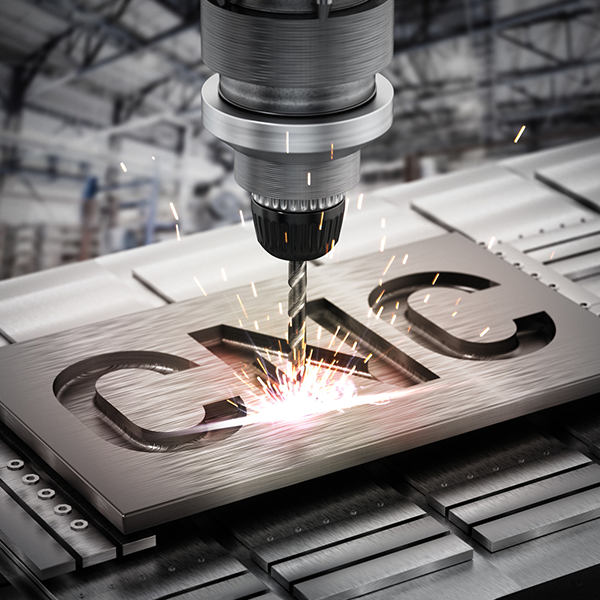
At its heart, a milling machine is a tool that uses a rotating cutter to remove material from a stationary workpiece. For centuries, this was a manual process, relying entirely on the skill and steady hand of a human operator. The revolution began with the acronym CNC, which stands for Computer Numerical Control. This is the “brain” that transforms a traditional mill into a powerhouse of precision and automation.
Think of CNC as the ultimate digital instruction-follower. Instead of a machinist turning cranks and levers, a computer controller reads a specially programmed digital file—often called G-code—which contains a series of commands. These commands dictate every conceivable aspect of the machine’s movement with superhuman accuracy: where the cutting tool should move, how fast it should spin, how quickly it should travel, and when to turn coolant on or off. This digital control eliminates human error, ensures every part is an identical copy of the last, and allows for the creation of geometries that would be impossible to achieve by hand.
What are the Core Components of a CNC Milling Machine?
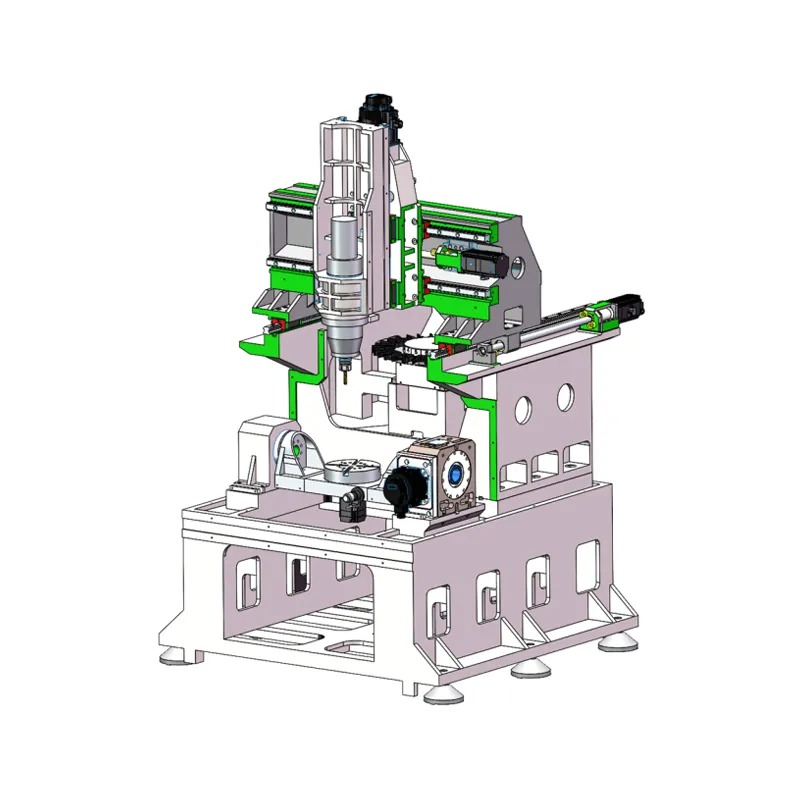
While designs vary, every CNC milling machine is built around a set of core components that work in harmony. The quality and rigidity of these parts are what separate a standard machine from a high-performance tool like those we build at Hirung. A robust construction ensures stability, dampens vibration, and directly translates to higher accuracy and better surface finishes on your final product.
| Component | Function and Importance |
|---|---|
| Machine Frame/Bed | The foundation of the machine, typically made of high-grade cast iron. Its mass and rigidity are crucial for absorbing vibrations and ensuring long-term accuracy. This is the bedrock of precision. |
| Spindle | The heart of the machine. It holds and rotates the cutting tool at high speeds. The power (torque) and speed (RPM) of the spindle determine what materials can be cut and how quickly. |
| Cutting Tool | The “teeth” of the machine. These come in countless shapes and sizes (e.g., end mills, face mills, drills) and are chosen based on the material and the specific operation being performed. |
| Worktable | The surface where the workpiece (the block of material to be machined) is securely clamped. It moves along the X and Y axes to position the material under the cutting tool. |
| Axis Drive System | A system of high-precision ball screws and linear guideways, driven by powerful servo motors. They execute the controller’s commands, moving the table and spindle along the X, Y, and Z axes with microscopic accuracy. |
| CNC Controller | The machine’s central nervous system. This computer interface is where the operator loads the program, sets up the job, and monitors the entire milling process. It interprets the G-code and sends precise electrical signals to the motors. |
How Does the CNC Milling Process Unfold from Concept to Creation?
The journey from a simple idea to a finished, physical part is a sophisticated digital workflow. This process ensures that the design intent is perfectly translated into a tangible object, a core principle we champion at Hirung. The process can be broken down into three main stages.
- CAD (Computer-Aided Design): It all begins with a digital blueprint. Engineers and designers use CAD software to create a 2D or 3D model of the final part. This model contains all the necessary geometric information and dimensions.
- CAM (Computer-Aided Manufacturing): The CAD model is then imported into CAM software. Here, a manufacturing engineer devises the machining strategy. They select the appropriate cutting tools, set the cutting speeds and feeds, and generate the toolpaths—the exact route the cutter will take to shape the part. The output of the CAM software is the crucial program known as G-code.
- Machining: The G-code is loaded into the CNC machine’s controller. An operator securely fastens the raw material (workpiece) onto the worktable and performs final checks. Once the cycle is started, the machine takes over, executing the G-code instructions flawlessly. It moves the tool and workpiece in perfect coordination, cutting away material layer by layer until the final, precise part is revealed.
Which Type of CNC Milling Machine is Right for Your Needs?
CNC milling machines are not one-size-fits-all. They are categorized primarily by the number of axes they can move on, which dictates the complexity of the parts they can produce. Choosing the right machine configuration is critical for balancing capability with cost-effectiveness.
| Machine Type | Description | Common Applications |
|---|---|---|
| 3-Axis CNC Mill | The most common type. The cutting tool moves in X (left-right), Y (forward-backward), and Z (up-down). Ideal for parts with features on a single plane. | Brackets, plates, machine components, enclosures, molds with no undercuts. |
| 4-Axis CNC Mill | Includes all the movements of a 3-axis machine, plus rotation around one axis (usually the A-axis). This allows for machining on the sides of a part without a new setup. | Cylindrical parts, parts with features on multiple sides, cam shafts. |
| 5-Axis CNC Mill | The pinnacle of milling technology. It moves along X, Y, and Z, plus rotates on two additional axes (e.g., A and C axes). This allows the tool to approach the workpiece from any direction. | Highly complex aerospace components, medical implants, turbine blades, intricate molds. |
What Kinds of Materials Can a CNC Mill Shape?
The versatility of CNC milling is also reflected in the vast range of materials it can handle. The key is to match the right machine, tooling, and cutting parameters to the specific material’s properties. A rigid and powerful machine, a hallmark of Hirung’s design philosophy, can effectively machine even the toughest alloys.
- Metals: Aluminum, steel, stainless steel, titanium, brass, copper, and exotic superalloys.
- Plastics: ABS, Polycarbonate, Nylon, PEEK, Acrylic (PMMA).
- Wood: Hardwoods, softwoods, plywood, and MDF.
- Composites: Carbon fiber, fiberglass.
Why is CNC Milling a Game-Changer for Modern Industry?
The widespread adoption of CNC milling isn’t accidental; it’s driven by a set of undeniable advantages that directly impact quality, speed, and cost.
- Unmatched Precision and Accuracy: CNC machines can achieve tolerances measured in microns (thousandths of a millimeter). This level of precision is non-negotiable in high-tech industries.
- Exceptional Repeatability: Once a program is perfected, a CNC mill can produce thousands of parts that are virtually identical. This consistency is impossible to achieve manually and is crucial for mass production and quality control.
- Complexity is Standard: The technology excels at creating complex curves, intricate pockets, and organic shapes that would be prohibitively difficult or time-consuming to make otherwise.
- Increased Productivity: By automating the machining process, CNC mills can run with minimal supervision, often 24/7. This drastically reduces cycle times and increases throughput compared to manual methods.
Where are CNC Milling Machines Used in the Real World?
The precision and versatility of CNC milling make it an indispensable tool across a spectrum of industries. It is the silent workhorse behind many of the products and technologies that define our modern world.
- Aerospace: For manufacturing everything from structural airframe components and landing gear to complex turbine blades that must withstand extreme conditions.
- Automotive: In the creation of engine blocks, transmission components, suspension parts, and the molds used for plastic interior parts.
- Medical: For producing custom surgical implants (like knee or hip replacements), precision medical instruments, and components for diagnostic equipment.
- Electronics: To machine heat sinks, custom enclosures, and prototypes for new devices.
- Energy: For components used in oil and gas exploration, power generation turbines, and renewable energy systems.
Your Partner in Precision: How to Select the Right CNC Machine Manufacturer
Understanding what a CNC milling machine means is the first step. The next is realizing that the machine itself is only as good as the company that builds and supports it. When you invest in a CNC machine, you are investing in a long-term manufacturing capability. Key factors to consider include the machine’s rigidity and build quality, the reliability of its components, the level of technical support and after-sales service, and the manufacturer’s commitment to innovation.
At Hirung, we build our machines to be the reliable, high-precision foundation of your operations. We understand that your success depends on our machine’s performance. By focusing on robust engineering, quality components, and a customer-centric approach, we provide not just a machine, but a complete manufacturing solution. Ready to explore how high-precision CNC milling can transform your operations? Our team of experts is here to guide you toward the perfect solution for your needs.