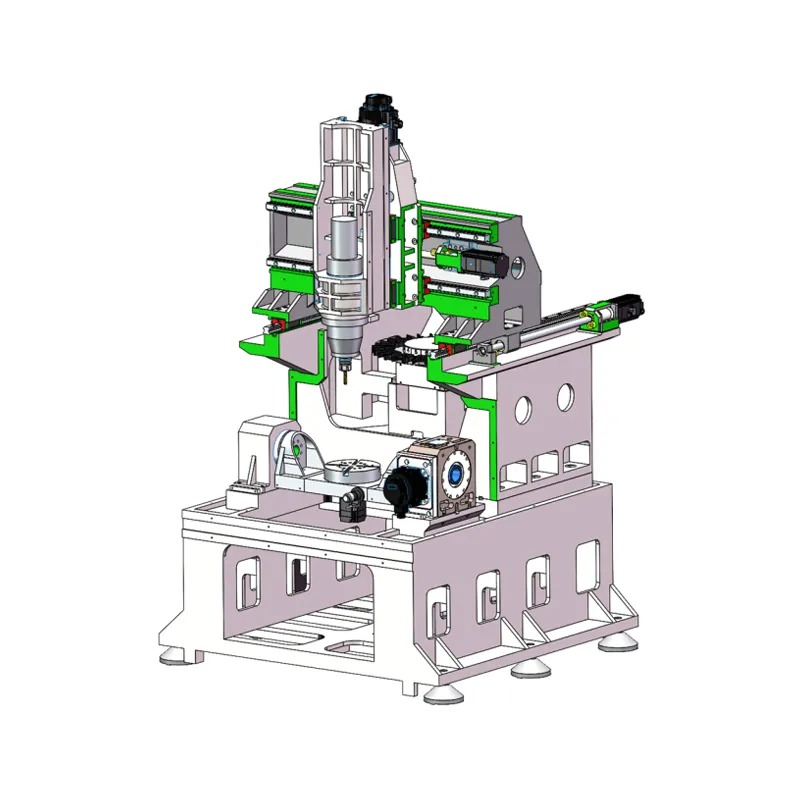
When working with advanced manufacturing equipment, safety is not merely a guideline; it’s a critical imperative. CNC (Computer Numerical Control) machines, while highly automated, pose significant hazards if not operated with extreme caution and adherence to strict protocols. Ensuring safety in CNC machinery operations revolves around consistently following six crucial rules: understanding the machine and its controls, wearing appropriate Personal Protective Equipment (PPE), maintaining a clean and organized workspace, adhering to lockout/tagout procedures, practicing safe programming and setup, and never bypassing safety interlocks. These rules form the bedrock of a secure machining environment, protecting both personnel and equipment. This article will delve into each of these fundamental safety rules, explaining their importance and providing practical guidance for maintaining a safe CNC machining environment.
Why is CNC Machinery Safety So Critical?
CNC machinery safety is critically important because these powerful, high-speed machines operate with immense forces, sharp cutting tools, and rapidly moving components, posing significant risks of severe injury, equipment damage, and production loss if safety protocols are neglected. Automated operations do not eliminate hazards; rather, they introduce new risks related to programming errors, unexpected movements, and human interaction with automated systems.
The inherent dangers of CNC machines include:
- Rotating Spindles and Cutting Tools: Can cause entanglement, lacerations, or even amputations.
- Rapidly Moving Axes: Present pinch points and impact hazards.
- High-Pressure Coolant and Chips: Can cause eye injuries, burns, or skin irritation.
- Noise: Prolonged exposure can lead to hearing damage.
- Electrical Hazards: Shock or fire risks from internal components.
- Machine Malfunctions: Unforeseen errors in programming or mechanical failures can lead to dangerous situations.
Therefore, strict adherence to safety rules is not just about compliance, but about protecting lives, preserving expensive machinery, and maintaining a productive and incident-free manufacturing environment.

Rule 1: Understand Your Machine and Its Controls
Understanding your CNC machine and its controls is the foundational safety rule, as it ensures operators can predict machine behavior, effectively operate emergency stops, and confidently navigate all functions to prevent accidents and respond correctly to unexpected events. Comprehensive knowledge of the machine’s capabilities, limitations, and control panel functions is paramount.
Operators must be thoroughly trained on the specific model of CNC machine they are using. This includes:
- Machine Manuals: Always read and understand the manufacturer’s operational and safety manuals. These documents contain critical information specific to the machine’s design and functions.
- Control Panel Familiarity: Know the location and function of every button, switch, and indicator on the control panel, especially:
- Emergency Stop (E-Stop): Immediate and unequivocal knowledge of how and when to activate it. E-stops are designed to cut all power to machine movements and are the last line of defense in many emergencies.
- Feed Hold, Spindle Stop, and Cycle Start/Stop: Understanding their immediate effects on machine operation.
- Machine Modes: Be familiar with different operational modes (e.g., Manual, Jog, MDI, Auto/Run) and the specific safety precautions associated with each.
- Axis Movements and Limits: Understand how each axis moves, its direction, and its physical travel limits to avoid crashes.
- Alarm and Error Codes: Be able to interpret common alarm messages from the CNC controller, which indicate specific issues requiring attention.
- Basic Maintenance Access: Knowing safe access points for routine checks like coolant levels or chip removal, always performed under safe conditions (e.g., machine off, lockout/tagout).
Proper training and familiarity build confidence and reduce the likelihood of operator error, which is a leading cause of industrial accidents.
Rule 2: Always Wear Appropriate Personal Protective Equipment (PPE)
Always wearing appropriate Personal Protective Equipment (PPE) is a non-negotiable safety rule in CNC machining, as it provides a critical barrier between potential hazards and the operator, minimizing the risk of injuries from flying debris, coolant splashes, loud noise, and other shop floor dangers. Correct PPE acts as the first line of personal defense against the inherent risks of machining.
Essential PPE for CNC machinists includes:
- Safety Glasses or Face Shield: Mandatory to protect eyes from flying chips, coolant, and tool fragments. A full face shield is recommended for operations involving high chip velocities or coolant splashes.
- Hearing Protection: Earplugs or earmuffs are crucial to protect against long-term hearing damage from continuous machine noise, which often exceeds safe exposure limits.
- Safety Shoes/Boots: Steel-toed or composite-toed footwear protects against falling objects and provides puncture resistance from sharp chips or tools on the floor. Non-slip soles are also vital.
- Gloves (Specific Types):
- When handling raw materials or finished parts: Cut-resistant gloves are essential to protect against sharp edges or burrs.
- NEVER wear gloves when operating a machine with rotating parts (spindles, chucks, tools): Gloves can easily become entangled, leading to severe injuries.
- Appropriate Clothing:
- No Loose Clothing: Loose sleeves, ties, or dangling jewelry can get caught in rotating machinery. Wear close-fitting clothes.
- Long Hair: Tie back long hair securely or wear a hairnet to prevent entanglement.
- Respirators/Masks: In operations that generate fine dust or fumes (e.g., machining certain composites, dry machining, or using specific coolants), respirators may be necessary to protect respiratory health.
Employers must provide appropriate PPE and ensure its proper use. Employees, in turn, are responsible for wearing it consistently and maintaining its condition.
Rule 3: Maintain a Clean and Organized Workspace
Maintaining a clean and organized workspace is a fundamental safety rule that directly prevents slips, trips, and falls, reduces fire hazards, and ensures a clear, safe environment around the CNC machine for efficient operation and emergency response. A tidy workspace reflects a disciplined approach to safety and operational excellence.
Key aspects of a clean and organized workspace include:
- Clear Aisles and Walkways: Ensure all pathways around the machine are free from obstructions, tools, materials, and chips to prevent tripping hazards.
- Chip Management: Regularly remove chips from the machine’s work area and surrounding floor using appropriate tools (e.g., chip hooks, shop vacuums). Never use hands to remove chips directly from the machine.
- Coolant and Oil Spills: Immediately clean up any coolant or oil spills on the floor. These create slip hazards and can lead to falls. Use absorbent materials.
- Tool and Fixture Organization: Keep all tools, fixtures, and workholding devices in their designated places when not in use. A cluttered workspace makes finding items difficult and increases the risk of accidental contact with sharp objects.
- Proper Lighting: Ensure the work area is adequately lit to prevent eye strain and allow clear visibility of the machine and workpiece.
- No Accumulation of Combustibles: Keep flammable materials, rags soaked in oil, or excessive waste away from the machining area, especially if sparks or heat are generated.
- Proper Waste Disposal: Dispose of all chips, worn tools, and other waste materials in designated, appropriate containers.
A clean and organized environment not only enhances safety but also improves efficiency and morale in the workshop.
Rule 4: Adhere to Lockout/Tagout Procedures
Adhering strictly to Lockout/Tagout (LOTO) procedures is a vital safety rule that prevents unexpected startup or release of stored energy during machine maintenance, repair, or setup, thereby protecting workers from hazardous energy sources. LOTO ensures that machinery is properly de-energized and cannot be accidentally re-energized while work is being performed.
- Purpose: LOTO procedures are designed to control hazardous energy. Hazardous energy sources in CNC machines include:
- Electrical (main power)
- Mechanical (moving parts, stored kinetic energy)
- Hydraulic (pressurized fluids)
- Pneumatic (pressurized air)
- Thermal (hot surfaces)
- When to Use LOTO: LOTO must be applied whenever:
- Performing maintenance, repairs, or service on the machine.
- Clearing jams or blockages.
- Cleaning inside the machine.
- Performing setup operations that require reaching into hazardous areas.
- The LOTO Process:
- Preparation: Notify all affected employees that the machine will be locked out.
- Shutdown: Turn off the machine using the normal stopping procedure.
- Isolation: Disconnect the machine from its energy source(s) (e.g., turn off main circuit breakers).
- Lockout/Tagout Application: Apply designated lockout devices (locks) and tagout devices (tags) to energy-isolating devices. Each authorized employee applies their personal lock.
- Stored Energy Release: Safely release or block any stored energy (e.g., dissipate electrical charge, bleed hydraulic pressure, block moving parts).
- Verification: Attempt to start the machine (after checking that no one is in a hazardous zone) to ensure it is completely de-energized. Return controls to the “off” position immediately.
- NEVER bypass LOTO. It is a critical life-saving procedure. Only the person who placed the lock should remove it.
Proper implementation of LOTO procedures is paramount for preventing serious injuries or fatalities during machine servicing.
Rule 5: Practice Safe Programming and Setup
Practicing safe programming and setup is a critical safety rule that minimizes the risk of machine crashes, tool breakage, and workpiece damage by ensuring that G-code programs are error-free, tools are correctly loaded, and work offsets are accurately set before initiating machining. Errors at this stage can have severe consequences for both personnel and equipment.
Key aspects of safe programming and setup include:
- Program Verification and Simulation:
- Software Simulation: Utilize CAM software’s simulation features to virtually run the program, check for collisions, and verify tool paths before loading the program to the machine.
- Dry Run/Air Cut: Before machining a part, run the program in “air” (with the tool far from the workpiece) at a reduced rapid speed. Pay close attention to all axis movements.
- Single Block Mode: During the first run of a new program, use “single block” mode to execute one line of G-code at a time, allowing for careful observation of each movement.
- Correct Tool Installation:
- Secure Clamping: Ensure all cutting tools are securely clamped in the spindle or tool holders. Loose tools can fly out at high speeds.
- Tool Length and Diameter Offsets: Accurately measure and input tool length offsets (TLOs) and tool diameter compensation (TDC) into the CNC control. Incorrect offsets are a common cause of crashes.
- Accurate Workholding and Offsets:
- Secure Workpiece Clamping: Ensure the workpiece is rigidly and securely clamped in the vise or fixture. A loose workpiece can be ejected at high velocity.
- Work Coordinate System (WCS) / Part Zero: Precisely set the part zero (work offset) using a probe or indicator. An incorrectly set WCS will lead to the tool cutting in the wrong location.
- Clearance Checks:
- Before running, manually jog the machine and tool to various critical points to confirm sufficient clearance between the tool, fixture, and workpiece.
- First Part Run Observation:
- Remain vigilant during the initial few minutes of a new program’s execution, ready to hit the E-stop at the first sign of an anomaly.
Thorough attention to detail during programming and setup is essential for preventing costly and dangerous mistakes.
Rule 6: Never Bypass Safety Interlocks
Never bypassing safety interlocks is a paramount safety rule because these critical features are designed to prevent machine operation when a guard is open or an unsafe condition exists, directly protecting operators from moving parts, flying debris, and other hazards. Bypassing an interlock compromises the machine’s built-in safety mechanisms and can lead to severe injury or fatality.

- What are Safety Interlocks?
- Safety interlocks are devices that prevent a machine from operating, or stop its operation, if a guard is not in place, a door is open, or a specific unsafe condition is detected. Examples include:
- Door Interlocks: Prevent the machine from running while the enclosure door is open.
- Light Curtains: Create a safety perimeter. If the beam is broken, the machine stops.
- Pressure Mats: Detect if a person is standing in a hazardous area.
- Guard Interlocks: Ensure machine guards are correctly positioned before operation.
- Safety interlocks are devices that prevent a machine from operating, or stop its operation, if a guard is not in place, a door is open, or a specific unsafe condition is detected. Examples include:
- Why They Must NOT Be Bypassed:
- Direct Protection: Interlocks are a primary layer of defense against accidental contact with moving parts, flying chips, and high-pressure coolant.
- Preventing Unexpected Starts: They ensure the machine cannot start or resume operation while an operator is in a hazardous zone.
- Legal and Ethical Obligation: Bypassing safety devices is illegal in most jurisdictions and demonstrates a blatant disregard for safety, exposing both the operator and the company to severe legal and financial repercussions.
- Risk of Catastrophic Injury: The consequences of bypassing an interlock can be life-altering, ranging from severe lacerations and broken bones to amputations or even death.
- Reporting Malfunctions: If an interlock malfunctions, report it immediately to maintenance personnel. Do not attempt to bypass or repair it yourself unless specifically authorized and trained to do so under LOTO procedures.
A culture where safety interlocks are respected and never circumvented is indicative of a genuinely safe and responsible machining environment.
Conclusion
Adhering to the 6 important rules in CNC machinery safety is not merely a recommendation; it is an absolute necessity for anyone working with or around these powerful machines. By consistently prioritizing understanding the machine, utilizing appropriate PPE, maintaining a tidy workspace, strictly following lockout/tagout procedures, meticulous programming and setup, and never bypassing safety interlocks, individuals can significantly mitigate risks and foster a secure, productive manufacturing environment. These rules, collectively, form a comprehensive safety framework that protects human life, safeguards valuable equipment, and ensures the continuous, efficient operation of CNC machinery. Embracing a culture of safety is the cornerstone of success in modern machining.
At HIRUNG, we are a leading manufacturer and supplier of high-quality CNC machine tools, including advanced CNC Vertical Machining Centers, Lathe Machines, and Gantry Machines. We understand that cutting-edge technology must go hand-in-hand with unwavering safety. That’s why our machines are designed with robust safety features, adhering to international safety standards to protect operators and ensure reliable performance. Our commitment extends beyond sales; we believe in fostering a safe manufacturing environment by building inherently secure machines and providing documentation that emphasizes proper operational safety. With decades of expertise, HIRUNG is dedicated to delivering machine tools that embody both precision engineering and uncompromising safety for our valued customers.