Choosing between a Vertical Machining Center (VMC) and a Horizontal Machining Center (HMC) depends primarily on your production volume, workpiece complexity, and budget. Generally, VMCs are more cost-effective and ideal for smaller, less complex parts, while HMCs offer superior chip evacuation, higher production speed, and multi-sided machining capabilities through integrated pallet changers. Understanding the fundamental differences in spindle orientation and mechanical design is crucial for optimizing your shop’s ROI and operational efficiency.
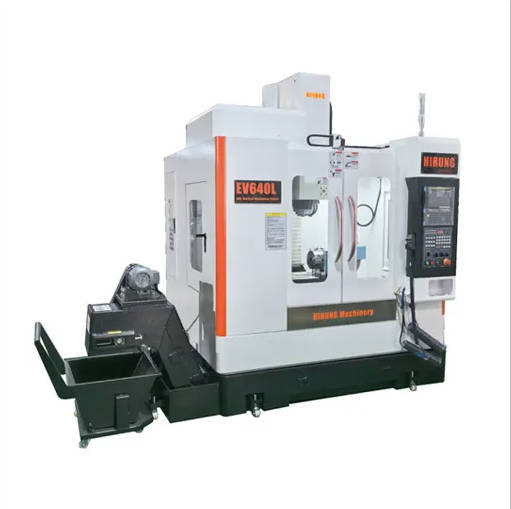
Table of Contents
- What is a Vertical Machining Center (VMC)?
- What is a Horizontal Machining Center (HMC)?
- Core Differences: Spindle Orientation and Mechanics
- Advantages and Limitations of VMCs
- Advantages and Limitations of HMCs
- Side-by-Side Comparison: VMC vs. HMC
- How to Choose: Decision Factors for Your Application
- Conclusion: Maximizing Your CNC Investment
What is a Vertical Machining Center (VMC)?
A Vertical Machining Center (VMC) is characterized by its vertically oriented spindle. In this configuration, the cutting tool moves up and down (Z-axis) while the workpiece is typically mounted on a table that moves in the X and Y axes. VMCs have been the backbone of the machining industry for decades due to their straightforward design and ease of operation. They are widely used for 3-axis milling tasks, where accessibility to the top of the part is the primary requirement.
VMCs are particularly favored by job shops and prototyping facilities. Because the spindle is vertical, the operator has a clear line of sight to the workpiece during the cutting process. This visibility makes setup and troubleshooting much easier compared to more enclosed systems. While traditionally 3-axis, many modern VMCs can be equipped with rotary tables to achieve 4-axis or even 5-axis capabilities, though they still lack some of the inherent structural advantages of their horizontal counterparts.
What is a Horizontal Machining Center (HMC)?
A Horizontal Machining Center (HMC) features a spindle that is oriented horizontally. Unlike the VMC, the tool cuts from the side of the workpiece. Most HMCs incorporate an integrated rotary table (tombstone) and a pallet changer. This design allows the machine to access multiple sides of a part in a single setup. The horizontal orientation is a deliberate engineering choice aimed at high-volume production and complex geometric requirements.
The hallmark of the HMC is its efficiency. By using a “tombstone” fixture, an HMC can hold several parts at once, rotating them into position for the spindle. This significantly reduces the “idle time” where the machine is not cutting. Furthermore, HMCs are designed for heavy-duty applications, often featuring more robust frames to handle the stresses of high-speed, continuous manufacturing. They are the preferred choice for industries like automotive and aerospace where throughput is the most critical metric.
Core Differences: Spindle Orientation and Mechanics
Chip Evacuation and Gravity
One of the most significant technical differences lies in how the machines handle chips (metal shavings). In a VMC, gravity works against the process; chips tend to pool in deep cavities or on the surface of the part, requiring high-pressure coolant or manual intervention to clear. In an HMC, gravity assists chip removal. As the tool cuts the side of the part, chips fall directly onto the conveyor below. This leads to better surface finishes and longer tool life because the cutter isn’t “re-cutting” old chips.
Part Accessibility and Tooling
VMCs offer excellent visibility and are easier to set up for large, heavy plates that can be laid flat on a table. However, HMCs win in terms of part accessibility. Because of the tombstone and pallet system, an HMC can machine four sides of a part without the operator ever touching it. This reduces human error and ensures better dimensional accuracy between different faces of the workpiece.
Advantages and Limitations of VMCs
The primary advantage of a VMC is affordability. The initial capital investment for a VMC is significantly lower than for an HMC of similar quality. This lower barrier to entry makes them ideal for small businesses. Additionally, VMCs have a smaller physical footprint, making them suitable for shops with limited floor space. Their simplicity also means that finding or training operators is generally easier and less expensive.
However, VMCs have notable drawbacks for high-volume work. The need for manual part flipping (setups) increases downtime and the potential for stacking errors. Furthermore, they are generally less rigid than HMCs, which can lead to increased vibration during heavy cuts, potentially affecting the precision and lifespan of the machine over several years of intense use.
Advantages and Limitations of HMCs
HMCs are built for speed and unattended operation. The pallet changer allows an operator to load parts while the machine is still cutting, effectively achieving near-100% spindle utilization. The structural rigidity of a horizontal machine allows for faster feed rates and deeper cuts without sacrificing accuracy. For complex parts requiring multiple faces to be machined, the HMC provides superior geometric tolerance because the part remains clamped in the same fixture for most operations.
The main deterrent for HMCs is the cost. They are complex machines that require a higher initial investment and more expensive tooling/fixturing. They also occupy more floor space and require highly skilled programmers and operators to maximize their potential. For a shop that only does simple 3-axis work or low-volume prototyping, an HMC may never achieve a positive ROI compared to a VMC.
Side-by-Side Comparison: VMC vs. HMC
| Feature | Vertical Machining Center (VMC) | Horizontal Machining Center (HMC) |
|---|---|---|
| Spindle Orientation | Vertical (Z-axis) | Horizontal (Y-axis) |
| Initial Cost | Lower ($) | Higher ($$$) |
| Chip Management | Poor (Gravity retains chips) | Excellent (Gravity clears chips) |
| Production Volume | Low to Medium | High / Continuous |
| Complexity of Parts | Simple / Single-sided | Complex / Multi-sided |
| Floor Space | Compact | Large |
How to Choose: Decision Factors for Your Application
To determine which machine is “better,” you must evaluate your specific application requirements. Ask yourself the following questions:
- What is my production volume? If you are running thousands of parts, the HMC’s pallet changer will pay for itself in labor savings. If you do custom one-offs, a VMC is more flexible.
- How many sides of the part need machining? Parts requiring work on 3 or more sides are much more efficiently handled on an HMC.
- What is my budget? Don’t just look at the purchase price; consider the cost per part. An HMC might be 3x the price but produce 5x the parts.
- What is the material? For heavy material removal in steel or titanium, the rigidity of an HMC often yields better results and longer tool life.
Conclusion: Maximizing Your CNC Investment
In the debate of Vertical vs. Horizontal Machining Centers, there is no universal winner—only the right tool for the job. VMCs remain the king of versatility and affordability for general machining and short-run projects. Conversely, HMCs are the powerhouse of the production world, offering unmatched efficiency for high-volume, multi-sided components. By analyzing your part geometry, volume requirements, and long-term business goals, you can choose the platform that provides the best balance of precision and profitability.
Vertical Machining Center, Horizontal Machining Center, VMC vs HMC, CNC machining efficiency, spindle orientation, chip evacuation, 4-axis milling, production CNC, machine tool ROI, pallet changers, metalworking technology, vertical vs horizontal milling.