A CNC vertical machining center buying guide should help manufacturers evaluate machine travel, table size, spindle configuration, rigidity, accuracy, tool magazine capacity, chip removal, control system, maintenance access, and supplier support before making a purchase. The right VMC is not simply the machine with the largest working area or the lowest price. It should match your parts, materials, tolerance requirements, production volume, workshop conditions, and future machining needs.
For manufacturers producing metal parts, molds, automotive components, machinery parts, electronic housings, fixtures, or custom components, a vertical machining center is often one of the most important machines in the workshop. A suitable CNC vertical machining center can improve machining efficiency, reduce manual setup work, support multiple operations in one clamping, and provide stable production quality.
This VMC buying guide explains how to choose a vertical machining center from a practical manufacturer’s point of view. It covers core specifications, machine structure, spindle selection, accuracy, tooling, chip management, supplier evaluation, and common purchasing mistakes.
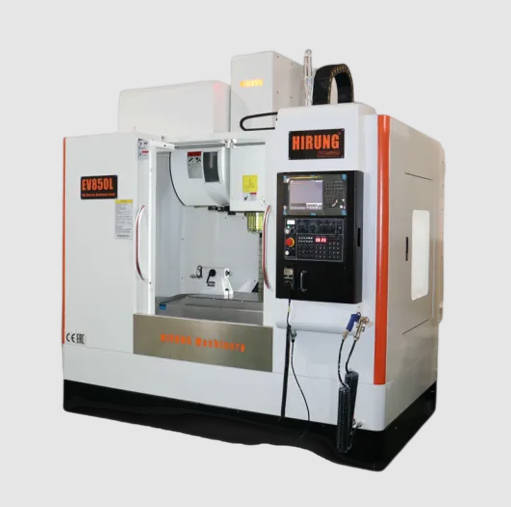
What Is a CNC Vertical Machining Center?
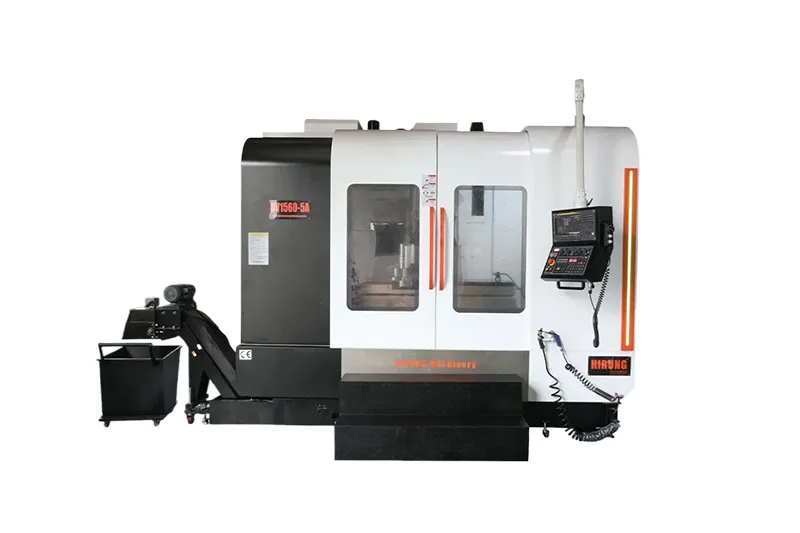
A CNC vertical machining center, also called a VMC, is a CNC machine tool with a vertically oriented spindle. The cutting tool moves from above the workpiece to perform milling, drilling, tapping, boring, contouring, pocketing, and surface machining.
Unlike a basic milling machine, a VMC usually includes a CNC control system, automatic tool changer, enclosed working area, coolant system, lubrication system, and optional chip removal equipment. It is designed for repeatable, programmable, multi-process machining.
Manufacturers usually choose a vertical machining center when they need flexible milling, drilling, tapping, and precision machining for a wide range of metal parts.
Common applications include:
| Application Area | Typical Parts |
|---|---|
| Automotive parts | Brackets, housings, covers, plates, fixture parts |
| Mold manufacturing | Mold bases, inserts, cavities, tooling plates |
| Machinery parts | Frames, blocks, mounting plates, mechanical components |
| Electronics industry | Aluminum housings, heat sink parts, precision plates |
| General metalworking | Custom parts, small-batch components, repair parts |
| Fixtures and jigs | Locating plates, clamping fixtures, production tools |
Why Choosing the Right VMC Matters
A vertical machining center is a long-term production asset. A poor purchasing decision can create problems for years, including low productivity, unstable accuracy, limited part compatibility, difficult maintenance, and high operating costs.
The right VMC can help manufacturers:
- Improve machining consistency
- Reduce setup time
- Support multi-process machining
- Handle different materials and part types
- Improve surface finish stability
- Reduce rework and scrap
- Expand production capacity
- Improve delivery reliability
However, the wrong machine may lead to:
- Insufficient travel for future parts
- Weak rigidity during heavy cutting
- Poor chip evacuation
- Limited tool capacity
- Unstable accuracy during batch production
- High maintenance difficulty
- Low operator efficiency
- Higher total ownership cost
That is why buyers should evaluate the full machining requirement instead of only comparing price or catalog size.
Step 1: Define Your Parts Before Choosing the Machine
Before comparing machine models, define what you need to machine. The part itself should drive machine selection.
Prepare the following information before contacting a supplier:
| Information to Prepare | Why It Matters |
|---|---|
| Part drawings | Confirms dimensions, tolerance, and machining features |
| Material | Affects spindle power, torque, tooling, coolant, and chip removal |
| Maximum part size | Determines machine travel and table size |
| Workpiece weight | Determines table load capacity |
| Tolerance requirements | Determines accuracy and machine rigidity requirements |
| Surface finish requirement | Affects spindle, tooling, and finishing strategy |
| Production volume | Affects tool magazine, automation, and cycle time needs |
| Fixture size | Determines actual table space and travel clearance |
| Future part range | Prevents buying a machine that becomes too limited |
The most practical way to choose a VMC is to start from your workpiece, not from the machine catalog.
A part may look small, but after adding fixtures, clamps, tools, and safe movement clearance, it may require a larger machine. Buyers should consider both current parts and future product changes.
Step 2: Choose the Right Machine Travel and Table Size
Machine travel refers to the movement range of the X, Y, and Z axes. Table size refers to the worktable area available for holding the workpiece and fixture.
When checking travel and table size, do not only ask: “Can the part fit?” Ask these questions instead:
- Can the fixture fit properly?
- Is there enough space for clamps?
- Is there enough tool movement clearance?
- Can the machine handle multi-part fixtures?
- Is the Z-axis travel enough for long tools?
- Is the table load suitable for the workpiece and fixture?
- Will future parts require larger travel?
For example, a medium-sized aluminum housing may fit on a smaller table, but if the manufacturer wants to machine several pieces in one cycle, a larger table may improve productivity. For mold bases or heavy steel blocks, table load and machine rigidity become more important.
HIRUNG’s EV Series vertical machining center includes multiple model sizes, allowing manufacturers to select a machine according to part dimensions, table load, and required working range.
Step 3: Evaluate Machine Rigidity
Machine rigidity is one of the most important factors in a VMC buying guide. Rigidity affects cutting stability, surface finish, tool life, accuracy, and long-term performance.
A rigid machine can better resist cutting force and vibration. This is especially important when machining:
- Steel parts
- Cast iron parts
- Mold components
- Heavy workpieces
- Deep cavities
- Large cutting depths
- Precision surfaces
- Parts with tight positional tolerance
Key rigidity-related areas include:
| Machine Area | What to Check |
|---|---|
| Machine base | Whether the base is stable and suitable for continuous cutting |
| Column structure | Whether the column can resist vibration and deformation |
| Spindle head | Whether the Z-axis structure supports stable cutting |
| Guideways | Whether axis movement remains stable under load |
| Table support | Whether the worktable moves smoothly without weak support |
| Casting quality | Whether the machine body supports long-term accuracy retention |
A VMC with weak rigidity may still perform light cutting, but it may struggle with heavy roughing, steel machining, or precision finishing. Buyers should not ignore machine structure when comparing quotations.
Step 4: Select the Right Spindle Configuration
The spindle is the core cutting unit of a vertical machining center. It affects material removal rate, surface quality, tool life, and machining accuracy.
Important spindle factors include:
- Spindle speed
- Spindle power
- Spindle torque
- Spindle taper
- Spindle connection type
- Bearing quality
- Cooling method
- Tool holder compatibility
Different materials require different spindle priorities.
| Material / Application | Spindle Selection Priority |
|---|---|
| Aluminum parts | Higher spindle speed, smooth cutting, efficient chip removal |
| Steel parts | Strong torque, rigidity, cutting stability |
| Cast iron parts | Stable spindle, dust/chip control, suitable cutting force |
| Mold machining | Balance of speed, torque, surface finish, and accuracy |
| General parts | Balanced spindle configuration for flexible production |
| Precision finishing | Low runout, stable bearing performance, thermal control |
A higher spindle speed is not always better; the right spindle depends on your material, tool size, cutting strategy, and production goal.
For example, aluminum machining may benefit from higher speed and fast chip evacuation, while steel machining often requires stronger torque and a rigid cutting system. If your workshop processes mixed materials, a balanced spindle configuration may be more practical.
Step 5: Check Accuracy and Repeatability
Accuracy is one of the most important purchasing concerns for manufacturers. However, buyers should understand the difference between positioning accuracy and repeatability.
| Term | Meaning | Why It Matters |
|---|---|---|
| Positioning accuracy | How close the axis reaches the programmed position | Affects dimensional and feature location accuracy |
| Repeatability | How consistently the machine returns to the same position | Affects batch consistency |
| Geometric accuracy | Alignment and movement quality of machine axes | Affects flatness, squareness, and contour accuracy |
| Thermal stability | Accuracy stability during long operation | Affects long-cycle and batch machining |
| Cutting accuracy | Actual part accuracy under machining load | Depends on rigidity, tooling, fixture, and parameters |
When buying a VMC, ask the supplier how accuracy is inspected, what standard is used, and whether inspection documentation can be provided. For precision parts, also ask about machine leveling, ball screw quality, guideway configuration, spindle condition, and optional measuring systems.
Step 6: Evaluate Guideways and Axis Drive System
Guideways affect movement stability, cutting rigidity, and machine responsiveness. Many modern VMCs use linear guideways for high-speed movement and smooth positioning. Roller-type linear guideways are often used to improve rigidity and load capacity in many machining applications.
Axis drive quality also matters. Ball screws, servo motors, lubrication, and control tuning all influence repeatability and surface finish.
When evaluating guideways and axis movement, consider:
- Required cutting load
- Part material
- Rapid movement speed
- Surface finish requirement
- Long-term wear resistance
- Maintenance requirements
- Accuracy stability under repeated use
For production workshops, stable axis movement is not only about speed. It is about maintaining accuracy after many hours of cutting.
Step 7: Choose a Suitable Tool Magazine
A tool magazine allows the VMC to automatically change tools during machining. This improves efficiency and reduces manual intervention.
Common tools used on a VMC include:
- Face mills
- End mills
- Drills
- Taps
- Chamfer tools
- Reamers
- Boring tools
- Ball nose tools
- Finishing tools
For simple parts, a smaller tool capacity may be enough. For complex parts, mold machining, or mixed production, more tools may be needed.
| Production Need | Tool Magazine Consideration |
|---|---|
| Simple drilling and milling | Basic tool capacity may be sufficient |
| Multi-process parts | More tool positions reduce manual changes |
| Mold machining | Multiple roughing and finishing tools may be required |
| Mixed production | Higher tool capacity improves flexibility |
| Batch production | Fast tool change can reduce non-cutting time |
HIRUNG’s CNC Vertical Machining Center EV Series includes a 24-tool arm-type tool magazine configuration, which is suitable for many general industrial machining applications.
Step 8: Do Not Ignore Chip Removal and Coolant System
Chip removal is often underestimated during VMC selection. In daily production, poor chip evacuation can reduce accuracy, damage surface finish, shorten tool life, and increase cleaning time.
Chip removal is especially important for:
- Aluminum machining
- Cast iron machining
- Deep pocket milling
- High-volume production
- Long cutting cycles
- Multi-part fixtures
- Automated or semi-automated production
Coolant also affects tool life, surface finish, temperature control, and chip evacuation. Buyers should evaluate coolant flow, tank capacity, filtration, oil-water separation, and chip conveyor options.
For production machining, chip removal and coolant management are not minor accessories; they directly affect uptime, accuracy, and operating cost.
Different chip conveyor options may be suitable for different materials. For example, screw-type, scraper-type, hinge-type, magnetic filter-type, or combined systems may be used depending on chip shape and material.
Step 9: Review Control System and Operator Usability
The CNC control system affects programming, operation, troubleshooting, training, and maintenance. For manufacturers with experienced operators, control preference may depend on existing workshop habits. For factories purchasing their first VMC, usability and training support become more important.
When reviewing the control system, consider:
- Operator familiarity
- Programming convenience
- Interface language
- Maintenance diagnostics
- Servo and spindle compatibility
- Local technician support
- Spare parts availability
- Documentation quality
For export buyers, electrical cabinet layout and labeling can also matter. Clear labeling and maintenance-friendly design can reduce downtime when troubleshooting is needed.
Step 10: Compare Standard and Optional Accessories
A VMC quotation should be reviewed carefully. Different suppliers may include different standard accessories, which makes price comparison difficult.
Common standard or optional items may include:
| Item | Why It Matters |
|---|---|
| Full splash guard | Improves safety and coolant control |
| Cutting coolant system | Supports tool life and surface quality |
| Spindle cooling device | Helps reduce thermal influence |
| Central lubrication system | Supports long-term machine movement |
| Chip conveyor | Reduces manual cleaning and downtime |
| Oil-water separator | Helps maintain coolant cleanliness |
| Tool magazine | Affects automation and cycle time |
| Auto tool setter | Improves tool measurement efficiency |
| Workpiece probe | Supports setup and inspection |
| 4th-axis rotary table | Expands machining capability |
| Electrical cabinet cooling | Useful in demanding environments |
When comparing suppliers, ask what is included in the base price and what is optional. A lower quotation may not include necessary accessories for your production environment.
Step 11: Estimate Total Cost of Ownership
Machine price is only one part of the investment. A manufacturer should also consider the total cost of ownership.
Cost factors may include:
- Machine purchase price
- Shipping and import cost
- Installation cost
- Tooling and fixtures
- Coolant and lubrication
- Power consumption
- Operator training
- Maintenance parts
- Downtime risk
- Spare parts availability
- After-sales support
- Floor space and foundation preparation
A machine with a slightly higher initial cost may be more economical if it provides better stability, easier maintenance, suitable configuration, and lower downtime. On the other hand, overbuying a machine with unnecessary options can also waste capital.
The goal is to select a VMC that matches your production needs and investment plan.
Step 12: Evaluate the CNC Machine Supplier
A reliable supplier should help you select a suitable machine, not simply sell a standard model. Before ordering, ask practical questions.
| Supplier Evaluation Question | Why It Matters |
|---|---|
| Can you recommend a model based on my drawings? | Shows application understanding |
| What spindle configuration fits my material? | Prevents wrong spindle selection |
| What accessories are standard and optional? | Clarifies real purchase cost |
| Can you provide accuracy inspection documents? | Supports quality verification |
| What installation support is available? | Reduces commissioning risk |
| How are spare parts supplied? | Affects long-term maintenance |
| What warranty terms are included? | Clarifies responsibility |
| Do you support remote troubleshooting? | Useful for international buyers |
| Can you provide operation and maintenance guidance? | Helps reduce downtime |
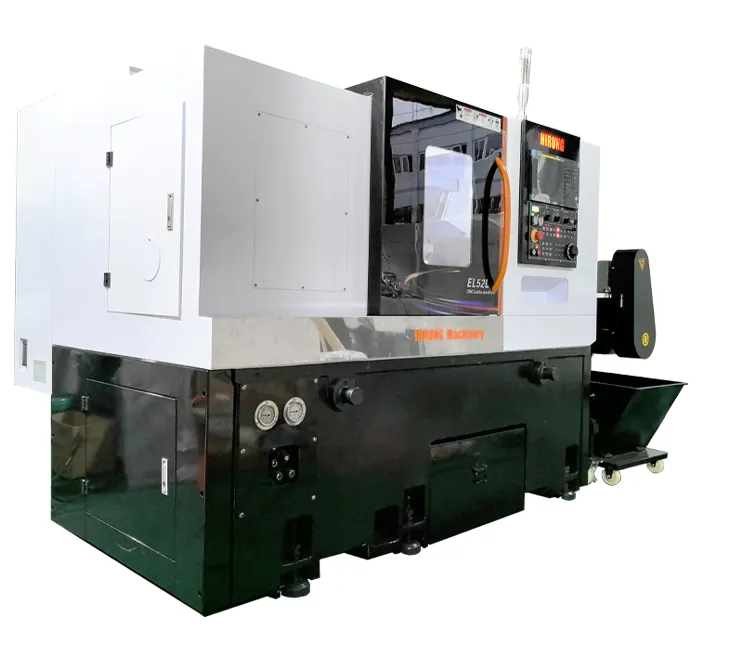
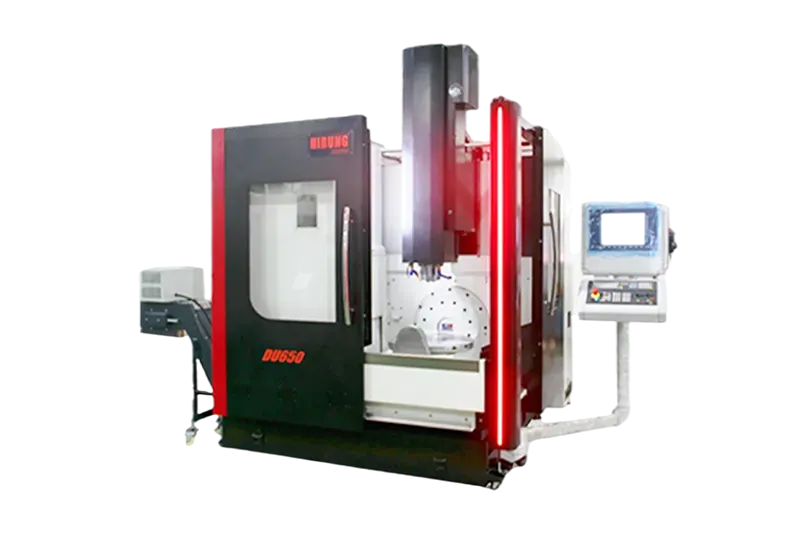
If you are still comparing models, you can visit the HIRUNG official website to review available CNC machine categories and determine whether a vertical machining center, CNC lathe, 5-axis machining center, or gantry machine better fits your production needs.
Common Mistakes When Buying a CNC Vertical Machining Center
Mistake 1: Buying Only by Table Size
A larger table does not automatically mean better productivity. Buyers should check rigidity, spindle, table load, travel, fixture plan, and machine stability.
Mistake 2: Choosing the Highest Spindle Speed Without Considering Material
High spindle speed is useful for some applications, especially aluminum and light finishing. However, steel or heavy cutting may require torque and rigidity more than speed.
Mistake 3: Ignoring Fixture and Tooling Costs
The machine is only part of the machining system. Fixtures, tool holders, cutting tools, probes, and measuring tools can significantly affect production quality and efficiency.
Mistake 4: Underestimating Chip Removal
A machine that cuts well during a short test may still create chip problems during long production runs. Chip management should be evaluated before ordering.
Mistake 5: Comparing Quotations Without Checking Configuration
Two machines with similar travel may have different spindle power, guideways, tool magazines, control systems, accessories, and service support. Always compare the complete configuration.
Mistake 6: Not Planning for Future Workpieces
If your workshop may handle larger parts, new materials, or higher production volumes in the future, leave reasonable room for growth when selecting a model.
When Should Manufacturers Choose the HIRUNG EV Series?
The HIRUNG EV Series can be considered by manufacturers looking for a practical vertical machining center for general industrial machining, metal parts production, mold components, fixtures, and medium-sized precision parts.
It may be suitable when you need:
- Multiple model sizes for different workpiece ranges
- A vertical machining center for milling, drilling, tapping, and boring
- A machine structure focused on rigidity and stability
- Spindle options for different machining requirements
- A tool magazine for multi-process machining
- Chip removal configuration choices
- Maintenance-friendly electrical layout
- A supplier familiar with international CNC machine delivery
For buyers preparing a quotation request, it is recommended to provide part drawings, material information, expected tolerance, batch size, surface finish requirement, and workshop power conditions. This helps the supplier recommend a more suitable EV Series model and configuration.
FAQ
1. How do I choose a CNC vertical machining center?
Choose a CNC vertical machining center based on your part size, material, tolerance, production volume, fixture design, spindle requirement, table load, tool magazine capacity, chip removal needs, control system, and supplier support.
2. What specifications should I check in a VMC buying guide?
Important VMC specifications include X/Y/Z travel, table size, table load, spindle speed, spindle power, spindle taper, guideway type, positioning accuracy, repeatability, tool magazine capacity, cutting feed rate, rapid feed rate, and available accessories.
3. What is the difference between a vertical machining center and a CNC milling machine?
A vertical machining center usually includes CNC control, an enclosed structure, automatic tool changer, coolant system, and higher automation. A basic CNC milling machine may be less automated and more limited in tool changing and production efficiency.
4. What spindle speed is suitable for a vertical machining center?
The suitable spindle speed depends on your material and machining process. Aluminum machining often benefits from higher speed, while steel and cast iron machining may require stronger torque and rigidity. Buyers should select spindle configuration based on actual workpieces.
5. How important is machine rigidity when buying a VMC?
Machine rigidity is very important because it affects cutting stability, accuracy, surface finish, vibration control, and tool life. It is especially important for steel machining, mold machining, heavy cutting, and precision parts production.
6. Should I choose a larger VMC model for future production?
A larger model may provide more flexibility, but it also requires more floor space and investment. Choose a larger VMC only if your future parts, fixtures, or production plan justify the extra capacity.
7. What should I ask a CNC vertical machining center supplier before buying?
Ask about suitable model selection, spindle options, machine accuracy, guideway type, standard and optional accessories, chip removal, installation support, warranty, spare parts, control system, delivery time, and after-sales service.
Conclusion
Buying a CNC vertical machining center is a strategic decision for manufacturers. The right machine should match your workpieces, materials, tolerance requirements, production volume, tooling plan, workshop conditions, and long-term business goals.
A practical VMC buying process should begin with part drawings and production requirements. Then buyers should evaluate machine travel, table size, rigidity, spindle configuration, accuracy, guideways, tool magazine, chip removal, coolant system, control system, accessories, and supplier support.
If you are looking for a flexible vertical machining center for industrial metal parts, automotive components, molds, fixtures, or general machining, the HIRUNG EV Series can be evaluated as a practical option. To receive a more accurate recommendation, prepare your part drawings, material details, tolerance requirements, and expected production volume before contacting the supplier.