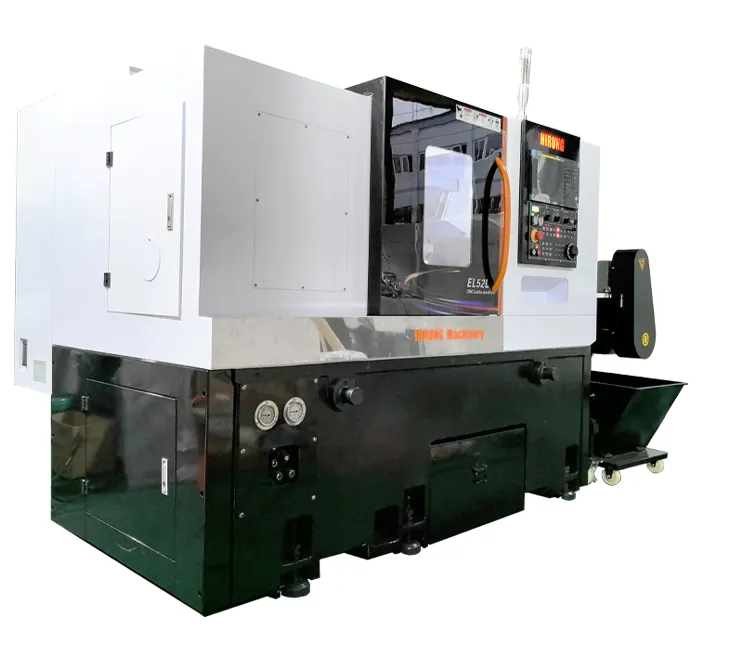
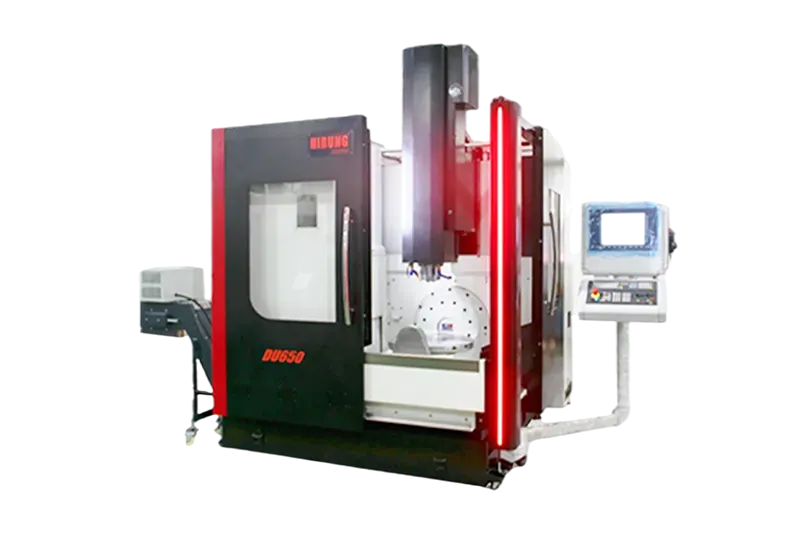
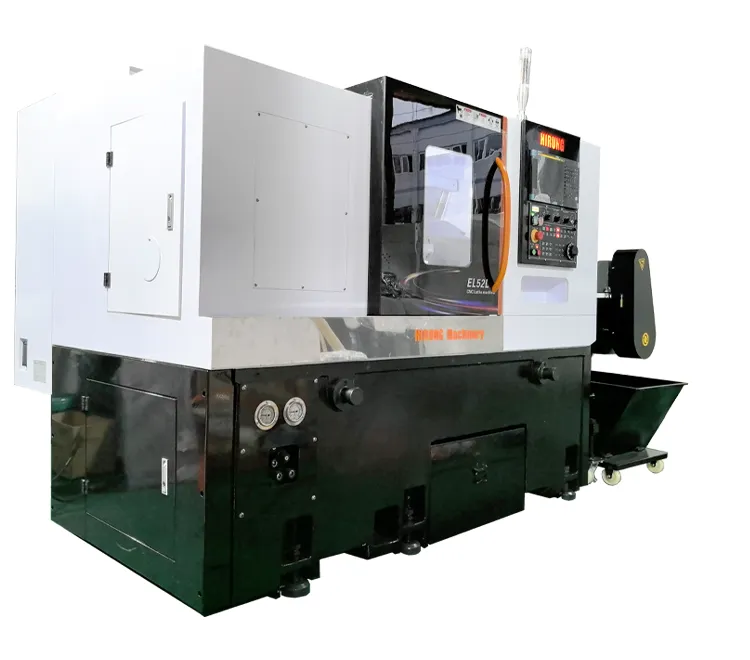
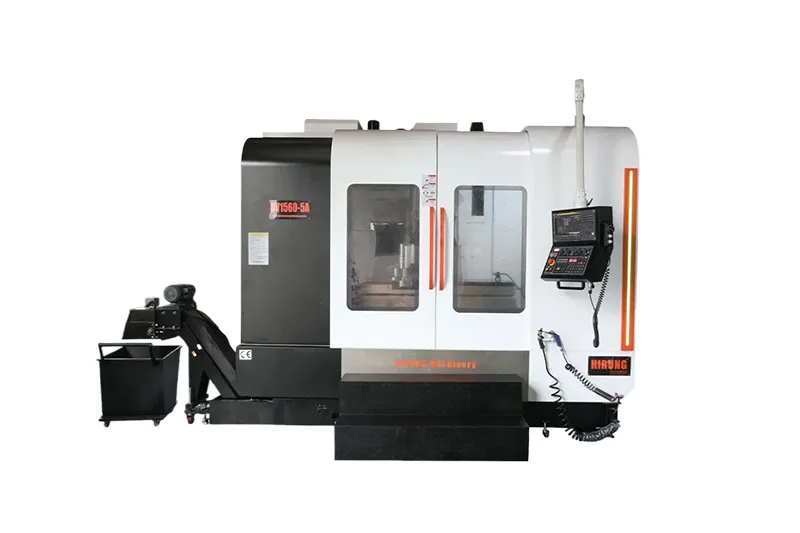
The main difference between 3-axis, 4-axis, and 5-axis CNC machining is how many directions the tool or workpiece can move during cutting. A 3-axis CNC machining center moves along the X, Y, and Z linear axes. A 4-axis CNC machine adds one rotary axis, usually for indexing or continuous rotation. A 5-axis CNC machining center adds two rotary axes, allowing the tool or workpiece to approach complex parts from multiple angles in fewer setups.
For manufacturers comparing 3 axis vs 5 axis CNC machining, the decision should not be based only on machine price. The right axis configuration depends on part geometry, tolerance requirements, number of setups, surface finish, production volume, operator skill, programming capability, and return on investment.
A basic 3-axis machining center is suitable for many flat, prismatic, and general metal parts. A 4-axis machine improves productivity for cylindrical or multi-side parts. A 5 axis CNC machining center is more suitable for complex components, curved surfaces, undercuts, aerospace parts, medical components, automotive precision parts, impellers, molds, and workpieces that require machining from multiple angles.
This CNC axis comparison guide explains the key differences, advantages, limitations, application scenarios, and buying considerations for manufacturers choosing between 3-axis, 4-axis, and 5-axis CNC machining centers.
What Does Axis Mean in CNC Machining?
In CNC machining, an axis refers to a direction of controlled movement. The machine uses these movements to position the cutting tool and workpiece accurately.
The most common linear axes are:
| Axis | Movement Direction | Function |
|---|---|---|
| X-axis | Left and right | Controls horizontal movement |
| Y-axis | Front and back | Controls depth movement across the table |
| Z-axis | Up and down | Controls vertical tool movement |
Rotary axes are usually called A, B, and C axes:
| Rotary Axis | Rotation Around | Common Use |
|---|---|---|
| A-axis | X-axis | Tilting or rotating the workpiece |
| B-axis | Y-axis | Tilting the tool or table |
| C-axis | Z-axis | Rotating the table or workpiece |
More axes do not automatically mean better machining; more axes mean greater movement flexibility, more complex programming, and higher equipment investment.
The correct choice depends on whether the added axis movement can reduce setups, improve accuracy, enable complex geometry, or increase production efficiency.
What Is 3-Axis CNC Machining?
3-axis CNC machining uses three linear axes: X, Y, and Z. The cutting tool moves left-right, front-back, and up-down relative to the workpiece. This is the most common CNC machining method for general milling, drilling, pocketing, slotting, and surface machining.
3-axis CNC machining is widely used for:
- Plates
- Brackets
- Blocks
- Mold bases
- Simple housings
- Fixture plates
- Machinery parts
- Flat surface machining
- Basic pocket and hole machining
Advantages of 3-Axis CNC Machining
3-axis machining is practical, widely available, and easier to operate. It is often the first choice for general manufacturing because it offers a good balance of cost, capability, and ease of use.
| Advantage | Explanation |
|---|---|
| Lower investment | Usually more affordable than 4-axis or 5-axis machines |
| Easier programming | Toolpaths are simpler and easier to verify |
| Easier setup | Suitable for common fixtures and standard workholding |
| Wide application range | Handles many flat and prismatic parts |
| Lower training requirement | Operators can learn and operate more easily |
| Good for general production | Suitable for many workshops and job shops |
Limitations of 3-Axis CNC Machining
The main limitation is access. A 3-axis machine can only approach the workpiece from one direction at a time. If a part requires machining on several sides, the operator must stop the machine, reposition the part, reset the datum, and machine again.
This may create:
- More setups
- Longer production time
- Higher labor cost
- More fixture requirements
- Higher risk of repositioning errors
- Lower consistency for complex parts
- Limited ability to machine undercuts and angled features
3-axis machining is suitable when part geometry is relatively simple and most features can be machined from one or a few straightforward setups.
What Is 4-Axis CNC Machining?
4-axis CNC machining adds one rotary axis to the three linear axes. This rotary axis allows the workpiece to rotate, or in some configurations, allows the tool to approach from an additional angle.
There are two common types of 4-axis machining:
| Type | How It Works | Typical Use |
|---|---|---|
| 4-axis indexing | The part rotates to a fixed angle, then machining stops and starts at that position | Multi-side machining |
| Continuous 4-axis machining | The rotary axis moves during cutting | Cylindrical parts, spiral grooves, complex curves |
4-axis CNC machining is often used for:
- Shaft-like parts
- Cylindrical components
- Multi-side brackets
- Cam profiles
- Spiral grooves
- Medical parts
- Automotive components
- Parts with repeated features around a centerline
Advantages of 4-Axis CNC Machining
A 4-axis machine can reduce manual repositioning and improve productivity for parts that need machining on multiple sides.
| Advantage | Explanation |
|---|---|
| Fewer setups than 3-axis | The rotary axis allows access to more faces |
| Better consistency | Less manual repositioning reduces datum errors |
| Suitable for cylindrical parts | Efficient for features around a rotating workpiece |
| Higher productivity | Can machine several sides in one clamping |
| Moderate upgrade cost | Usually less expensive than full 5-axis machining |
| Good bridge between 3-axis and 5-axis | Useful for shops that need more capability without full 5-axis complexity |
Limitations of 4-Axis CNC Machining
4-axis machining is more capable than 3-axis machining, but it still has limitations. It normally adds only one rotary direction, so the tool cannot freely approach the workpiece from all angles.
Common limitations include:
- Not enough for highly complex freeform surfaces
- Limited access to undercuts
- More complex programming than 3-axis
- Requires better fixture planning
- Rotary table load capacity must be considered
- Not always suitable for large or heavy parts
4-axis machining is a practical step when manufacturers need more access than 3-axis machining but do not yet require full 5-axis capability.
What Is 5-Axis CNC Machining?
5-axis CNC machining uses three linear axes plus two rotary axes. Depending on the machine structure, the rotary axes may come from a tilting rotary table, a swivel head, or a combined head-table configuration.
A 5-axis CNC machining center allows the tool or workpiece to approach the part from multiple directions. This makes it possible to machine complex geometries, curved surfaces, deep cavities, angled holes, undercuts, and multi-sided features in fewer setups.
5-axis machining can be divided into two major process types:
| Type | Description | Typical Use |
|---|---|---|
| 3+2 axis machining | The rotary axes position the part at an angle, then 3-axis machining is performed | Angled features, multi-side parts, reduced setups |
| Simultaneous 5-axis machining | All five axes move at the same time during cutting | Complex surfaces, impellers, blades, aerospace parts, medical components |
5-axis CNC machining is most valuable when it reduces multiple setups, improves complex-part accuracy, shortens tool overhang, or enables geometries that 3-axis machining cannot efficiently produce.
Advantages of 5-Axis CNC Machining
5-axis machining provides major benefits for complex and high-value components.
| Advantage | Explanation |
|---|---|
| Fewer setups | Multiple faces can be machined in one clamping |
| Better positional accuracy | Fewer repositioning steps reduce accumulated error |
| Complex geometry capability | Suitable for curved surfaces, undercuts, and angled features |
| Shorter tool overhang | Tool can tilt toward the surface, reducing vibration |
| Better surface finish potential | More consistent tool contact can improve finishing |
| Improved productivity for complex parts | Reduces setup, inspection, and secondary operations |
| Expanded business capability | Allows manufacturers to quote higher-complexity projects |
Limitations of 5-Axis CNC Machining
A 5-axis machine is powerful, but it is not the right choice for every manufacturer.
Limitations include:
- Higher machine investment
- More complex programming
- Higher operator skill requirement
- More advanced collision avoidance needed
- Higher maintenance requirements
- More expensive fixtures and tooling in some applications
- Requires enough complex work to justify ROI
If a workshop mainly machines simple plates and blocks, a 5-axis machine may be underutilized. If the workshop handles high-complexity components, the investment may be easier to justify.
3 Axis vs 4 Axis vs 5 Axis CNC Machining: Comparison Table
| Factor | 3-Axis CNC Machining | 4-Axis CNC Machining | 5-Axis CNC Machining |
|---|---|---|---|
| Axis movement | X, Y, Z | X, Y, Z + one rotary axis | X, Y, Z + two rotary axes |
| Part complexity | Simple to medium | Medium complexity | Complex and high-precision parts |
| Setup quantity | More setups for multi-side parts | Fewer setups than 3-axis | Fewest setups for complex parts |
| Programming difficulty | Lower | Medium | Higher |
| Operator skill requirement | Lower | Medium | Higher |
| Investment cost | Lower | Medium | Higher |
| Fixture complexity | Basic to medium | Medium | Medium to advanced |
| Best for | Plates, blocks, simple parts | Cylindrical and multi-side parts | Complex surfaces and multi-angle parts |
| Accuracy risk | More datum error if multiple setups are needed | Reduced setup error | Lowest setup-related error when properly programmed |
| Surface finish potential | Good for simple geometry | Good for rotary features | Strong for complex surfaces |
| ROI condition | General machining demand | Moderate complexity demand | High-value complex parts and setup reduction |
Key Difference 1: Number of Setups
Setup reduction is one of the most important reasons to move from 3-axis to 4-axis or 5-axis machining.
In 3-axis machining, a part that requires five machined sides may need several separate setups. Every setup introduces possible datum error, clamping variation, and inspection effort.
In 4-axis machining, the part can rotate to different positions, reducing the need for manual repositioning.
In 5-axis machining, the machine can access more surfaces and angles in one setup, especially for complex components.
When a part requires repeated repositioning on a 3-axis machine, 4-axis or 5-axis machining may improve accuracy and reduce production time.
Key Difference 2: Part Geometry Capability
Part geometry often determines which machine is practical.
| Part Feature | 3-Axis | 4-Axis | 5-Axis |
|---|---|---|---|
| Flat surface | Suitable | Suitable | Suitable |
| Simple holes | Suitable | Suitable | Suitable |
| Multi-side holes | Requires repositioning | Suitable | Suitable |
| Angled holes | Difficult without special fixtures | Possible in some cases | Suitable |
| Deep cavity | Tool overhang may be long | May help depending on orientation | Better tool angle control |
| Curved surface | Limited | Limited to moderate | Strong |
| Undercut | Difficult | Limited | More suitable |
| Impeller/blade geometry | Not practical | Limited | Suitable |
| Complex mold surface | Limited to moderate | Moderate | Strong |
If your parts are mostly flat and prismatic, 3-axis or 4-axis may be enough. If your parts include complex surfaces, undercuts, angled features, or tight multi-face accuracy, 5-axis machining may be more practical.
Key Difference 3: Accuracy and Repositioning Error
Accuracy is not only about machine specification. It also depends on how many times the part must be unclamped and repositioned.
Each time a workpiece is moved, several risks appear:
- Datum shift
- Clamping force variation
- Fixture error
- Operator error
- Inspection mismatch
- Accumulated tolerance error
5-axis machining can reduce these risks by machining more features in one setup. This is especially important for aerospace, medical, automotive, mold, and precision machinery parts.
However, 5-axis accuracy also depends on machine calibration, rotary axis precision, tool center point control, programming quality, and collision avoidance. A 5-axis machine must be properly selected and maintained to deliver its full benefit.
Key Difference 4: Tool Length and Surface Finish
In 3-axis machining, deep cavities and angled surfaces often require long tools. Long tool overhang can cause vibration, tool deflection, chatter, and poor surface finish.
In 5-axis machining, the tool can be tilted toward the cutting surface. This allows shorter tools in many applications and improves cutting stability.
Benefits may include:
- Reduced vibration
- Improved tool life
- Better surface finish
- More stable cutting force
- Improved access to difficult features
- Lower risk of tool interference
This is one reason 5-axis machining is common in mold, aerospace, medical, and high-precision component manufacturing.
Key Difference 5: Cost and ROI
A 5-axis CNC machining center usually requires a higher investment than a 3-axis or 4-axis machine. However, purchase price alone does not determine value.
Buyers should compare total cost and return.
| Cost / ROI Factor | 3-Axis | 4-Axis | 5-Axis |
|---|---|---|---|
| Machine cost | Lower | Medium | Higher |
| Programming cost | Lower | Medium | Higher |
| Setup labor | Higher for complex parts | Lower than 3-axis | Often lowest for complex parts |
| Fixture cost | Basic to medium | Medium | Medium to advanced |
| Scrap risk from repositioning | Higher for multi-setup parts | Lower | Lower when process is controlled |
| Complex part capability | Limited | Moderate | Strong |
| Business expansion potential | General jobs | More advanced jobs | High-value complex jobs |
A 5-axis machine may be justified when it helps reduce setups, improve accuracy, shorten lead time, machine complex parts, or win higher-value projects. It may not be justified if most workpieces are simple.
When Should You Choose a 3-Axis CNC Machining Center?
Choose a 3-axis machine when your parts are relatively simple, your budget is limited, and most features can be machined from one or several straightforward setups.
3-axis machining is suitable for:
- Flat plates
- Simple brackets
- Blocks
- Basic molds
- Fixture plates
- General milling
- Simple pockets
- Drilled and tapped holes
- Small and medium job shop work
A 3-axis machine is often a practical first investment for general manufacturers. It is easier to operate, easier to program, and suitable for many common machining tasks.
When Should You Choose a 4-Axis CNC Machining Center?
Choose a 4-axis machine when your parts need rotary access, indexing, or features around a cylindrical or multi-side workpiece.
4-axis machining is suitable for:
- Cylindrical parts
- Shaft-type components
- Multi-side brackets
- Components with holes on several faces
- Spiral features
- Repeated angular features
- Parts that need reduced setup time
A 4-axis configuration can be a practical upgrade for manufacturers that need more capability than 3-axis machining but do not yet require full 5-axis simultaneous machining.
When Should You Choose a 5-Axis CNC Machining Center?
Choose a 5-axis CNC machining center when your parts are complex, high-value, multi-angle, or difficult to machine accurately with repeated setups.
5-axis machining is suitable for:
- Aerospace structural parts
- Medical implants and instruments
- Automotive precision components
- Turbine and impeller parts
- Mold cavities and complex surfaces
- Deep cavity parts
- Parts with angled holes
- Complex aluminum components
- High-precision multi-face parts
- Components requiring fewer setups
For manufacturers entering high-value industries, a CNC 5 Axis Machining Center can expand production capability and support more complex customer requirements.
Common 5-Axis Machine Configurations
Not all 5-axis machining centers use the same structure. The configuration affects workpiece size, rigidity, accessibility, and application suitability.
| Configuration | Description | Suitable Applications |
|---|---|---|
| Trunnion table | The table tilts and rotates the workpiece | Small to medium precision parts |
| Swivel head | The spindle head tilts while the table remains more stable | Larger and heavier workpieces |
| Head-table type | One rotary axis in the head and one in the table | Versatile complex machining |
| Gantry 5-axis type | Large machine structure with 5-axis capability | Large molds, aerospace parts, large components |
When choosing a 5-axis machine, manufacturers should consider workpiece size, weight, required angle range, table load, spindle access, tool length, and collision risk.
How to Choose the Right CNC Axis Configuration
Before purchasing a machine, manufacturers should prepare actual part requirements rather than selecting by axis count alone.
| Question | Why It Matters |
|---|---|
| What parts will be machined most often? | Determines whether 3-axis, 4-axis, or 5-axis is needed |
| How many setups are required on a 3-axis machine? | Helps calculate setup reduction value |
| Are there angled holes or undercuts? | Indicates whether additional rotary axes are needed |
| Is the part high-value or tolerance-sensitive? | Supports investment in higher capability |
| What materials will be machined? | Affects spindle power, rigidity, and tooling |
| What batch size is expected? | Affects ROI and automation needs |
| Do operators have 5-axis experience? | Determines training and implementation needs |
| Is CAM software available? | 5-axis programming usually requires advanced CAM support |
| Can current fixtures support the process? | Fixture design affects accuracy and efficiency |
| What is the expected payback period? | Helps justify investment level |
The right CNC machining center is not the one with the most axes; it is the one that produces your target parts efficiently, accurately, and profitably.
Common Mistakes When Comparing 3-Axis, 4-Axis, and 5-Axis Machines
Mistake 1: Buying a 5-Axis Machine Only for Prestige
A 5-axis machine is a serious production investment. If the workshop does not have complex parts, suitable operators, CAM capability, or enough high-value orders, the machine may be underused.
Mistake 2: Underestimating Programming Requirements
5-axis machining requires more advanced toolpath planning and collision checking. Manufacturers should evaluate CAM software, post-processors, operator training, and technical support before purchasing.
Mistake 3: Ignoring Workpiece Size and Table Load
A trunnion-type 5-axis machine may be excellent for precision parts but limited by table load and workpiece size. Large or heavy parts may need a different configuration, such as a swivel head or gantry-type 5-axis structure.
Mistake 4: Comparing Only Machine Price
A lower machine price may not include the spindle, control system, tool magazine, probing system, coolant system, or accessories needed for actual production. Buyers should compare full configuration and long-term support.
Mistake 5: Forgetting About Operator Training
Axis capability does not create value unless the team can use it correctly. Training, process support, and supplier guidance are important for successful implementation.
How HIRUNG 5 Axis CNC Machining Centers Fit Complex Manufacturing Needs
HIRUNG provides 5-axis machining center solutions for manufacturers that need to produce complex, precision, and high-value components. The product range includes different 5-axis configurations for various part sizes, materials, and machining requirements.
A HIRUNG 5-axis solution may be considered when your production requires:
- Multi-angle machining in fewer setups
- Complex surface machining
- Precision aerospace, automotive, medical, or mold components
- High-rigidity machine structure
- Stable spindle performance
- Efficient tool management
- Better access to difficult part features
- Reduced manual repositioning
- Long-term production capability for complex parts
For buyers evaluating whether to upgrade from 3-axis or 4-axis machining, the HIRUNG 5 Axis CNC Machining Center page can be used as a starting point to compare available configurations and discuss application requirements.
You can also visit the HIRUNG official website to review broader CNC machine categories and choose the most suitable equipment type for your manufacturing plan.
FAQ
1. What is the difference between 3-axis, 4-axis, and 5-axis CNC machining?
3-axis CNC machining moves along X, Y, and Z linear axes. 4-axis machining adds one rotary axis for indexing or rotation. 5-axis machining adds two rotary axes, allowing the tool or workpiece to approach complex parts from multiple angles.
2. Is 5-axis CNC machining better than 3-axis machining?
5-axis CNC machining is better for complex parts, multi-angle features, curved surfaces, undercuts, and setup reduction. However, 3-axis machining is still more practical for simple parts, flat surfaces, basic pockets, and general machining with lower investment.
3. When should I choose a 5-axis CNC machining center?
Choose a 5-axis CNC machining center when your parts require complex geometry, fewer setups, high positional accuracy, angled features, deep cavities, better surface finish, or access to multiple sides in one clamping.
4. Is 4-axis CNC machining enough for multi-side parts?
4-axis CNC machining can be enough for many multi-side or cylindrical parts, especially when one rotary axis provides the required access. For more complex angles, undercuts, or simultaneous surface machining, 5-axis may be more suitable.
5. What parts are suitable for 5-axis CNC machining?
5-axis CNC machining is suitable for aerospace components, medical parts, impellers, turbine blades, automotive precision parts, complex molds, angled-hole parts, deep cavity parts, and high-value components requiring multi-angle machining.
6. Does 5-axis machining improve accuracy?
5-axis machining can improve accuracy by reducing manual repositioning and machining more features in one setup. However, final accuracy also depends on machine calibration, rigidity, spindle quality, programming, tooling, fixtures, and inspection control.
7. Is a 5-axis CNC machining center worth the investment?
A 5-axis CNC machining center is worth considering when it reduces setups, shortens lead time, improves complex-part accuracy, expands customer capability, or supports high-value parts. It may not be necessary for simple parts that can be efficiently produced on 3-axis machines.
Conclusion
The choice between 3-axis, 4-axis, and 5-axis CNC machining depends on your actual parts, not only the machine specification. A 3-axis machine is suitable for general milling, simple parts, and lower investment. A 4-axis machine improves efficiency for cylindrical and multi-side parts. A 5-axis CNC machining center provides the highest flexibility for complex surfaces, angled features, fewer setups, and high-value precision components.
For manufacturers comparing 3 axis vs 5 axis CNC machining, the key question is not whether 5-axis is more advanced. The real question is whether your parts, customers, tolerance requirements, and production goals justify the added capability.
If your business is moving toward aerospace, automotive precision components, medical parts, complex molds, or high-value multi-angle machining, a 5-axis CNC machining center can be a strategic investment. Before purchasing, prepare your part drawings, material information, tolerance requirements, batch size, and target applications so the supplier can recommend the most suitable machine configuration.