Yes, a vertical machining center is often enough for a small workshop if your main work involves milling, drilling, tapping, boring, slotting, and producing prismatic metal parts in small to medium batches. For many job shops, mold repair shops, fixture builders, and startup manufacturers, a CNC vertical machining center provides the right balance of machining capability, floor-space efficiency, operator visibility, and investment control.
However, “enough” depends on your part size, material, tolerance requirements, production volume, setup frequency, and future business direction. A small workshop that mainly machines aluminum plates, steel brackets, mold inserts, fixtures, housings, and general mechanical components may be well served by one properly selected VMC. A shop that needs high-volume multi-sided machining, heavy roughing, large gantry parts, turning operations, or continuous 5-axis work may need additional equipment.
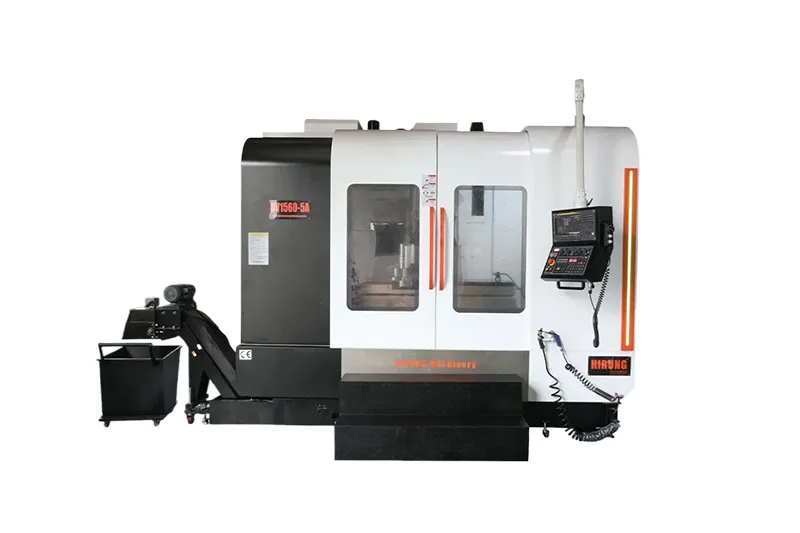
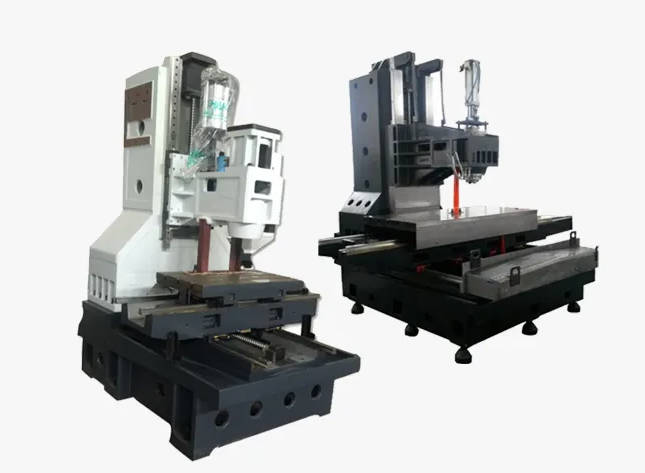
A vertical machining center is not simply a larger CNC mill; it is a production-oriented machine tool with an automatic tool changer, enclosed machining area, stronger structure, and better repeatability for industrial work. Modern VMCs usually include a table, spindle, column/base structure, CNC control, and tool changer, allowing operations such as milling, drilling, boring, and tapping in one setup.
For small workshops evaluating their first serious CNC investment, the key question is not “Can a VMC machine everything?” but “Can one VMC cover 70–90% of the profitable work I plan to accept?”
If the answer is yes, a VMC can be the center of your workshop.
What Is a Vertical Machining Center in a Small Workshop Setup?
A vertical machining center, often called a VMC, is a CNC machine tool with a vertically oriented spindle. The cutting tool moves down toward the workpiece mounted on the table. This structure is especially suitable for parts that can be machined from the top, including plates, blocks, brackets, cavities, pockets, slots, holes, and mold components.
Compared with a manual mill or small CNC router, a CNC vertical machining center usually offers:
| Feature | Why It Matters in a Small Workshop |
|---|---|
| Enclosed machining area | Improves safety and coolant/chip control |
| Automatic tool changer | Reduces manual tool changes and supports multi-operation parts |
| Rigid cast structure | Helps maintain accuracy during cutting |
| CNC control system | Enables repeatable production and complex toolpaths |
| Coolant and chip management | Supports longer production runs |
| Higher spindle power | Allows machining of aluminum, steel, cast iron, and other metals |
| Better repeatability | Reduces scrap and rework in batch production |
For example, HIRUNG’s EV Series includes models such as EV640L, EV850L, and EV1270L, with different X/Y/Z travel ranges, table sizes, spindle configurations, tool magazine capacity, and floor-space requirements. The series also lists standard and optional configurations such as 24-tool magazines, roller linear guideways, cooling systems, chip removal options, Renishaw probing options, and 4-axis or 5-axis rotary table options.
For workshops that need a production-grade VMC rather than a light-duty milling solution, the EV Series vertical machining centers can be evaluated according to part size, material, tolerance, and available workshop space.
Why This Question Matters Before Buying CNC Equipment
A small workshop usually has limited space, budget, manpower, and power supply capacity. Choosing the wrong CNC machine can create long-term problems:
You may buy a machine that is too small and cannot handle future parts.
You may buy a machine that is too large and wastes floor space, power, and capital.
You may focus only on machine price and forget tooling, fixtures, coolant, compressor, chip handling, training, shipping, installation, and maintenance.
You may buy a machine with high specifications but low utilization.
For a small workshop, the best CNC setup is not the most expensive setup; it is the setup that matches your real parts, real batch sizes, and real production bottlenecks. SME notes that purchasing a VMC is a balance between machine choice, budget, and product requirements, with setup time, cycle time, and troubleshooting being important selection factors.
That is why the VMC decision should start from your workpiece and business model, not only from the machine catalog.
When Is a Vertical Machining Center Enough for a Small Workshop?
A VMC is usually enough when your workshop mainly produces 3-axis machined parts that can be accessed from the top or from simple repositioning.
Common applications include:
- Aluminum and steel brackets
- Machine fixtures and jigs
- Mold inserts and repair parts
- Automotive and motorcycle components
- Electrical and automation housings
- Small machinery parts
- Plate and block machining
- Prototype parts and low-volume production
- Small batch OEM parts
- General maintenance and repair components
A vertical CNC machining center is usually enough when most parts can be completed with 3-axis milling plus occasional manual repositioning or rotary-table indexing.
The following table gives a practical view.
| Workshop Requirement | Is One VMC Usually Enough? | Explanation |
|---|---|---|
| Flat plates, brackets, housings | Yes | Excellent fit for 3-axis VMC machining |
| Fixtures, jigs, repair parts | Yes | Flexible for small-batch and custom work |
| Mold inserts and cavity work | Usually yes | Depends on spindle speed, rigidity, and surface finish needs |
| Aluminum parts with pockets and holes | Yes | VMC is commonly used for this work |
| Steel parts with moderate cutting depth | Yes | Need sufficient spindle torque and machine rigidity |
| Multi-sided parts in small batches | Often yes | May require multiple setups or a 4th-axis rotary table |
| High-volume multi-face production | Not always | HMC or automation may improve throughput |
| Long shafts or round parts | No | CNC lathe is usually required |
| Large plates or heavy components | Not always | Larger VMC or gantry machine may be needed |
| Continuous 5-axis impeller/blade work | No | 5-axis machining center is more suitable |
When Is a VMC Not Enough?
A VMC is powerful, but it is not a universal solution. A small workshop may need more than one machine if its product mix includes turning, very large parts, or complex multi-axis geometry.
A vertical machining center may not be enough if:
1. You Need Turning Operations
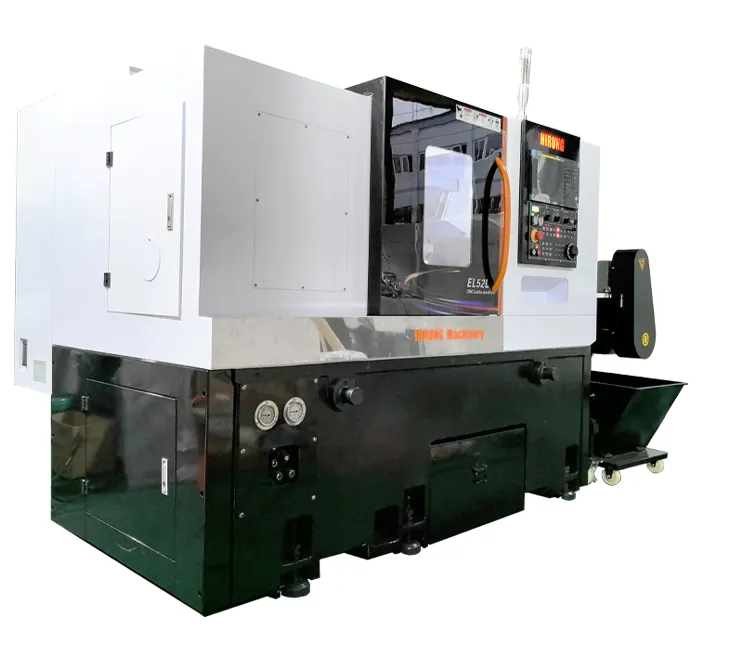
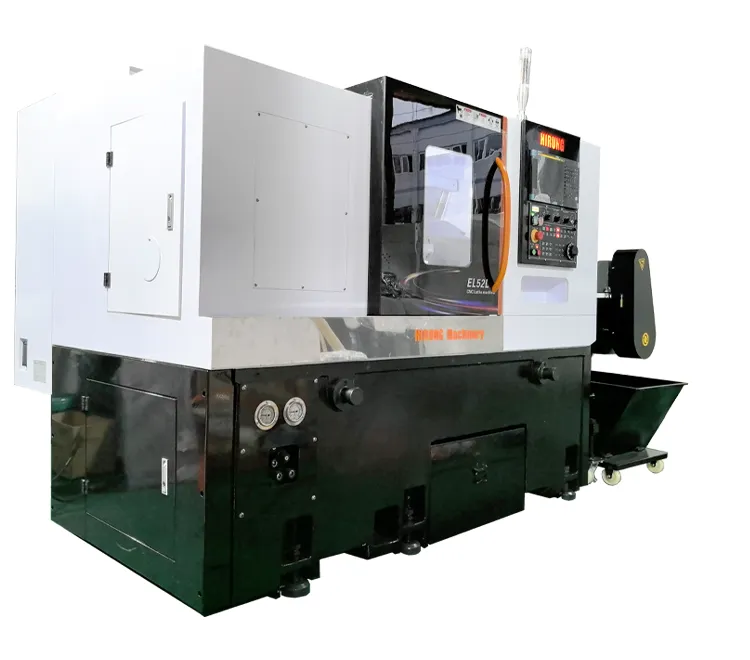
If your main work is shafts, bushings, pins, rings, flanges, threaded round components, or high-volume cylindrical parts, a CNC lathe is more appropriate. A VMC can mill features on round parts, but it cannot efficiently replace turning.
2. You Need High-Volume Multi-Sided Production
A VMC may require multiple setups to machine several sides of a part. For low-volume work, this is acceptable. For high-volume production, setup time can become expensive. An HMC, pallet system, or 4th-axis setup may be more efficient.
3. Your Parts Are Too Large or Too Heavy
Every VMC has limits for X/Y/Z travel, table size, and maximum table load. If your workpiece exceeds these limits, forcing the job onto a smaller machine can reduce accuracy, safety, and efficiency.
4. You Need True 5-Axis Continuous Machining
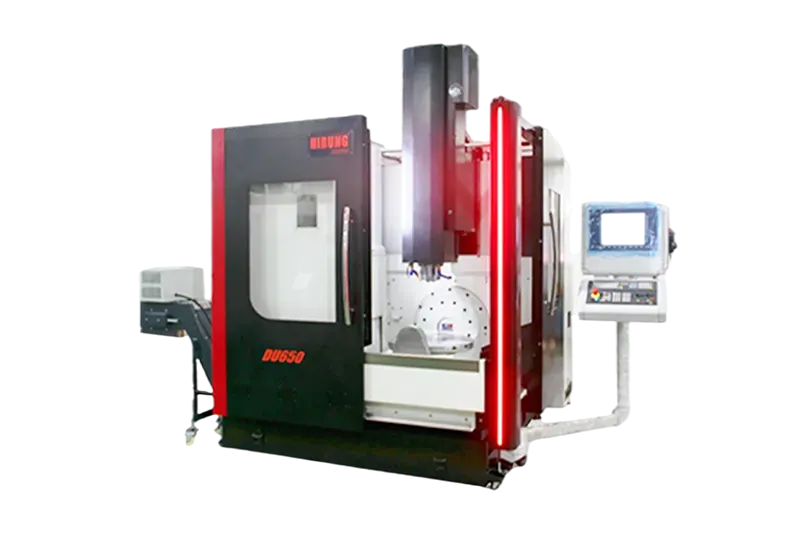
A VMC with a rotary table can handle indexed 4-axis or 3+2 machining in many cases. But for turbine blades, impellers, complex aerospace contours, or continuous 5-axis toolpath control, a dedicated 5-axis machining center is usually more suitable.
5. Your Material Requires Heavy Cutting
For tough materials, deep roughing, and large tools, spindle torque, machine rigidity, taper size, cooling, and vibration control become critical. A light-duty VMC may not be enough even if the workpiece physically fits.
Key Factors to Check Before Deciding If One VMC Is Enough
Before buying a vertical machining center for a small workshop, review the following factors carefully.
Work Envelope and Table Size
Start with your largest regular part, not your largest possible dream part. Check:
- X-axis travel
- Y-axis travel
- Z-axis travel
- Table size
- Distance from spindle nose to table
- Fixture height
- Tool length
- Clearance for clamps and vises
A common mistake is choosing a VMC based only on workpiece size. In reality, you need room for fixtures, clamps, probes, tool length, safe clearance, and chip evacuation.
Table Load
Table load is important when machining steel blocks, molds, fixtures, or heavy castings. The combined weight of the workpiece, vise, fixture plate, rotary table, and clamps must stay within the machine’s rated table load.
HIRUNG’s EV Series, for example, lists different maximum table load capacities across models, ranging from smaller machines suitable for compact parts to larger models designed for heavier workpieces.
Spindle Speed and Torque
Spindle selection depends on your material and cutting strategy.
| Material / Work Type | Important Spindle Requirement |
|---|---|
| Aluminum machining | Higher spindle speed and fast feed capability |
| Steel machining | Good torque and rigidity |
| Mold finishing | Stable high-speed performance and low vibration |
| General job shop work | Balanced speed and torque |
| Heavy roughing | Strong spindle power and rigid structure |
A 10,000–12,000 rpm spindle is commonly used for general-purpose VMC work, while higher-speed built-in spindles may be selected for specific applications such as aluminum, mold finishing, or high-speed machining. HIRUNG’s EV Series lists standard spindle configurations and optional high-speed spindle choices depending on model and application.
Machine Rigidity
Rigidity affects cutting stability, surface finish, tool life, and dimensional accuracy. For a small workshop, rigidity is especially important because one machine may need to handle many different materials.
Check the following:
- Casting quality
- Column and base structure
- Spindle box support
- Linear guideway or box way design
- Ball screw quality
- Thermal stability
- Machine weight
- Foundation requirements
The HIRUNG CNC vertical machining center EV Series emphasizes cast iron structure, heat treatment, broad base design, Z-axis rigidity, and roller-type linear guideways for machining stability.
Tool Magazine Capacity
A small shop may underestimate tool magazine capacity. A typical part may require:
- Face mill
- End mills
- Drills
- Chamfer tools
- Taps
- Reamers
- Spot drill
- Ball nose tools
- Finishing tools
- Probe or tool setter
For small-batch production, a 24-tool magazine is often more practical than it first appears because different jobs require different tool groups.
A larger tool magazine reduces manual tool changes, setup interruptions, and operator dependence.
Control System
The CNC control affects programming, operation, maintenance, and operator training. Common industrial controls include FANUC, Mitsubishi, and Siemens. For small workshops, the control should be easy to learn, widely supported, and compatible with your CAM workflow.
Check:
- Operator familiarity
- Local support availability
- Post-processor compatibility
- Diagnostic functions
- Maintenance documentation
- Macro and probing capability
- Network/data transfer options
Floor Space and Layout
A small workshop must plan more than the machine footprint. You also need space for:
- Machine door opening
- Operator movement
- Tool cart
- Workbench
- Coolant tank
- Chip conveyor
- Compressor access
- Electrical cabinet access
- Maintenance clearance
- Raw material storage
- Finished part inspection area
HIRUNG’s EV Series specification table includes floor-space information by model, which is useful when matching a VMC to a compact workshop layout.
VMC vs Manual Mill vs CNC Router vs HMC for Small Workshops
| Machine Type | Best For | Strengths | Limitations |
|---|---|---|---|
| Manual milling machine | Simple repair, one-off work | Low cost, easy manual control | Low productivity, operator-dependent accuracy |
| CNC router | Wood, plastic, light aluminum | Fast, affordable, large table options | Limited rigidity for steel and heavy cutting |
| CNC vertical machining center | Metal parts, molds, fixtures, job shop work | Good balance of accuracy, flexibility, and productivity | Multi-sided parts may require extra setups |
| Horizontal machining center | High-volume multi-sided parts | Better chip evacuation and production efficiency | Higher investment and larger footprint |
| 5-axis machining center | Complex curved parts, aerospace, medical, molds | Fewer setups, complex geometry | Higher cost, higher programming skill requirement |
| Gantry machining center | Large plates, molds, structural parts | Large work envelope | Requires more floor space and investment |
For most small workshops entering industrial CNC machining, a VMC is usually the most balanced starting point. It is more capable than a manual mill or router for metal production, while usually being more accessible than HMC or 5-axis equipment.
Practical Small Workshop CNC Setup Around One VMC
A good small workshop CNC setup is not only the VMC itself. You also need supporting equipment and a workflow.
| Setup Area | Recommended Planning Point |
|---|---|
| Machine foundation | Confirm floor thickness, leveling, vibration, and access |
| Power supply | Verify voltage, phase, capacity, grounding, and local standards |
| Air supply | Prepare compressor capacity for tool change and pneumatic functions |
| Tooling | Start with common holders, collets, drills, end mills, taps, and face mills |
| Workholding | Use vises, clamps, fixture plates, soft jaws, and possibly a rotary table |
| Coolant | Choose suitable coolant and maintain concentration |
| Inspection | Prepare calipers, micrometers, height gauge, gauge blocks, and CMM if needed |
| Programming | Use CAM software with a correct post-processor |
| Chip handling | Plan chip tray, conveyor, or collection method |
| Safety | Use enclosure, door lock, PPE, and operating procedures |
| Maintenance | Schedule lubrication, coolant cleaning, spindle warm-up, and cleaning routines |
If you expect to machine small batches with frequent changeovers, probing and tool measurement can also be valuable. HIRUNG lists optional accessories such as Renishaw work measuring devices, tool measuring devices, 4-axis rotating tables, 5-axis rotating tables, optical rulers, and through-spindle coolant on the EV Series page.
How to Choose the Right Vertical Machining Center for a Small Workshop
Step 1: List Your Real Parts
Collect drawings, 3D models, or sample parts. Group them by:
- Material
- Size
- Weight
- Tolerance
- Surface finish
- Batch size
- Number of setups
- Required operations
Do not buy based only on general industry trends. Buy based on your actual part mix.
Step 2: Define Your “Core Work”
Your first VMC should cover your most common and profitable work. For example:
- If 80% of your work is aluminum fixtures and plates, choose speed and flexibility.
- If 80% is steel mold inserts, choose rigidity and spindle torque.
- If 80% is small batch custom parts, choose easy setup, tool capacity, probing, and control usability.
- If 80% is heavy workpieces, choose table load and structure first.
Step 3: Match the Machine Size
A compact VMC may be enough if your parts are small, but do not choose a model with no growth margin. A slightly larger work envelope can allow larger fixtures, multiple vises, and future jobs.
For example, smaller models in the EV Series CNC vertical machining center range can fit compact production needs, while larger models provide longer X-axis travel, bigger tables, and higher table load for bigger workpieces.
Step 4: Check Total Cost, Not Only Machine Price
Your real investment includes:
- Machine price
- Shipping and import costs
- Installation
- Electrical preparation
- Air compressor
- Coolant and oil
- Tool holders
- Cutting tools
- Vises and fixtures
- CAM software
- Training
- Spare parts
- Maintenance cost
A cheaper machine may become expensive if it causes downtime, poor accuracy, difficult maintenance, or slow service response.
Step 5: Evaluate Supplier Support
For a small workshop, supplier support matters because you may not have a full maintenance department. Ask the supplier:
- Can they recommend a model based on drawings?
- Do they provide installation guidance?
- Are electrical components clearly labeled?
- What control systems are available?
- What spare parts are stocked?
- Do they provide troubleshooting documents or videos?
- What is the warranty process?
- Can they support international shipping and customs documents?
The EV Series page mentions labeled electrical components, phase sequence protection, packaging, customs documents, and after-sales support procedures, which are relevant for overseas buyers and small workshops without large engineering teams.
Common Mistakes When Setting Up a Small CNC Workshop
Mistake 1: Buying a Machine Based Only on Price
A low-cost machine may look attractive, but poor rigidity, weak spindle performance, low accuracy retention, and difficult maintenance can reduce profit quickly.
Mistake 2: Ignoring Tooling and Workholding Budget
A VMC without proper tooling is not a complete production system. Tool holders, cutters, vises, fixtures, probes, and measuring tools are part of the investment.
Mistake 3: Choosing Too Small a Work Envelope
A part that fits on paper may not fit after adding a vise, fixture plate, clamps, long tools, and safe clearance.
Mistake 4: Forgetting Chip and Coolant Management
Poor chip evacuation can damage tools, affect finish, increase cleaning time, and reduce unattended machining potential.
Mistake 5: Overestimating 5-Axis Needs
Many small workshops can start with a 3-axis VMC and add a 4th-axis rotary table later. Full 5-axis capability is valuable, but it also requires higher investment, programming skill, and application demand.
Mistake 6: Ignoring Operator Skill
A powerful machine still needs good programming, setup, tool selection, fixture design, and inspection. Training should be part of the purchase plan.
Recommended VMC Configuration for Many Small Workshops
The exact model should be selected based on part drawings, but many small workshops can start by evaluating the following configuration range:
| Configuration Item | Practical Recommendation |
|---|---|
| Machine type | CNC vertical machining center |
| Axis | 3-axis, with optional 4th-axis readiness |
| Spindle | General-purpose 10,000–12,000 rpm or application-specific option |
| Taper | BT40 for general small and medium parts; BT50 for heavier cutting if needed |
| Tool magazine | Around 24 tools for flexible job-shop work |
| Control | FANUC, Mitsubishi, Siemens, or other widely supported industrial control |
| Coolant | Standard coolant plus better filtration if needed |
| Chip removal | Select based on material and chip volume |
| Probing | Recommended for frequent setups and tolerance-sensitive work |
| Floor space | Leave maintenance and operator clearance, not just machine footprint |
| Supplier support | Must include installation, documentation, parts, and troubleshooting support |
A well-selected 3-axis VMC with good tooling, stable workholding, and proper CAM programming can often generate more value than an oversized machine with low utilization.
How HIRUNG EV Series Fits Small Workshop CNC Setup Needs
For small workshops considering a production-grade CNC vertical machining center, HIRUNG’s EV Series offers multiple model sizes rather than a one-size-fits-all solution. This matters because a compact mold repair shop and a larger parts supplier may both need a VMC, but their required travel, table load, spindle configuration, and floor space can be very different.
The EV Series includes different X/Y/Z travel ranges, table sizes, spindle speeds, spindle power levels, tool magazine capacities, and optional accessories. The product page also lists machine structures such as cast iron construction, heat treatment, broad base design, spindle support, chip removal options, and roller linear guideways.
For buyers who are still comparing machine size, spindle type, and optional accessories, reviewing the HIRUNG EV Series vertical CNC machining centers is a practical next step.
A good supplier should not only sell the machine but also help match the machine to your parts, production volume, and workshop constraints.
FAQ
Is a vertical machining center enough for a small CNC workshop?
Yes. A vertical machining center is often enough for a small CNC workshop if most parts require milling, drilling, tapping, slotting, boring, and 3-axis machining. It may not be enough if your main work requires turning, large gantry machining, high-volume multi-sided machining, or continuous 5-axis cutting.
What size VMC do I need for a small machine shop?
The right VMC size depends on your largest regular workpiece, fixture size, tool length, table load, and required travel. Many small shops choose a compact or mid-size VMC with enough extra capacity for fixtures and future parts rather than selecting the smallest possible machine.
Should a small workshop buy a VMC or a CNC milling machine?
A CNC milling machine may be enough for light-duty work, training, or simple parts. A VMC is more suitable for industrial production because it usually has an enclosure, automatic tool changer, stronger structure, better repeatability, and better coolant and chip management.
Can a 3-axis VMC make complex parts?
A 3-axis VMC can make many complex parts if they can be machined from one side or from several repositioned setups. For parts that require continuous multi-angle cutting, undercuts, or complex curved surfaces, a 4th-axis, 3+2 setup, or 5-axis machining center may be needed.
What is the biggest limitation of a vertical machining center?
The biggest limitation is access to multiple sides of the workpiece. Since the spindle is vertical, machining side features often requires repositioning, special fixtures, angle heads, or a rotary table. For high-volume multi-sided parts, an HMC or automated system may be more efficient.
What should I check before buying a VMC for a small workshop?
Check part size, material, tolerance, table load, spindle speed and torque, tool magazine capacity, control system, floor space, power supply, air supply, coolant, chip removal, tooling budget, and supplier support.
Is a 4th axis useful for a small CNC workshop?
Yes, a 4th-axis rotary table can be useful for small workshops that machine multi-sided parts, round components with milled features, or indexed machining jobs. It can reduce setups, improve repeatability, and expand the capability of a 3-axis VMC.
Conclusion: Is a Vertical Machining Center Enough?
For many small workshops, the answer is yes. A vertical machining center can be the main production machine if your work is mainly milling-based, your parts fit within the machine envelope, and your production volume does not require a more specialized system.
A VMC is enough for a small workshop when it matches your part size, material, tolerance, batch size, and setup strategy—not simply because it has good specifications on paper.
Before purchasing, review your drawings, estimate your future job mix, calculate your total setup investment, and compare machine models based on real production needs. If your work includes general metal parts, fixtures, molds, plates, brackets, and small-batch OEM components, a properly selected VMC can become the foundation of your CNC workshop.
To compare suitable models and configurations, explore HIRUNG’s vertical CNC machining center EV Series and evaluate the machine according to your workpiece size, required rigidity, spindle performance, tool capacity, and available workshop space.