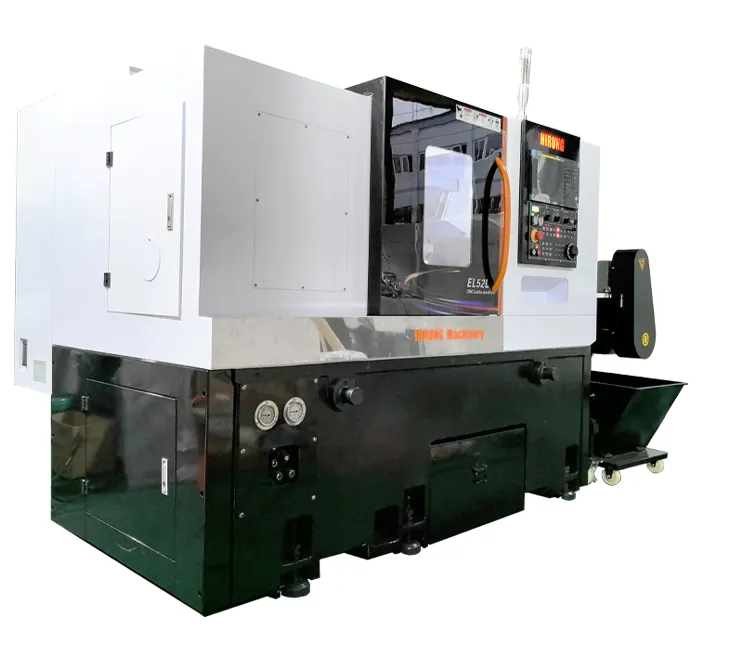
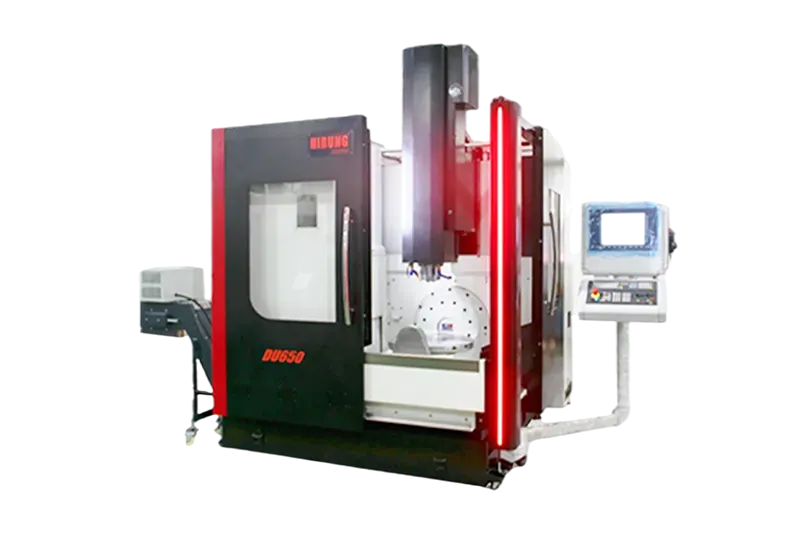
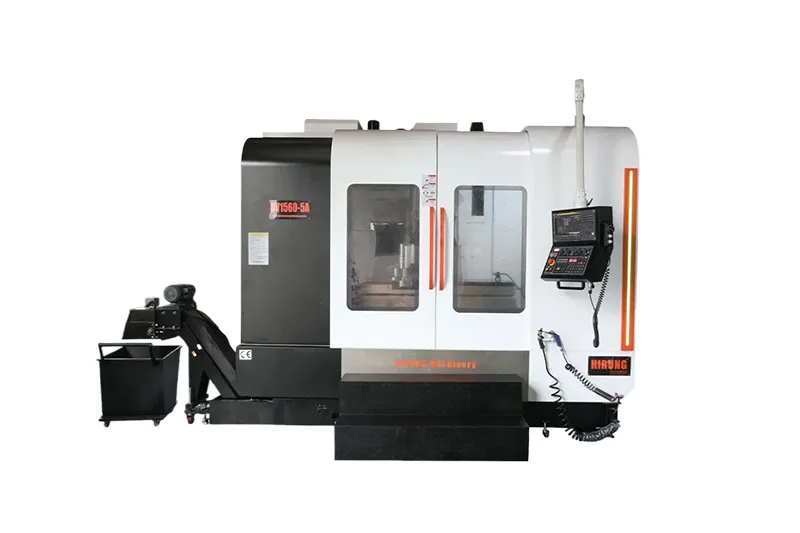
Understanding the distinctions between 3-axis, 4-axis, and 5-axis CNC machining centers is crucial for any manufacturing operation looking to optimize production, reduce costs, and enhance part quality. The choice of a CNC machine – whether 3, 4, or 5-axis – fundamentally depends on the complexity of your parts, desired precision, production volume, and budget. While 3-axis machines are ideal for simpler geometries and flat surfaces, 4-axis machines excel in cylindrical or rotational work, and 5-axis machines unlock unparalleled complexity, efficiency, and surface finish for intricate components, minimizing setups and improving accuracy. This comprehensive guide will dissect each type, helping you determine which machining center truly aligns with your specific needs and strategic goals.
Introduction to CNC Machining Axes
Computer Numerical Control (CNC) machining has revolutionized the manufacturing industry by enabling the production of parts with exceptional precision, repeatability, and speed. At the heart of CNC technology lies the concept of “axes,” which define the directions and planes in which a cutting tool or workpiece can move. Each additional axis dramatically expands the machine’s capabilities, allowing for the creation of increasingly complex geometries and improved efficiency. Understanding how these axes function is fundamental to selecting the optimal machining center for specific manufacturing requirements.
In a typical CNC milling machine, the primary axes are X, Y, and Z. The X-axis typically controls left-right movement, the Y-axis handles front-back movement, and the Z-axis manages up-down movement, often associated with the spindle’s depth control. These three linear axes form the foundation of conventional machining. Multi-axis machines introduce rotational axes, denoted as A, B, and C, which allow the workpiece or the cutting tool to rotate, enabling access to more angles and surfaces in a single setup. This enhanced maneuverability translates directly into reduced production times, superior surface finishes, and the ability to machine intricate designs that would be impossible or highly inefficient with fewer axes.
What is 3-Axis CNC Machining?
3-axis CNC machining represents the foundational level of automated subtractive manufacturing, operating along three primary linear axes: X, Y, and Z. These machines are ubiquitous in workshops worldwide, lauded for their straightforward operation, relative affordability, and ability to handle a vast range of common machining tasks. Despite their “basic” designation compared to multi-axis counterparts, 3-axis machines are workhorses capable of producing high-quality components for numerous industries.
How 3-Axis Machines Work
In a 3-axis CNC machine, the cutting tool moves along the X (left-right), Y (front-back), and Z (up-down) axes simultaneously or independently, while the workpiece remains stationary on the machine table. This movement allows the tool to approach the workpiece from a single, fixed direction, typically from above. Material is removed layer by layer, creating shapes by cutting horizontally and vertically. The primary limitation is that any features not directly accessible from the top, or requiring angled cuts, necessitate manual repositioning of the workpiece, which introduces potential for error and adds significant setup time.
Advantages of 3-Axis CNC
The primary advantage of 3-axis CNC machining lies in its simplicity and cost-effectiveness. The initial investment for a 3-axis machine is significantly lower than for 4- or 5-axis machines. Furthermore, programming 3-axis toolpaths is generally less complex, requiring less specialized software and operator expertise. This makes them an excellent entry point for businesses new to CNC or those with a consistent need for straightforward part geometries. They offer good precision for their operational scope and are highly reliable for milling flat surfaces, drilling holes perpendicular to those surfaces, and creating simple pockets or profiles. The robust nature of these machines also contributes to lower maintenance costs and greater overall uptime.
Limitations of 3-Axis CNC
While versatile, 3-axis machines have inherent limitations, particularly when dealing with complex geometries. Their inability to rotate the workpiece or the cutting tool restricts access to certain features, leading to multiple setups for parts requiring machining on more than one side. Each new setup introduces potential for clamping errors, misalignment, and increased cycle times. Machining undercuts, complex curves, or angled holes can be challenging or impossible without specialized, custom fixturing, which can negate the cost savings. Surface finish quality on contoured surfaces may also be compromised as the tool must make many small, stepped cuts to approximate a curve, leading to visible “scalloping” that might require post-machining finishing operations.
Common Applications for 3-Axis CNC
3-axis CNC machines are perfectly suited for a wide array of applications where part complexity is relatively low and features are primarily accessible from one or two directions. These include: flat parts, molds, and dies with simple cavities, general engraving, drilling operations, production of panels, brackets, and casings, as well as rapid prototyping of simpler components. Industries such as general manufacturing, sign making, woodworking, and educational institutions frequently rely on 3-axis CNC machines for their day-to-day operations due to their balanced blend of capability and affordability.
What is 4-Axis CNC Machining?
Stepping up in complexity and capability, 4-axis CNC machining introduces an additional rotational axis to the traditional X, Y, and Z linear movements. This fourth axis, typically a “rotary table” or “indexing head” (often designated as the A-axis, rotating around the X-axis), allows the workpiece to be rotated during machining. This critical enhancement expands the machine’s versatility, enabling it to tackle more intricate parts than a 3-axis machine without the need for constant manual repositioning.
How 4-Axis Machines Work
A 4-axis CNC machine operates with the standard X, Y, and Z linear axes, augmented by a fourth axis that provides rotational movement to the workpiece. This rotary axis typically allows the workpiece to be indexed (rotated to a specific angle and then held stationary) or continuously rotated during the cutting process. This means the machine can access multiple sides of a part or machine features around a cylindrical component in a single setup. For instance, if machining a shaft with features on its circumference, the 4th axis can rotate the shaft, allowing the tool to cut from different angles without the operator ever touching the part. This capability is fundamental to improving efficiency and accuracy for certain types of components.
Advantages of 4-Axis CNC
The primary advantage of 4-axis machining is the ability to machine multiple faces or continuous features on a cylindrical part in a single setup. This dramatically reduces setup times, minimizes potential for error caused by multiple re-clamping operations, and improves overall accuracy and consistency between features. For example, drilling holes at different angles around a cylindrical part or milling a cam profile becomes far more efficient. This increased efficiency leads to reduced cycle times and higher throughput, making 4-axis machines ideal for medium-complexity parts with rotational symmetry or features on multiple sides. They also enable the use of shorter, more rigid tools when accessing features on the side of a part, leading to better surface finishes and extended tool life.
Limitations of 4-Axis CNC
Despite its significant advantages over 3-axis, 4-axis machining still has limitations. The additional rotary axis typically only allows rotation around one plane (e.g., A-axis around X). This means that while it can access four sides of a cube or machine around a cylinder, it cannot tilt the tool or workpiece in multiple directions simultaneously to achieve highly complex, organic, or deeply contoured surfaces. Features requiring compound angles or undercuts that are not parallel to the spindle’s Z-axis still pose challenges. Programming for 4-axis machining is also more complex than 3-axis, requiring more advanced CAM software and operator skill. The initial investment and maintenance costs are also higher than for a 3-axis machine.
Common Applications for 4-Axis CNC
4-axis CNC machines are well-suited for a variety of applications, particularly those involving rotational components or parts requiring operations on multiple faces. Key applications include: shafts, impellers, gears, cam profiles, manifold blocks with features on multiple sides, fixture plates, and any component requiring radial drilling or milling. Industries such as automotive (e.g., engine components), aerospace (e.g., small turbine parts), medical (e.g., specialized instruments), and general industrial machinery frequently leverage 4-axis capabilities to improve efficiency and part quality for their moderately complex components.
What is 5-Axis CNC Machining?
The pinnacle of CNC machining technology for versatility and complexity, 5-axis CNC machining introduces two additional rotational axes to the three linear axes (X, Y, Z). This allows the cutting tool to approach the workpiece from virtually any direction, enabling the simultaneous movement of five axes. This unparalleled freedom of movement revolutionizes manufacturing capabilities, making it possible to create parts with highly intricate geometries, superior surface finishes, and exceptional accuracy in a single setup.
How 5-Axis Machines Work
A 5-axis CNC machine operates with the standard X, Y, and Z linear axes, complemented by two rotational axes. These additional axes can be configured in various ways:
- Two rotary axes on the table (e.g., A and C axes): The workpiece is mounted on a table that can rotate around two different axes.
- Two rotary axes on the spindle (e.g., B and C axes): The cutting tool (spindle) itself can pivot and rotate.
- One rotary axis on the table and one on the spindle (e.g., A on table, B on spindle): A hybrid configuration offering balanced flexibility.
This simultaneous movement allows the tool to maintain an optimal cutting angle relative to the workpiece surface, eliminating the need for multiple setups and enabling continuous contouring of complex shapes. This ability to manipulate the tool and workpiece in five dimensions unlocks possibilities previously unattainable with fewer axes.
Advantages of 5-Axis CNC
The advantages of 5-axis CNC machining are numerous and transformative for high-precision, complex manufacturing. Firstly, it offers significantly reduced setup times and increased efficiency, as a single setup can often complete a complex part that would require multiple setups on a 3- or 4-axis machine. This also means higher accuracy because potential errors introduced by re-clamping are eliminated. Secondly, 5-axis machines enable the use of shorter, more rigid cutting tools, as the machine can tilt the tool to avoid collisions and access deep cavities or undercuts. This results in superior surface finishes, longer tool life, and improved material removal rates. Lastly, 5-axis machines are capable of machining incredibly complex, organic, and free-form shapes, including turbine blades, impellers, and medical implants, that would be impossible to produce otherwise. They can also create highly detailed features and thin walls with remarkable precision, reducing the need for costly post-machining finishing processes.
Limitations of 5-Axis CNC
While incredibly powerful, 5-axis CNC machining comes with its own set of limitations. The most prominent is the significantly higher initial investment cost compared to 3-axis and 4-axis machines. This includes not only the machine itself but also the more sophisticated CAM software required for programming and the potentially higher maintenance expenses. Programming 5-axis toolpaths is substantially more complex, demanding highly skilled operators and programmers with specialized training. Collision avoidance strategies, tool path optimization, and managing five simultaneous axes require advanced expertise. Furthermore, the increased mechanical complexity of 5-axis machines can sometimes lead to longer repair times if specialized components fail. The power consumption for these advanced machines can also be higher.
Common Applications for 5-Axis CNC
5-axis CNC machines are indispensable in industries demanding the highest levels of precision and complexity. Their capabilities are particularly valuable in: aerospace for turbine blades, impellers, and structural components; medical for prosthetics, surgical instruments, and implants; automotive for intricate engine components and molds; defense for complex weapon parts; and mold & die making for intricate tooling. Any application requiring contoured surfaces, deep cavities, undercuts, or features on multiple compound angles in a single, highly accurate operation is a prime candidate for 5-axis machining. They are also crucial for specialized artistic and architectural applications requiring organic or sculptural forms.
3-Axis vs. 4-Axis vs. 5-Axis: A Comparative Analysis
Choosing between 3-axis, 4-axis, and 5-axis CNC machining centers is a pivotal decision that impacts everything from production costs and lead times to part quality and manufacturing capabilities. This section provides a direct comparison across several key parameters, helping to clarify the distinctions and guide your decision-making process.
Key Differences Summarized
The fundamental distinction lies in the degrees of freedom each machine offers. This table provides a concise overview:
| Feature | 3-Axis CNC | 4-Axis CNC | 5-Axis CNC |
|---|---|---|---|
| Axes of Movement | 3 Linear (X, Y, Z) | 3 Linear (X, Y, Z) + 1 Rotary (A or B) | 3 Linear (X, Y, Z) + 2 Rotary (A & B, or A & C, etc.) |
| Tool/Workpiece Access | From one fixed direction (usually top) | From multiple sides of a cylindrical part, indexed or continuous rotation | From virtually any angle, simultaneous motion of all 5 axes |
| Complexity of Parts | Simple, prismatic parts, flat surfaces, drilling | Medium complexity, cylindrical features, parts requiring multi-sided access without compound angles | High complexity, organic shapes, intricate contours, undercuts, complex aerospace/medical parts |
| Number of Setups | Multiple setups for multi-sided parts | Fewer setups than 3-axis, often single for cylindrical parts | Typically single setup for most complex parts |
| Surface Finish | Good for flat, acceptable for simple curves (may show stepping) | Better for rotational surfaces, generally good | Excellent, highly smooth, often reduces post-machining finishing |
| Tool Length Usage | Requires longer tools for deep features, prone to deflection | Can use shorter tools for side access, improved rigidity | Optimized for shortest possible tools, maximum rigidity, reduced vibration |
| Programming Difficulty | Easiest, basic CAM software | Moderately difficult, requires more advanced CAM | Most difficult, requires expert-level CAM and highly skilled operators |
| Initial Cost | Lowest | Medium | Highest |
Cost Considerations: Initial Investment and Operational Expenses
The financial implications are often a primary driver in machine selection. 3-axis machines represent the most economical entry point, with significantly lower purchase prices and generally lower setup and maintenance costs. Their simplicity means fewer specialized parts and less expensive software. As you move to 4-axis machines, the cost increases due to the added rotary axis, more complex controls, and the need for more advanced CAM software. 5-axis machines demand the highest initial investment. This cost extends beyond the machine itself to include premium CAM software, potential climate-controlled environments for ultra-precision, and ongoing maintenance for more complex mechanical systems. Operational expenses also scale with complexity; 5-axis machines may consume more power, require more frequent precision calibration, and demand higher-skilled, therefore higher-paid, operators and programmers. However, these higher costs are often justified by the significant gains in efficiency, reduced labor per part, and ability to produce high-value, complex components.
Programming Complexity and Software Requirements
The sophistication of programming scales directly with the number of axes. 3-axis programming is relatively straightforward, often achievable with basic CAM packages and G-code knowledge, focusing on linear and planar movements. 4-axis programming introduces rotational toolpaths, requiring CAM software capable of handling indexing or continuous rotational movements, demanding a deeper understanding of coordinate transformations and collision avoidance around the rotary axis. 5-axis programming is by far the most complex, necessitating advanced, multi-axis CAM software that can calculate intricate toolpaths to avoid collisions, manage simultaneous movements, and optimize tool orientation for optimal cutting conditions and surface finish. Expertise in tool vectors, lead/lag angles, and multi-axis kinematics is paramount for effective 5-axis programming, often requiring specialized training and experience.
Tooling and Fixturing Implications
The choice of machine also influences tooling and fixturing strategies. 3-axis machining often requires simpler vises and clamps, but if a part needs machining on multiple sides, specialized and often custom fixtures are needed for each setup, which can be costly and time-consuming to design and produce. 4-axis machining benefits from chucks and tailstocks for cylindrical work, or specialized indexing fixtures. The ability to rotate the workpiece often reduces the need for multiple complex setups. 5-axis machining offers the greatest flexibility in fixturing. Often, a single, robust fixture can hold the workpiece while the machine accesses nearly all surfaces. This capability allows for the use of shorter, more rigid tools, as the machine can tilt the spindle rather than needing a long reach. This leads to improved surface finish, reduced tool deflection, longer tool life, and higher material removal rates, ultimately contributing to overall efficiency and cost savings despite the higher initial machine cost.
Choosing the Right CNC Machine for Your Needs
The decision of whether to invest in a 3-axis, 4-axis, or 5-axis CNC machining center is a strategic one, impacting production capabilities, profitability, and future growth. It requires a thorough evaluation of current and prospective manufacturing requirements, rather than simply opting for the most advanced or cheapest option. Consider these critical factors:
Evaluating Part Complexity and Geometry
The most fundamental factor is the inherent complexity of the parts you intend to machine.
- 3-Axis: If your parts primarily feature flat surfaces, simple pockets, holes drilled perpendicular to the surface, and basic profiles (e.g., brackets, panels, simple molds), a 3-axis machine is likely sufficient and cost-effective.
- 4-Axis: For parts with cylindrical features, rotational symmetry, or features on multiple sides that can be accessed by indexing (e.g., shafts with radial holes, cam profiles, manifold blocks), a 4-axis machine offers significant efficiency gains.
- 5-Axis: If you’re producing highly complex, organic, or free-form shapes, parts with deep cavities, undercuts, compound angles, or thin walls that demand exceptional surface finish and accuracy in a single setup (e.g., impellers, turbine blades, medical implants, complex molds), a 5-axis machine is not just an advantage, but often a necessity. Trying to machine these parts on a 3- or 4-axis machine would be impossible, extremely inefficient, or result in unacceptable quality.
Production Volume and Efficiency Goals
Your production targets and desired level of efficiency should heavily influence your choice.
- High Volume, Simple Parts: For high volumes of relatively simple parts, 3-axis machines can be highly efficient, especially if multiple machines can run simultaneously.
- Medium-to-High Volume, Moderate Complexity: A 4-axis machine significantly reduces cycle times for suitable parts by minimizing setups, making it ideal for continuous production of cylindrical or multi-sided components. The reduced handling and increased automation boost throughput.
- Low-to-High Volume, High Complexity: While 5-axis machines have a higher initial cost, their ability to complete intricate parts in a single setup drastically cuts down overall production time, labor costs associated with multiple setups, and potential for errors. This efficiency can make them highly economical for both low-volume, high-value components (e.g., aerospace prototypes) and higher volumes of complex parts (e.g., medical implants). If reducing lead times and maximizing machine uptime are critical, 5-axis machines excel.
Budgetary Constraints and ROI Considerations
The upfront cost and potential return on investment (ROI) are critical.
- 3-Axis: Lowest initial investment, making them accessible for startups, smaller shops, or companies with limited budgets. The ROI is typically strong for appropriate applications due to low operational costs.
- 4-Axis: Mid-range investment. The ROI is realized through reduced setup times and increased throughput for specific part types that would otherwise require multiple setups on a 3-axis machine.
- 5-Axis: Highest initial investment, requiring a significant capital outlay. However, the ROI for 5-axis machines often comes from their ability to produce parts that competitors cannot, the elimination of multiple operations, superior surface finishes reducing post-processing, and improved accuracy. For high-value, complex components, the efficiency gains and quality improvements can quickly justify the higher cost. Consider not just the machine price, but also the cost of specialized CAM software, training, and higher-skilled labor.
A thorough cost-benefit analysis, factoring in labor, tooling, cycle times, and scrap rates, is essential.
Material Type and Surface Finish Requirements
The type of material you’re machining and the required surface finish also play a role.
- Material: While all CNC machines can cut various materials, the ability to optimize tool angles on 4- and 5-axis machines can significantly improve cutting performance, especially for hard-to-machine materials like titanium or Inconel, by maintaining optimal chip load and reducing tool wear.
- Surface Finish: 5-axis machines excel at producing exceptionally smooth surface finishes, especially on contoured surfaces, because they can maintain a constant tool-to-surface normal vector. This reduces or eliminates the “scalloping” effect often seen on 3-axis machines when machining curves, thereby minimizing the need for costly and time-consuming manual polishing or finishing operations. If a high aesthetic or functional surface finish is paramount, 5-axis is the superior choice.
Future Expansion and Versatility
Consider not just your current needs, but also your projected growth and potential diversification of products.
- Investing in a more capable machine (e.g., 5-axis) might seem excessive now, but could open doors to new, more lucrative contracts and allow you to take on more complex work in the future, providing a competitive edge.
- A 5-axis machine, for instance, can often perform 3-axis and 4-axis operations with ease, offering the ultimate in versatility, whereas a 3-axis machine cannot handle 4- or 5-axis work. This long-term perspective can save you from needing to purchase another machine sooner than anticipated.
Common Misconceptions About Multi-Axis Machining
The world of multi-axis CNC machining is often surrounded by several myths and misunderstandings. Addressing these can help manufacturers make more informed decisions and avoid unnecessary hesitations or misjudgments.
- “More axes always mean better parts.”While 5-axis machines can produce more complex and often higher-quality parts, it doesn’t automatically mean they’re “better” for every job. For a simple flat plate with holes, a 3-axis machine will deliver the exact same quality at a fraction of the cost and complexity. Using a 5-axis for such a part would be overkill, inefficient, and wasteful of resources. The “best” machine is the one that most efficiently and cost-effectively meets the part’s specifications.
- “5-axis machines are too expensive for small shops.”While the initial investment for a new, top-tier 5-axis machine is substantial, the market now offers a wider range of options, including more affordable entry-level models, used machines, and even 3+2 axis machines (where two rotary axes are used for positioning but not simultaneous motion). Furthermore, the long-term cost savings from reduced setups, improved accuracy, and eliminated post-processing can quickly offset the higher initial cost, especially for shops handling high-value, complex components. It’s about ROI, not just the sticker price.
- “Programming multi-axis is too difficult and requires expert-level staff.”While 5-axis programming is undeniably more complex than 3-axis, modern CAM software has significantly simplified the process. User-friendly interfaces, powerful simulation tools, and advanced automated toolpath generation features reduce the learning curve. Many CAM providers also offer comprehensive training programs. While highly skilled operators are certainly an asset, the barrier to entry for proficient multi-axis programming is lower than it once was, especially for 3+2 positioning. Dedicated training can bring competent CNC programmers up to speed.
- “Multi-axis machines are only for aerospace and medical industries.”While these industries are heavy users due to their demanding requirements, 4- and 5-axis capabilities are increasingly beneficial across a broader spectrum. Automotive, mold and die, general industrial, artistic, and even woodworking industries are leveraging multi-axis machines for increased efficiency, design freedom, and competitive advantage. Any industry looking to reduce setups, improve surface finish on contours, or produce intricate components can benefit.
- “I can just use a 3-axis machine with complex fixturing instead of a multi-axis.”While complex fixturing can sometimes allow a 3-axis machine to approximate multi-sided work, it comes with significant drawbacks. Designing and building custom fixtures is costly and time-consuming. Each new setup introduces potential for error due to re-clamping, leading to reduced accuracy and repeatability. Tool access can still be severely limited, forcing the use of long, less rigid tools. Ultimately, what a multi-axis machine does in one highly accurate setup, a 3-axis machine might do in several, with increased risk of errors, longer cycle times, and higher labor costs. The perceived savings on machine cost are often eaten up by these hidden expenses and compromises in quality.
The Future of CNC Machining Technology
The CNC machining landscape is continuously evolving, driven by advancements in automation, artificial intelligence, and materials science. Looking ahead, several trends will further blur the lines between 3, 4, and 5-axis capabilities and push the boundaries of what’s possible in manufacturing.
One significant trend is the increasing integration of automation and robotics. Robotic arm loaders and unloaders, automated pallet changers, and integrated quality control systems are becoming more common across all axis configurations, but particularly enhancing the productivity of multi-axis machines. This trend moves towards “lights-out” manufacturing, where machines can run autonomously for extended periods, reducing labor costs and maximizing machine utilization.
Artificial Intelligence (AI) and Machine Learning (ML) are set to revolutionize CNC. AI algorithms can optimize toolpaths more efficiently than human programmers, predict tool wear, prevent collisions, and even compensate for thermal expansion in real-time, leading to unprecedented levels of precision and reduced scrap rates. Predictive maintenance, driven by ML, will reduce downtime by identifying potential failures before they occur. These intelligent systems will make multi-axis machines even more capable and easier to operate, lowering the skill barrier for complex operations.
The development of hybrid manufacturing, combining additive and subtractive processes, is also gaining traction. Imagine a 5-axis machine that can deposit material (e.g., metal 3D printing) to build a near-net-shape part, and then immediately use its subtractive capabilities to machine it to final precision and surface finish, all in one setup. This significantly reduces material waste and allows for the creation of geometries impossible with either method alone.
Furthermore, advanced materials like composites, ceramics, and superalloys continue to demand more sophisticated machining solutions. Multi-axis machines, with their ability to optimize tool angles and use shorter, more rigid tools, are better equipped to handle these challenging materials, ensuring efficient material removal and maintaining structural integrity. The future will likely see even more specialized tooling and cutting strategies developed in conjunction with multi-axis capabilities to tackle these next-generation materials.
Finally, the growing emphasis on digital twins and virtual commissioning will further enhance the efficiency of CNC operations. Creating a virtual replica of the machine, workpiece, and tooling allows for comprehensive simulation and optimization before any physical cutting begins. This reduces risk, accelerates program validation, and ensures first-time-right production, particularly crucial for the complex operations of 5-axis machining. These advancements will continue to drive the evolution of CNC technology, making manufacturing processes more intelligent, efficient, and versatile than ever before.
Conclusion: Making an Informed Decision
The journey through 3-axis, 4-axis, and 5-axis CNC machining reveals a clear progression in capability, complexity, and cost. Each machine type serves a distinct purpose within the manufacturing landscape, offering unique advantages tailored to specific production demands. 3-axis machines remain the bedrock for simpler, prismatic parts, valued for their affordability and ease of use. 4-axis machines bridge the gap, providing enhanced efficiency for parts with rotational features or multi-sided access without extreme complexity. 5-axis machines stand at the forefront, unlocking the ability to produce the most intricate geometries with unparalleled precision, superior surface finishes, and significant time savings through single-setup machining.
Ultimately, the “best” machining center is not the one with the most axes, but the one that perfectly aligns with your operational needs, part complexity, volume requirements, and financial constraints. An informed decision requires a comprehensive analysis of:
- The specific geometry and complexity of your current and future parts.
- Your production volume targets and desired lead times.
- Your budget for initial investment, software, tooling, and labor.
- The required surface finish and material type.
- Your long-term strategic goals and potential for growth into more complex projects.
By carefully weighing these factors and dispelling common misconceptions, manufacturers can confidently choose the CNC machining center that not only meets their present needs but also positions them for future success and competitive advantage in a rapidly evolving industry.
Frequently Asked Questions (FAQs)
Q1: What are the primary differences between 3, 4, and 5-axis CNC machines?
The primary difference lies in the number of axes of movement and the types of motion each machine can perform. A 3-axis machine moves along linear X, Y, and Z axes, suitable for simpler, prismatic parts from one direction. A 4-axis machine adds a rotational axis (typically around the X-axis), allowing for machining on multiple sides or around a cylindrical part. A 5-axis machine incorporates two rotational axes in addition to the three linear axes, enabling the cutting tool to approach the workpiece from virtually any angle, ideal for complex, contoured, or organic shapes in a single setup.
Q2: Why would I need a 5-axis machine if a 3-axis can do the job with multiple setups?
While a 3-axis machine can sometimes achieve complex parts through multiple setups, a 5-axis machine offers significant advantages. It dramatically reduces setup times, minimizes potential for error from re-clamping, improves overall accuracy and consistency, allows for the use of shorter and more rigid tools (leading to better surface finish and tool life), and can create geometries impossible with 3-axis. For high-value, complex parts, the efficiency and quality gains often outweigh the higher initial cost.
Q3: Is programming a 5-axis CNC machine much harder than a 3-axis?
Yes, programming for 5-axis simultaneous machining is significantly more complex than for 3-axis. It requires advanced CAM software capable of calculating intricate toolpaths, managing collision avoidance, and optimizing tool orientation across five moving axes. While modern CAM software has made it more accessible, it still demands a higher level of skill and understanding from the operator/programmer compared to 3-axis programming.
Q4: What types of industries benefit most from 5-axis CNC machining?
Industries that require high precision, complex geometries, and superior surface finishes benefit most from 5-axis CNC machining. This includes aerospace (turbine blades, structural components), medical (implants, prosthetics, surgical instruments), automotive (intricate engine parts, molds), defense, and mold & die making. Any sector producing highly contoured or intricate components can leverage 5-axis capabilities.
Q5: What are the main cost considerations when choosing between these machines?
Cost considerations include the initial purchase price of the machine (lowest for 3-axis, highest for 5-axis), the cost of CAM software (more basic for 3-axis, highly advanced for 5-axis), tooling costs, training for operators, maintenance expenses, and operational costs like power consumption. It’s crucial to consider the total cost of ownership and the return on investment (ROI) based on your specific production needs and the value of the parts you will produce.
Q6: Can a 5-axis machine perform 3-axis or 4-axis operations?
Yes, absolutely. A 5-axis machine is fully capable of performing all operations that a 3-axis or 4-axis machine can do, and often with greater speed and precision due to its rigidity and advanced control system. This versatility is one of its key advantages, allowing it to adapt to a wide range of part complexities.
Q7: How does multi-axis machining improve surface finish?
Multi-axis machining, especially 5-axis, improves surface finish by allowing the tool to maintain an optimal cutting angle relative to the workpiece surface. This means the tool can use its side cutting edges more effectively, employing larger step-overs for finish passes. It also enables the use of shorter, more rigid tools, reducing tool deflection and vibration, which all contribute to a smoother, more consistent surface finish with less “scalloping” on contoured surfaces, often reducing or eliminating the need for manual post-machining finishing.
CNC machining, 3-axis CNC, 4-axis CNC, 5-axis CNC, multi-axis machining, CNC machine types, machining center, CNC comparison, manufacturing process, part complexity, production efficiency, surface finish, CAD/CAM, aerospace manufacturing, medical device manufacturing, automotive components, mold and die, machining capabilities, choosing CNC machine, CNC advantages, CNC limitations, machining budget, CNC automation, machine shop, CNC technology, tool path, spindle, rotary axis, linear axis, machine investment, operational costs, CNC programming, fixturing, tooling, machine shop equipment, subtractive manufacturing, precision machining, advanced manufacturing, CNC guide, industrial manufacturing, engineering solutions, production optimization, tool life, material removal, cycle time reduction, CNC applications, industrial automation, manufacturing technology, high-speed machining