The primary difference between a CNC Vertical Machining Center (VMC) and a Horizontal Machining Center (HMC) lies in the orientation of the spindle. In a VMC, the spindle axis is vertical, while in an HMC, the spindle axis is horizontal. This fundamental design difference dictates everything from how a workpiece is held and how gravity affects the operation to chip removal, cost, and the types of jobs each machine excels at. Understanding this distinction is crucial for selecting the right manufacturing process to achieve optimal precision, efficiency, and cost-effectiveness for your machined parts. As a leader in precision CNC machining since 2002, we at Hirung leverage deep, hands-on expertise with these technologies daily to deliver superior components for our global partners.
Understanding the Fundamentals: What is a CNC Machining Center?
Before diving into the vertical versus horizontal debate, it’s essential to understand what a CNC machining center is. A CNC (Computer Numerical Control) machining center is a highly advanced machine tool that performs various machining operations, primarily milling, drilling, tapping, and boring, with automated precision. Guided by a computer program (G-code), it uses rotating cutting tools to selectively remove material from a stationary workpiece, shaping it into a desired component. These centers are the workhorses of modern manufacturing, capable of producing complex parts with tight tolerances for industries ranging from aerospace to medical devices. The main distinction between different types of machining centers, like VMCs and HMCs, comes down to their structural configuration.
What is a Vertical Machining Center (VMC)?
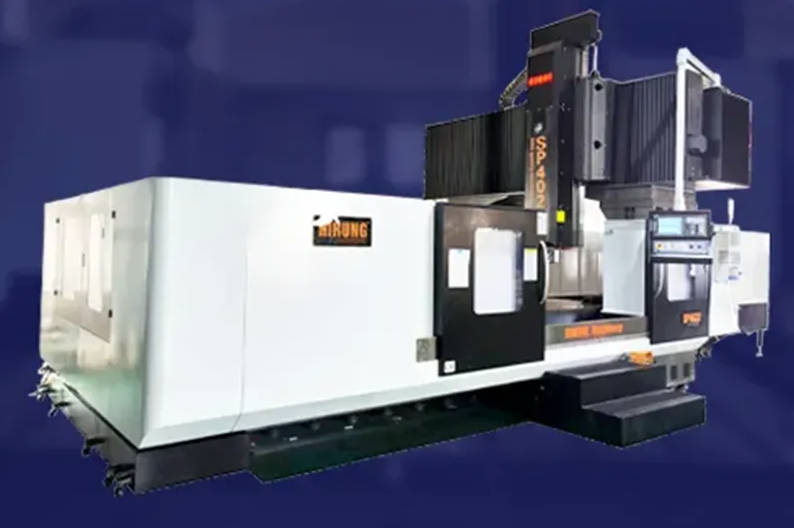
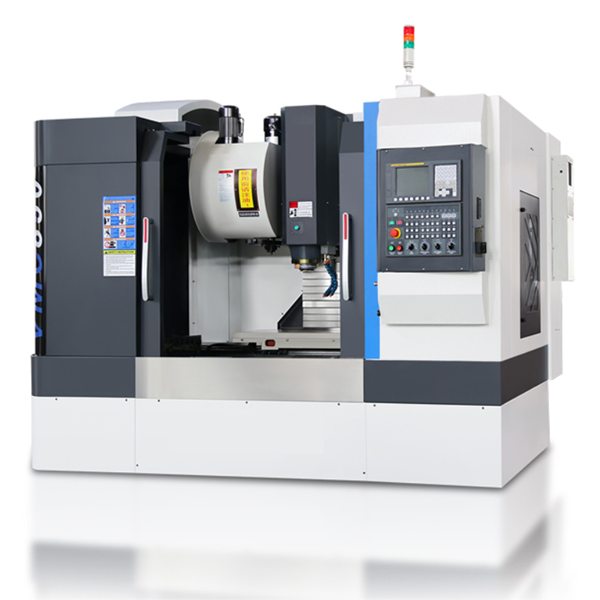
A Vertical Machining Center (VMC) is perhaps the most common type of CNC milling machine. Its defining feature is the vertically oriented spindle, which holds and spins the cutting tool. The visibility and accessibility of VMCs make them incredibly popular for a wide range of tasks, from prototyping to small and medium production runs.
The Core Concept: A Vertical Spindle Axis
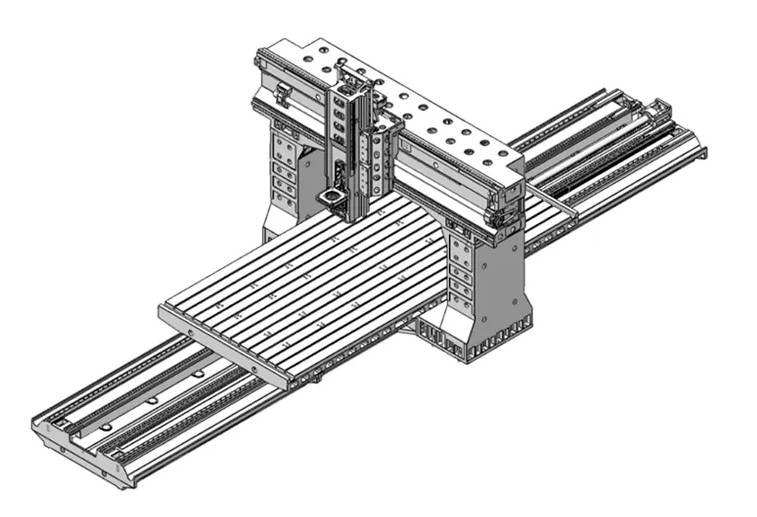
In a VMC, the spindle stands upright, and the cutting tool points straight down towards the machine’s table. The machine table moves along the X and Y axes (left-right and forward-backward), while the spindle moves up and down along the Z-axis. This setup is highly intuitive for operators because they can look directly down onto the workpiece, making setup, tool changes, and monitoring the machining process straightforward. This direct line of sight is a significant advantage, especially for one-off parts or complex setups that require careful verification.
How VMCs Work: Workpiece and Tool Movement
The workpiece is typically secured flat on the VMC’s table using clamps or a vise. The table then moves underneath the rotating spindle to create the desired 2D features like pockets, contours, and slots. The spindle’s vertical Z-axis movement controls the depth of cut and allows for drilling and tapping operations. Because gravity holds the workpiece firmly against the table, setting up heavy or large, flat parts can be simpler than on an HMC. However, this same gravitational force creates a significant challenge: chip evacuation. Chips and shavings tend to pile up on the cutting surface, which can lead to recutting, poor surface finish, and increased tool wear if not managed effectively with high-pressure coolant or air blasts.
Common Applications and Strengths of VMCs
VMCs are extremely versatile and are often the machine of choice for mold and die making, prototyping, and work on large, flat components. Their lower cost and smaller footprint make them an accessible entry point for many machine shops.
- Ideal for 3-axis work: Perfect for parts that can be machined from one side, like plates, molds, and fixture components.
- Ease of Use: The open setup and clear visibility simplify programming, setup, and operation.
- Cost-Effective: Generally, VMCs have a lower initial investment cost compared to their horizontal counterparts.
- Best for: Single-sided operations, large and heavy workpieces, prototyping, and low-to-medium volume production.
What is a Horizontal Machining Center (HMC)?
A Horizontal Machining Center (HMC) is defined by its horizontally oriented spindle. This machine is engineered for high-volume production and complex, multi-sided machining. While more of a significant investment, the HMC offers unparalleled efficiency and productivity advantages in the right applications.
The Core Concept: A Horizontal Spindle Axis
As the name suggests, the spindle in an HMC is parallel to the floor. The cutting tool extends horizontally towards the workpiece, which is mounted on a vertical surface. This configuration might seem less intuitive, but it provides a major advantage: gravity-assisted chip removal. As material is cut, the chips and coolant naturally fall away from the workpiece and the cutting zone, dropping into a conveyor below. This leads to better surface finishes, longer tool life, and a cleaner machining environment, which is critical for unattended or “lights-out” manufacturing.
How HMCs Work: Pallet Systems and Tombstones
HMCs typically integrate a rotary table (B-axis) and an Automatic Pallet Changer (APC). The workpiece is mounted onto a vertical fixture, often a four-sided block called a “tombstone.” This setup allows access to multiple sides of the part—or multiple parts—in a single clamping. While one pallet with its tombstone is inside the machine being worked on, the operator can be safely outside, unloading finished parts and loading new raw material onto a second pallet. When the cycle is complete, the machine automatically swaps the pallets in seconds, virtually eliminating setup time from the production cycle and maximizing spindle uptime.
Common Applications and Strengths of HMCs
HMCs are the powerhouse of production machining. Their design makes them ideal for parts that require work on multiple faces and for manufacturers who need to produce thousands of identical parts with minimal downtime.
- Superior Chip Management: Gravity ensures chips fall away, enhancing cut quality and tool longevity.
- High Productivity: Integrated pallet changers and the ability to machine multiple parts on a tombstone drastically reduce cycle times.
- Multi-Sided Machining: The rotary table allows for 4-sided machining in one setup, improving accuracy by reducing re-fixturing errors.
- Best for: High-volume production, parts requiring multi-face machining, and applications where spindle uptime is paramount.
VMC vs. HMC: A Head-to-Head Comparison
Choosing between a VMC and an HMC depends entirely on the specific requirements of the project, including part complexity, production volume, material, and budget. Here is a direct comparison of their key characteristics:
| Feature | Vertical Machining Center (VMC) | Horizontal Machining Center (HMC) |
|---|---|---|
| Spindle Orientation | Vertical (perpendicular to the table) | Horizontal (parallel to the table) |
| Workpiece Mounting | On a flat, horizontal table. Gravity assists in holding the part down. | On a vertical tombstone or fixture. Requires more robust clamping. |
| Chip Evacuation | Challenging. Chips can pile up, requiring coolant or air blasts. | Excellent. Gravity pulls chips away from the part and tool. |
| Productivity & Automation | Lower. Setup time occurs while the machine is idle. Pallet changers are less common. | Very high. Automatic pallet changers and tombstone fixtures allow for near-continuous production. |
| Cost & Footprint | Lower initial investment. Generally a smaller footprint. | Significantly higher initial investment. Larger and heavier machines. |
| Part Access | Easy access to one side of the part. Additional setups needed for other sides. | Access to multiple sides (typically 4) in a single setup using a rotary table. |
| Best Use Case | Prototyping, mold making, large/flat parts, low-to-medium volume runs. | High-volume production, complex parts, unattended “lights-out” manufacturing. |
| Operator Visibility | Excellent. The operator can easily see the cutting action. | Limited. The workpiece is often inside a fully enclosed machining area. |
How to Choose: Which Machine is Right for Your Project?
As a precision machining partner, we at Hirung make this decision every day. The right choice is not about which machine is “better” in a vacuum, but which is the most effective and efficient tool for a specific part and production quantity. This strategic choice directly impacts lead time, part cost, and final quality.
When to Choose a VMC
A VMC is the optimal choice for projects with simpler geometries that primarily require machining on one or two faces. If you need a prototype, a small batch of parts, or have a component like a large base plate, a VMC offers a perfect blend of precision and cost-effectiveness. The simpler setup and lower operational overhead translate into competitive pricing for shorter runs.
When to Choose an HMC
An HMC becomes the clear winner for high-volume orders or for complex parts that need machining on three, four, or more sides. Imagine a hydraulic manifold with ports on multiple faces. Machining this on a VMC would require multiple, time-consuming setups, introducing opportunities for error with each re-clamping. On an HMC, it can be completed in a single setup, ensuring higher accuracy and drastically faster cycle times. The initial investment is higher, but for production runs, the throughput and reduced labor per part deliver a lower overall piece price.
The Hybrid Option: 5-Axis Machining Centers
It’s also worth mentioning 5-axis machining centers, which can be seen as an evolution of the 3-axis VMC. These machines add two rotary axes (A and C) to the standard X, Y, and Z linear axes. This allows the cutting tool to approach the workpiece from any direction, enabling the machining of incredibly complex geometries like turbine blades or medical implants in a single setup. While they offer the ultimate in capability, they also represent a higher level of complexity and cost.
Hirung’s Expertise: Applying the Right Technology for Your Parts
At Hirung, our state-of-the-art facility is equipped with a fleet of advanced CNC machines, including high-precision Vertical Machining Centers. This isn’t just about owning the equipment; it’s about knowing precisely when and how to deploy it. When you partner with us, our engineering team conducts a thorough analysis of your part design, material specifications, tolerances, and volume requirements.
This expert review allows us to select the most efficient and cost-effective manufacturing method. For your intricate prototype, our VMCs provide the flexibility and precision you need. For a large-scale production order, we leverage automation principles to optimize throughput, even on our vertical machines. This commitment to process optimization ensures that every part we deliver is not only compliant with ISO 9001:2015 standards but is also produced using the smartest, most economical strategy. This is the Hirung difference—transforming your designs into reality with unmatched expertise and technology.
Frequently Asked Questions (FAQ)
- Is an HMC more accurate than a VMC?
- Not inherently. Both machines can achieve extremely tight tolerances. However, HMCs can offer better overall part accuracy for complex components because they can machine multiple sides in a single setup, eliminating the potential for cumulative error that comes from re-fixturing a part multiple times on a VMC.
- Why are HMCs so much more expensive than VMCs?
- The higher cost of an HMC is due to several factors: they are typically built with heavier, more rigid castings to handle aggressive cutting; they include complex and robust systems like a built-in rotary table and an Automatic Pallet Changer (APC); and their tool magazines are often much larger. These features are all engineered for high-speed, high-volume production, which commands a premium price.
- Can a VMC do the same work as an HMC?
- Technically, yes, but not as efficiently. A VMC can machine multiple sides of a part, but it requires the operator to stop the machine and manually unclamp, rotate, and re-clamp the part for each side. This is slow, labor-intensive, and increases the risk of error. An HMC automates this process, making it far superior for multi-sided production work.
- What is a “tombstone” in CNC machining?
- A tombstone is a tall, typically four-sided fixture used on Horizontal Machining Centers. It is mounted to the machine’s rotary table. Multiple workpieces can be attached to each face of the tombstone, allowing the machine to work on many parts (or many sides of a few parts) in one cycle, dramatically increasing productivity.
Ready to see how our machining capabilities can benefit your next project? Contact us today for a free quote.