
5 Axis Machining Center Manufacturer
Unlocking Precision and Efficiency: The Power of 5 Axis Machining Centers
HIRUNG's 5 axis machining centers are engineered to tackle complex geometries with high precision and repeatable accuracy. Available in the DV, DU, and GU series, these 5 axis CNC machining centers help manufacturers produce demanding components in a single setup — reducing handling, shortening cycle times, and improving part quality across aerospace, automotive, medical, and energy production.This guide explains what a 5 axis machining center is, how the configurations differ, why the technology outperforms 3 axis machining, and how to choose the right HIRUNG model for your parts.
2015
ESTABLISHED
33
COUNTRIES SERVED
3
SERIES · DV/DU/GU
VDI 3441
ACCURACY TESTED
FUNDAMENTALS
What Is a 5 Axis Machining Center?
A 5 axis machining center is a CNC (Computer Numerical Control) machine that moves the cutting tool or the workpiece along five axes at the same time. A conventional 3 axis machine travels only along the linear X, Y, and Z axes (left–right, front–back, and up–down). A 5 axis machine adds two rotational axes — typically A, B, or C — so the tool can approach a part from virtually any angle in one clamping.
In practice, that means complex contours, inclined holes, deep cavities, and undercuts that would require multiple setups on a 3 axis machining center can be finished in a single operation. The result is fewer fixtures, less manual repositioning, and tighter positional relationships between machined features.
How 5 Axis Machining Works — The Five Degrees of Freedom
The three linear axes position the spindle relative to the workpiece. The two rotary axes tilt and rotate the workpiece (trunnion table) or the spindle head (swivel head). Because the cutting tool stays tangentially oriented to the surface, 5 axis machining maintains an optimal cutting angle, improves surface finish, and reduces cutting-tool stress.
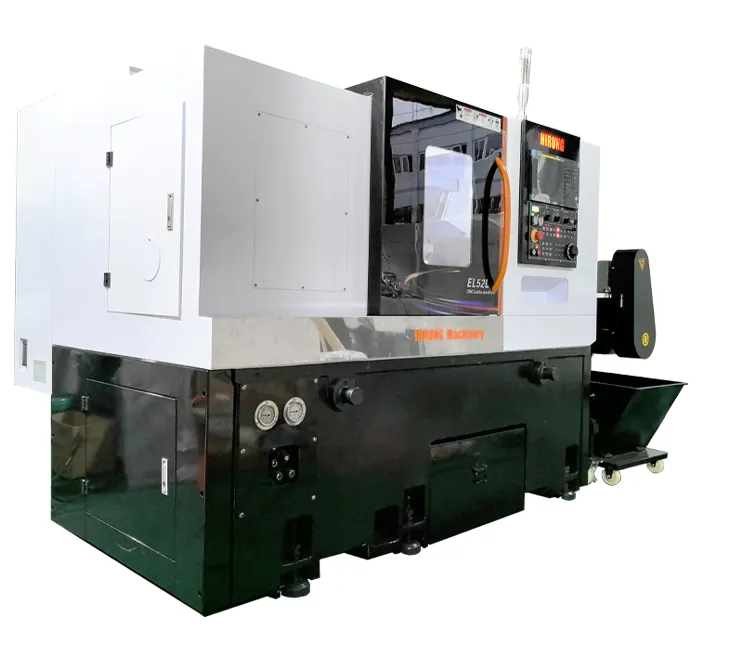
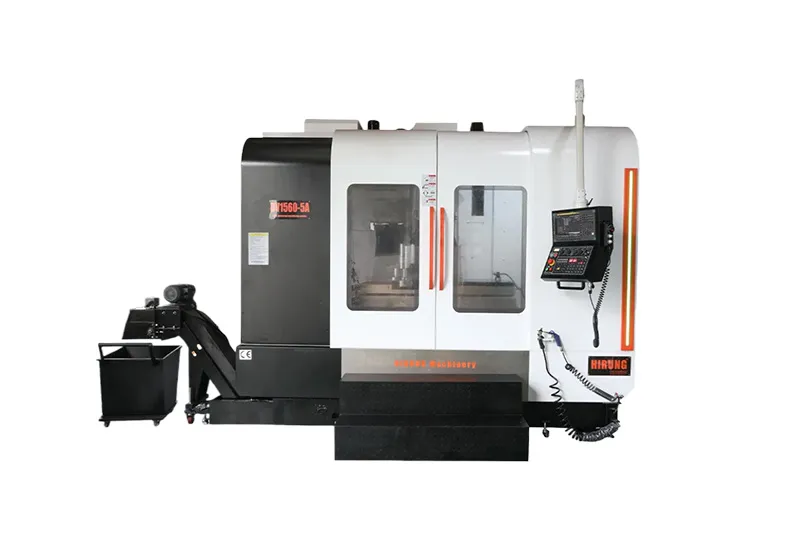
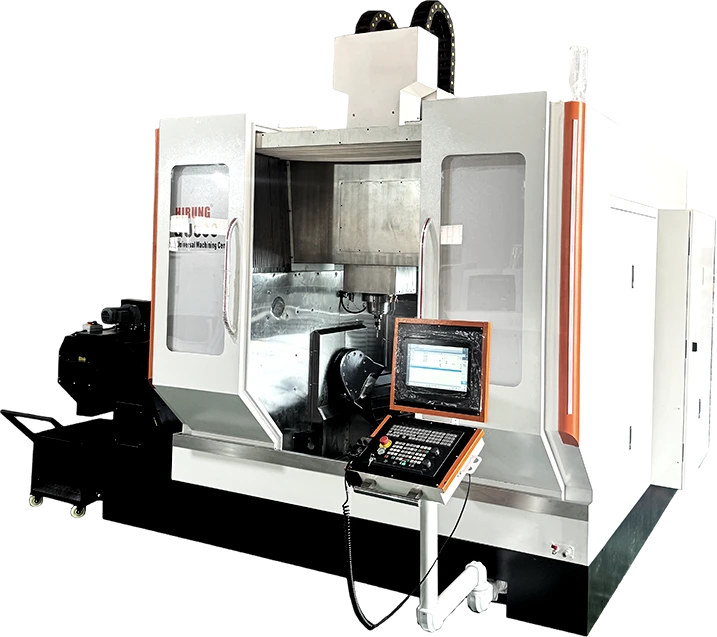
HIRUNG CNC machining center — full machine view
MACHINE TYPES
Common 5 Axis Machine Configurations
5 axis machining centers gain their extra degrees of freedom through different mechanical layouts. The two most common approaches are the dual-rotary table and the swivel / articulating head. The right configuration depends on your typical workpiece size, weight, and the features you need to reach.
Dual-Rotary Table (Trunnion Table)
The workpiece is mounted on a trunnion table that provides the two rotary axes (commonly A and C, or B and C). The cutting tool travels along X, Y, and Z while the table tilts and rotates the part. This layout offers excellent rigidity and stability for small- to medium-sized parts and is well suited to high-precision components.
Excellent rigidity and stability for smaller to medium workpieces.
Often found on machines built for intricate, high-precision parts.
Workpiece size and weight are limited by the table's capacity.
Swivel / Articulating Head
The rotary axes are built into the spindle head itself. The tool tilts and rotates relative to a stationary workpiece on a standard XYZ table. This is ideal for larger, heavier parts because the table does not need to rotate with the component, which also simplifies fixturing.
Ideal for larger, heavier workpieces.
Simpler fixturing — the table stays fixed.
Head geometry must be considered for collision avoidance.
How to Choose a Configuration
Choose a trunnion (dual-rotary table) layout when you machine smaller, high-precision parts and need maximum rigidity. Choose a swivel / articulating head when your parts are large or heavy and the table must stay stationary. A gantry structure with a direct-drive rotary table (the GU Series) extends this further for very large, complex components.
Configuration vs HIRUNG series — which machine type fits your parts
| Configuration | How it works | Best for | HIRUNG series |
|---|---|---|---|
| Dual-rotary table (trunnion) | The table tilts and rotates the workpiece while the tool moves in X/Y/Z | Small to medium, high-precision parts | DV Series |
| Swivel / articulating head | The spindle head tilts and rotates; the workpiece stays fixed on the table | Larger, heavier workpieces with simpler fixturing | DU Series |
| Gantry + direct-drive B/C rotary table | Gantry linear axes combined with a double-supported DD rotary table | Large, complex multi-surface parts | GU Series |
WHY 5-AXIS
Why Move From 3 Axis to 5 Axis Machining?
The leap from 3 axis to 5 axis machining delivers measurable gains in productivity, part quality, and design freedom. The benefits below are why manufacturers in demanding industries adopt 5 axis CNC machining centers.
Enhanced Geometric Freedom
5 axis machining creates highly complex geometries — contoured surfaces, deep cavities, and undercuts — that are difficult or impossible on a 3 axis machine.
Fewer Setups, Shorter Cycle Times
Accessing multiple sides of a part in one operation reduces the number of setups. This 'done-in-one' approach saves time, lowers labor cost, and speeds up production.
Superior Surface Finish
Continuous tool engagement and a maintained optimal cutting angle produce smooth, high-quality surfaces — often removing the need for secondary finishing such as sanding or polishing.
Higher Precision and Accuracy
Eliminating multiple setups removes repositioning errors, improving precision and supporting tighter tolerances — critical for aerospace, medical, and automotive components.
Longer Tool Life, Less Tool Wear
Orienting the tool tangentially to the cutting surface allows efficient material removal with less stress on the tool, extending tool life. Shorter tools also reduce vibration and improve precision.
Cost-Effectiveness for Complex Parts
Although the initial investment is higher, efficiency gains, less material waste, and the ability to take on more complex projects make 5 axis machining cost-effective for intricate components over time.
PRODUCT RANGE
HIRUNG 5 Axis Machining Center Series at a Glance
HIRUNG offers three 5 axis CNC machining center families. The table below compares their configuration, ideal workpiece, and key specifications to help you shortlist a model.
HIRUNG 5 axis machining center series comparison
| Attribute | DV Series | DU Series | GU Series (Gantry) |
|---|---|---|---|
| Configuration | Dual-rotary table (trunnion, B+C) | Swivel head, worm-gear B/C axis | Gantry + direct-drive B/C rotary table |
| Best for | Large, heavy parts (aerospace, automotive, energy) | Compact high-precision intricate parts | Large complex multi-surface parts |
| Worktable / envelope | DV1560: 800×1500 mm, max load 1200 kg | Up to Φ720×600 mm (OP Φ800) | Φ260–Φ800 mm, load up to 1200 kg+ |
| Spindle interface & speed | BBT-40 built-in, 14,000 rpm | HSK A63, 18,000 / 24,000 rpm, 30 kW | HSK A63 built-in, 18,000 / 24,000 rpm, 30 kW |
| Tool magazine | 24T arm type | 32T chain | 24/32, bidirectional |
| Key structure | Meehannite FC30, aged 90 days | German Mihanite FC30, widened base | Germany Meehannite, tempered & stress-relieved |
| Typical control | FANUC 0i MF | LYNUC N3 / Siemens ONE | SIEMENS ONE (OP HEIDENHAIN / SYNTEC) |
DV SERIES
HIRUNG DV Series — 5 Axis CNC Machining Center for Large, Heavy Parts
The HIRUNG DV Series is engineered for stable, high-precision machining of large and heavy parts. Introduced with the DV1560, this series is a cornerstone for industries such as aerospace, automotive, and energy, where load-bearing capacity, rigidity, and accuracy are paramount.
Key Features of the DV Series
Integrated spindle and B-axis design minimizes precision loss from repeated assembly.
Direct-drive (DD) B-axis with circular optical ruler: ±110° indexing, positioning accuracy 0.0015°.
High-speed BBT-40 built-in electric spindle up to 14,000 rpm for roughing to fine finishing.
Robust mechanical structure built with Meehannite FC30 castings aged for 90 days (net weight ~12,000 kg for DV1560).
Optimized axis layout with widened roller linear guides (X:6, Y:8, Z:6 heavy-duty sliders) for dynamic accuracy.
User-friendly electrical box with Chinese / English / Russian labeling for easier maintenance.
Standard 24T arm-type tool magazine, tool exchange time 1.5 s.
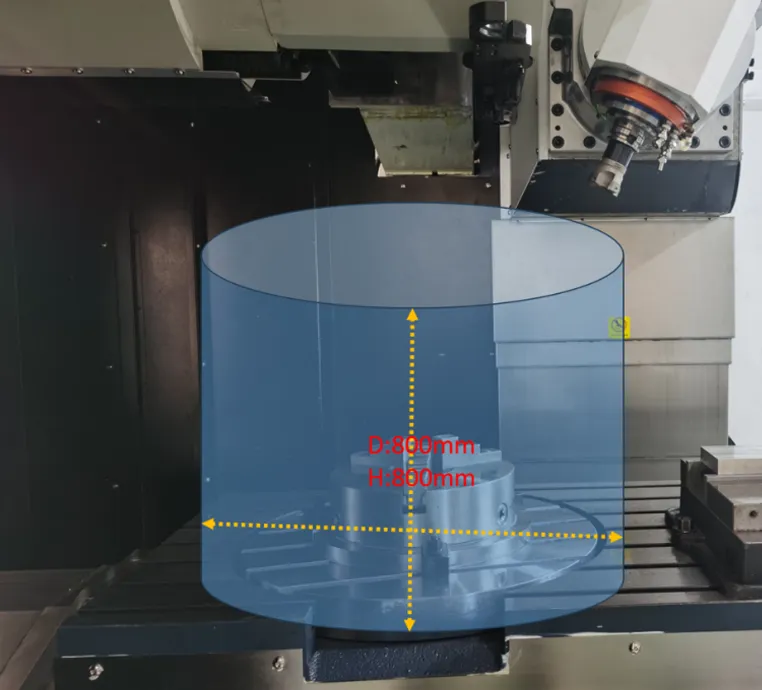
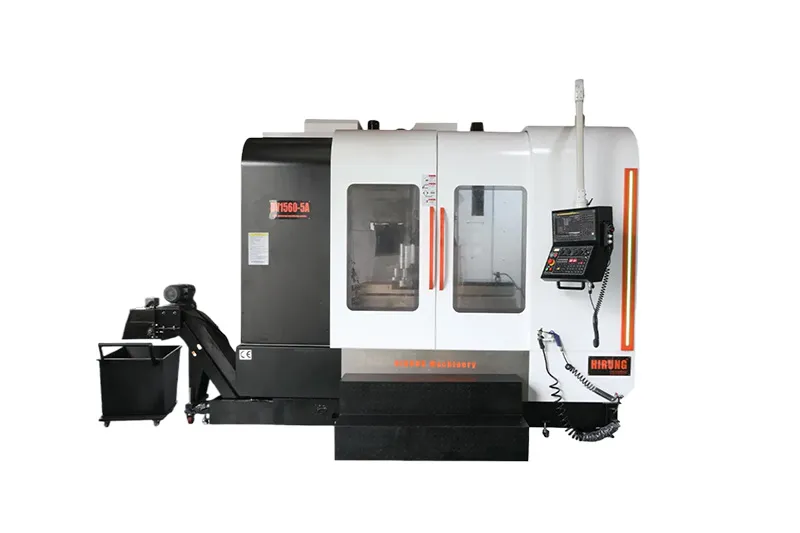
HIRUNG DV1560-5A 5 axis CNC machining center
DV1560 Technical Highlights
DV1560-5A representative specifications
| Specification | DV1560-5A |
|---|---|
| X / Y / Z travel | 1300 / 800 / 800 mm |
| B-axis rotation | ±110° |
| Table working surface | 800 × 1500 mm |
| Max. table load | 1200 kg |
| Spindle | BBT-40 built-in, 14,000 rpm |
| Spindle power | 18.5 kW (FANUC) |
| Positioning accuracy (X/Y/Z) | ≤0.01 mm (VDI 3441) |
| Repeatability (X/Y/Z) | ≤0.005 mm |
| Control system | FANUC 0i MF |
| Net weight | 12,000 kg |
DU SERIES
HIRUNG DU Series — Universal 5 Axis CNC Machining Center
The HIRUNG DU Series embodies precision and reliability, combining German engineering principles with efficient manufacturing. With models such as the DU200, DU650, and DU1060, the series meets the rigorous demands of high-precision, intricate components for aerospace, medical, and automotive sectors.
Key Features of the DU Series
German Mihanite FC30 cast iron structure with FEM analysis and patented heat-treatment for rigidity and long-term stability.
Widened base design separates the linear axes from the B/C axis, keeping moving parts light for better accuracy.
High-speed built-in spindle options (18,000 or 24,000 rpm) for both heavy cutting and precision finishing.
Efficient 32-tool chain magazine for rapid, seamless tool changes.
HSK A63 tool interface for strong clamping force and stability at high speed.
Worm-gear B/C axis with HEIDENHAIN circular scale for lasting accuracy and lower maintenance cost.
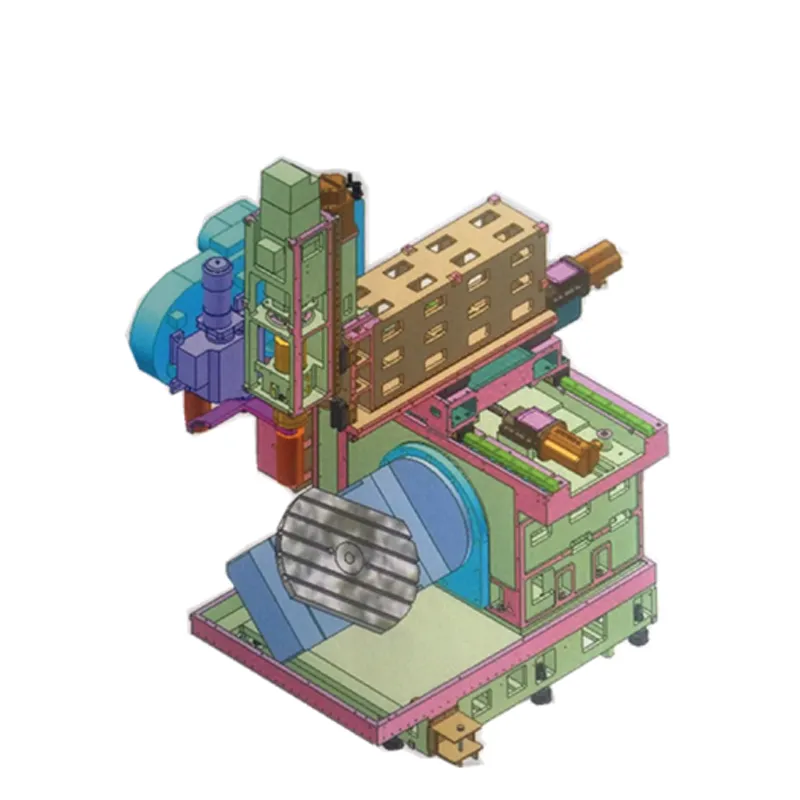
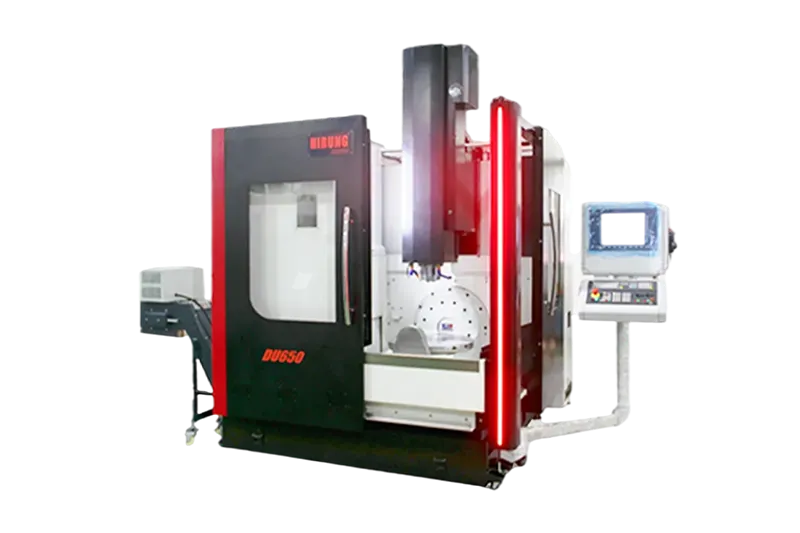
HIRUNG DU650 5 axis universal machining center
DU Series Technical Highlights
DU series representative specifications
| Specification | DU200 | DU650 | DU1060 |
|---|---|---|---|
| Worktable size | 200 mm | 650 mm | Φ720×600 mm (OP Φ800) |
| X / Y / Z travel | 270/270/310 mm | 620/520/600 mm | 1020/600/600 mm |
| B-axis travel | ±110° | +110° ~ -60° | +110° ~ -60° |
| Spindle speed | 24,000 rpm | 18,000 rpm | 18,000 rpm |
| Spindle power (S1/S3) | 3.7/5.5 kW | 30 kW | 30 kW |
| Tool magazine | 16T | 32T chain | 32T chain |
| Positioning accuracy (X/Y/Z) | 0.01 mm | 0.01 mm | 0.01 mm |
| Repeatability (X/Y/Z) | 0.005 mm | 0.005 mm | 0.005 mm |
GU SERIES
HIRUNG GU Series — 5 Axis Gantry Universal Machining Center
The HIRUNG GU Series is a high-rigidity 5 axis gantry universal machining center designed for complex parts that require multi-surface machining, accurate rotary-axis positioning, and fewer workpiece setups. Its gantry linear-axis structure works with a direct-drive B/C rotary table so the cutting tool can approach the workpiece from multiple directions. The series includes multiple machine sizes to match different workpiece dimensions, fixture weights, and machining requirements.
Key Features of the GU Series
CNC gantry structure with stronger X/Y/Z rigidity and higher precision.
5-axis rotary table with DD double-support design: strong load capacity, higher precision, faster response.
HSK A63 built-in electric spindle, selectable 18,000 / 24,000 rpm, 30 kW.
Machine casting body uses Germany Meehannite with tempering and stress treatment to prevent deformation.
High rapid feedrate with low frictional resistance and high positioning accuracy.
Rotary table uses Taiwan HIWIN or SOLPOWER brand components for stability and lifespan.
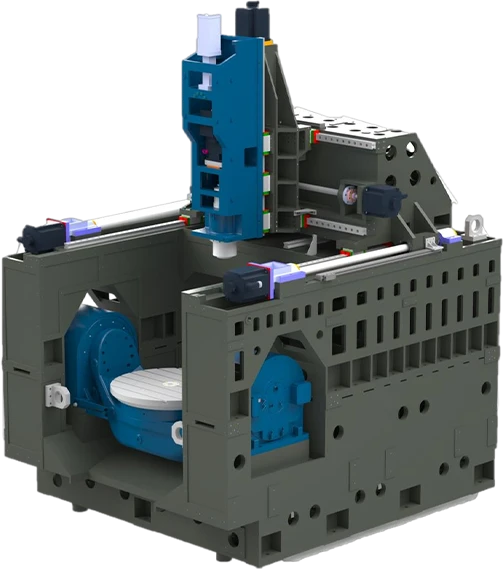
HIRUNG GU series 5 axis gantry universal machining center
GU Series Technical Highlights
GU series representative specifications
| Specification | GU400 | GU630 | GU800 |
|---|---|---|---|
| X / Y / Z travel | 500/650/450 mm | 700/900/500 mm | 850/1000/600 mm |
| Working table size | Φ400 (OP Φ500) | Φ630 | Φ800 |
| Max. table load | 200 kg | 850 kg | 1200 kg |
| B/C rotate angle | ±120° / 360° | ±120° / 360° | ±120° / 360° |
| Spindle | HSK A63, 18,000–24,000 rpm | HSK A63, 18,000–24,000 rpm | HSK A63, 18,000–24,000 rpm |
| Spindle power (S1/S3) | 30 / 33.3 kW | 30 / 33.3 kW | 30 / 33.3 kW |
| Positioning accuracy (X/Y/Z) | 0.008 mm (VDI 3441) | 0.008 mm (VDI 3441) | 0.008 mm (VDI 3441) |
| Control system | SIEMENS ONE 15" | SIEMENS ONE 15" | SIEMENS ONE 15" |
APPLICATIONS
Industry Applications of 5 Axis Machining Centers
A 5 axis CNC machining center is the natural choice for parts that are complex, high-value, and tolerance-critical. Below are the industries where HIRUNG machines are most frequently applied.
Aerospace
Turbine blades, structural brackets, engine housings, and lightweight aluminum components benefit from 5 axis machining's ability to hold tight tolerances on contoured, multi-directional surfaces in a single setup.
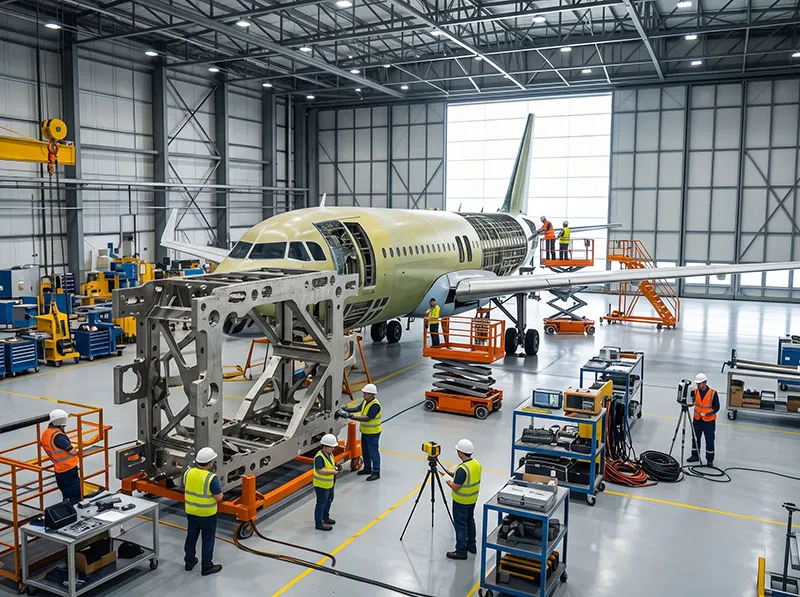
Precision-machined aerospace components produced on 5 axis machining centers
Medical
Titanium orthopedic implants, surgical instruments, and dental components demand biocompatible materials and exact geometries. 5 axis machining delivers the surface quality and accuracy medical parts require.
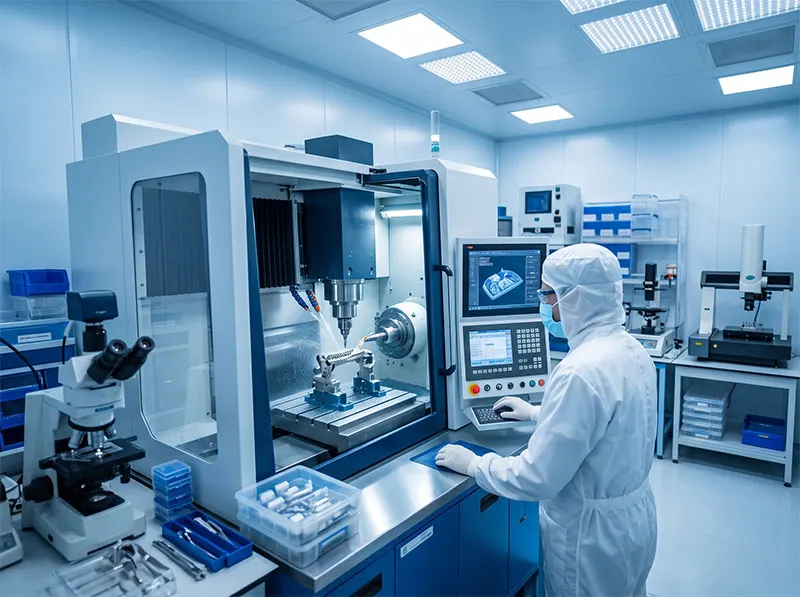
Titanium medical implant components machined with high precision
Automotive
Powertrain parts, mold tooling, and complex aluminum housings are produced faster and more accurately when multiple sides are machined in one clamping, reducing fixtures and lead time.
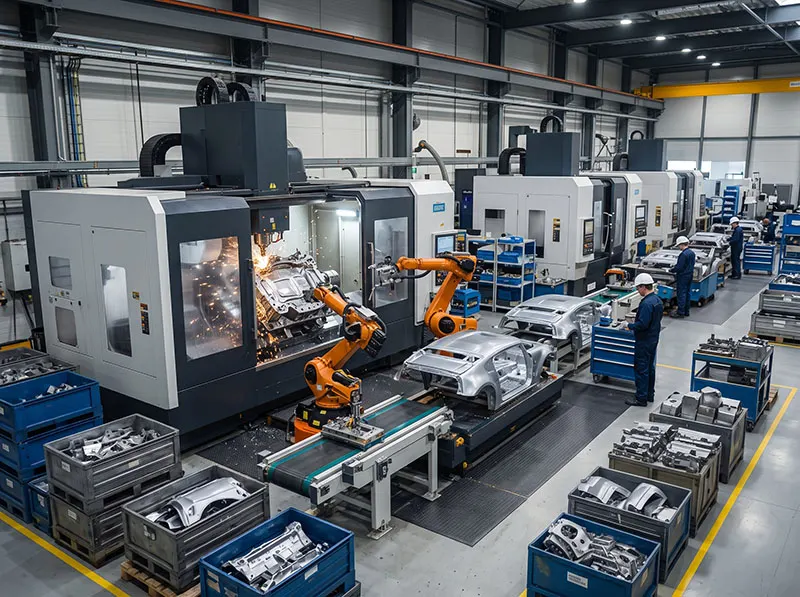
Automotive powertrain and mold components from 5 axis machining
Energy & Precision Molds
Energy-sector components and high-precision injection / die-casting molds rely on the rigidity and repeatability of 5 axis machining centers to hold geometry across long production runs.
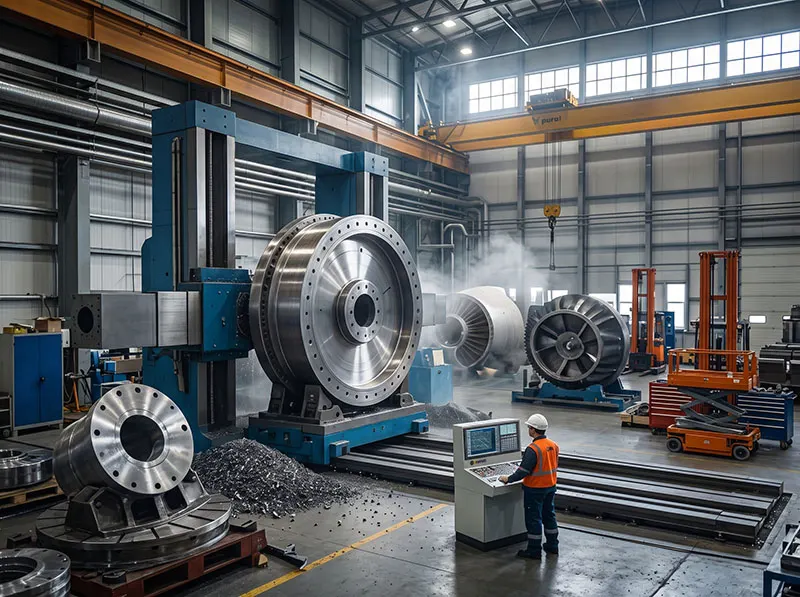
Precision machined components and fixtures produced on HIRUNG machines
QUALITY & ACCURACY
Built for Long-Term Accuracy — Structure, Casting & Quality
Machine accuracy is only as stable as the structure beneath it. HIRUNG 5 axis machining centers are built around stabilized castings, precise motion systems, and verified inspection so accuracy holds over years of production.
Meehannite Casting and Stress Relief
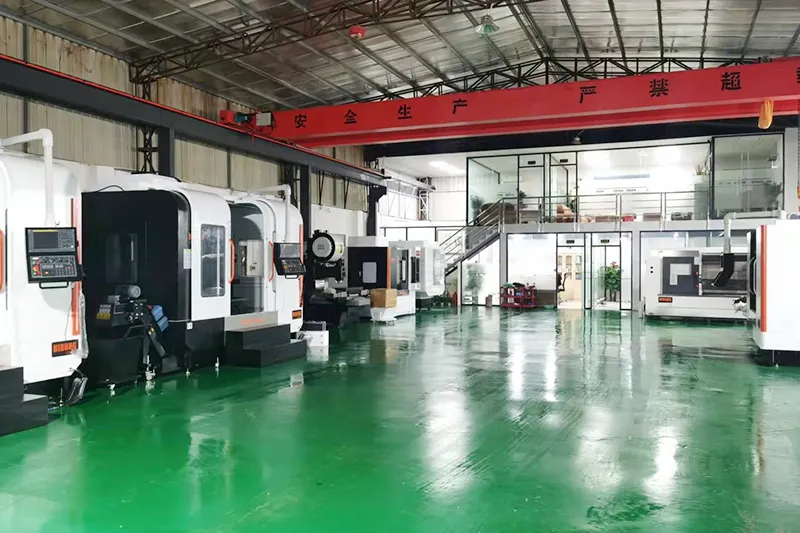
The machine body uses Germany Meehannite / Mihanite FC30 cast iron, aged (e.g., 90 days for the DV series) and stress-relieved to prevent deformation over the machine’s lifetime. A stable foundation protects rigidity and repeatability.
Heavy cast iron machine structure — the foundation of long-term accuracy
Precision Motion and Spindle Systems
Rolling linear guides, high-precision ball screws, and direct-drive or built-in spindles provide smooth, accurate movement. Oil-cooled spindles reduce thermal growth, while HSK A63 / BBT-40 interfaces keep tools stable at high speed.
Quality Inspection and Calibration
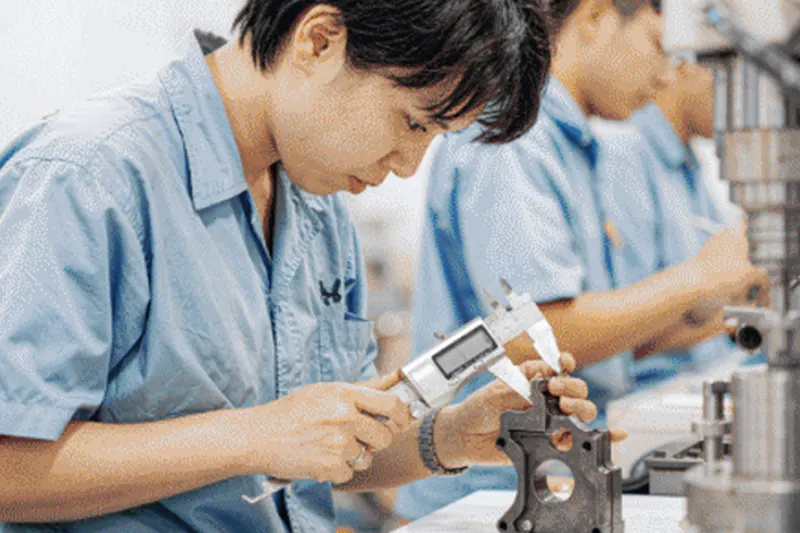
Finished parts are verified against drawings and fixtures. Buyers should evaluate accuracy together with installation, leveling, temperature control, tooling, and calibration — not from a single published number. HIRUNG supports technical communication and inspection review before order confirmation.
Coordinate measuring machine (CMM) verifying machined part accuracy
BUYING GUIDE
How to Choose the Right 5 Axis Machining Center
Selecting the right 5 axis machining center should follow the workpiece and process, not a single specification. Evaluate these factors before committing:
Workpiece characteristics: typical size, weight, and complexity determine the work envelope, table load, and configuration (trunnion vs swivel head vs gantry).
Material types: aluminum, titanium, stainless steel, and superalloys demand different spindle power, torque, and rigidity.
Required precision and surface finish: tolerance and surface-quality needs guide the precision class, spindle type, and control system.
Budget and ROI: weigh initial investment against long-term gains from efficiency, fewer setups, and expanded capability.
Automation and integration: robotics, pallet changers, and automated loading enable lights-out manufacturing and higher throughput.
Technical support and service: spare parts availability and after-sales support protect uptime.
WHY HIRUNG
Why Choose HIRUNG as Your 5 Axis Machining Center Manufacturer
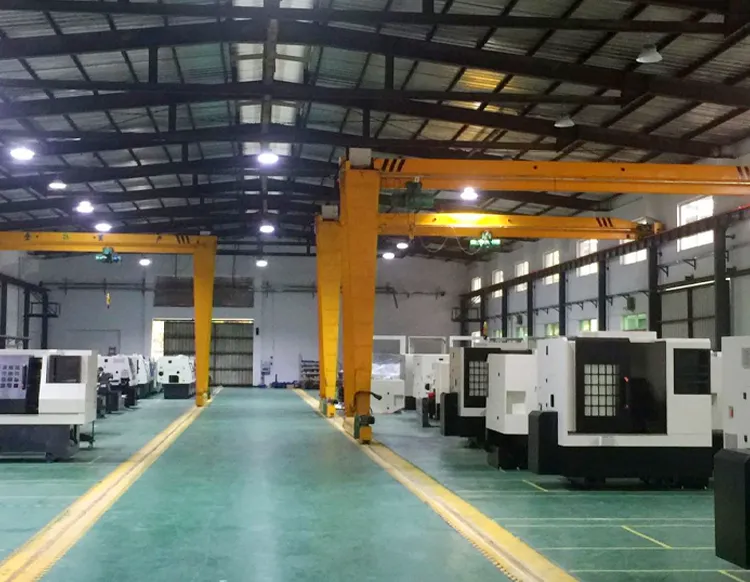
HIRUNG was established in January 2015. Since then our machine tools have been supplied to 33 countries and regions. We apply high-standard manufacturing processes and combine German-derived engineering with rigorous casting, assembly, and inspection so our 5 axis CNC machining centers deliver stable performance and precision for international manufacturers.
Three complementary series (DV, DU, GU) covering large, compact, and gantry 5 axis applications.
Stabilized Meehannite / Mihanite FC30 cast structures with stress relief for long-term accuracy.
International component sourcing (control systems, spindles, guides, bearings) with transparent origin lists.
Multilingual labeling and remote technical communication for easier operation and maintenance.
Engineering support for model selection, configuration review, inspection, and installation.
Established 2015
Supplied to 33 countries
DV · DU · GU series
Meehannite FC30 castings
FANUC / Siemens / HEIDENHAIN
Multilingual support
HIRUNG machining center production workshop
FAQ
Frequently Asked Questions
Common questions about 5 axis machining centers and the HIRUNG product range.
A 3 axis machine moves along X, Y, and Z only and usually needs multiple setups for complex parts. A 5 axis machining center adds two rotary axes so the tool or workpiece can tilt and rotate, letting you machine complex features in a single clamping with better accuracy and surface finish.
A trunnion table rotates the workpiece on two rotary axes and offers high rigidity for smaller to medium parts. A swivel / articulating head rotates the spindle instead, keeping a large, heavy workpiece stationary on a fixed table — simpler fixturing for big parts. The GU gantry series extends this with a direct-drive rotary table for very large components.
Aerospace, medical, automotive, energy, and precision mold making are the main users. These sectors need complex, tolerance-critical parts that benefit from single-setup machining.
Common materials include aluminum alloys, titanium, stainless steel, and superalloys. The required spindle power, torque, and rigidity should match your primary materials — HIRUNG offers spindles from 14,000 to 24,000 rpm and up to 30 kW to cover this range.
Start from the workpiece: size, weight, complexity, material, and tolerance. Then match the configuration (trunnion, swivel head, or gantry), work envelope, spindle, tool magazine, and control system. HIRUNG provides technical communication and configuration review before order confirmation.
Positioning accuracy is around 0.008–0.01 mm (VDI 3441) on X/Y/Z and rotary-axis repeatability in the arc-second range, depending on the series and model. Final part accuracy also depends on installation, leveling, temperature, tooling, and calibration.
Depending on the series, HIRUNG offers FANUC (DV), LYNUC N3 / Siemens ONE (DU), and SIEMENS ONE with optional HEIDENHAIN or SYNTEC (GU), plus optional 5-axis linkage CNC systems.
Ready to Match a 5 Axis Machining Center to Your Parts?
HIRUNG engineers support model selection, configuration review, and inspection before order confirmation.