Often used interchangeably, the terms “Vertical Machining Center” (VMC) and “CNC Milling Machine” refer to distinct yet overlapping categories of automated manufacturing equipment. While both leverage Computer Numerical Control (CNC) to automate machining operations, the *real difference* lies in their evolution, inherent capabilities, and the level of automation they offer, influencing their suitability for various industrial applications.
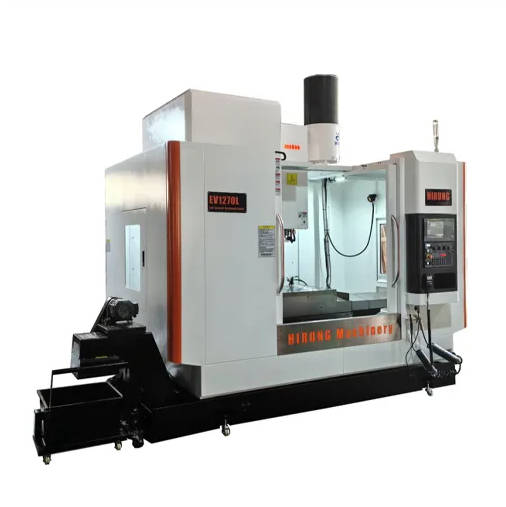
Decoding the Terminology: VMC vs. CNC Mill
To truly grasp the distinctions, it’s essential to first understand what each term fundamentally represents and how their definitions have evolved over time. While modern CNC mills are almost exclusively VMCs or HMCs, understanding the historical context clarifies the nomenclature.
What is a CNC Milling Machine?
A Computer Numerical Control (CNC) milling machine is a broad category of machine tools that use rotating cutters to remove material from a workpiece. The “CNC” part signifies that its operations—such as cutter path, feed rate, and spindle speed—are controlled by pre-programmed computer commands. Historically, milling machines were manual, requiring an operator to manipulate handwheels. The advent of numerical control (NC) and later computer numerical control (CNC) revolutionized these machines, enabling high precision, repeatability, and complex contouring without constant human intervention. CNC milling machines can be horizontal or vertical, and can range from simple 3-axis machines to highly complex 5-axis machines. This term encompasses a wide array of machines, making it a foundational concept in subtractive manufacturing.
What is a Vertical Machining Center (VMC)?
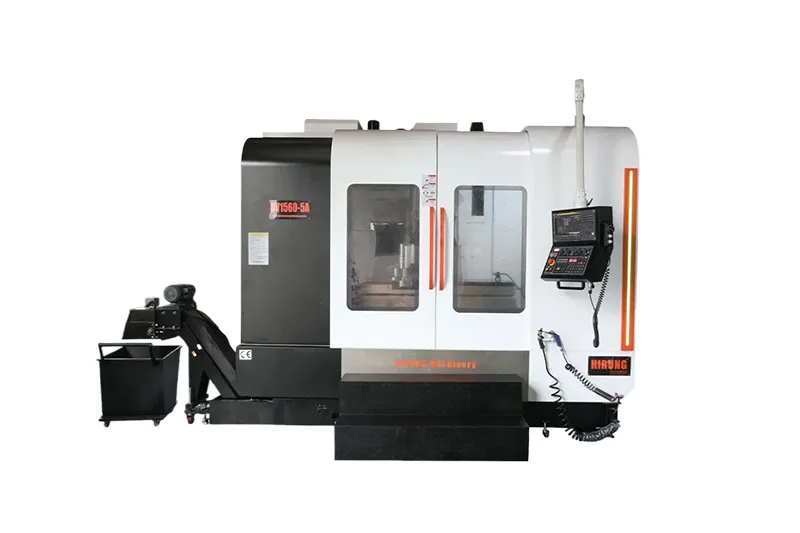
A Vertical Machining Center (VMC) is a specific type of CNC milling machine characterized by its vertically oriented spindle. This means the cutting tool rotates along a vertical axis, typically moving up and down (Z-axis), while the workpiece is secured on a table that moves horizontally (X and Y axes). The “Machining Center” aspect implies a higher degree of automation and capability beyond a basic milling operation. VMCs are designed for multi-tasking, incorporating features like automatic tool changers (ATCs), tool magazines, and often pallet changers, enabling them to perform a sequence of operations—milling, drilling, tapping, boring—without manual intervention between steps. This integration of multiple functions into a single machine makes them extremely efficient for high-volume production and complex part manufacturing.
The Core Distinctions: Beyond Semantics
While a VMC is technically a type of CNC milling machine, the “Machining Center” designation highlights key differentiating factors that impact functionality, application, and overall efficiency. Understanding these distinctions is crucial for selecting the right equipment for specific manufacturing needs.
1. Automation and Integrated Capabilities: The Defining Factor
The most significant difference lies in the level of automation and integrated features. This is where the “Machining Center” truly earns its name.
Automatic Tool Changers (ATC) & Tool Magazines
Most modern VMCs come equipped with an Automatic Tool Changer (ATC) and a multi-slot tool magazine. This allows the machine to automatically swap cutting tools as required by the program, facilitating continuous, unattended machining of complex parts that might require drilling, milling, tapping, and boring operations with different tools. A traditional or simpler CNC milling machine, while still computer-controlled, might require manual tool changes or have a very limited number of tools, interrupting the machining process. The efficiency gains from ATCs are substantial, reducing cycle times and labor costs.
Pallet Changers & Workpiece Handling
Higher-end VMCs often include automatic pallet changers. This feature allows a finished workpiece to be swapped out for a new blank automatically while the machine continues to operate. This dramatically reduces setup time and maximizes spindle utilization, making VMCs ideal for high-volume production runs where minimizing downtime is critical. While some advanced CNC mills might integrate similar features, they are standard on VMCs designed for production environments.
Coolant Systems and Chip Management
VMCs are typically engineered with advanced coolant delivery systems, including through-spindle coolant, and robust chip evacuation systems. These are essential for maintaining tool life, improving surface finish, and ensuring continuous operation during highly automated processes. While basic CNC mills have coolant, the sophisticated management systems in VMCs are designed for extended, unattended runs.
Table 1: Automation Feature Comparison
| Feature | CNC Milling Machine (General) | Vertical Machining Center (VMC) |
| Automatic Tool Changer (ATC) | Optional, often limited capacity or manual. | Standard, high-capacity tool magazines (10-100+ tools). |
| Pallet Changer | Rarely standard, typically an advanced add-on. | Common on production VMCs, significantly boosts throughput. |
| Coolant Management | Basic flood coolant common. | Advanced, often through-spindle, high-pressure coolant. |
| Chip Management | Manual chip removal or basic conveyor. | Integrated chip conveyors, sophisticated evacuation. |
2. Spindle Orientation: Vertical vs. Horizontal vs. Universal
As the name suggests, a VMC specifically refers to a machine with a vertical spindle. This contrasts with other types of CNC milling machines.
Vertical Spindle Advantages (VMC)
The vertical orientation offers several benefits: superior visibility of the cutting area, easier loading and unloading of workpieces (especially for smaller shops), and efficient chip evacuation downwards due to gravity. VMCs are excellent for machining flat, plate-like parts, dies, molds, and components requiring operations on one face. They are generally more compact and less expensive than Horizontal Machining Centers (HMCs).
Horizontal Machining Centers (HMCs)
In contrast, Horizontal Machining Centers (HMCs) have a horizontally oriented spindle. These machines typically feature multiple workholding pallets and excellent chip evacuation, making them ideal for high-volume, multi-sided machining of prismatic parts. HMCs are generally more expensive and require more floor space but offer unparalleled efficiency for specific applications.
Universal or 5-Axis Milling Machines
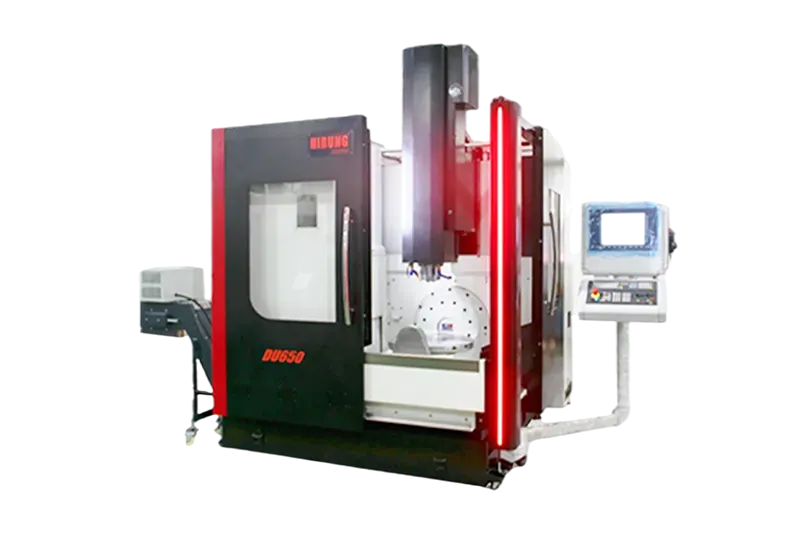
Some advanced CNC milling machines, often called Universal Machining Centers or 5-axis CNC mills, can rotate the spindle or the workpiece (or both) to achieve complex geometries. While many 5-axis machines are based on a vertical spindle configuration, their capability to machine multiple sides in a single setup blurs the line between strictly “vertical” or “horizontal” and focuses on multi-sided access.
3. Application and Best Use Cases
The differences in automation and configuration lead to distinct ideal applications for each machine type.
When to Choose a Vertical Machining Center (VMC)?
VMCs are the workhorses of many machine shops. They excel in:
- Prototyping and Low-to-Medium Volume Production: Their versatility and relatively lower cost make them suitable for diverse jobs.
- Mold and Die Making: The vertical spindle is excellent for intricate details and deep cavities.
- Flat Part Machining: Ideal for plates, panels, and components requiring operations primarily on one face.
- Complex 3D Contouring: With 3-axis capabilities and often optional 4th and 5th axes, VMCs can produce highly complex shapes.
- Shops with Space Constraints: VMCs generally have a smaller footprint compared to HMCs.
When to Choose a General CNC Milling Machine (in its simplest form)?
A basic CNC milling machine, particularly one without extensive automation features, might be preferred for:
- Educational Settings: Simpler machines are easier to learn on.
- Hobbyists and Small Workshops: Lower initial investment for basic milling tasks.
- Specialized, Single-Operation Tasks: Where only one specific cutting tool or operation is consistently needed, and automation is overkill.
- Budget Constraints: Entry-level CNC mills are generally the most affordable option.
Evolution and Modern Overlap: A Blurred Line
The manufacturing landscape is constantly evolving. As technology advances, the lines between these categories have become increasingly blurred. Many entry-level “VMCs” might only offer a basic ATC, while some advanced “CNC milling machines” might be highly capable but retain a simpler designation. The key takeaway is that the term “machining center” implies a *higher degree of integrated automation and capability* than a generic “CNC milling machine.”
The Rise of Multi-Tasking Machines
Modern machine tools are pushing the boundaries further. Machines that combine milling and turning operations (mill-turn machines) or integrate advanced robotics for part handling are becoming more common. These are often referred to as “multi-tasking machines” or “production centers,” further extending the concept of a “machining center” beyond just milling.
Considerations for Procurement: Which Machine Do You Need?
When deciding between a CNC milling machine and a Vertical Machining Center, consider the following:
- Part Complexity: Do your parts require multiple operations and tool changes?
- Production Volume: Are you looking for high throughput and lights-out manufacturing?
- Budget: What is your initial investment capacity?
- Floor Space: How much space is available in your facility?
- Workpiece Material & Size: What type of materials will you be cutting, and what are the typical dimensions of your parts?
- Required Precision & Surface Finish: Both can achieve high precision, but VMCs are often built for more rigorous, continuous operation.
By carefully evaluating these factors, manufacturers can make an informed decision that aligns with their production goals and budget.
Conclusion: It’s All in the Capabilities
In essence, all Vertical Machining Centers are a type of CNC Milling Machine, but not all CNC Milling Machines are VMCs. The “Machining Center” moniker denotes a sophisticated CNC milling machine that incorporates advanced automation features—primarily automatic tool changers, often pallet changers, and robust chip/coolant management—designed for continuous, multi-operation, and often unattended production. While a basic CNC mill focuses on precision material removal through computer control, a VMC extends this with integrated capabilities to perform a sequence of operations efficiently, making it a cornerstone of modern automated manufacturing.