The most important CNC lathe machine specifications include swing over bed, maximum turning diameter, maximum machining length, chuck size, spindle nose, spindle bore, bar feeding diameter, spindle speed, spindle power, X/Z/Y-axis travel, rapid feedrate, turret tool stations, tailstock configuration, control system, accuracy, and optional automation. These parameters determine what parts the machine can process, how efficiently it can run, and whether it fits your production requirements.
For manufacturers buying a CNC lathe machine, understanding the specification sheet is essential. A CNC lathe may look suitable from the outside, but if the spindle bore is too small, the turning length is insufficient, the chuck size is wrong, or the turret cannot hold enough tools, the machine may not support your real production needs.
This guide explains the key CNC lathe parameters that buyers should understand before selecting a machine. It also explains how each specification affects turning capacity, machining accuracy, productivity, automation, and long-term value.
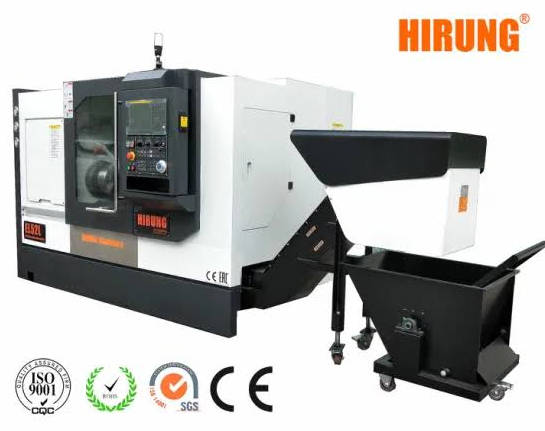
Why CNC Lathe Machine Specifications Matter
CNC lathe machine specifications are not just technical numbers. They define the machine’s actual working capability. For industrial buyers, these parameters affect part compatibility, cutting stability, cycle time, tooling options, bar feeding, accuracy, maintenance, and total cost.
If the specifications are misunderstood, several problems may occur:
- The part cannot fit inside the machine.
- The chuck cannot hold the workpiece properly.
- The spindle bore cannot accept the required bar stock.
- The Z-axis travel is not enough for long shafts.
- The turret does not have enough tool stations.
- The spindle lacks enough torque for heavy cutting.
- The machine cannot support future automation.
- The buyer pays for functions that are not needed.
A CNC lathe should be selected by matching machine parameters to real workpiece drawings, materials, batch size, tolerance requirements, and production goals.
Before comparing models, prepare the maximum part diameter, maximum length, material, tolerance, surface finish requirement, bar diameter, batch volume, and required operations.
Quick Overview of CNC Lathe Parameters
| Parameter | What It Means | Why It Matters |
| Swing over bed | Maximum diameter that can rotate over the bed | Defines the largest possible workpiece envelope |
| Maximum turning diameter | Largest diameter the machine can actually turn | More practical than swing over bed for part selection |
| Maximum machining length | Longest part length the machine can process | Important for shafts and long components |
| Chuck size | Size of the workholding chuck | Affects clamping capacity and workpiece range |
| Spindle nose | Spindle mounting interface | Determines chuck and fixture compatibility |
| Spindle bore | Through-hole diameter of the spindle | Important for bar-fed production |
| Max bar feeding diameter | Largest bar stock that can pass through the spindle | Critical for automated turning |
| Spindle speed | Maximum spindle rotation speed | Affects cutting efficiency and surface finish |
| Spindle power | Motor power available for cutting | Affects torque and heavy-cutting capacity |
| Axis travel | Movement range of X, Z, and optional Y axes | Determines tool movement and part coverage |
| Rapid feedrate | Non-cutting axis movement speed | Affects cycle time |
| Tool stations | Number of turret tool positions | Affects process flexibility |
| Tailstock | Support device for long parts | Helps stabilize shafts and slender workpieces |
| Control system | CNC controller used by the machine | Affects operation, programming, and serviceability |
| Optional accessories | Automation, tool setter, chip conveyor, optical scale, robot | Affects productivity and final cost |
1. Swing Over Bed
Swing over bed refers to the maximum diameter that can rotate over the lathe bed without hitting the machine structure. It is one of the most common CNC lathe specifications, but it is often misunderstood.
For example, if a machine has a large swing over bed, it means a large-diameter workpiece can theoretically rotate over the bed. However, this does not mean the machine can actually cut that full diameter with all tools, fixtures, and turret positions.
Swing over bed shows the physical clearance of the machine, while maximum turning diameter shows the more realistic machining capacity.
When reviewing swing diameter, also check:
- Maximum turning diameter
- Chuck size
- Turret clearance
- Tool holder interference
- Tailstock position
- Workpiece fixture size
- Required cutting tool access
For buying decisions, swing over bed is useful, but it should not be the only size parameter considered.
2. Maximum Turning Diameter
Maximum turning diameter, sometimes listed as processing diameter or maximum machining diameter, indicates the largest diameter the CNC lathe can actually machine under normal conditions.
This parameter is more practical than swing over bed because it reflects real tool access and machine design.
Maximum turning diameter matters for:
- Flanges
- Bushings
- Large sleeves
- Discs
- Pulley-type parts
- Automotive components
- Hydraulic parts
- Large connectors
- Round precision components
If your part diameter is close to the machine’s maximum turning diameter, leave enough safety margin for fixtures, jaws, tool holders, and future part variation. Buying a machine with no margin can create interference problems and reduce efficiency.
3. Maximum Machining Length
Maximum machining length defines the longest workpiece length that can be processed. This is especially important for shaft-type components.
Long parts may require:
- Sufficient Z-axis travel
- Suitable distance between chuck and tailstock
- Tailstock support
- Steady rest in some applications
- Proper cutting sequence
- Rigidity control
- Chip and coolant management
If the machining length is too short, the machine cannot process the part in one setup. If the part is long and slender, tailstock support may be necessary to prevent vibration, deflection, and poor surface finish.
For manufacturers producing shafts, pins, rollers, sleeves, or long hydraulic components, maximum machining length is one of the first specifications to check.
4. Chuck Size
Chuck size affects how the workpiece is clamped. Common CNC lathe chuck sizes vary depending on machine model and workpiece capacity. Larger chucks can hold larger workpieces, but they also require a stronger spindle and machine structure.
Chuck size influences:
- Workpiece clamping range
- Maximum workpiece diameter
- Cutting stability
- Heavy-cutting capability
- Jaw selection
- Setup convenience
- Machine cost
A small chuck may be suitable for small shafts, connectors, and precision parts. A larger chuck may be necessary for flanges, larger sleeves, or heavier components.
When checking chuck size, also consider whether you need:
- Hydraulic chuck
- Manual chuck
- Soft jaws
- Hard jaws
- Collet chuck
- Special fixture
- Bar feeder compatibility
5. Spindle Nose
The spindle nose is the mechanical interface where the chuck or fixture mounts to the spindle. It affects compatibility, rigidity, and workholding options.
Common spindle nose standards are usually listed in the machine specification sheet. Buyers should confirm that the spindle nose matches the intended chuck, collet system, or special fixture.
Spindle nose matters because it affects:
- Chuck mounting compatibility
- Clamping rigidity
- Workholding flexibility
- Spare part selection
- Retrofit possibilities
- Heavy-cutting stability
If your workshop already uses certain chucks or fixtures, confirm compatibility before ordering the machine.
6. Spindle Bore
Spindle bore is the through-hole diameter inside the spindle. It is one of the most important CNC lathe parameters for bar-fed production.
If the spindle bore is too small, the required bar stock cannot pass through the spindle. This limits automation and may force the operator to cut shorter blanks manually before loading.
For manufacturers using bar feeders, spindle bore and maximum bar feeding diameter are more important than swing over bed.
Spindle bore is critical for:
- Shaft production
- Pins
- Bushings
- Connectors
- Fittings
- Sleeves
- Small turned parts
- Batch production
- Automated turning lines
When reviewing spindle bore, always compare it with the maximum bar feeding diameter. The maximum bar feeding diameter is usually smaller than the spindle through-hole because clearance is needed for stable feeding.
7. Maximum Bar Feeding Diameter
Maximum bar feeding diameter tells you the largest bar stock that can be fed through the spindle during automatic or semi-automatic production.
This parameter affects productivity when the machine is used with:
- Bar feeder
- Parts catcher
- Automatic door
- Robot loading
- Batch turning process
- Continuous production of small turned parts
For example, if your parts are made from 50 mm bar stock, the machine must support that bar diameter with enough clearance. If future products may use larger bar sizes, select a machine with suitable margin.
Bar feeding capability can strongly influence long-term productivity and labor cost.
8. Spindle Speed
Spindle speed refers to how fast the spindle can rotate. It is usually listed as maximum RPM. Higher spindle speed is useful for smaller diameters, aluminum, brass, and finishing operations. Lower speed with higher torque may be more important for larger diameters or difficult materials.
Spindle speed should be matched to:
- Workpiece diameter
- Material
- Cutting tool
- Surface speed requirement
- Operation type
- Surface finish requirement
- Tool life target
| Application | Spindle Speed Priority |
| Small aluminum parts | Higher speed often useful |
| Brass connectors | Higher speed and stable cutting |
| Steel shafts | Balance of speed and torque |
| Stainless steel parts | Torque, rigidity, and heat control |
| Large-diameter parts | Lower speed with stronger torque |
| Precision finishing | Stable speed and low vibration |
A high maximum spindle speed is not always better. For heavy cutting, spindle torque and rigidity may matter more.
9. Spindle Power
Spindle power affects the machine’s cutting capacity. A higher-power spindle can support heavier cuts, larger diameters, tougher materials, and more demanding production conditions.
Spindle power matters for:
- Steel turning
- Stainless steel turning
- Cast iron parts
- Large diameters
- Heavy roughing
- Interrupted cutting
- High material removal
- Long cycle production
However, spindle power should not be evaluated alone. Cutting performance also depends on machine rigidity, toolholding, chuck clamping force, turret stability, coolant, and cutting parameters.
A machine with high spindle power but weak rigidity may still perform poorly under heavy cutting.
10. X, Z, and Y-Axis Travel
Axis travel determines how far the tool can move. In a CNC lathe, the main axes are usually X and Z. Some turning centers include Y-axis for off-center machining.
| Axis | Function in CNC Turning |
| X-axis | Controls tool movement toward or away from the workpiece diameter |
| Z-axis | Controls tool movement along the length of the workpiece |
| Y-axis | Allows off-center milling, drilling, and complex features |
X-axis travel affects diameter coverage and tool clearance. Z-axis travel affects machining length. Y-axis travel expands capability for parts requiring milling, drilling, slots, flats, or off-center features.
A basic CNC lathe may not need Y-axis. However, if you want to reduce secondary operations on a machining center, a Y-axis turning center may be worth considering.
11. Rapid Feedrate
Rapid feedrate is the speed at which the machine axes move during non-cutting motion. It affects cycle time, especially in batch production with many tool changes and positioning moves.
Higher rapid feedrate can improve productivity when:
- Parts are produced in batches
- Cycle time matters
- Turret moves frequently
- Toolpath includes many positioning moves
- Automation is used
- Non-cutting time is significant
However, rapid speed is not the only productivity factor. Tool change time, turret indexing, spindle acceleration, chip control, loading time, and cutting strategy also matter.
12. Turret Tool Stations
The turret holds cutting tools and indexes them during machining. The number of tool stations determines how many tools can be prepared for one machining cycle.
Common turning operations may require:
- OD turning tool
- ID boring tool
- Facing tool
- Grooving tool
- Threading tool
- Drilling tool
- Parting tool
- Chamfering tool
- Reaming tool
- Live tool holder if milling is needed
More turret stations improve process flexibility, especially when one part requires several turning, drilling, threading, and grooving operations.
For simple parts, fewer stations may be enough. For complex parts, a 10-station or 12-station turret can reduce manual tool changes and improve production efficiency.
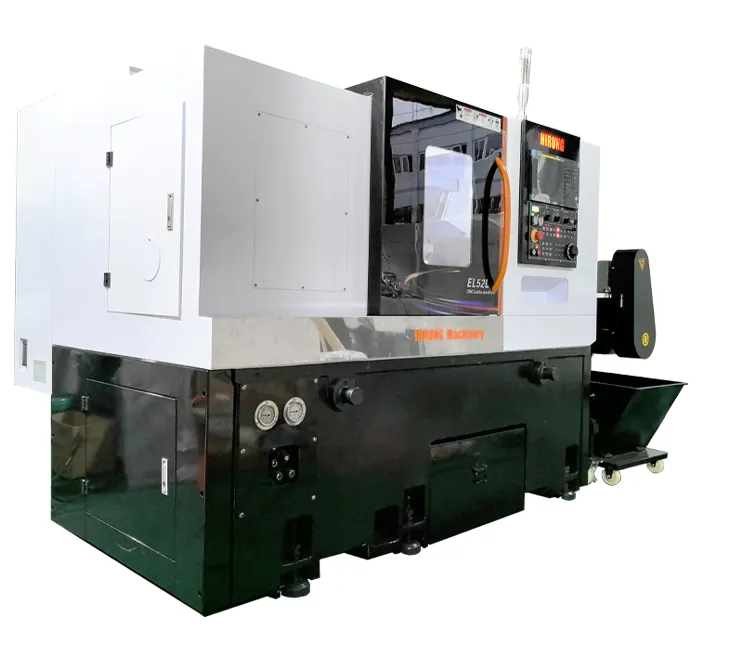
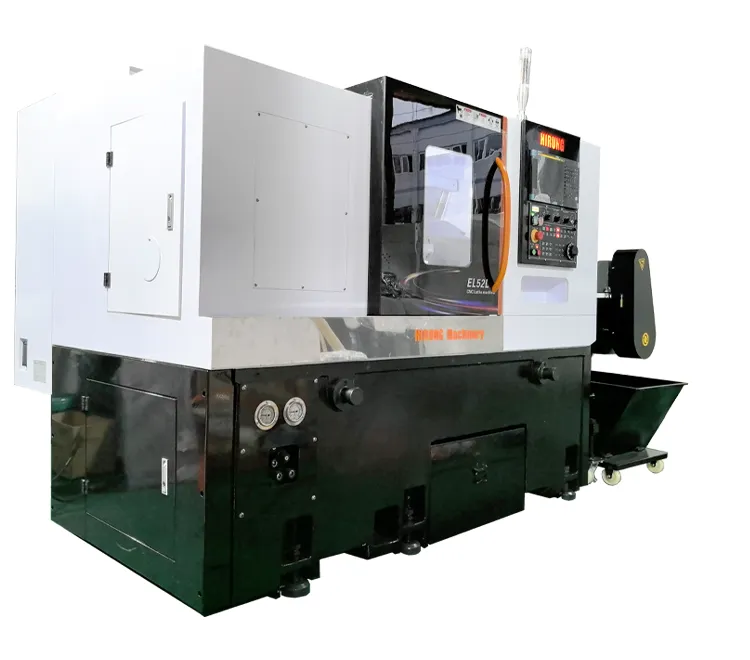
The HIRUNG CNC Lathe Machine EL Series includes models with different tool station configurations, allowing buyers to choose according to part complexity and production workflow.
13. Tailstock Configuration
A tailstock supports the free end of long workpieces. It is important for shafts, rods, sleeves, and slender parts.
Without tailstock support, long parts may vibrate or deflect during cutting, causing:
- Poor surface finish
- Tapered dimensions
- Chatter marks
- Tool wear
- Dimensional error
- Workpiece instability
Tailstock specifications may include:
- Tailstock travel
- Tailstock taper model
- Hydraulic or manual operation
- Programmable tailstock function
- Quill travel
- Support rigidity
For short parts, a tailstock may not be needed. For long shafts, it can be essential.
14. Control System
The CNC control system affects programming, operation, troubleshooting, maintenance, and service support. For industrial buyers, the control system should be reliable, familiar to operators, and support the required machining functions.
When reviewing the control system, check:
- Controller brand
- Servo compatibility
- Spindle control
- Interface language
- Programming functions
- Macro support
- Diagnostic functions
- Communication interface
- Post-processor compatibility
- Local service availability
The HIRUNG EL Series page lists FANUC 0i TF and optional SYNTEC 22TB configurations. Buyers should confirm the exact control system in the quotation because it affects operation, training, maintenance, and spare parts.
15. Accuracy and Repeatability
Accuracy specifications help buyers understand how precisely the machine can position and repeat movements. However, actual part accuracy depends on more than the catalog values.
Accuracy is influenced by:
- Machine bed rigidity
- Spindle runout
- Guideways
- Ball screws
- Servo system
- Turret repeatability
- Tool holder quality
- Chuck clamping
- Thermal stability
- Machine leveling
- Cutting parameters
- Operator setup
Common accuracy terms include:
| Accuracy Term | Meaning |
| Positioning accuracy | How close the axis reaches the commanded position |
| Repeat positioning accuracy | How consistently the axis returns to the same position |
| Spindle runout | How much the spindle deviates during rotation |
| Turret repeatability | How consistently the turret indexes to each tool position |
| Thermal stability | How stable the machine remains as temperature changes |
For precision turning, ask whether the supplier provides inspection reports and how the machine is tested before shipment.
16. Standard and Optional Accessories
Accessories can change a CNC lathe’s productivity, automation level, safety, maintenance, and final cost.
Common accessories include:
| Accessory | Function |
| Total splash guard | Controls coolant and improves safety |
| Hydraulic chuck | Improves clamping efficiency |
| Hydraulic tailstock | Supports long parts |
| Servo turret | Improves tool indexing and productivity |
| Central lubrication system | Supports long-term axis movement |
| Cutting cooling system | Improves tool life and surface finish |
| Oil-water separator | Helps maintain coolant quality |
| Chip conveyor | Reduces manual chip cleaning |
| Electric cabinet cooling | Supports stable electrical operation |
| Automatic tool setter | Reduces tool setup time |
| Parts catcher | Collects finished parts automatically |
| Bar feeder | Supports automated bar stock production |
| Automatic door | Useful for robot loading and automation |
| Optical ruler | Provides position feedback for higher accuracy needs |
| Robot or FMS | Supports automated production cells |
The HIRUNG EL Series CNC Lathe Machine page lists multiple standard and optional accessories, which helps buyers evaluate production requirements beyond the basic machine model.
How to Read a CNC Lathe Specification Sheet
When reading a CNC lathe specification sheet, do not start with every number at once. Use a selection sequence.
| Step | What to Check | Why |
| 1 | Maximum turning diameter | Confirms the part can be machined |
| 2 | Maximum machining length | Confirms length capacity |
| 3 | Chuck size and spindle bore | Confirms workholding and bar feeding |
| 4 | Spindle speed and power | Confirms material and cutting capability |
| 5 | Axis travel | Confirms tool movement and machining coverage |
| 6 | Turret stations | Confirms tool process flexibility |
| 7 | Tailstock | Confirms support for long parts |
| 8 | Control system | Confirms operation and programming support |
| 9 | Accuracy | Confirms precision suitability |
| 10 | Accessories | Confirms productivity and final cost |
This sequence helps avoid the common mistake of choosing by machine size alone.
How to Choose CNC Lathe Parameters for Different Parts
| Part Type | Key Parameters to Prioritize |
| Shafts | Machining length, tailstock, spindle power, chuck size, Z-axis travel |
| Bushings and sleeves | Turning diameter, spindle bore, chuck size, turret tools |
| Pins and small parts | Spindle speed, bar feeding diameter, parts catcher, bar feeder |
| Flanges | Swing over bed, turning diameter, chuck size, spindle torque |
| Hydraulic fittings | Spindle bore, bar feeding, turret stations, threading capability |
| Automotive components | Accuracy, repeatability, spindle performance, automation options |
| Stainless steel parts | Spindle power, rigidity, coolant, toolholding |
| High-volume parts | Bar feeder, turret, rapid feedrate, chip conveyor, parts catcher |
| Precision turned parts | Accuracy, spindle runout, tool setter, control system, thermal stability |
Common Mistakes When Comparing CNC Lathe Specifications
Mistake 1: Confusing Swing Over Bed with Turning Diameter
Swing over bed is the maximum rotating clearance. Maximum turning diameter is the practical machining capacity. Buyers should check both, but turning diameter is usually more important for real part selection.
Mistake 2: Ignoring Spindle Bore
If you plan to use a bar feeder, spindle bore is critical. A machine may have enough turning diameter but still fail to support the required bar stock.
Mistake 3: Choosing by Spindle Speed Alone
Higher spindle speed is useful for some parts, but heavy cutting may require torque and rigidity more than speed.
Mistake 4: Forgetting Tool Stations
A machine with too few turret stations may require manual tool changes or secondary operations, reducing productivity.
Mistake 5: Not Considering Tailstock Support
Long shafts may need tailstock support. Without it, vibration and deflection can reduce accuracy and surface quality.
Mistake 6: Comparing Prices Without Accessories
Two machines may have similar basic parameters but different accessories. Check chip conveyor, tool setter, bar feeder, parts catcher, optical ruler, and automation options before comparing price.
How to Choose a CNC Lathe Supplier
A reliable CNC lathe supplier should help you interpret parameters based on your workpieces. Before ordering, ask practical questions.
| Supplier Question | Why It Matters |
| Which model fits my part drawing? | Prevents wrong machine size selection |
| What turning diameter and machining length do I need? | Confirms part compatibility |
| What chuck size is recommended? | Ensures proper workholding |
| What spindle bore supports my bar stock? | Critical for bar-fed production |
| Do I need a tailstock? | Important for long shafts |
| How many tool stations are recommended? | Affects process flexibility |
| Should I choose Y-axis, C-axis, or live tooling? | Reduces secondary machining if needed |
| What accuracy inspection is provided? | Helps verify machine quality |
| What accessories are standard and optional? | Clarifies final machine cost |
| What service and spare parts support are available? | Reduces long-term downtime risk |
You can also visit the HIRUNG official website to compare broader CNC machine categories and evaluate whether a CNC lathe, machining center, or multi-axis machine is more suitable for your production plan.
When to Consider the HIRUNG EL Series CNC Lathe Machine
The HIRUNG EL Series is suitable for manufacturers producing shafts, sleeves, bushings, pins, flanges, connectors, hydraulic components, automotive parts, and general precision turned parts.
You may consider the CNC Lathe Machine EL Series when you need to compare:
- Swing over bed
- Processing diameter
- Chuck size
- Spindle nose
- Maximum processing length
- X/Z/Y-axis travel
- Spindle speed
- Spindle power
- Spindle hole through diameter
- Maximum bar feeding diameter
- Rapid feedrate
- Tool number
- Tailstock travel
- Tailstock model
- FANUC control system
- Linear guideway structure
- Ball screw configuration
- Hydraulic chuck and tailstock
- Servo turret
- Oil-water separation
- Chip conveyor and automation options
Before requesting a quotation, prepare your part drawings, material, maximum diameter, maximum length, bar diameter, tolerance, batch size, and required machining operations. This helps the supplier recommend the right CNC lathe configuration instead of only providing a rough machine price.
FAQ
1. What are the most important CNC lathe machine specifications?
The most important CNC lathe machine specifications include swing over bed, maximum turning diameter, maximum machining length, chuck size, spindle bore, bar feeding diameter, spindle speed, spindle power, axis travel, turret tool stations, tailstock, control system, accuracy, and accessories.
2. What does swing over bed mean on a CNC lathe?
Swing over bed means the maximum diameter that can rotate over the lathe bed without hitting the machine structure. It shows machine clearance, but maximum turning diameter is usually more practical for actual machining capacity.
3. Why is spindle bore important in a CNC lathe machine?
Spindle bore is important because it determines the maximum bar stock that can pass through the spindle. For bar-fed production, spindle bore and maximum bar feeding diameter directly affect automation and productivity.
4. How do I choose CNC lathe machining length?
Choose CNC lathe machining length based on the longest part you need to turn, the required Z-axis travel, chuck holding length, tailstock support, tool clearance, and future workpiece range.
5. How many turret tool stations does a CNC lathe need?
The required number of turret tool stations depends on the part process. Simple parts may need fewer tools, while parts requiring turning, boring, drilling, threading, grooving, chamfering, and parting benefit from more tool stations.
6. What is the difference between spindle speed and spindle power?
Spindle speed is how fast the spindle rotates. Spindle power indicates cutting capacity. Small aluminum or brass parts may need higher speed, while steel, stainless steel, and large-diameter parts often need more torque and power.
7. What information should I provide before buying a CNC lathe machine?
Provide workpiece drawings, material, maximum turning diameter, maximum machining length, bar diameter, tolerance, surface finish, batch size, required operations, automation plans, and destination country before requesting a CNC lathe quotation.
Conclusion
Understanding CNC lathe machine specifications is essential for selecting the right machine. Parameters such as swing over bed, maximum turning diameter, machining length, chuck size, spindle bore, bar feeding diameter, spindle speed, spindle power, axis travel, turret stations, tailstock, control system, accuracy, and accessories all affect the machine’s real production capability.
The most important principle is to match the machine to your parts. A CNC lathe that is too small will limit production, while a machine with unnecessary functions may increase cost without improving value. Buyers should prepare real part drawings, materials, tolerance requirements, batch size, and automation plans before comparing models.
If you are evaluating a CNC lathe machine for industrial turning, the HIRUNG EL Series provides multiple specifications and configurations for different part sizes and production requirements. Reviewing the specification sheet carefully will help you choose a practical, efficient, and cost-effective CNC lathe solution.