Maintaining a CNC gantry machine for stable performance comes down to a disciplined routine: keep the guideways and spindle clean and lubricated, verify geometry with laser and ballbar checks at planned intervals, control coolant and chips, and protect the cast-iron foundation from thermal and mechanical shock. A gantry center is a large, multi-ton structure with long axis travels, so small lapses in care show up as gradually drifting accuracy rather than sudden failure.
For buyers and plant managers evaluating a CNC gantry machining center, maintenance is also a purchasing decision: some machines are simply engineered to need less of it. This guide covers what to do, how often, and which design choices keep a gantry holding tolerance shift after shift.
Why Gantry Machine Maintenance Needs a Different Routine
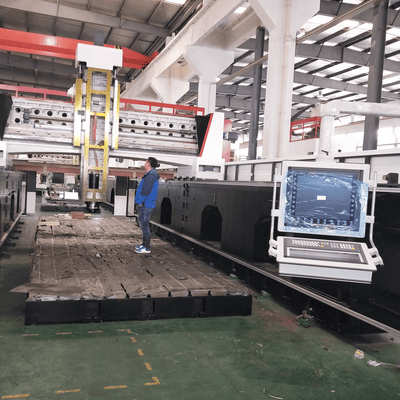
A gantry machining center is not a vertical machining center scaled up. The bridge spans the width of the workpiece, the table or column can weigh tens of tonnes, and the X-axis travel often runs several meters. That scale changes the failure modes:
- Thermal drift matters more. Over a 6–12 m travel, a fraction of a degree in the structure shifts the tool tip by microns. Shops that ignore warm-up and oil cooling see accuracy wander through the day.
- Swamp of swarf. Heavy milling produces large volumes of chips. If they reach the guideways, they act like cutting paste on the most precise surfaces of the machine.
- Foundation load. A 30-tonne table load is supported by the floor and the base casting. Settlement or impact damages geometry that is expensive to restore.
What “Stable Performance” Actually Means
For a B2B user, stable performance is three things: the machine holds positioning accuracy across its full travel, it repeats the same cut within a tight band, and surface finish stays consistent on long jobs. On HIRUNG gantry centers, for example, every machine is verified by laser interferometer and ballbar testing to a positioning accuracy of ≤0.010 mm and repeatability of ±0.003 mm — but that is a reference value measured under controlled conditions. Whether the machine still meets it in your shop depends largely on maintenance.
The Components That Decide Long-Term Stability
Before writing a schedule, it helps to know which parts actually hold the accuracy. The maintenance effort should follow the risk.
The Cast-Iron Foundation
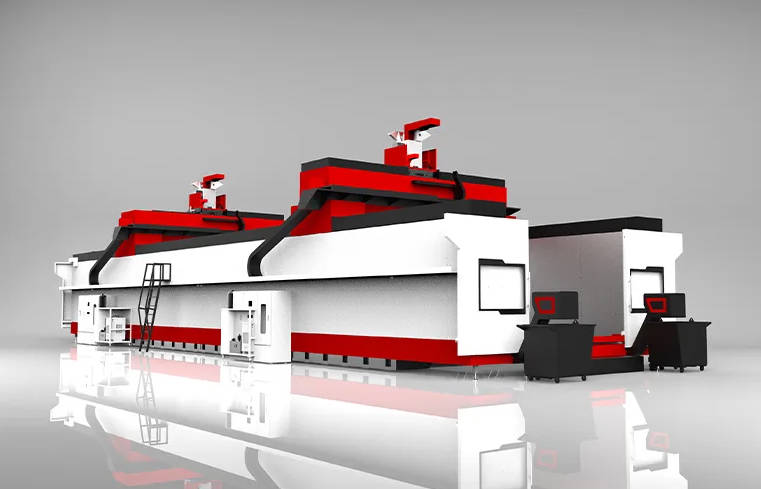
The base, columns and crossbeam are the machine’s skeleton. HIRUNG builds its gantry bases from high-grade Mehanite cast iron (GC-275 / FC300), heat-treated for stress relief, with critical interfaces hand-scraped and structural alignment held within 0.01 mm per 1000 mm. Stress relief means the casting is far less likely to move on its own over time — but it is not immune to foundation settlement, flooding, or a hard crash. Protect the floor, keep the base clean and dry, and re-level if the building moves.
Spindle and Thermal Control
The spindle is the most valuable rotating assembly and the most sensitive to heat. On HIRUNG gantry centers a spindle oil cooling system is fitted as standard, holding Z-axis thermal displacement under 0.005 mm. That engineering only works if the cooling circuit is maintained: clean oil, correct flow, no air in the line. A spindle that warms unevenly will drift exactly where you can least afford it.
Guideways and Drives
Gantry centers commonly pair hardened box-ways (HRC 50+) for heavy milling damping with premium linear guideways for rapid traverses. Both rely on a clean, lubricated track. The X-axis is usually rack and pinion; the Z-axis uses a Class C3 double-nut ball screw. Wear here shows up first as ripple on a finished surface and later as lost repeatability.
A Practical CNC Gantry Machine Maintenance Schedule
The table below is a general framework used by many heavy-machine shops. Treat it as a starting point and adjust intervals to your duty cycle, coolant type and ambient conditions. A daily wipe-down of the table and guideway covers prevents the single most common cause of accuracy loss: abrasive swarf entering the linear guides.
| Interval | Key tasks | Why it matters |
|---|---|---|
| Daily | Remove chips from table, covers and chip conveyor; wipe guideway covers; check lube level and coolant concentration; inspect for leaks; run spindle warm-up | Stops swarf and contamination before they reach precision surfaces |
| Weekly | Clean way covers and wipers; inspect spindle taper and tool holders; check coolant filtration and tank level; verify hydraulic/pneumatic pressure; listen for abnormal vibration | Catches wear and contamination while it is still cheap to fix |
| Monthly | Check way-lube distribution at each axis; inspect ball-screw and rack for damage; verify tool-taper contact (dykem or test bar); record spindle warm-up trend | Confirms the accuracy-critical subsystems are still in spec |
| Quarterly | Clean coolant tank and replace filtration; re-check machine level and anchor bolts; inspect cable chains and way protection for wear; calibrate probes and tool length sensors | Maintains geometry and avoids gradual drift from a shifting foundation |
| Annually | Laser interferometer pitch/linear check; ballbar circularity test; spindle runout and bearing check; full lube-system service; document against the original acceptance report | Re-establishes the machine’s accuracy baseline and supports warranty or resale value |
Re-verify geometry with a laser interferometer and ballbar test at least once a year, or after any major crash, relocation, or foundation work. The original acceptance report — such as HIRUNG’s laser and ballbar verification — is your reference; repeat the same checks so you can prove the machine still performs.
Daily and Weekly Care That Pays Off
Most downtime on a gantry is self-inflicted and preventable at the end of a shift. The highest-leverage habits are also the cheapest:
- Chips first. Run the chip conveyor, then blow or vacuum residual swarf away from the table, covers and the base of the column. Never let chips sit against a way cover overnight.
- Keep covers closed. The full protective covers exist to keep coolant and abrasive dust off the guides. Repair torn bellows promptly; a 10 cm gap is an open invitation to contamination.
- Watch the coolant. Wrong concentration corrodes casts and clogs lines; correct concentration protects them. Check with a refractometer, not by eye.
- Lubrication discipline. Confirm the central lube system is actually metering oil to each axis. A silent pump that is not pumping is a common silent killer of linear guides.
Protecting the Spindle and Tool Interface
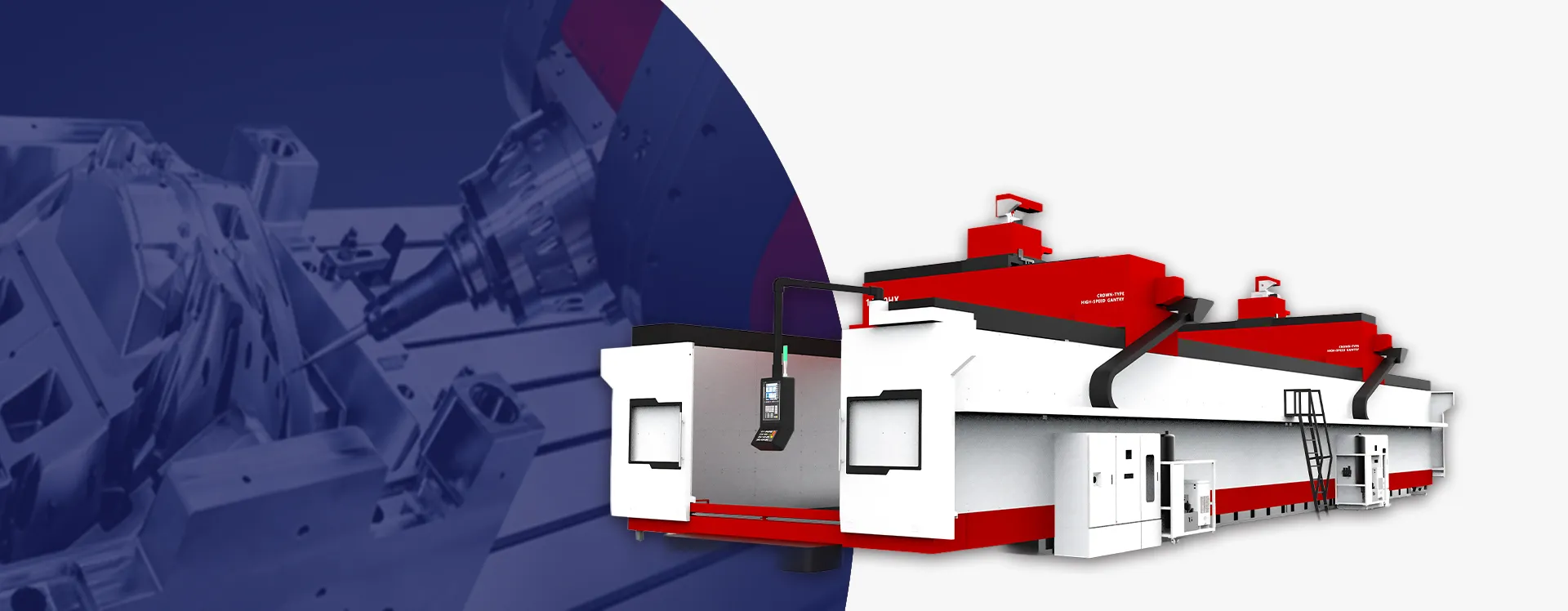
The spindle converts your program into a cutting edge, and it is where heat, vibration and contamination do the most damage.
Spindle Warm-Up and Oil Cooling
Run a warm-up cycle before the first precision job so the bearing and oil reach a stable temperature. Keep the spindle oil cooler clean and the flow correct — on machines with active oil cooling, this single system is responsible for holding thermal displacement under 0.005 mm. Keep the spindle taper and tool holders clean; contaminated tapers are a leading cause of runout and poor surface finish. A 5-minute taper wipe with the correct solvent beats a weekend of scrap parts.
Tool Holders and Pull Studs
Inspect holders for galling, corrosion and cracked pull studs. Replace studs on the maker’s interval; a failed stud drops a tool at speed. Store holders vertically, never stacked, and keep tapers capped when out of the machine.
Guideways, Covers and Chip Management
Box-ways and linear guides each need a clean track and the right lube film. The practical rules:
- Never grind, weld or run sparking work near an open way cover.
- Replace worn wipers before they let paste through — wipers are cheaper than a reground rail.
- Keep the chip conveyor chain tensioned and the auger clear; a jammed conveyor backs chips into the base.
- If you cut exotic or abrasive material, shorten the guideway-inspection interval accordingly.
Coolant, Filtration and Corrosion Control
Coolant is the machine’s bloodstream. A neglected tank grows bacteria, drops pH, foams and corrodes the cast base from the inside. Manage it deliberately:
- Test concentration and pH on a fixed weekly schedule; top up with the same product.
- Clean the tank and replace filtration at the interval your duty suggests — heavy casting iron loads sludge faster than aluminum.
- Use a bactericide per the coolant maker’s guidance in warm months; a sour tank is a health and corrosion risk.
- Rinse and dry exposed ways after a long shutdown so they do not pit.
Choosing a Gantry Built for Lower Maintenance
Some of the best maintenance is designed in at the quoting stage. Thermal stability, not raw power, is what separates a gantry that holds tolerance from one that drifts — so favor designs with active spindle cooling, stress-relieved cast structures and verified geometry. HIRUNG positions its range around exactly these ideas, and the two series suit different duties:
| Design | Best for | Maintenance note |
|---|---|---|
| HPG Series — column-moving (fixed table) | Extra-large, heavy workpieces where table load is effectively unlimited | Fixed table stays put; wear concentrates on the moving column and bridge. Easier to load very large parts. |
| SP Series — table-moving (fixed bridge) | High-precision molds and aerospace parts needing maximum rigidity | Fixed bridge damps vibration well; the moving table and its load are the items to protect and level. |

Modular components and high-durability wear parts, as used across HIRUNG’s gantry centers, also shorten any repair: a worn part is swapped, not rebuilt. When you compare suppliers, ask directly about spare-part lead time and whether wear items are standard, stocked components.
Common CNC Gantry Maintenance Mistakes
| Mistake | What it costs you | Better habit |
|---|---|---|
| Skipping spindle warm-up | Drift on the first precision parts of the day | Run the warm-up cycle every morning |
| Ignoring a silent lube alarm | Scored linear guides, lost repeatability | Confirm oil reaches each axis daily |
| Letting chips pile on the table | Abrasion into way covers and guides | Chip conveyor + end-of-shift wipe |
| Guessing coolant concentration | Corrosion and clogged lines | Refractometer check on a schedule |
| No annual geometry check | Undetected drift, scrap, warranty disputes | Laser + ballbar against the acceptance report |
When to Call the Manufacturer’s Service Team
Do the daily and scheduled work in-house, but escalate promptly when you see bearing noise that rises with spindle speed, a sudden step change in accuracy, a way cover failure that exposes the rails, or any alarm you cannot clear safely. Early manufacturer support protects the warranty and avoids a small fault becoming a rebuilt axis. Keep the original acceptance report, laser/ballbar data and a log of every intervention — it is the fastest route to a correct fix and to proving the machine is still in spec.
Frequently Asked Questions
How often should I maintain a CNC gantry machine?
A gantry center needs daily cleaning and lubrication checks, weekly inspection of the spindle taper and coolant, monthly checks of way-lube and ball-screw condition, quarterly level and filtration service, and an annual laser and ballbar geometry verification. Busy or abrasive-duty shops should shorten the intervals.
What is the best CNC gantry machine maintenance checklist for daily use?
The daily checklist is: clear chips from table, covers and conveyor; wipe guideway covers; confirm lube level and flow; check coolant concentration and tank level; inspect for leaks; and run a spindle warm-up before precision work. These five minutes prevent most accuracy loss.
How do I keep a CNC gantry machine accurate over time?
Hold accuracy by protecting the structure and verifying it. Keep the foundation stable and level, maintain spindle oil cooling, keep guides clean and lubricated, and re-check geometry with a laser interferometer and ballbar test at least annually or after any crash or relocation, comparing results to the original acceptance report.
How do I extend the life of a CNC gantry machining center?
Extend service life through disciplined chips-and-coolant control, correct lubrication, prompt wiper and cover repair, and protecting the spindle taper. Choosing a machine with a stress-relieved cast base, active thermal control and modular wear parts also lowers lifetime cost and downtime.
Why does my CNC gantry machine drift during the day?
Daytime drift is usually thermal. The spindle, ball screws and structure warm as the machine runs, and over a long travel that heat moves the tool tip by microns. A warm-up cycle plus active spindle oil cooling controls most of it; a sudden drift can also signal a lube failure or foundation shift and should be checked.
Should I lubricate the linear guides by hand?
On a gantry with a central automatic lube system, do not hand-grease the rails on a different schedule — it can over- or under-lube and trap debris. Confirm the system is metering oil to each axis; only hand-lubricate exposed or manual points the maker specifies, using the recommended grade.
Which gantry architecture is easier to maintain, column-moving or table-moving?
Neither is universally “easier”; they concentrate wear differently. A column-moving (fixed-table) gantry keeps the heavy table still and wears the moving bridge; a table-moving (fixed-bridge) gantry damps vibration well but asks you to protect and level the moving table and its load. Match the architecture to the workpiece.
Build a Maintenance Habit, Not a Fire Drill
Stable performance on a CNC gantry machine is rarely the result of one big service. It is the sum of small, repeated habits: chips cleared, lube flowing, coolant balanced, spindle warm, and geometry proven once a year. If you are still specifying a machine, factor maintenance into the purchase — a structure built for stability and a supplier with stocked spares will save more than any heroics after commissioning.
To compare designs and duty fit, review the full HIRUNG CNC gantry machining center range, or share your part drawings, material and shift pattern with the HIRUNG engineering team to discuss a configuration matched to your workload.