CNC Vertical Machining Center Price: What Factors Affect the Cost?
When a procurement team asks for a CNC vertical machining center price, the number on the quotation can vary widely between two offers that look almost identical in a brochure. The price of a CNC vertical machining center is driven mainly by axis travel and table load, spindle specification, control system, structural rigidity, and the level of automation and optional accessories selected. Understanding these cost drivers lets a buyer compare quotations on equal terms instead of simply chasing the lowest line item.
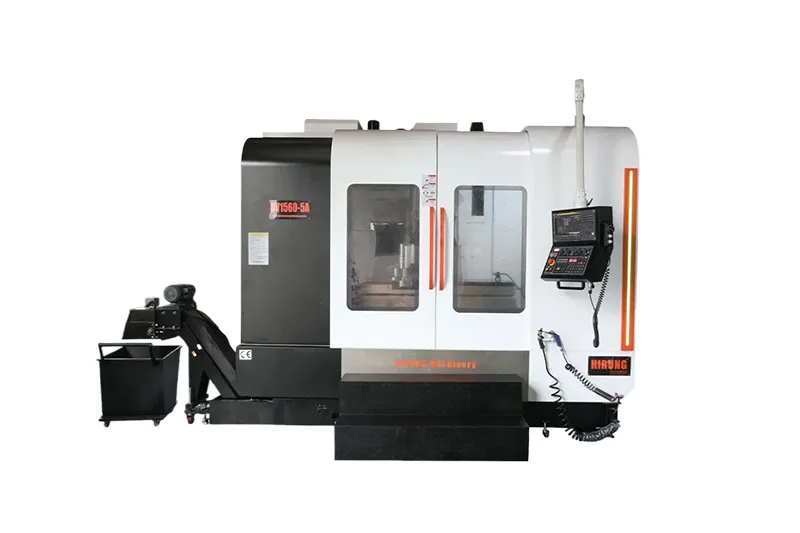
A CNC vertical machining center is a 3-axis (or optionally 4- or 5-axis) milling machine with a vertically oriented spindle. It remains the workhorse of job shops, contract manufacturers, and in-house machining departments because it balances footprint, rigidity, and cost per part. This guide breaks down the nine factors that move the price, shows how configuration tiers change a quote, and explains how to read a supplier’s offer the way an experienced buyer would.
Who This Guide Is For
This article is written for purchasing managers, plant engineers, and distributors who are budgeting for a new VMC or comparing several suppliers. If your goal is a machine that holds tolerance on real production parts, the factors below matter more than the headline number. We focus on what is verifiable on a specification sheet, not on marketing claims.
Why the Price of a VMC Varies So Much Between Quotes
Two machines described as “a 3-axis VMC with a 10,000 rpm spindle” can still differ by a large amount once travel, accuracy class, control brand, and build quality are accounted for. A small-footprint center built for light aluminum work costs far less to produce than a heavy-duty cast-iron machine built for steel and ductile iron at tight tolerances. Buyers who focus only on the headline machining center cost often miss the specifications that protect them from downtime and scrap later.
The practical takeaway: request a configured quotation against a fixed specification sheet, then compare line by line. Price differences are normal; unexplained price differences are a warning sign.
The 9 Cost Drivers Behind a CNC Vertical Machining Center Price
1. Axis Travel and Table Size
Axis travel is the single largest lever on a VMC’s price. Travel (X/Y/Z stroke) and table dimensions define the maximum part size, and they scale the entire machine: more cast iron, a larger base, longer ball screws, and a bigger footprint. A compact model with roughly 600 mm of X-travel uses far less material than a large-travel model at 1,800 mm. On the HIRUNG EV Series, the EV640L provides 600/400/400 mm travel while the EV1890 reaches 1800/900/700 mm; the larger frame, higher table load, and longer axis ways raise both material and engineering cost.
2. Spindle Power and Speed
The spindle is often the most expensive single component. Standard belt-driven or direct-drive spindles at 10,000 rpm are economical. High-speed direct-type spindles at 12,000 rpm, and built-in electric spindles at 18,000 or 24,000 rpm, add significant cost because of bearing grade, balancing, and cooling. Taper type also matters: ISO#40 (BT40/BBT40/HSKA63) is common, and stepping up to a larger taper such as BT50 on bigger models increases the drawbar, bearings, and motor size.
HIRUNG equips its vertical machining centers with P4-grade Japanese NSK bearings and controls spindle suspension within 0.003 mm, which supports stable high-speed cutting. The bearing grade and cooling system behind that performance are part of what the quotation pays for, even when two spindles are both labeled “10,000 rpm.”
3. Control System (CNC Brand)
The control is the machine’s brain, and brand choice moves the price noticeably. Mainstream industrial controls such as MITSUBISHI M80B, SIEMENS 828D, and FANUC 0i-MF Plus each carry different licensing and hardware costs, and each shapes the operator experience and resale value. A familiar control can also reduce training time, which is a real though indirect part of total cost of ownership.
4. Structural Rigidity and Casting Quality
Rigidity decides how much metal the machine can remove without chatter or drift. Premium castings such as German Meehannite (FC30) iron, engineered with FEM analysis and a patented heat-treatment process, cost more than commodity castings but deliver long-term stability. A broad base and a long column-to-base contact length, over 150 mm on HIRUNG centers, improve accuracy retention. That stability is built into the price through more material and more processing steps, and it is difficult to see on a price list yet easy to feel in production.
5. Linear Guideways and Ball Screws
3-axis roller-type linear guideways (for example HIWIN) and precision ball screws determine repeatability and load capacity. Roller guides cost more than slide-way or smaller ball-guide designs but allow heavier cuts and longer service life. The diameter and lead of the ball screws also scale with machine size and accuracy class, adding to both cost and capability.
6. Tool Magazine Capacity and Tool Change Speed
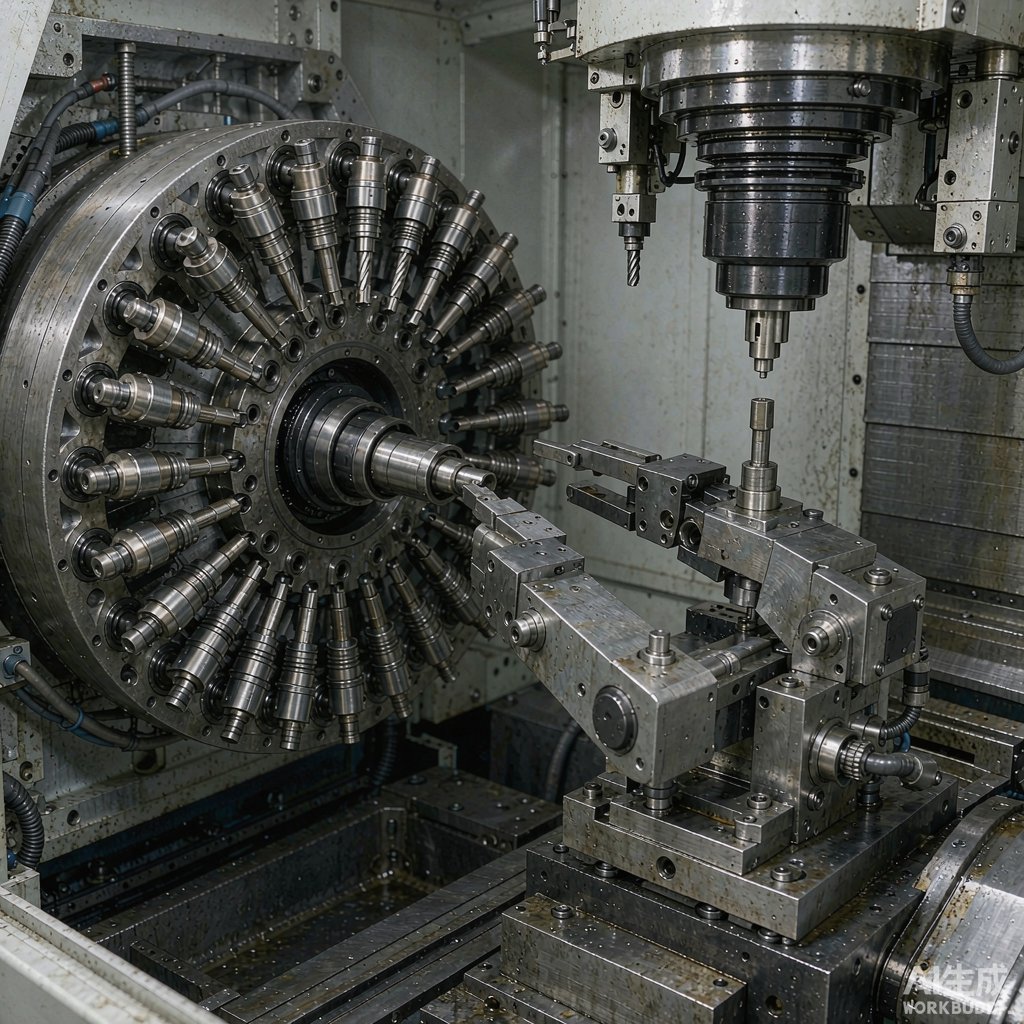
An automatic tool changer (ATC) removes manual tool swaps and is a major convenience and productivity feature. A 24-tool arm-type magazine with a 1.3-second tool exchange is standard on many HIRUNG vertical machining centers; larger magazines and faster exchange mechanisms raise the price. For shops running many operations per part, the ATC pays for itself in cycle time, but it is still a line item on the quote.
7. Accuracy and Calibration Level
Repeatability and positioning accuracy are the two numbers that most directly predict whether a VMC will hold tolerance over years of production, so they deserve close attention when comparing prices. Positioning accuracy around ±0.01 mm and repeatability around 0.005 mm are validated through calibration and testing. Tighter specifications require better components and more inspection time, which is reflected in the quotation.
8. Optional Automation and Accessories
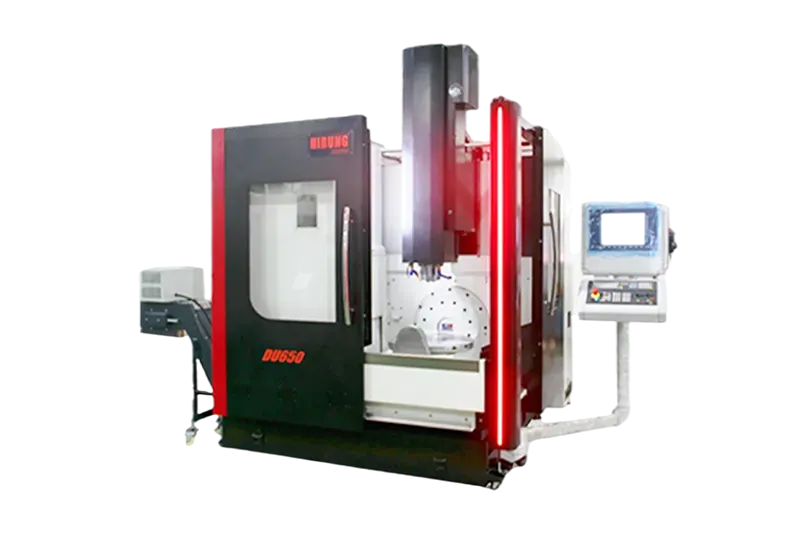
Options are where quotations diverge most. Common additions include a 4th- or 5th-axis rotary table, Renishaw workpiece and tool measuring probes, 3-axis optical scales, through-spindle coolant, oil-mist collection, and automatic doors. Each option is engineered, installed, and tested, so it adds both hardware and integration cost. The cheapest quotation is usually the one with the fewest options, which is exactly why comparing specifications rather than price alone protects buyers who need real capability.
9. Brand, Support, and Country of Origin
Finally, the supplier itself affects price and risk. A manufacturer with documented export experience, spare-parts supply, training, and after-sales support typically prices above a no-name trader but reduces the risk of long downtime. HIRUNG, for example, has supplied CNC machine tools to 33 countries and regions since 2015, which buyers can weigh against pure price when evaluating total cost of ownership.
How Configuration Tiers Change the Price
The table below shows how a typical VMC quote moves as configuration rises from a standard 3-axis base to a high-specification, option-rich machine. Cost impact is shown as a relative level rather than a fixed figure, because final pricing depends on model, market, and freight.
| Configuration element | Standard specification | Upgraded specification | Typical cost impact |
|---|---|---|---|
| Axis travel | Compact (around 600 mm X) | Large (around 1,800 mm X) | High |
| Spindle | 10,000 rpm belt or direct, BT40 | 18,000 to 24,000 rpm built-in, BT50 | High |
| Control | Entry industrial CNC | SIEMENS, FANUC, or MITSUBISHI top tier | Medium |
| Casting and structure | Standard cast iron | Meehannite FC30 with FEM, patented heat treat | Medium |
| Guideways | Ball guide | 3-axis roller guide | Medium |
| Tool magazine | 24-tool ATC | 30-tool or faster exchange | Low to Medium |
| Automation | None | 4th or 5th axis, probes, coolant-through | Medium to High |
How to Read a VMC Quotation Like a Buyer
A useful quotation lists every cost driver above separately. When reviewing offers, buyers should:
- Confirm the exact model and axis travel, not just the label “VMC.”
- Check spindle speed, taper, and power, including S1 and maximum torque.
- Verify the control brand and version.
- Ask which accuracy values are measured and how, for example positioning ±0.01 mm and repeatability 0.005 mm.
- List standard versus optional accessories so comparisons are like for like.
- Clarify what is included in the price: installation, training, spare parts, warranty, and freight.
Shops focused on cost per part from a vertical machining center should model the quotation against expected batch sizes. A faster spindle, an ATC, and a probe package raise the purchase price but often cut cycle time and setup enough to lower unit cost at volume.
Common Mistakes When Comparing VMC Prices
- Comparing only the headline number while ignoring travel and accuracy class.
- Assuming a “10,000 rpm spindle” means the same bearing grade and cooling across brands.
- Overlooking what is excluded, such as freight, installation, training, and warranty.
- Choosing the cheapest option and paying later in downtime and scrap.
- Treating the control brand as interchangeable when operator familiarity matters.
How to Choose the Right Supplier
For export buyers, total cost of ownership matters more than the unit price, because delivery risk, spare-parts availability, and support decide how much the machine actually earns. A capable CNC machine tool manufacturer should share specifications, reference installations, and a clear statement of what is included. For overseas buyers, regional distribution rights, training, and technical support are as important as the quoted price.
Frequently Asked Questions
What is the average CNC vertical machining center price?
There is no single average, because price scales with travel, spindle, control, and options. A compact 3-axis VMC costs far less than a large-travel or high-speed model, and the same “VMC” label can cover very different machines. The reliable approach is to compare configured quotations against the same specification sheet.
Why is there such a big price difference between two VMCs?
Differences usually come from machine size, spindle grade and speed, control brand, casting and rigidity, guideway type, tool magazine, accuracy class, and optional automation. Two quotes that look alike in a brochure can differ sharply once these are itemized.
Which specification most affects the VMC price?
Axis travel and table load are typically the largest levers, followed by spindle speed and power. Control brand and optional automation such as a 4th or 5th axis and probes also move the price meaningfully.
Is a cheaper CNC vertical machining center worth it?
A lower price can be reasonable if the specification matches the work. It becomes risky when it hides weaker castings, slower spindles, or missing support. Buyers should weigh total cost of ownership, including downtime, scrap, and service, not just the purchase price.
How do options like a 4th axis change the price?
Options such as a rotary table, Renishaw probes, or through-spindle coolant add hardware and integration cost, but they can reduce setup and cycle time. For multi-sided or high-mix parts, they often lower cost per part enough to justify the upgrade.
What should I ask a supplier before accepting a VMC quote?
Ask for the exact model and travel, spindle details, control version, measured accuracy, standard versus optional accessories, and what is included in the price, such as freight, installation, training, warranty, and spare parts. Clear answers make quotations comparable.
Conclusion
A CNC vertical machining center price is not one number but the sum of nine measurable choices, from travel and spindle to control, rigidity, and automation. Buyers who specify their requirements clearly and compare like-for-like quotations get the capability they need at a defensible cost. To see how these factors map onto a real product line, review the HIRUNG EV Series vertical machining centers and discuss your part range with the engineering team for a configured quote.