To maintain a CNC lathe machine, build a small routine around the parts that actually wear: clean and de-burr the hydraulic chuck and check its runout every week, keep the X/Z linear guideways and ball screws free of chips, top up the central auto-lubrication system, verify turret indexing and tool offsets, inspect the hydraulic tailstock quill, keep the coolant clean through the oil-water separator, and run a short spindle warm-up before production. A simple daily, weekly and monthly checklist prevents almost all unplanned downtime and protects the positioning accuracy your parts depend on.
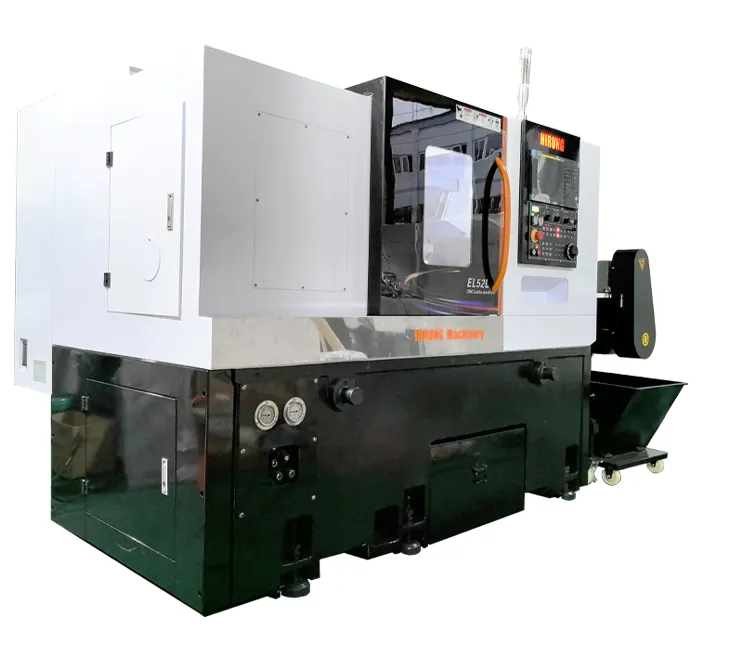
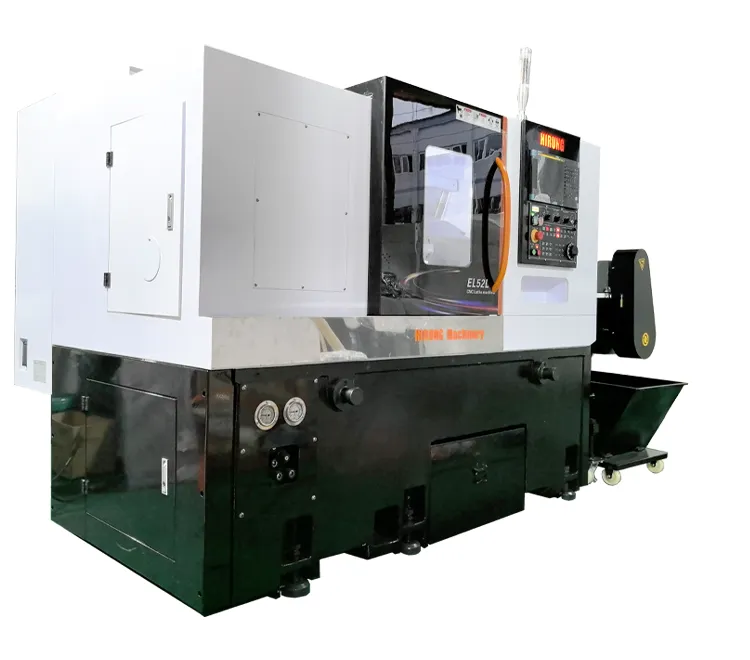
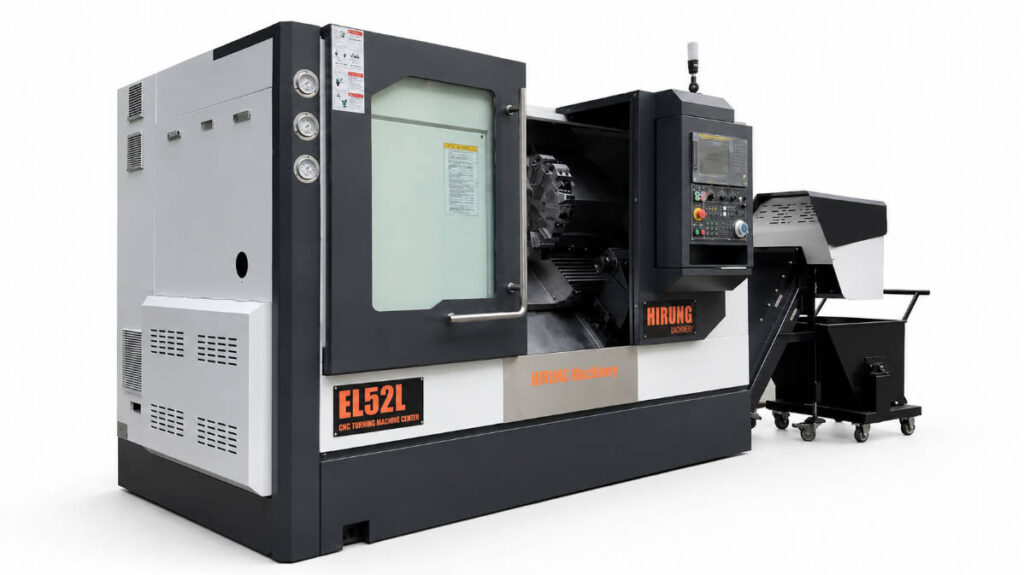
Turning is unforgiving about neglect. A lathe spins the workpiece at thousands of rpm while a tool removes material a few microns at a time, so a dirty chuck jaw, a worn soft jaw or a clogged guideway way cover shows up directly as diameter drift, taper or a scratched finish. This guide walks through a practical CNC lathe machine maintenance plan built around the machine’s real subsystems, with an interval checklist you can paste into a maintenance log. Where it helps, we reference how the HIRUNG EL Series CNC lathe machines are laid out, because good machine design already removes much of the maintenance burden.
Why CNC Lathe Machine Maintenance Protects Your Tolerance and Throughput
Most shops buy a lathe for its spec sheet—swing, machining length, spindle bore—but keep it for its consistency. Consistency is a maintenance outcome, not a purchase outcome. The single biggest cause of drifting turned accuracy is not the control or the spindle; it is workholding and way cleanliness slowly degrading between services. A chuck that has baked-on swarf and a guideway that is no longer receiving lube will lose tenths of a millimeter long before any major component fails. The cheaper fix is a habit.
Maintenance also protects resale value and lead time. A machine that loses accuracy forces operators to “chase the offset,” cutting test bars and editing offsets several times a shift. That is hidden downtime. A 30-minute weekly routine costs far less than one scrapped batch or one emergency service visit.
The CNC Lathe Machine Maintenance Checklist by Interval
Use this as the backbone of your log. It maps each task to a frequency and explains why it matters, so an operator can act even without a service background.
| Interval | Subsystem | Task | Why it matters |
|---|---|---|---|
| Daily | Workholding | Remove swarf from chuck jaws and soft jaws; wipe the spindle face. | Prevents built-up chips from throwing the part off-center. |
| Daily | Coolant | Skim tramp oil; check level; confirm oil-water separator is running. | Clean coolant protects the finish and the pump. |
| Daily | Power-on | Confirm the phase-sequence protection switch shows green after first power-up. | Verifies correct wiring before motion starts. |
| Weekly | Workholding | Check chuck runout with a test bar or dial indicator. | Catches jaw wear and taper before it reaches parts. |
| Weekly | Guideways | Blow off X/Z way covers; confirm central auto-lube is dispensing. | Keeps HIWIN/PMI ball screws and linear rails clean. |
| Weekly | Turret | Confirm 12-station servo turret indexes repeatably; review tool offsets. | Worn indexing or wrong offsets ruin diameter and length. |
| Monthly | Hydraulics | Check hydraulic chuck and tailstock pressure; look for leaks at the double-tank chain. | Holds clamp force and protects cables from oil. |
| Monthly | Electrical | Clean electric-cabinet heat-exchanger filters; check labeled terminal tightness. | Avoids heat-related faults and EMI. |
| Quarterly | Alignment | Re-level the machine; verify tailstock-to-spindle centerline on shaft work. | Keeps long parts from tapering. |
| Quarterly | Accuracy | Cut a test bar and compare to laser baseline (positioning ±0.01 mm, repeat ±0.005 mm). | Confirms the machine still holds its specification. |
This table is deliberately subsystem-based rather than symptom-based: a lathe’s failure modes cluster around chuck, turret, ways, hydraulics and coolant, and checking those directly beats waiting for a fault to appear. You can read the full EL Series specifications to map these tasks to your exact model’s chuck size, tailstock travel and guideway layout.
Workholding First: Hydraulic Chuck, Collet and Spindle Bore
On a lathe, workholding is the first link in the accuracy chain. If the part is not held true, no amount of control tuning helps.
Check Chuck Runout Every Week
A hydraulic 3-jaw chuck should hold a ground test bar within a few hundredths of a millimeter of runout; once it climbs past that, clean the jaws and re-seat the soft jaws before blaming the spindle. Soft jaws (supplied as standard on the EL Series) should be re-bored to the part whenever you change diameter ranges, because bored jaws locate on the part’s own surface rather than the scroll. Hard jaws are for repeated, identical diameters.

Keep the Spindle Bore and Bar Path Clear
For bar-fed work, the spindle bore is a chip and coolant channel. The max bar-feeding diameter on the EL Series runs from 46 mm on the EL42L up to 75 mm (90 mm option) on the larger EL75, so match your bar stock to the bore and never let nested chips accumulate at the spindle nose. A blocked bore drags bar stock off-center and scores the through-hole. Blow it out on the same weekly pass you use for the chuck.
Tailstock and Live-Tool Alignment (Shaft Work)
Long shaft parts are where many shops first see taper. The hydraulic tailstock (fitted to the EL42L, EL52 and EL75) supports the free end of the part, but only if its centerline matches the spindle. If a long turned shaft tapers toward the tailstock end, the usual cause is tailstock misalignment or a worn quill—not the tool. Re-center the tailstock at every quarterly leveling, and check quill extension for play. On the EL Series the tailstock travel ranges from 300 mm (EL42L) to 800 mm (EL52LL), so confirm it still clamps across its full stroke.
Turret Indexing and Tool-Offset Hygiene
The 12-station servo turret is where diameter and length accuracy are set in software. Most “the machine is wrong” complaints are actually stale offsets.
- After any tool change, re-measure the X and Z offsets against a known bar; do not copy offsets from a worn insert.
- Watch for indexing that overshoots or hunts—usually a dirty turret face or a low hydraulic clamp pressure.
- Keep the turret face and tool shanks clean; embedded grit changes the tool’s position by microns.
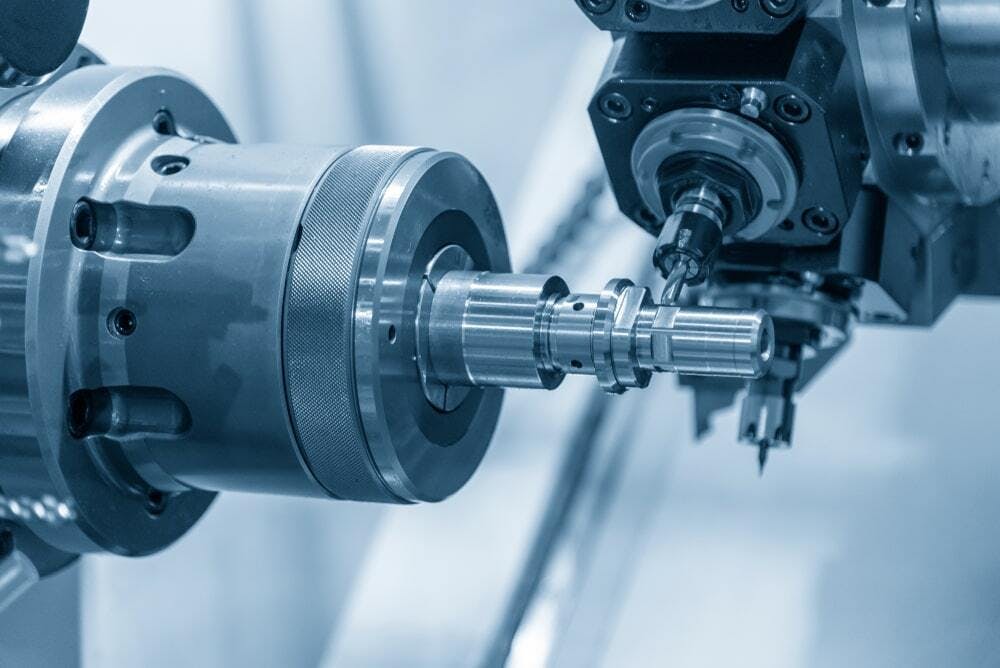
A MARPOSS automatic tool setter (optional on the EL Series) removes the manual step and makes offset checking a one-button routine, which is worth it on high-mix jobs.
X/Z Linear Guideways, Ball Screws and the Central Lube Loop
The X/Z axis linear guideways and Taiwan HIWIN or PMI ball screws do the positioning work, and they fail slowly when starved of lube. The EL Series ships with a central auto-lubrication system as standard, which removes most manual greasing—but it does not remove the need to confirm it is actually dispensing. A weekly check that the way covers are clear and the lube reservoir is topped prevents the two most expensive lathe failures: a scored rail and a pitted ball screw.

Keep way covers (the telescoping guards over the rails) free of packed swarf. Chips wedged under a cover get dragged along the rail on the next rapid move and score it. A quick air blow-down each week is enough on most shops.
Hydraulic System and the Double-Tank Chain
The hydraulic chuck and hydraulic tailstock run on the same power unit, so a slow pressure drop affects clamping and support at once. Monthly, read the gauge at the front-mounted pressure switches (all adjustment is at the front of the EL Series for exactly this reason) and look for weeping at fittings.
One design detail worth knowing: HIRUNG uses a double-tank chain to separate the control cables from the high-pressure oil pipes. That keeps hydraulic oil off the wiring loom, which is a common cause of intermittent lathe faults on lesser layouts. During monthly checks, look along that chain for the first sign of a weep and wipe it before it migrates to the cables.
Coolant, Oil-Water Separation and Chip Management
Coolant is the lathe’s circulatory system. The EL Series carries an oil-water separation device as standard, which keeps tramp oil off the coolant and extends both fluid life and pump life. Skim the surface daily and confirm the separator is running; a clogged tank turns coolant fouled within a week and you will see it in the finish first.

Chip handling matters more on a lathe than a machincenter because swarf is long and stringy. The EL52 series ships with a chain waste conveyor and cart as standard; on other models it is an option. Keep the conveyor running and never let a nest of stringy chips wrap the chuck or the way cover.
Thermal Behaviour and Spindle Warm-Up
A spindle heats as it runs, and that growth moves the tool relative to the part. Run a 5–10 minute spindle warm-up at mid-range rpm before cutting tight-tolerance work, especially on a cold morning or after a weekend idle. The EL Series uses a heat exchanger for the electric cabinet as standard, which controls the control side; the spindle side is managed by a predictable warm-up routine. Log the warm-up so first-off parts are consistent shift to shift.
A 30-Minute Weekly Routine That Catches Most Faults
Compress the weekly tasks into one short routine:
- Wipe chuck jaws and spindle face; blow guideway way covers.
- Mount a test bar, check chuck runout, note it in the log.
- Cycle the turret through all stations; listen for hunting.
- Confirm central lube reservoir and coolant level; skim tramp oil.
- Read hydraulic pressure at the front switches; glance along the double-tank chain.
- Cut one test bar if running tight tolerance this week; compare to baseline.
Thirty minutes, once a week, eliminates most emergency calls.
Common CNC Lathe Maintenance Mistakes
| Warning sign | Likely cause | First check |
|---|---|---|
| Diameter drifts within a long run | Spindle warming / chuck runout | Warm-up routine; chuck runout test |
| Long shaft tapers toward tailstock | Tailstock misalignment | Re-center tailstock at next leveling |
| Repeat “tool not found” alarms | Dirty turret face / low clamp pressure | Clean turret; check hydraulics |
| Scored finish on every part | Chips on way cover or in chuck | Blow ways; clean jaws |
| Intermittent electrical faults | Oil on wiring loom / loose terminal | Inspect double-tank chain; tighten labeled terminals |
The mistakes behind these signs are almost always the same: skipping the weekly pass, topping lube but never confirming it dispenses, and treating the chuck as “set and forget.” None of them need a service engineer—they need a log.
Choosing a Lathe Designed for Lower Upkeep
Some maintenance is designed out. Beyond the central auto-lube and oil-water separator, the EL Series targets easy upkeep in three places: the electrical box has neat, numbered wiring with terminals labeled in Chinese, English and Russian so a fault is traced without a schematic; all pressure adjustments sit at the front so the operator never climbs inside; and the internal protection is stainless steel rated for a 10-year service life. CNC lathe machines built for easy maintenance turn a 30-minute weekly routine into a realistic one rather than a hope.

When to Call Your Supplier’s Service Team
A log handles the 90% that is routine. Call the service team for the 10% that is not: a ball screw that has developed backlash no re-lube fixes, a turret that will not index after cleaning, a hydraulic unit that cannot hold pressure, or an accuracy test that no longer returns to the laser baseline. An experienced CNC lathe machine supplier should be able to quote the spare part from your model and serial before the engineer arrives, which is the difference between a one-day fix and a two-week wait. Talk to the HIRUNG team if you want the EL Series service interval sheet matched to your exact configuration.
Frequently Asked Questions
How often should I maintain a CNC lathe machine?
Do a daily pass (chuck wipe, coolant skim, power-on check) and a weekly pass (runout test, way covers, turret cycle, lube and coolant confirm). Move to monthly hydraulic and electrical checks and quarterly leveling and accuracy tests. This cadence prevents almost all unplanned downtime.
What is the best CNC lathe maintenance checklist for daily use?
Daily: remove swarf from the chuck and soft jaws, wipe the spindle face, skim tramp oil and check coolant level, and confirm the phase-sequence protection switch is green after first power-up. Keep it to five minutes so operators actually do it.
How do I keep a CNC lathe chuck accurate?
Clean the jaws every day, re-bore soft jaws to each diameter range, and check runout with a test bar weekly. Most diameter drift traces to the chuck, not the spindle, so this one check protects more accuracy than any other.
Why does my turned diameter drift during a long run?
Usually spindle warm-up or chuck runout. Run a 5–10 minute spindle warm-up before tight work and verify chuck runout weekly. If drift appears only on long shafts toward the tailstock, re-center the tailstock instead.
Should I lubricate the linear guideways by hand?
On machines with a central auto-lubrication system, such as the EL Series, manual greasing is reduced to confirming the reservoir dispenses—do not over-grease, which attracts chips. On machines without auto-lube, follow the maker’s grease points and intervals strictly.
How long does a CNC lathe machine last with good maintenance?
With a weekly routine and clean coolant, the structural and drive components typically run for many years; HIRUNG rates its stainless-steel internal protection for a 10-year service life. Life is decided far more by the log than by the brand.
Conclusion
A CNC lathe machine rewards the boring work. A daily wipe, a weekly runout and turret check, a monthly hydraulic and electrical pass, and a quarterly accuracy test will keep a well-designed machine holding its specification for years. The EL Series lays much of this out for you—central auto-lube, oil-water separation, a front-mounted pressure bank and a clearly labeled electrical box—so the routine stays short. Start the log this week, and treat maintenance as a habit rather than a repair.