A reliable CNC machine manufacturer is one that actually builds machines, has the engineering depth to match a machine to your parts, controls build quality through documented measurement, supports export customers with spare parts and service, and communicates transparently about what is and is not included. For buyers sourcing from China, the real difficulty is not finding a supplier — it is telling a genuine manufacturer apart from a trading company, and verifying capability before money changes hands.
This guide explains how to choose a CNC machine manufacturer in China: which signals actually indicate capability, what to verify in a quotation, which red flags to walk away from, and how to compare suppliers on something other than price alone.
A CNC machine is a long-term production asset. The manufacturer behind it determines not only the build quality of the machine but also whether spare parts, technical support and documentation will still be available years later. That is why supplier selection deserves at least as much attention as machine specification.
Why Choosing the Right Manufacturer Matters
Two suppliers can quote machines that look identical on paper and still deliver very different outcomes. The difference appears later — in build consistency between units, in how accurately the machine was measured before shipment, in how quickly a spare part arrives when production stops, and in how clearly the supplier answers technical questions before you buy.
A machine that is down for want of a component or a clear answer can lose far more value than the price gap between two suppliers. When comparing CNC machine manufacturers, total cost of ownership and support reliability usually matter more than the lowest headline quotation. The supplier you choose becomes part of your production capability, not just a one-off purchase.
What to Look for in a CNC Machine Manufacturer
1. A Real Manufacturer, Not Just a Trading Company
In China, many companies described as “CNC machine manufacturers” are trading companies that resell or lightly assemble machines built elsewhere. A trading company can still be a valid partner — it may offer broader choice or better export logistics — but you should know which one you are dealing with, because it directly affects accountability, customisation depth and the price structure.
Ask to see the production stages: casting, machining of structural parts, scraping and alignment, assembly, and final accuracy testing. A manufacturer that owns these stages can control quality and customise a machine; a pure trader usually cannot.
| Aspect | Genuine manufacturer | Trading company |
|---|---|---|
| Production facilities | Owns casting, machining, assembly and testing stages | Sources finished machines from third parties |
| Customisation | Can change spindle, travel, tooling and options to a drawing | Limited to what is available to resell |
| Technical answers | Engineering team explains trade-offs directly | Relays questions through another party |
| Price structure | Manufacturing cost plus margin | Manufacturer price plus reseller margin |
| Spare parts | Central to their own build and service | Depends on the upstream builder |
2. Product Range and Technical Depth
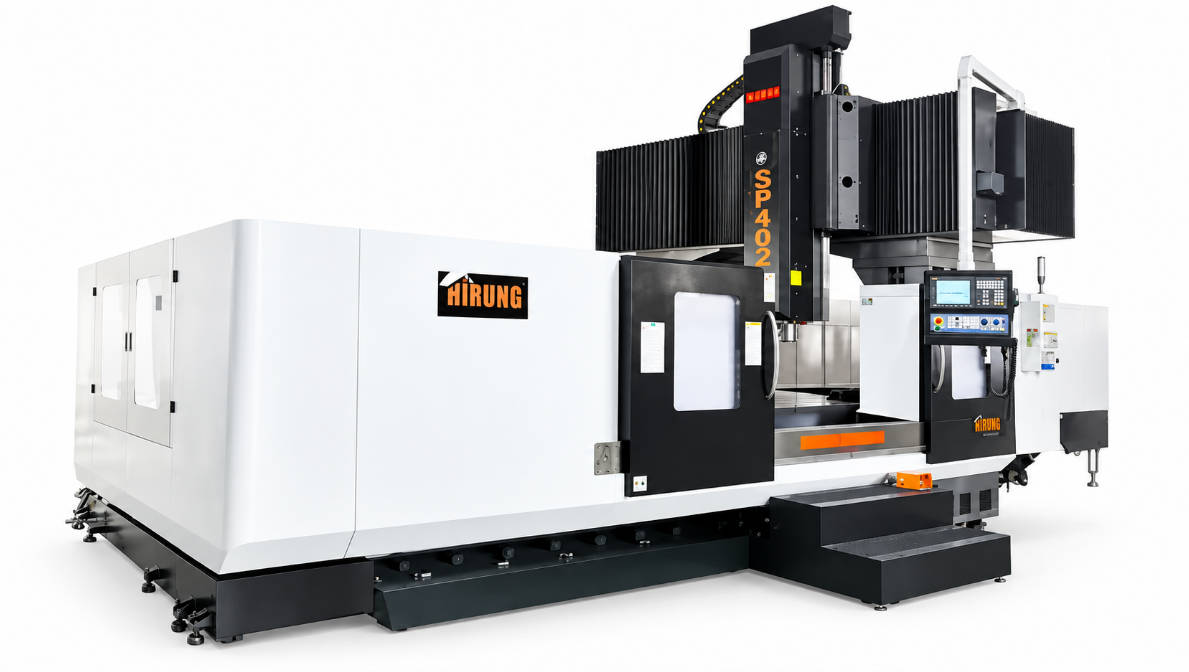
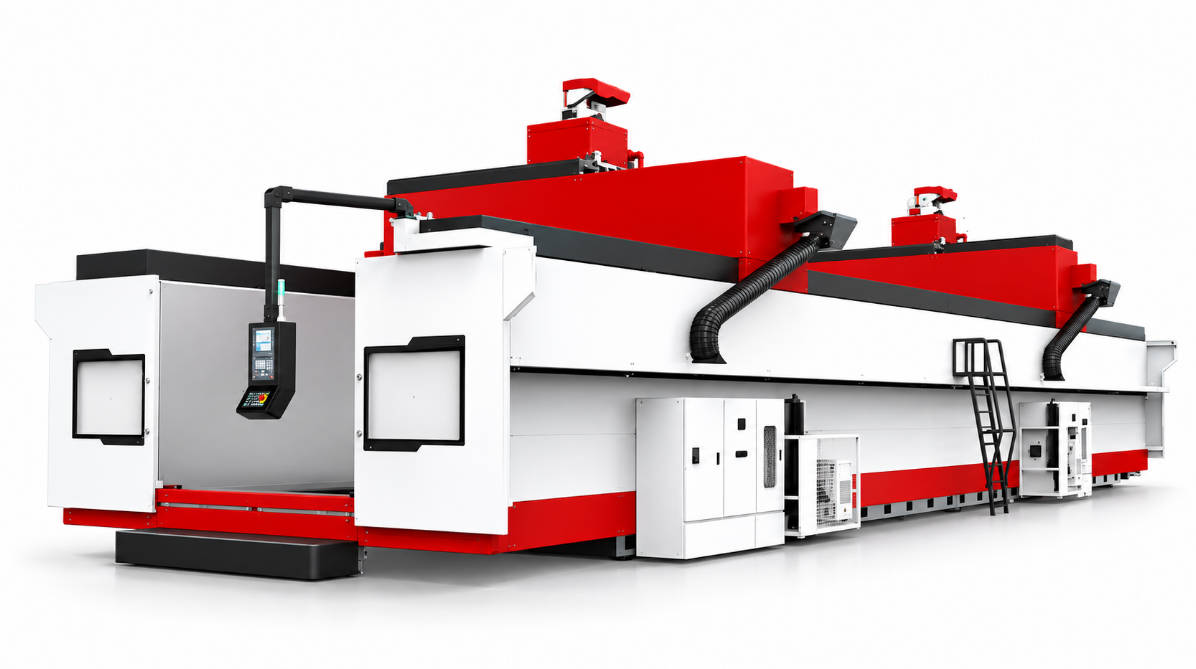
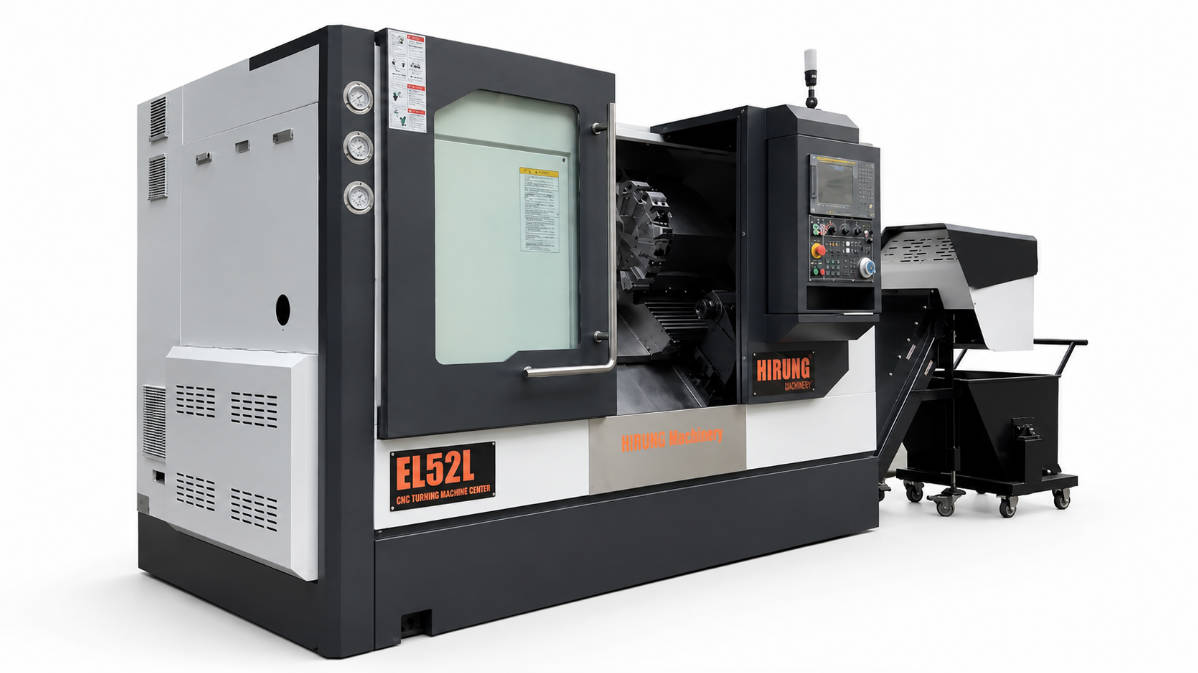
A manufacturer’s product range is a useful indicator of technical depth. A company that builds several machine families — vertical machining centers, 5-axis machining centers, turning machines and large gantry machines — has broader engineering experience than one offering a single stock model, and is more likely to recommend the right platform instead of pushing what it happens to have.
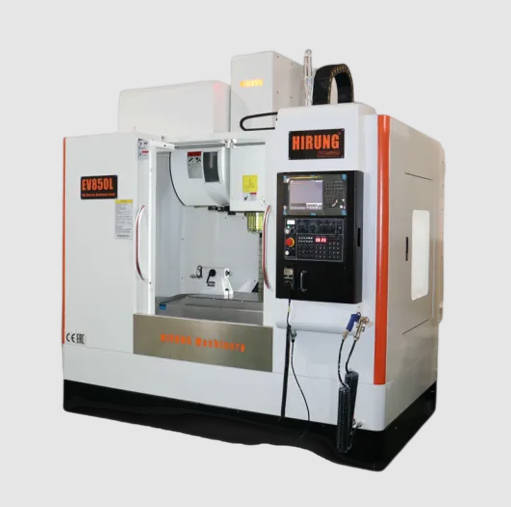
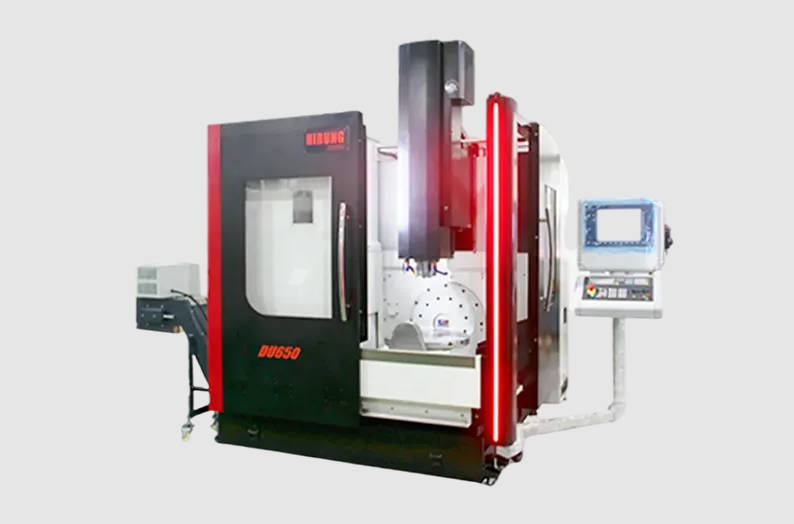
HIRUNG, for example, manufactures gantry, vertical, 5-axis and turning platforms, including HIRUNG EV Series vertical machining centers that cover a range of envelope and table-load options. A range like this lets the configuration discussion start from your parts rather than from a single catalogue model.
3. Engineering and Customisation Capability
The clearest test of a manufacturer is whether it can respond to a part drawing with a configuration proposal, rather than a catalogue page. Send your workpiece dimensions, weight, material, required tolerance, machining operations and production quantity, and judge the quality of the technical reply: does it address your constraints, or does it simply repeat specifications?
Strong manufacturers explain trade-offs — where extra travel helps, where it adds cost without benefit, and which spindle or tooling choice fits the material. That engineering conversation is one of the most reliable indicators of the partner you are choosing.
4. Build Quality and Component Sourcing
Build quality starts with the structure and the key components. The base and casting material, guideway design, ball screw accuracy class, spindle bearings and control brand together determine how the machine performs and how long it holds accuracy. Documented specifics are more meaningful than adjectives: for instance, EV Series specifications cite FC30 precision cast iron with controlled heat treatment, Japanese-origin or equivalent linear guideways, P4-class bearings, and FANUC, SIEMENS or MITSUBISHI controls.
Ask exactly which components and materials are specified, and whether any are substituted — component substitution is one of the most common ways cost is reduced without the buyer noticing. A supplier that answers this in writing is usually the one worth continuing with.
5. Quality Control and Accuracy Testing
Ask how accuracy is measured and documented, and ask to see the evidence. Serious manufacturers test geometric accuracy as well as positioning and repeatability during assembly and before shipment, and can provide test results. HIRUNG documents accuracy verification using laser interferometer and ballbar testing rather than relying on a specification sheet alone.
Where accuracy is mission-critical, agree in the contract which tests are performed and how results are reported, so “accuracy” becomes a measured value rather than an assumption.
6. Documentation, Communication and Export Experience
A manufacturer used to export understands documentation, packing, shipping terms and after-sales across borders. Ask about the markets it already serves, the quality of its English manuals, its packing for sea freight, and how it handles technical questions remotely.
Export experience is checkable. HIRUNG has supplied machines to customers in 33 countries and regions since it entered overseas markets in 2015 — a level of export history that buyers can question directly and verify in conversation.
7. After-Sales Support, Spare Parts and Training
Support is one of the clearest differences between manufacturers. Ask about spare-part availability, remote and on-site support, installation and commissioning, operator and programmer training, and warranty terms. Discuss these before the order, not after the machine arrives, because the answers shape the real cost of ownership.
8. Price Transparency and Payment Terms
A transparent quotation itemises the machine, options, tooling, packing, shipping, commissioning and warranty, so you can compare like with like. Be cautious of a low base price that quietly excludes essentials, and make sure delivery terms, payment milestones and responsibilities are written clearly in the contract.
Red Flags to Avoid When Choosing a CNC Machine Supplier
- Cannot show its own production or testing when asked, only a catalogue and a price.
- Quotes without a written specification, leaving travel, spindle, control and options undefined.
- Deflects questions about components or refuses to confirm brands and materials.
- No documented accuracy testing, with quality described only in adjectives.
- Vague on spare parts and support, especially for a machine that will run for years.
- Prices far below the market for the same nominal specification — something is usually missing.
- Pressure to pay before delivery terms, incoterms and warranty are clearly agreed.
How to Evaluate a Manufacturer: A Step-by-Step Process
- Define the requirement: workpiece size, weight, material, tolerance, operations and volume.
- Shortlist candidates that build the machine family you need.
- Send the same brief to each and compare the technical quality of the replies.
- Request a specification-based quotation so every offer is comparable.
- Ask for component sources and accuracy-test evidence.
- Discuss support, spare parts, training and warranty before pricing is finalised.
- Where feasible, request a video walkthrough of production and testing.
- Confirm delivery terms, payment milestones and responsibilities in writing.
Comparing Suppliers: What to Verify Side by Side
| What to verify | What to ask | Why it matters |
|---|---|---|
| Manufacturing status | Which production stages do you own? | Determines accountability and customisation depth |
| Product capability | Which machine families do you build? | Shows technical breadth and fit to your parts |
| Engineering response | Can you propose a configuration from my drawing? | Reveals real engineering support, not sales talk |
| Build quality | Which castings, guideways, bearings and control brands? | Directly affects accuracy and machine life |
| Accuracy testing | Which tests are performed and reported? | Turns specifications into verifiable values |
| Export experience | Which markets do you already serve? | Indicates documentation and logistics reliability |
| Support | How fast are spare parts and service available? | Protects uptime and total cost of ownership |
Common Mistakes When Choosing a CNC Machine Manufacturer in China
- Choosing on price alone and discovering missing capability or weak support after delivery.
- Not confirming who actually builds the machine, so accountability is unclear.
- Accepting a vague specification that leaves travel, spindle or options undefined.
- Skipping accuracy-test evidence, treating a claim as a verified result.
- Leaving support and spare parts undefined until a problem appears.
- Not comparing the same specification, so quotations are not actually comparable.
Working with a Manufacturer That Engineers to Your Parts
The best outcome comes from a manufacturer that treats the machine as a configuration, not a stock item. That means starting from the part drawing, recommending the platform and spindle that fit, being honest about trade-offs, and backing the machine with measurement and support.
HIRUNG (Dongguan Hirung Precision Machinery Co., Ltd.) manufactures CNC machine tools across gantry, vertical, 5-axis and turning platforms, including 5-axis machining centers, and has supplied customers in 33 countries and regions. Buyers who want to evaluate the HIRUNG CNC machine tool manufacturer against these criteria can start from their own part drawing and requirements.
FAQ
How do I know if a CNC machine manufacturer in China is reliable?
Check whether it actually manufactures the machines, can answer technical questions from your drawing, specifies its components in writing, documents accuracy testing, and supports export customers with spare parts and service. A manufacturer that answers these points clearly and consistently is generally a safer partner.
How can I tell a manufacturer from a trading company?
Ask which production stages they own and request a walkthrough of casting, machining, assembly or testing. Genuine manufacturers can describe their own processes and customise a machine; trading companies typically resell finished machines and have limited ability to change the specification.
What should I check before ordering a CNC machine from China?
Confirm a written specification, the component sources, accuracy-test evidence, delivery terms, packing, warranty, spare-part availability and training. Compare quotations on the same specification so price differences reflect real capability rather than missing items.
Do Chinese CNC machine manufacturers provide after-sales support?
Many established manufacturers do, but the level varies widely. Ask specifically about remote diagnosis, on-site service, spare-part availability and response time, and agree expectations in the contract. Support quality is one of the clearest differences between suppliers.
Is it cheaper to buy a CNC machine directly from a Chinese manufacturer?
Buying direct can remove a reseller margin, but the lower price only has value if the machine, specification and support are right. Compare total cost — including tooling, shipping, commissioning and expected maintenance — rather than the headline figure alone.
What is the most important factor when selecting a CNC machine supplier?
The most reliable signal is how well the supplier engages with your part drawing and production requirements. A supplier that asks the right questions and answers them with specifics — configuration, components, testing and support — is usually a better long-term partner than one that simply quotes the lowest number.
Conclusion: Choose Capability, Not Just a Price
Choosing a reliable CNC machine manufacturer in China comes down to verification: confirm that the company really builds machines, that it can configure one to your parts, that its build quality and accuracy are documented, and that it will support the machine after delivery. Those checks protect the investment far more than a low quotation.
To evaluate a manufacturer properly, share your part drawing, workpiece size and weight, required tolerance, machining operations and production quantity, and compare how each candidate responds. A supplier that engineers a configuration to your requirement is the one worth building a long-term relationship with.