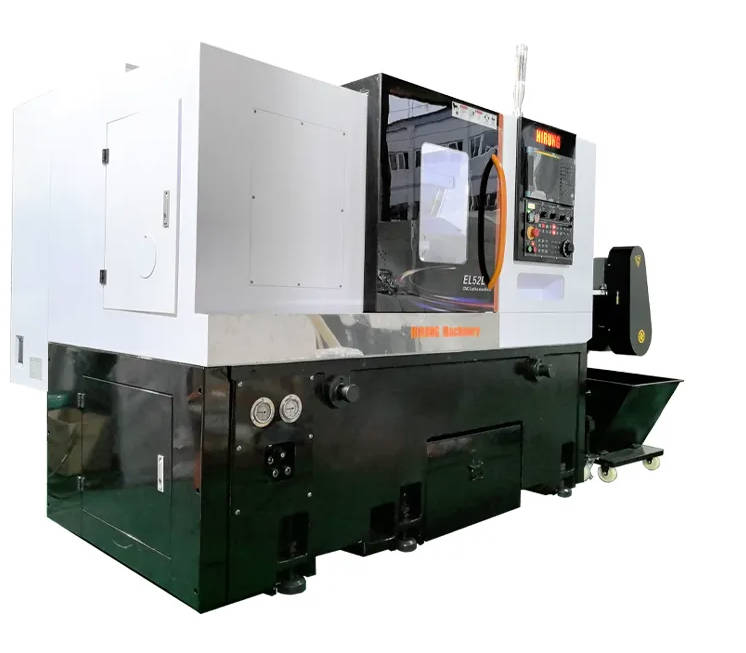
When acquiring high-precision manufacturing equipment, standard commercial agreements rarely favor the buyer. Negotiating robust CNC machine tool warranty and service terms upfront protects production schedules, establishes accountability, and caps unexpected maintenance expenses. The baseline warranty typically covers standard defects for 12 months, but it often omits labor expenses, freight costs, and the operational impact of spindle failures or controller errors — what the standard machine warranty and service coverage actually includes is almost always narrower than the sales proposal implies.
To safeguard your operational investment, negotiations must focus on four levers rather than on the headline percentage discount:
- The warranty start trigger: shifting commencement from the bill of lading date to final site acceptance.
- Component-specific coverage: securing distinct protection for spindles, linear guides, and CNC controls.
- Service Level Agreements (SLAs): setting enforceable response windows for technical support and emergency field dispatch.
- Commissioning boundaries: tying operator training and sign-off criteria directly to dynamic cutting performance.
This guide details the contract clauses industrial buyers, procurement managers, and plant engineers must review and amend before executing an equipment purchase contract.
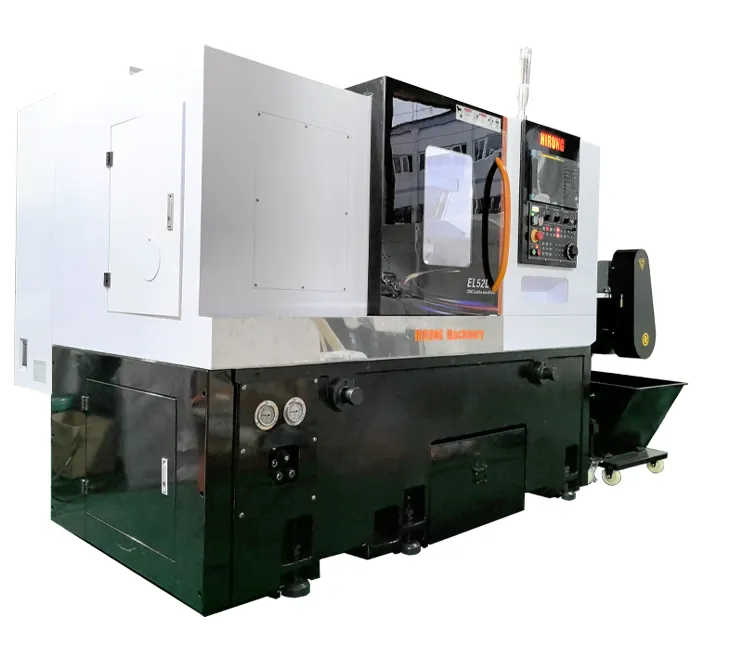
Beyond the Purchase Price: Why Warranty and Service Terms Define Your Machine’s ROI
A competitive acquisition price can quickly be negated by unbudgeted downtime. For sophisticated industrial equipment, calculating the total cost of ownership (TCO) requires balancing the initial invoice against the ongoing expense of keeping mechanical axes aligned, spindles running within thermal specifications, and drive systems functional. The cost items buyers commonly miss on a first purchase — spare parts, service response, acceptance measurement — are precisely the ones a warranty clause either absorbs or passes back to you.
Unplanned machine downtime ripples through production lines, causing missed delivery deadlines, expedited freight surcharges, and costly scrap rates. A standard equipment contract treats a down machine as an ordinary warranty event. It does not account for factory overhead or idle operator labor while an overseas technician is scheduled.
Addressing a CNC machine service contract negotiation before finalizing payment milestones gives buyers the leverage needed to convert vague manufacturer assurances into legally binding commitments. Clarifying who pays for emergency logistics, establishing replacement-part turnaround times, and defining mechanical performance guarantees shifts unexpected financial liability back to the equipment builder. If you want to know what suppliers do not volunteer about after-sales support, ask for the clause text rather than the brochure promise.
Dissecting the Fine Print: Standard Warranty Inclusions vs. Hidden Exclusions
Standard industrial equipment terms are written to restrict factory liability. Standard vendor language often promises a simple “12-month defect warranty,” yet subsequent sub-clauses silently exempt the components most susceptible to operational wear, electrical fluctuations, or environmental exposure. Because the wording is nearly identical across builders, the fastest way to calibrate expectations is to check a specific offer against what warranty a machine tool builder should be able to explain clause by clause, including its FAQ on commercial terms and spare parts.
| Contract Dimension | Standard Vendor Baseline | Negotiated Buyer-Centric Baseline | Why It Matters to the Buyer |
|---|---|---|---|
| Warranty Clock Trigger | Clock starts at factory shipment (Bill of Lading date) | Clock starts at signed Site Acceptance Test (SAT) | Preserves the full coverage period; transit and staging delays no longer consume warranty runtime. |
| Coverage Scope | Parts-only coverage; buyer covers labor and logistics | Parts, certified engineering labor, and expedited air freight included | Protects operational cash flow against thousands in technician travel and express shipping bills. |
| Labor & Logistics | Buyer pays technician transit, lodging, and daily engineering rates | All labor, lodging, and air freight covered for confirmed defects | Eliminates emergency travel billings for assembly flaws the builder caused. |
| Spindle & Core Assets | Spindle grouped under general machinery or consumable terms | Independent, multi-year or cut-hour coverage dedicated to the spindle | Gives the highest-value wear subsystem its own engineering backing without early depreciation risk. |
| Normal Wear vs. Defect | Solely determined by the manufacturer | Joint technical review based on documented operational logs | Prevents reflexive operator-error rulings on seal or bearing failure. |
| Excluded Components | Broad list covering seals, belts, and electrical switches | Narrow list limited strictly to tooling, fluids, and filters | Keeps structural components and control electronics inside coverage instead of outside it. |
| Service Level Window | Vague “best effort” remote response ticket queue | Contractually binding technical response and on-site dispatch SLAs | Creates legal accountability for line stoppages and caps unassisted downtime at a defined number of hours. |
Three critical exclusions routinely undermine standard machinery warranties:
- The Commencement Clock: Most contracts start the warranty clock at the shipping date or port of departure. For machinery imported across borders, transit, customs clearance, and floor installation can consume two to three months of warranty coverage before the machine cuts a single chip.
- “Consumable” Reclassifications: Builders often classify high-wear elements — wipers, drive belts, proximity switches, cooling nozzles, and even drawbar springs — as consumables excluded from coverage, even if they fail prematurely due to misalignment at assembly. The boundary only holds if the contract names the components that define long-term accuracy separately from true consumables.
- The Freight and Labor Split: Standard terms frequently cover replacement castings or raw circuit boards while requiring the end user to pay for international air express shipping, technician flights, daily engineering rates, and lodging. Ask instead for genuine spare parts and rapid logistics to be priced inside the coverage, not quoted per incident.
Negotiating Tiered Warranties: Subsystems That Require Specialized Coverage
Treating an entire machine tool as a single warranty unit leaves critical, high-cost subsystems underprotected. For advanced machinery — such as complex 5 axis CNC machining equipment — the kinematic complexity of dual-axis rotary tables, motorized high-RPM spindles, and high-resolution optical scales demands independent, tiered protection terms. A B/C rotary table with HEIDENHAIN scales, for example, is not a wear part in the same sense as a way wiper, and the contract should not treat the two alike.
1. High-Speed Motorized Spindles
Spindles operate under continuous mechanical, centrifugal, and thermal stresses. A standard 12-month policy rarely accounts for early bearing raceway fatigue, dynamic balance degradation, or rotary joint fluid leaks. Most of these failures are thermal and structural in origin, which is why the coverage argument has to be built on measured spindle behaviour rather than on a claim form.
- Target term: negotiate an independent coverage term — for example 24 months or 4,000–6,000 operational cut hours, whichever occurs first.
- Critical factor: explicitly define the boundary between improper programming (crashes) and material failure (bearing breakdown, seal leakage, or stator insulation fault). Ensure the terms mandate black-box data logging analysis before a claim is denied.
2. Digital CNC Controllers, Drives, and Encoders
Industrial controls (such as Fanuc, Siemens, Heidenhain, or Syntec, subject to specific machine configuration) are built by specialized third-party providers. Because look-ahead depth and RTCP behaviour differ between platforms, the CNC control platform comparison belongs in the purchase decision, not in the service file afterwards.
- Target term: machine builders should mirror or extend original equipment manufacturer (OEM) controller warranties to the end buyer without administrative markup.
- Critical factor: demand clauses guaranteeing software bug fixes, firmware compatibility, and replacement I/O module availability for a minimum duration — typically 5 to 10 years after series phase-out.
3. Precision Rotary Axes, Ballscrews, and Linear Guides
Multi-axis positioning requires exact dynamic repeatability. Backlash or mechanical play that develops during the early production run severely degrades cutting tolerances, which is why what 5-axis accuracy actually depends on should be written into the warranty as a measurable baseline rather than a general promise.
- Target term: 24 months on ground ballscrews, roller guide systems, and rotary table drive mechanisms — such as worm gear sets or the integrated direct-drive B-axis used on swivel-head machines.
- Critical factor: establish allowable wear limits. If positional deviation exceeds baseline factory delivery tolerances under normal operational conditions and recommended lubrication, it must be treated as a compensable mechanical defect.
Defining the SLA: Response Time, On-Site Support, and Engineering Access
A warranty document stating “the seller will provide technical assistance” carries no operational guarantee. Without a written CNC machine service level agreement, support requests risk languishing in standard ticket queues while shop capacity sits idle. The measurable difference usually comes from remote diagnostics that cut downtime before a technician is booked, so define whether telemetry access is part of the SLA or an optional extra.
| Incident Severity Tier | Operational Impact Definition | Target First Diagnostic Response | Critical Parts Logistics Commitment | On-Site Engineering Dispatch Window |
|---|---|---|---|---|
| Tier 1 (Critical Stoppage) | Complete production halt: spindle inoperable, safety circuit fault, axis motor lock, or primary hydraulic drop | Within 2 hours (direct engineering contact) | Priority air dispatch within 24 hours from regional depot | On-site technician arrival within 24–48 hours if remote telemetry cannot clear the fault; confirm the global service network and technical expertise behind that window before signing |
| Tier 2 (Degraded Production) | Machine functional with workarounds: tool changer alarm, secondary coolant pump fault, or minor telemetry error | Within 6 business hours | Standard component shipment dispatched within 3–5 business days | Scheduled within planned preventive maintenance or mutual operational window |
Spare Parts Consignment and Critical Spares Kits
For overseas equipment purchases, logistics lines create latency. Negotiate the composition of an “Initial Spares Package” delivered alongside the machine. This kit should include high-risk, quick-swap items: solenoid valves, limit switches, relays, hydraulic seals, and manifold filters. Specify that if parts from this package are consumed to resolve factory-recognized warranty defects, the supplier must replenish them at their sole expense, including priority freight. Attach the builder’s spare parts and specification documentation as an annex so the list is auditable rather than verbal.
Commissioning, FAT/SAT, and Operator Training: Closing the Handover Gaps
A warranty cannot protect your plant if the baseline condition of the equipment was never properly verified. The transition from installation to signed handover represents a critical point of operational vulnerability.
| Acceptance Milestone | Execution Location & Timing | Core Verification Protocols | Contractual Significance |
|---|---|---|---|
| Factory Acceptance Testing (FAT) | Machine builder floor prior to crating | Static axis runout, geometric squareness, spindle balance at max RPM, tool exchange cycle rate | Authorizes machine release for crating and triggers the international shipping payment. |
| Installation & Floor Staging | Buyer facility upon arrival and leveling | Mechanical anchoring, grouting, pneumatic and hydraulic piping, electrical line conditioning | Confirms readiness for live energized operational trials under facility power. |
| Site Acceptance Testing (SAT) | Buyer production floor under true cutting conditions | Test cut on live workpiece material, continuous dynamic repeatability checks, and Cpk tolerance verification against drawing limits | Officially triggers the machine warranty commencement clock; confirms compliance with purchased specifications. |
Factory Acceptance Testing (FAT) vs. Site Acceptance Testing (SAT)
- Factory Acceptance Testing (FAT): executed on the builder’s floor prior to crating. Verify static alignment, spindle runout at operating temperatures, tool changer cycle speed, and raw axis motion.
- Site Acceptance Testing (SAT): conducted inside your manufacturing environment under local power, shop ambient temperatures, and tooling parameters.
The Golden Rule of Handover: the formal warranty period must not begin upon delivery. The clock starts only when the machine passes the mutually agreed SAT protocol and cuts an operational test piece within engineering drawing tolerances.
Formalized Training Allowances
Machinery manufacturers frequently attribute initial component failures to “unqualified operator error.” Insulate your organization by writing explicit, mandatory training commitments into the procurement schedule — the after-sales support, spare parts and training section of any serious supplier evaluation should already ask for them:
- Minimum dedicated instruction hours for both maintenance personnel (mechanical and electrical) and programmers (controller navigation, macro variables, safety bypass prevention).
- Clear sign-off documentation stating that training has been completed satisfactorily before formal sign-off on machine commissioning.
Post-Warranty Longevity: Bundling Preventive Maintenance and Exit Audits
Negotiating service arrangements does not end at the initial warranty horizon. The most cost-effective moment to secure long-term service rates is during the initial machine capital expenditure negotiations, before the vendor has collected final equipment payment.
| Milestone Horizon | Primary Technical Objective | Key Verification Items | Post-Warranty Value |
|---|---|---|---|
| Month 0 (Commissioning) | Production baseline sign-off | Initial geometry, laser calibration report, dynamic vibration signature | Establishes the performance benchmark for future degradation claims. |
| Month 11 (Exit Audit Window) | Latent defect discovery before warranty expiry | Backlash audit, interferometer pitch check, hydraulic seal inspection, drawbar retention pull-force | Identifies wearing parts for replacement under builder warranty before coverage lapses. |
| Year 2–4 (PM Period) | Long-term operational precision | Semi-annual dynamic laser checks, fluid testing, way-wiper replacement, linear car re-greasing | Keeps machines cutting to micro-tolerances at locked-in service hourly rates. |
- Locked-In Preventive Maintenance (PM) Rates: demand fixed hourly service rates and structured PM visit costs for years 2 through 4. Standard industrial PM agreements should mandate bi-annual or annual checks covering:
- Laser interferometer and ballbar verification of linear axis positioning, repeatability and dynamic contouring accuracy.
- Spindle drawbar pull-force measurement.
- Lubrication line pressure decay checks to prevent gib and linear car starvation.
- Capped Spare Parts Price Escalation: require the builder to provide a critical spare parts catalog with guaranteed maximum price escalation caps — tied to standard inflation indices, not arbitrary supplier price hikes — for a period of 24 to 36 months following installation.
- The 11th-Month End-of-Warranty Exit Audit: insert an explicit clause mandating a comprehensive technical audit during the 11th month of the standard 12-month warranty. The machine builder, or a certified regional service representative, must perform a baseline accuracy check consistent with the periodic calibration and geometric verification routine used during commissioning:
- Any geometric deviation exceeding factory tolerances must be re-aligned under warranty.
- Any deteriorating axis way wiper, noisy guide truck, or leaking hydraulic packing identified during the audit must be replaced at the vendor’s cost before the standard warranty lapses.
Machine Tool Warranty & Service Negotiation Checklist
Use this checklist when reviewing purchase agreements with machine tool vendors:
- Trigger Point Clarification: warranty start is legally tied to completion of the on-site SAT, not the shipping or arrival date.
- Subsystem Tiers: motorized spindles, CNC controllers, and rotary axes carry distinct, multi-year or operational-hour coverage independent of the base chassis.
- All-Inclusive Defect Resolution: the vendor contractually covers factory replacement parts, express international air shipping, technician travel expenses, and daily labor costs for confirmed defects.
- Clear Downtime SLAs: response windows are segmented by severity, with a maximum 2-hour remote engineering response and 24- to 48-hour on-site dispatch for critical stoppages.
- Emergency Parts Commitment: the vendor maintains an audited regional inventory of critical spares or provides an on-site consignment kit.
- Acceptance Criteria Definition: clear, measurable part tolerance and runout metrics determine SAT completion, preventing premature sign-offs.
- Operator and Maintenance Training: dedicated instructional hours for shop personnel are included in the commissioning contract, preventing operator-error disputes.
- End-of-Warranty Inspection: a formal geometric and subsystem review is contractually required at month 11 to address latent defects before expiry.
If you want these clauses reflected in a live offer rather than argued over after the order, request a quotation with the warranty matrix attached so both sides price the same scope.
Key Takeaways
- Standard Warranties Protect the Manufacturer: baseline one-year warranties often exclude labor, overseas freight, and wear components, leaving buyers exposed to heavy production-line losses.
- Tie the Clock to Production: never permit a warranty clock to start at shipping. Insist the commencement trigger is a successfully signed SAT.
- Demand Tiered Protection on Critical Components: high-precision subsystems — motorized spindles, rotary axes, and digital CNC controls — should carry extended coverage past the 12-month standard mark.
- Codify Concrete SLAs: replace vague service commitments with enforceable time metrics governing initial technical response, part air shipments, and field engineering arrival.
- Leverage the Exit Audit: an 11th-month diagnostic inspection catches premature mechanical wear, axis backlash, and dynamic misalignment while repair obligations remain fully with the builder.
Frequently Asked Questions
What is the standard warranty period for industrial CNC machine tools?
The typical baseline warranty offered by most machine tool manufacturers is 12 months from the date of shipment or factory dispatch. However, for specialized equipment like multi-axis mills or lathes, this standard coverage is often insufficient. Buyers regularly negotiate a 12-month warranty starting from final Site Acceptance Testing (SAT), alongside 24- to 36-month tiered coverage for critical subsystems like the spindle, ballscrews, and CNC controller.
What is the difference between FAT and SAT in machine tool purchasing?
Factory Acceptance Testing (FAT) takes place at the manufacturer’s facility to ensure the equipment is fully assembled, running, and capable of basic operations before it is crated and shipped. Site Acceptance Testing (SAT) takes place on the buyer’s production floor under real operating conditions, using local electrical power, operational cutting tools, and actual workpiece materials. The warranty clock should only begin after SAT criteria are met.
Can third-party CNC controllers have different warranties than the machine tool itself?
Yes. CNC controllers (such as Fanuc, Siemens, Heidenhain, or Syntec) are manufactured by third-party automation specialists and incorporated by the machine builder. These electronics often come with independent manufacturer warranties ranging from 1 to 3 years. Buyers should ensure the machine builder passes these full OEM warranty terms through directly without truncating them to match a shorter machine tool frame warranty.
Are wear-and-tear parts ever covered under an equipment warranty?
Standard warranties universally exclude ordinary wear-and-tear items such as way wipers, fluids, filters, drive belts, and cutting fluids. However, if a wear item fails prematurely due to improper mechanical installation, structural binding, or misaligned lubrication lines, it constitutes a manufacturing defect. Buyers should negotiate clear exclusions that limit “consumables” strictly to perishable operational items like tooling, lubricants, and workholding jaws.
How do I handle replacement parts logistics if my machine builder is overseas?
Ensure the contract stipulates that for any validated warranty failure, replacement components are sent via expedited international air courier at the manufacturer’s sole expense. Additionally, negotiate an on-site emergency critical spare parts kit (including relays, solenoids, proximity switches, and primary seals) delivered with the machine to eliminate customs transit delays during an unexpected breakdown.