CNC gantry machine price is mainly affected by machine structure, X/Y/Z travel, gantry span, table size, table load, spindle power, spindle taper, guideway design, tool magazine, angle head options, accuracy level, control system, measuring devices, chip removal system, customization, shipping, installation, and after-sales support. Because gantry machines are usually used for large molds, aerospace structures, heavy machinery parts, energy equipment, and oversized precision components, the final cost is highly configuration-dependent.
For buyers comparing CNC gantry machine cost, the first question should not be “What is the cheapest gantry milling machine price?” A better question is: “Which gantry machine configuration can safely and accurately machine my largest and most valuable workpieces?” A low quotation may look attractive, but if the machine lacks the required rigidity, table load, spindle torque, tool capacity, accuracy, foundation support, or service capability, the long-term cost may be much higher.
A CNC gantry machine is a major production investment. It should be selected based on workpiece drawings, size, weight, material, tolerance, surface finish, machining process, loading method, and future production plan. This guide explains the key factors that affect CNC gantry machine price and helps buyers compare quotations more accurately.
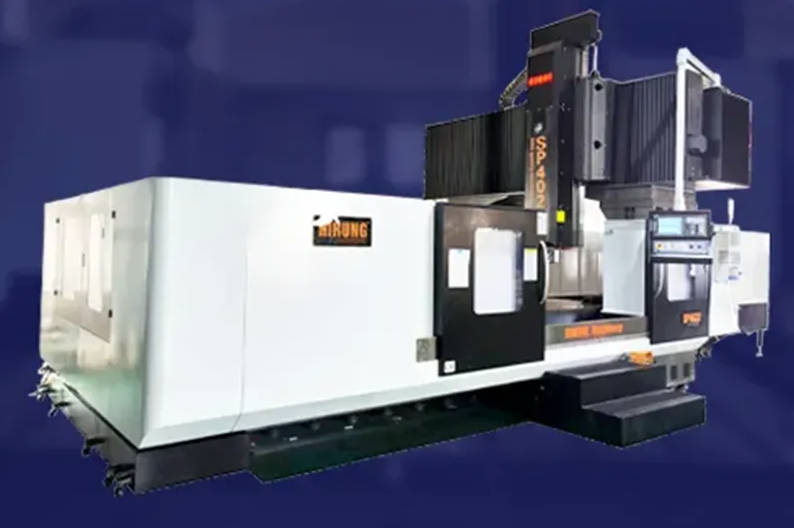
Why CNC Gantry Machine Prices Vary So Much
CNC gantry machines are not standard small workshop machines. They are large, structure-intensive systems designed for heavy-duty and large-area machining. Two machines may both be called “CNC gantry milling machines,” but their price can differ greatly because their structures and configurations are completely different.
Price differences may come from:
- Column moving or table moving structure
- Customized X/Y/Z travel
- Gantry span and distance between columns
- Table size and table load
- Machine casting and structural rigidity
- Spindle taper, power, torque, and speed
- Box way, linear guideway, or hybrid guideway structure
- Ball screw, rack, or dual-drive system
- CNC control system
- Tool magazine capacity
- Automatic tool changer
- Angle head or universal head
- Workpiece measuring system
- Tool measuring system
- Optical ruler feedback
- Coolant and chip removal system
- Foundation and installation requirements
- Export packaging and transportation
- Training, warranty, and after-sales support
A CNC gantry machine quotation should always be compared by full configuration, not only by travel size or machine name.
A machine with the same X-axis travel may have different spindle power, different table load, different guideways, different tool magazine capacity, and different accuracy features. These differences directly affect both price and production value.
Main CNC Gantry Machine Price Factors
| Price Factor | How It Affects Cost | Why Buyers Should Care |
| Machine structure | Column moving, table moving, fixed bridge, or custom design changes cost | Determines workpiece loading, rigidity, and suitable applications |
| X/Y/Z travel | Longer travel increases machine size and structural cost | Must match large workpiece dimensions |
| Gantry span | Wider span requires stronger beam and column design | Affects usable machining width |
| Table size | Larger table increases material, guideway, and floor space needs | Must fit workpiece and fixture |
| Table load | Higher load capacity requires stronger structure | Critical for molds, castings, and heavy machinery parts |
| Spindle configuration | Higher power, torque, and taper increase cost | Determines cutting capability |
| Guideway design | Box ways, linear guides, or hybrid systems affect price | Affects rigidity, speed, damping, and accuracy |
| Tool magazine | More tools and faster tool change increase cost | Supports multi-process machining |
| Angle head | Adds side machining and 5-sided access | Useful for complex large parts |
| Measuring systems | Tool setter, workpiece probe, optical ruler increase cost | Helps improve setup and accuracy control |
| Chip removal | Conveyor and coolant systems add cost | Important for long-cycle machining |
| Control system | FANUC, Siemens, or other systems affect price | Influences operation, service, and programming |
| Customization | Special travel, height, enclosure, or spindle options increase cost | Needed for non-standard workpieces |
| Logistics and installation | Large machines require special packaging, shipping, foundation, and commissioning | Affects final delivered cost |
1. Machine Structure: Column Moving vs Table Moving
Machine structure is one of the biggest cost factors. CNC gantry machines are commonly divided into column moving and table moving designs.
Column Moving Gantry Machine
In a column moving gantry machine, the workpiece stays stationary while the gantry or columns move. This is useful for very large or heavy workpieces because the machine does not need to move the workpiece during cutting.
A HPG Series column moving gantry machine is usually considered when buyers need to process extra-large workpieces, heavy machinery frames, energy equipment parts, shipbuilding components, or oversized molds.
Column moving machines may cost more when they require long travel, dual-drive synchronization, heavy-duty structure, large foundation planning, or customized machining range.
Table Moving Gantry Machine
In a table moving gantry machine, the worktable moves with the workpiece. This structure is often used for large molds, plates, aerospace structural parts, and high-rigidity precision machining.
A SP Series CNC gantry machining center can be considered when buyers need a table moving structure with high rigidity, tool magazine options, BT50 spindle configuration, measuring options, and precision machining features.
Column moving machines are often evaluated for very heavy or stationary workpieces, while table moving gantry machines are often evaluated for large molds, plates, and precision structural parts.
2. X/Y/Z Travel and Gantry Span
Travel size strongly affects CNC gantry machine price. Larger X/Y/Z travel requires longer machine beds, larger beams, stronger columns, more powerful drive systems, more guideways, more protective covers, and higher installation requirements.
Important travel-related parameters include:
| Parameter | Meaning |
| X-axis travel | Longitudinal machining range |
| Y-axis travel | Crossbeam machining width |
| Z-axis travel | Vertical ram or spindle movement |
| Gantry span | Width that the gantry can cover |
| Distance between columns | Usable workpiece width |
| Max feeding height | Available workpiece height or clearance |
A buyer should not choose travel based only on part size. The machine must also allow space for fixtures, clamps, tool length, spindle head movement, safety clearance, measuring devices, and possible angle head use.
If the machine is too small, it may not support future parts. If it is too large, the buyer may pay for unused capacity, higher shipping cost, larger foundation, and more floor space.
3. Table Size and Table Load
Table size and load capacity have a direct influence on cost. Large molds, heavy castings, welded frames, and energy equipment components require strong support.
When checking table capacity, include:
- Workpiece weight
- Fixture weight
- Clamping system weight
- Possible rotary or support devices
- Safety margin
- Loading method
A machine may have enough travel but not enough table load. This is a common mistake when buyers only compare machine dimensions.
| Workpiece Type | Table Load Priority |
| Large mold base | High |
| Heavy machinery frame | Very high |
| Aerospace aluminum plate | Medium to high |
| Energy equipment part | Very high |
| Large welded structure | High |
| Precision plate | Medium to high |
| Shipbuilding component | Very high |
For extremely heavy workpieces, a column moving or floor-type structure may be more practical because the workpiece can stay fixed during machining.
4. Spindle Taper, Power, Torque, and Speed
The spindle is one of the most important cost drivers in gantry milling machine price. A gantry machine used for heavy roughing requires different spindle performance from a machine used mainly for high-speed finishing.
Key spindle factors include:
- Spindle taper
- Spindle power
- Spindle torque
- Spindle speed
- Gearbox or belt/direct-drive configuration
- Spindle cooling
- Tool interface
- Angle head compatibility
For large molds and heavy steel parts, spindle torque and rigidity are often more important than maximum speed. For aluminum aerospace structures or finishing applications, spindle speed and smooth dynamic performance may matter more.
| Application | Spindle Priority |
| Large mold roughing | Torque, rigidity, BT50 or similar heavy-duty interface |
| Mold finishing | Stability, surface finish, spindle cooling |
| Aerospace aluminum parts | Speed, chip evacuation, smooth movement |
| Heavy machinery parts | Torque, rigidity, cutting stability |
| Energy equipment | Heavy cutting capability |
| Precision large plates | Accuracy, thermal stability, smooth finishing |
| Complex side machining | Angle head compatibility |
A higher spindle power increases cost, but an undersized spindle may reduce productivity, tool life, and machining stability.
5. Guideway and Drive System
Guideway and drive systems affect rigidity, speed, damping, accuracy, and long-term maintenance. Gantry machines may use linear guideways, box ways, hard guideways, hybrid structures, rack transmission, ball screws, or dual-drive systems depending on size and application.
Guideway selection affects price because it changes the machine’s mechanical structure and manufacturing complexity.
| Guideway / Drive Factor | Cost and Performance Impact |
| Linear guideways | Support faster movement and dynamic response |
| Box ways / hard guideways | Improve damping and heavy cutting stability |
| Hybrid structures | Balance speed and heavy-duty rigidity |
| Precision ball screws | Improve feed accuracy and repeatability |
| Dual-drive systems | Improve synchronization on large axes |
| Optical rulers | Improve position feedback but add cost |
| Manual scraping | Improves fitting accuracy but increases manufacturing labor |
For heavy-duty roughing, damping and rigidity are critical. For large precision molds and aerospace structural parts, axis accuracy and smooth movement are also important.
6. Tool Magazine and Automatic Tool Change
A basic gantry milling machine may not require many tools. However, a gantry machining center used for molds, aerospace structures, and heavy machinery parts often needs multiple tools.
A large workpiece may require:
- Face mill
- Roughing cutter
- Finishing cutter
- Ball nose cutter
- Drill
- Tap
- Boring tool
- Chamfer tool
- Angle head
- Probe
A tool magazine increases machine price, but it reduces manual tool changes and improves long-cycle machining efficiency.
| Tool Magazine Requirement | Suitable Situation |
| No or small tool magazine | Simple rough milling or low tool variety |
| 24-tool magazine | General multi-process gantry machining |
| 30–40 tools | Complex molds and production flexibility |
| 50+ tools | Large complex parts with many operations |
| Chain-type magazine | Higher tool capacity needs |
If the machine will process complex molds, aerospace parts, or parts with many holes and surfaces, tool magazine capacity should be included in the quotation from the beginning.
7. Angle Head and Multi-Side Machining Options
Angle heads increase CNC gantry machine cost, but they can expand machining capability. They allow the spindle to machine side faces, angled surfaces, or features that are difficult to reach with a standard vertical spindle.
Angle heads are useful for:
- Large mold side machining
- Deep side faces
- Large frame features
- Aerospace structural parts
- 5-sided machining
- Heavy parts that are difficult to reposition
- Large workpieces with side holes or slots
If side machining is frequent, an angle head may reduce setup time and workpiece repositioning. If side machining is rare, the buyer may not need this option.
8. Accuracy, Calibration, and Measuring Systems
Accuracy requirements strongly affect gantry machine cost. Large-part precision machining is more difficult than small-part machining because errors can accumulate across long travel.
Accuracy-related cost factors include:
- Positioning accuracy
- Repeatability
- Geometric accuracy
- Thermal stability
- Laser calibration
- Ballbar testing
- Optical ruler feedback
- Tool measuring system
- Workpiece measuring system
- Spindle cooling
- Machine foundation quality
- Assembly precision
For large molds, aerospace structures, and precision machinery parts, measuring systems may reduce setup risk and improve consistency.
However, buyers should avoid paying for expensive accuracy options if their application only requires rough machining. The accuracy level should match the part tolerance.
9. Coolant, Chip Removal, and Enclosure
Large gantry machining produces large chip volumes, especially during rough milling of steel, cast iron, and aluminum. Coolant and chip removal systems affect productivity, cleanliness, tool life, and operator workload.
Cost-related options may include:
- Cutting cooling system
- Spindle oil cooling
- Through-spindle coolant
- Air blast
- Chip conveyor
- Twin screw + chain chip conveyor
- Oil mist collection
- Splash guard
- Electric cabinet air conditioner
- Coolant filtration
- Separate lubrication oil collection
Chip removal may seem like an accessory, but in long-cycle machining, poor chip control can increase downtime and surface defects.
10. Control System and Electrical Configuration
The CNC control system affects programming, operation, maintenance, diagnostics, and service availability. Control system choice can influence price and long-term usability.
Important control-related items include:
- Controller brand
- Servo drive system
- Spindle drive system
- 3-axis or 5-axis support
- Macro functions
- Communication interface
- Diagnostic functions
- Operator interface language
- Remote support capability
- Electrical cabinet design
- Heat exchanger or cabinet air conditioner
For international buyers, control system familiarity and spare parts availability can be just as important as the initial price.
11. Customization and Project-Based Engineering
Many CNC gantry machines are not purchased as simple catalog machines. Large-part manufacturers often need customized travel, table size, spindle, height, foundation planning, enclosure, chip removal, tool magazine, or loading access.
Customization increases cost because it may require:
- Special mechanical design
- Customized casting or structure
- Longer production cycle
- Special transport planning
- Non-standard electrical layout
- Special accuracy inspection
- Custom foundation drawings
- Application engineering review
Customized machines are often necessary for oversized molds, heavy structures, aerospace tooling, or special energy equipment. Buyers should discuss custom requirements early instead of requesting a standard quote.
12. Shipping, Foundation, Installation, and Training
The final CNC gantry machine price is not only the ex-factory machine price. Large machines involve more logistics and installation planning.
Additional costs may include:
| Cost Item | Why It Matters |
| Export packaging | Protects machine during long-distance transport |
| Ocean freight or land transport | Large machines may require special shipping arrangements |
| Insurance | Important for high-value equipment |
| Import duty and taxes | Affects final landed cost |
| Foundation preparation | Critical for machine accuracy and stability |
| Crane or unloading equipment | Needed for large-machine installation |
| Leveling and commissioning | Supports accuracy and machine performance |
| Operator training | Helps users start production correctly |
| Spare parts package | Reduces downtime risk |
| On-site or remote support | Affects installation confidence |
A buyer comparing quotations should ask whether installation, training, foundation guidance, shipping documents, and commissioning support are included.
Total Cost of Ownership: Beyond the Initial Price
A low CNC gantry machine price may not mean a low total cost. The total cost of ownership includes productivity, downtime, maintenance, tooling, labor, power, coolant, foundation, service, and machine lifespan.
| TCO Factor | What to Consider |
| Cycle time | Faster machining can reduce cost per part |
| Setup time | Tool magazine and measuring systems can reduce manual work |
| Scrap risk | Accuracy and stability affect high-value workpiece safety |
| Downtime | Spare parts and service support affect production continuity |
| Maintenance | Guideway protection, lubrication, and modular design matter |
| Tool life | Rigidity and spindle stability affect cutting tools |
| Floor space | Large machines require more workshop planning |
| Future capacity | Oversized or undersized machines affect long-term flexibility |
| Operator training | Complex machines need skilled operation |
| Energy and coolant | Long-cycle machining consumes resources |
The best gantry CNC machine investment is the configuration that produces your target large parts reliably at the right total cost, not simply the lowest machine quotation.
How to Request an Accurate CNC Gantry Machine Quotation
To receive a meaningful quotation, buyers should prepare detailed production information.
| Information to Provide | Why It Helps |
| Workpiece drawings | Confirms machining features and process |
| Workpiece size | Determines travel and gantry span |
| Workpiece weight | Determines table load and structure |
| Material | Affects spindle and guideway selection |
| Tolerance requirement | Determines accuracy and measuring needs |
| Surface finish | Affects spindle and finishing strategy |
| Machining operations | Determines tool magazine and accessories |
| Side machining needs | Determines angle head requirement |
| Batch size | Affects automation and tool capacity |
| Loading method | Affects machine layout and workshop planning |
| Foundation condition | Helps evaluate installation requirements |
| Destination country | Affects voltage, shipping, documentation, and service |
For buyers evaluating the HIRUNG CNC Gantry Machine range, this information helps determine whether HPG Series, SP Series, or a customized gantry solution is more suitable.
Common Mistakes When Comparing CNC Gantry Machine Prices
Mistake 1: Comparing Only Travel Size
Two machines with similar X/Y/Z travel may have very different spindle power, table load, tool magazine, guideways, control systems, and accuracy levels.
Mistake 2: Ignoring Workpiece Weight
The machine must support the workpiece and fixture weight safely. For heavy workpieces, structure selection is often more important than table size alone.
Mistake 3: Forgetting Foundation and Installation Costs
Large gantry machines require proper foundation, leveling, and commissioning. Ignoring these costs can lead to budget problems later.
Mistake 4: Not Including Tool Magazine or Angle Head Needs
If your part requires many tools or side machining, these options should be included in the first quotation. Adding them later may change price and delivery time.
Mistake 5: Choosing the Lowest Price Without Service Support
Large gantry machines are long-term production assets. Weak service support, poor documentation, and difficult spare parts supply can create high downtime cost.
How to Choose a Reliable CNC Gantry Machine Supplier
A reliable supplier should help buyers evaluate the application instead of simply offering a standard model.
Ask these questions before purchasing:
| Supplier Question | Why It Matters |
| Which structure fits my part: column moving or table moving? | Prevents wrong machine layout selection |
| What travel, gantry span, and table load are recommended? | Confirms part compatibility |
| What spindle taper, power, and torque do I need? | Matches cutting requirements |
| What guideway and drive system are used? | Affects rigidity and accuracy |
| Is a tool magazine included? | Clarifies real machine capability |
| Do I need an angle head? | Supports side machining or 5-sided work |
| What measuring systems are available? | Supports precision setup |
| What foundation should be prepared? | Reduces installation risk |
| What is included in the quotation? | Prevents hidden cost |
| What shipping, training, warranty, and after-sales support are provided? | Protects long-term operation |
You can also visit the HIRUNG official website to review broader CNC machine categories and compare whether a gantry machine, vertical machining center, 5-axis machine, or CNC lathe better fits your production plan.
When to Consider HIRUNG CNC Gantry Machines
HIRUNG CNC Gantry Machines can be considered by manufacturers processing large molds, aerospace structures, heavy machinery frames, energy equipment, shipbuilding parts, large precision plates, and industrial components.
The HIRUNG gantry range is relevant when your production requires:
- Large workpiece machining
- Heavy-duty roughing and finishing
- High table load or stationary workpiece setup
- Long travel and wide gantry span
- BT50 or heavy-duty spindle configuration
- Tool magazine options
- Angle head options
- Workpiece and tool measuring options
- Chip conveyor and coolant management
- Column moving or table moving structure selection
- Large-part installation and service planning
For very heavy, stationary, or extra-large workpieces, the HPG Series can be evaluated as a column moving gantry solution. For high-rigidity table moving gantry machining, the SP Series can be reviewed according to workpiece size, table load, precision requirement, and accessory needs.
FAQ
1. What affects CNC gantry machine price the most?
CNC gantry machine price is mainly affected by machine structure, travel size, gantry span, table load, spindle power, guideway design, control system, tool magazine, angle head, measuring systems, chip removal, customization, shipping, installation, and service support.
2. How much does a CNC gantry machine cost?
The cost depends heavily on configuration and workpiece requirements. A supplier needs your drawings, part size, weight, material, tolerance, machining process, and accessory needs before providing an accurate CNC gantry machine quotation.
3. Why is a gantry milling machine more expensive than a standard machining center?
A gantry milling machine is usually larger, heavier, and designed for bigger workpieces. It requires stronger structure, wider travel, higher table load, more foundation planning, and often more powerful spindle and guideway systems.
4. Is a column moving gantry machine more expensive than a table moving gantry machine?
Not always. The price depends on travel, workpiece weight, structure, spindle, table load, accuracy, and configuration. Column moving machines are often used for very heavy workpieces, while table moving machines are often used for precision large-part machining.
5. Do I need a tool magazine on a CNC gantry machine?
A tool magazine is useful when your large parts require multiple tools, drilling, tapping, boring, roughing, finishing, or long-cycle machining. For simple rough milling, a smaller tool setup may be enough.
6. Does an angle head increase CNC gantry machine cost?
Yes. An angle head increases cost, but it can reduce setup time and improve access to side faces, angled surfaces, and 5-sided machining features on large workpieces.
7. What should I provide to get a CNC gantry machine quotation?
Provide workpiece drawings, material, maximum size, weight, tolerance, surface finish, machining process, required travel, loading method, side machining needs, batch size, foundation condition, destination country, and accessory requirements.
Conclusion
CNC gantry machine price depends on much more than machine size. Buyers should evaluate structure type, X/Y/Z travel, gantry span, table size, table load, spindle power, spindle taper, guideway design, tool magazine, angle head, measuring systems, chip removal, control system, customization, foundation, logistics, installation, and after-sales support.
For large molds, aerospace structures, energy equipment, shipbuilding parts, and heavy machinery components, the wrong machine configuration can create high long-term cost even if the initial quotation is low. A practical purchasing process should begin with workpiece drawings, material, size, weight, tolerance, surface finish, and machining operations.
If your factory is evaluating a CNC gantry machine for large-part production, HIRUNG CNC Gantry Machines can be reviewed according to your actual workpieces and process requirements. The HPG Series is suitable for buyers considering column moving gantry solutions for heavy workpieces, while the SP Series is suitable for table moving gantry machining applications requiring rigidity, precision, and machining-center functions.