CNC lathe machine price is mainly affected by machine size, swing over bed, maximum turning diameter, machining length, chuck size, spindle power, spindle speed, bar capacity, turret type, control system, accuracy level, automation options, accessories, customization, shipping, and after-sales support. A basic CNC lathe for simple turning work will cost less than a high-configuration turning center with Y-axis, C-axis, live tooling, second spindle, bar feeder, automatic parts catcher, robot loading, or optical scale feedback.
For manufacturers, the right question is not only “How much does a CNC lathe cost?” The more important question is: “Which CNC lathe configuration fits my parts, production volume, accuracy requirements, and long-term operating cost?” A lower initial price may look attractive, but if the machine lacks the required spindle capacity, rigidity, bar feeding diameter, tool stations, tailstock support, or automation readiness, it may increase labor cost and limit production efficiency.
A CNC lathe machine is used for turning round, cylindrical, threaded, grooved, and shaft-type components. In many workshops, it is a core machine for producing shafts, bushings, sleeves, pins, flanges, automotive components, hydraulic parts, connectors, and general precision metal parts. This guide explains what affects CNC lathe machine price and how manufacturers can compare quotations more accurately.
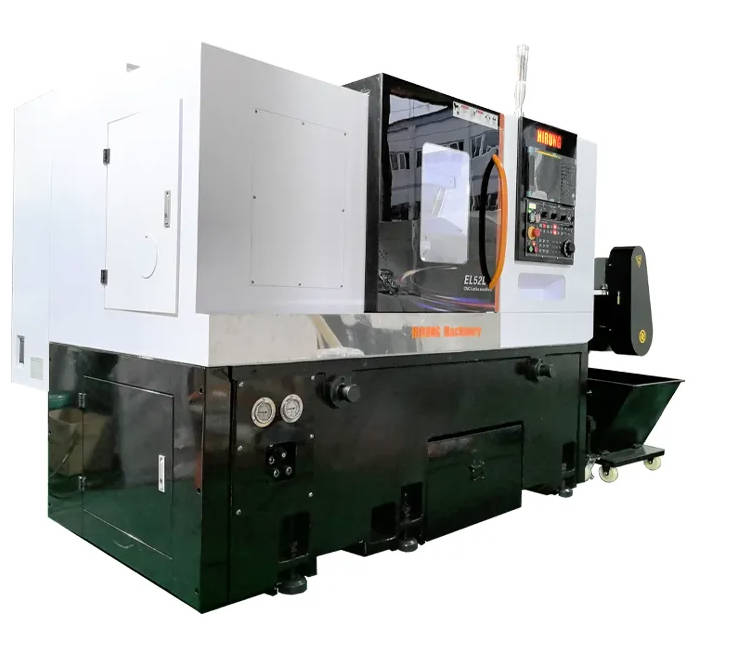
Why CNC Lathe Machine Prices Vary So Much
CNC lathe prices vary because different machines are designed for different workpiece sizes, materials, cutting loads, accuracy levels, automation needs, and production environments. Two CNC lathes may look similar from the outside, but their internal configuration can be very different.
A price difference may come from:
- Larger swing over bed
- Longer maximum machining length
- Bigger chuck size
- Stronger spindle motor
- Larger spindle bore
- Higher bar feeding capacity
- More tool stations
- Servo turret configuration
- Y-axis or C-axis function
- Live tooling capability
- Second spindle
- Linear guideway or different guideway structure
- FANUC, SYNTEC, or other CNC control system
- Automatic chip conveyor
- Bar feeder
- Automatic parts catcher
- Robot loading system
- Optical ruler feedback
- Tool setter
- Safety and maintenance features
- Export packaging and shipping requirements
A CNC lathe quotation should always be compared by full configuration, not only by machine model name or base price.
For this reason, buyers should provide part drawings, materials, tolerance requirements, batch size, and automation expectations before asking for price. Without these details, suppliers can only provide a rough reference rather than a reliable quotation.
CNC Lathe Machine Price Factors at a Glance
| Price Factor | How It Affects Cost | Why It Matters |
| Machine size | Larger machines usually cost more | Determines workpiece capacity |
| Turning diameter | Higher capacity increases structure and spindle requirements | Affects part compatibility |
| Machining length | Longer Z-axis travel increases machine size | Needed for shafts and long parts |
| Chuck size | Larger chuck increases holding capacity | Important for bigger workpieces |
| Spindle power | Higher power usually raises cost | Needed for heavy cutting |
| Spindle speed | Application-specific; high speed may require better components | Affects productivity and finish |
| Spindle bore | Larger bore increases bar capacity | Important for bar-fed production |
| Turret type | Servo turrets and more stations increase cost | Affects cycle time and flexibility |
| Y-axis/C-axis/live tooling | Adds milling and complex turning capability | Turns a lathe into a more capable turning center |
| Tailstock | Adds support for long shafts | Improves stability for slender workpieces |
| Control system | Higher-end controls may increase price | Affects reliability, operation, and service |
| Automation | Bar feeder, robot, parts catcher add cost | Reduces labor and supports batch production |
| Accuracy options | Optical scales, tool setter, inspection support add cost | Supports precision manufacturing |
| Shipping and service | Export packaging, installation, training, and support affect final cost | Important for international buyers |
Machine Size and Workpiece Capacity
Machine size is one of the most direct CNC lathe cost factors. A lathe designed for small shafts and connectors is not priced the same as a machine designed for large flanges, heavy workpieces, or long shafts.
Key size-related specifications include:
- Swing over bed
- Maximum processing diameter
- Maximum processing length
- Chuck size
- X-axis travel
- Z-axis travel
- Tailstock travel
- Machine weight and footprint
A larger machine requires a stronger bed, larger spindle structure, heavier casting, bigger servo system, and more robust chip and coolant management. This increases manufacturing cost.
However, buying too small can be more expensive in the long run. If your future parts exceed the machine capacity, you may need outsourcing or another machine purchase.
Manufacturers should select CNC lathe size based on the largest realistic workpiece, fixture needs, bar diameter, and future part range—not only current sample parts.
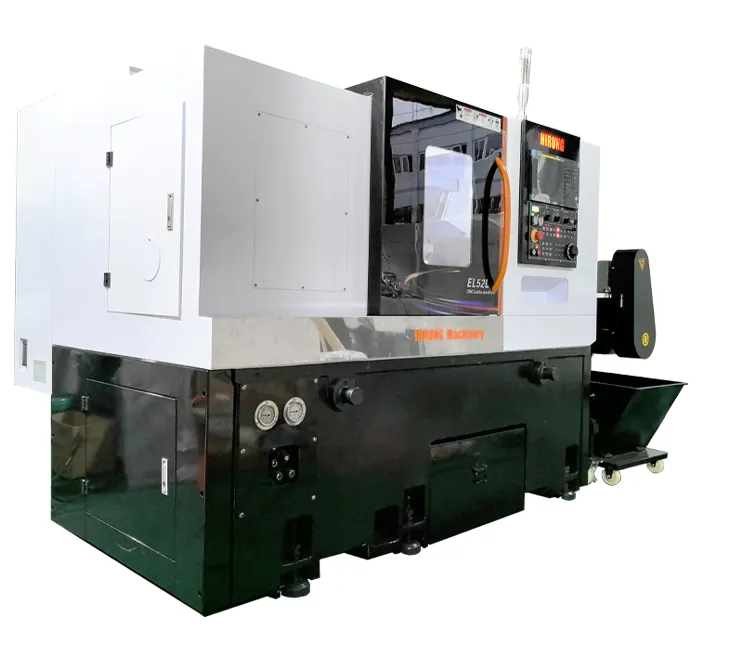
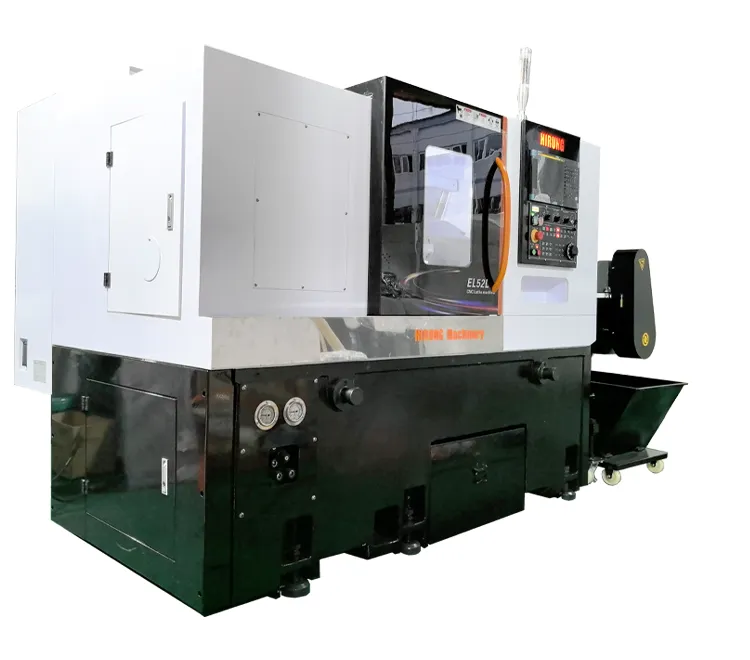
The HIRUNG CNC Lathe Machine EL Series includes multiple models with different turning diameters, machining lengths, chuck sizes, spindle bores, and travel ranges, allowing buyers to match the machine to their part size requirements.
Chuck Size and Spindle Bore
Chuck size affects the machine’s clamping capacity and workpiece range. A small chuck may be suitable for compact parts, while larger chucks are required for bigger components, heavier cuts, or larger bar capacity.
Spindle bore is especially important if you plan to use a bar feeder. The spindle through-hole diameter and maximum bar feeding diameter determine what bar stock size can pass through the spindle.
| Specification | Why It Affects Price |
| Chuck size | Larger chuck requires stronger spindle and clamping structure |
| Spindle nose | Affects chuck compatibility and machine capacity |
| Spindle bore | Larger bore supports bigger bars but increases spindle design requirements |
| Bar feeding diameter | Important for automated turning production |
| Hydraulic chuck | Adds clamping efficiency and production stability |
For manufacturers producing shafts, pins, sleeves, bushings, fittings, and connector parts, bar capacity can directly affect productivity. If bar-fed production is planned, the buyer should not choose a machine only by turning diameter; spindle bore and bar feeder compatibility are equally important.
Spindle Power, Speed, and Torque
The spindle is one of the most important cost drivers in CNC turning machine price. A more powerful spindle usually increases machine cost, but it may be necessary for heavy cutting, larger diameters, steel machining, or long production cycles.
Spindle selection should match the material and workpiece type.
| Material / Application | Spindle Requirement |
| Aluminum parts | Higher spindle speed and smooth cutting performance |
| Steel shafts | Strong torque and stable cutting force |
| Stainless steel parts | Rigidity, torque, and heat control |
| Cast iron parts | Stable spindle and chip/dust management |
| Large flanges | Chuck capacity, torque, and machine rigidity |
| Small precision parts | Speed stability and low runout |
| Long shafts | Spindle stability and tailstock support |
A high spindle speed is not always the right answer. For heavy steel turning, torque and rigidity may matter more than maximum RPM. For small aluminum or brass components, speed and bar-fed automation may matter more.
Turret Type and Number of Tool Stations
The turret holds cutting tools and indexes them during machining. Tool capacity and turret performance affect cycle time, flexibility, and price.
Common turret considerations include:
- Number of tool stations
- Servo turret or hydraulic turret
- Indexing speed
- Tool holder compatibility
- Live tooling capability
- Repeatability
- Maintenance requirements
A machine with more tool stations can complete more operations without manual tool changes. This is useful for parts requiring turning, grooving, threading, drilling, boring, and chamfering in one cycle.
For complex parts, a 12-station servo turret can improve flexibility compared with a smaller or slower tool system. If live tooling is added, the machine can perform milling or drilling operations that would otherwise require secondary machining.
Y-Axis, C-Axis, Live Tooling, and Second Spindle
Basic CNC lathes are mainly used for turning operations. More advanced CNC turning centers may include C-axis indexing, Y-axis movement, live tooling, or a second spindle.
These features increase price but can significantly improve capability.
| Feature | What It Does | When It Is Worth Considering |
| C-axis | Controls spindle angular position | Parts with indexed holes, flats, or grooves |
| Y-axis | Adds off-center machining capability | Parts requiring milling, drilling, or complex features |
| Live tooling | Allows rotating tools on the turret | Reduces secondary milling operations |
| Second spindle | Transfers part for back-side machining | High-volume parts needing complete machining |
| Bar feeder | Feeds bar stock automatically | Batch production of shaft or small turned parts |
| Parts catcher | Collects finished parts automatically | Reduces operator handling |
| Robot loading | Automates loading and unloading | High-volume or labor-saving production |
Advanced turning functions increase CNC lathe machine price, but they may reduce total cost when they eliminate secondary operations and manual handling.
For example, a part that needs turning, cross drilling, flat milling, and back-side machining may require several machines if processed on a basic lathe. A higher-configuration turning center may complete more operations in one setup, improving consistency and reducing labor.
Accuracy, Repeatability, and Inspection
Accuracy level affects machine cost because precision depends on the machine bed, spindle, guideways, ball screws, servo system, control system, thermal stability, assembly quality, and inspection process.
Important accuracy-related factors include:
- Positioning accuracy
- Repeat positioning accuracy
- Spindle runout
- Turret indexing repeatability
- Ball screw quality
- Guideway structure
- Thermal stability
- Machine leveling
- Laser inspection
- Optional optical scale feedback
HIRUNG’s EL Series page states that its CNC lathe machines undergo laser inspection and lists positioning and repeat positioning accuracy references. For buyers producing precision turned parts, these accuracy values and inspection methods should be discussed during quotation.
Accuracy is especially important for:
- Precision shafts
- Bearing-related parts
- Hydraulic parts
- Threaded components
- Automotive components
- Medical or instrument parts
- High-repeatability batch production
When comparing CNC lathe price, ask whether the supplier can provide inspection reports, accuracy standards, and machine testing details before shipment.
Control System and Electrical Configuration
The CNC control system affects operation, programming, maintenance, diagnostics, and long-term serviceability. Well-known control systems may increase machine price but can improve operator familiarity, spare parts availability, and technical support.
Control-related price factors include:
- CNC controller brand
- Servo motor and drive system
- Spindle drive
- Interface language
- Macro/programming functions
- Communication ports
- Diagnostic functions
- Remote support compatibility
- Electrical cabinet layout
- Cooling or heat exchanger for the electrical cabinet
For international buyers, the electrical cabinet layout can be important. Clear wiring, labeled terminals, separated high-voltage and low-voltage areas, and understandable documentation can reduce troubleshooting difficulty.
The HIRUNG EL Series page lists FANUC 0i TF with optional SYNTEC 22TB for the control system and highlights maintenance-friendly electrical layout features. Buyers should confirm the exact control system in the quotation because controller configuration can affect final CNC lathe cost.
Guideways, Ball Screws, and Machine Structure
Machine structure affects rigidity, cutting stability, accuracy, vibration control, and long-term durability. A low-cost CNC lathe may be acceptable for light-duty work, but demanding production requires stronger structure and reliable axis movement.
Key components include:
- Machine bed casting
- X/Z axis linear guideways
- Ball screws
- Servo motors
- Spindle support
- Tailstock structure
- Chip protection
- Lubrication system
- Internal guards
A stable machine structure helps control vibration and maintain accuracy during repeated production. If the machine will process steel, stainless steel, or heavy workpieces, rigidity should be a major evaluation factor.
Standard Accessories vs Optional Accessories
One of the biggest reasons CNC lathe quotations differ is that suppliers include different standard and optional items. A low quotation may not include accessories that are necessary for your production.
Common standard or optional accessories may include:
| Accessory | Why It Matters |
| Total splash guard | Improves safety and coolant control |
| Hydraulic chuck | Supports efficient clamping |
| Hydraulic tailstock | Supports long shafts |
| Servo turret | Improves tool indexing and productivity |
| Cooling system | Supports cutting stability |
| Central auto-lubrication | Helps maintain axis movement |
| Oil-water separator | Helps keep coolant cleaner |
| Chip conveyor | Reduces cleaning time |
| Electrical cabinet air conditioner | Useful in hot environments |
| Automatic tool setter | Improves tool setup efficiency |
| Bar feeder | Supports automated bar production |
| Parts catcher | Reduces manual unloading |
| Automatic door | Useful for automation |
| Robot arm or FMS | Supports automated production |
| Optical ruler | Supports higher positioning feedback |
Before comparing prices, ask the supplier to separate standard configuration, optional configuration, and recommended configuration for your parts.
Shipping, Packaging, Import, and Installation Cost
For international buyers, the final CNC lathe machine price is not only the machine ex-factory price. Additional costs may include:
- Export packaging
- Sea freight or land transportation
- Insurance
- Customs duties
- Import taxes
- Local unloading
- Foundation preparation
- Electrical installation
- Coolant and lubricants
- Tooling and fixtures
- Operator training
- Commissioning support
- Spare parts package
A compact machine design may help reduce logistics and floor space costs in some cases. HIRUNG’s EL Series page mentions compact design and container loading considerations, which can be relevant for buyers comparing total delivered cost.
Total Cost of Ownership: Beyond the Initial Price
A cheaper machine is not always the lower-cost machine. Manufacturers should calculate total cost of ownership over the machine’s working life.
| Cost Area | What to Consider |
| Initial purchase | Machine base price and configuration |
| Tooling | Holders, inserts, drills, boring bars, live tools |
| Fixtures | Chucks, jaws, collets, special fixtures |
| Automation | Bar feeder, parts catcher, robot, automatic door |
| Maintenance | Lubrication, filters, seals, electrical parts, spindle service |
| Downtime | Service response and spare parts availability |
| Operator cost | Manual loading, setup, inspection, tool changes |
| Scrap risk | Accuracy stability and process repeatability |
| Energy and coolant | Power use, coolant maintenance, oil-water separation |
| Future flexibility | Ability to handle new parts and higher volume |
The best CNC lathe investment is not always the lowest quotation; it is the machine configuration that produces your target parts reliably at the right total cost.
How to Request an Accurate CNC Lathe Machine Quotation
To receive a practical price, prepare clear machining requirements. A supplier cannot recommend the right machine if the inquiry only says “Please send CNC lathe price.”
Prepare the following information:
| Information | Why It Helps |
| Workpiece drawings | Confirms dimensions and machining features |
| Material | Determines spindle, tooling, and rigidity needs |
| Maximum diameter | Helps select swing and turning capacity |
| Maximum length | Helps select Z travel and tailstock requirement |
| Bar diameter | Determines spindle bore and bar feeder compatibility |
| Tolerance requirement | Helps evaluate accuracy level |
| Surface finish requirement | Affects tooling and spindle choice |
| Batch size | Determines automation needs |
| Required operations | Turning, threading, drilling, grooving, milling, back machining |
| Automation expectation | Bar feeder, parts catcher, robot, automatic door |
| Control system preference | FANUC, SYNTEC, or other requirements |
| Destination country | Affects voltage, packaging, shipping, and documentation |
For buyers evaluating the HIRUNG CNC Lathe Machine EL Series, sending drawings and production goals allows the supplier to recommend a suitable model, configuration, and quotation more accurately.
Common Mistakes When Comparing CNC Lathe Machine Prices
Mistake 1: Comparing Only the Base Machine Price
A base price may exclude chip conveyor, bar feeder, tool setter, parts catcher, oil mist collector, automation, or other useful options. Always compare complete configuration.
Mistake 2: Buying a Machine Too Small
A small machine may reduce initial cost, but it can limit future workpiece range and force outsourcing. Check realistic future part sizes before choosing.
Mistake 3: Ignoring Spindle Bore
For bar-fed production, spindle bore and maximum bar feeding diameter are critical. A machine with insufficient bore may not support your intended automation plan.
Mistake 4: Overpaying for Unused Functions
Y-axis, live tooling, second spindle, and automation are valuable only when they match your production. If your parts are simple, a lower configuration may be more economical.
Mistake 5: Ignoring Service and Spare Parts
A machine with weak support can become expensive if downtime is frequent. Ask about spare parts, warranty, technical support, and installation guidance.
How to Choose a Reliable CNC Lathe Machine Supplier
A reliable supplier should help you evaluate the right machine configuration instead of simply quoting the cheapest model.
Ask these questions before purchasing:
| Supplier Question | Why It Matters |
| Which model fits my drawing and material? | Prevents wrong machine selection |
| What is included in the standard configuration? | Clarifies real price |
| Which options are recommended for my production? | Avoids unnecessary or missing accessories |
| What is the spindle bore and bar capacity? | Important for bar-fed turning |
| What control system is included? | Affects operation and service |
| What accuracy inspection is performed? | Supports quality verification |
| What is the delivery time? | Helps production planning |
| What packaging and shipping support are available? | Important for import buyers |
| What training and after-sales service do you provide? | Reduces commissioning risk |
| How are spare parts supplied? | Affects long-term uptime |
You can also visit the HIRUNG official website to review other CNC machine categories and compare whether a CNC lathe, machining center, or multi-axis machine fits your broader production plan.
When to Consider the HIRUNG EL Series CNC Lathe Machine
The HIRUNG EL Series is suitable for manufacturers looking for a CNC lathe machine for turning shafts, sleeves, bushings, pins, flanges, connectors, hydraulic parts, automotive components, and general precision metal parts.
You may consider the HIRUNG EL Series CNC Lathe Machine if your production requires:
- Multiple model options for different part sizes
- Turning, drilling, threading, and grooving capability
- Suitable chuck size and spindle bore options
- Tailstock support for longer workpieces
- Servo turret configuration
- FANUC control system option
- Linear guideway structure
- Central lubrication system
- Oil-water separation device
- Chip conveyor and automation options
- Bar feeder, parts catcher, or robot automation planning
Before requesting a quotation, prepare your part drawings, material details, machining length, turning diameter, bar diameter, tolerance requirements, and expected batch size. This helps the supplier recommend a more suitable model and avoid inaccurate pricing.
FAQ
1. How much does a CNC lathe machine cost?
CNC lathe machine cost depends on machine size, turning diameter, machining length, chuck size, spindle power, spindle bore, turret type, control system, accuracy level, automation options, accessories, shipping, and service support. A supplier needs your part requirements to provide an accurate quotation.
2. What affects CNC lathe machine price the most?
The biggest CNC lathe machine price factors usually include machine size, spindle configuration, chuck size, bar capacity, control system, turret type, Y-axis or C-axis functions, live tooling, second spindle, automation, and optional accessories.
3. Why do CNC turning machine prices differ between suppliers?
CNC turning machine prices differ because suppliers may use different castings, spindles, guideways, ball screws, controllers, turrets, electrical components, standard accessories, inspection processes, and after-sales support. Always compare full configuration, not only machine name.
4. Is a cheaper CNC lathe machine worth buying?
A cheaper CNC lathe may be suitable for simple turning work, light-duty machining, or limited budgets. However, if it lacks required rigidity, spindle bore, accuracy, automation, or service support, it may increase long-term operating cost.
5. Should I choose a CNC lathe with Y-axis and live tooling?
Choose Y-axis and live tooling if your parts require milling, drilling, off-center features, flats, slots, or reduced secondary operations. If your parts only require basic turning, a simpler CNC lathe may be more economical.
6. What information should I provide to get a CNC lathe quotation?
Provide workpiece drawings, material, maximum diameter, maximum length, bar diameter, tolerance requirements, surface finish, batch size, required operations, automation needs, control system preference, and destination country.
7. Does automation increase CNC lathe cost?
Yes. Automation such as bar feeders, parts catchers, automatic doors, robot arms, and FMS systems increases the initial price. However, automation can reduce labor cost and improve productivity when production volume is stable.
Conclusion
CNC lathe machine price is influenced by many factors, including machine size, chuck size, spindle bore, spindle power, machining length, turret configuration, control system, accuracy, automation, accessories, shipping, and service support. For manufacturers, a CNC lathe should not be selected only by the lowest price. It should be selected according to workpiece size, material, tolerance, batch size, and long-term production needs.
A practical CNC lathe quotation should clearly list the machine model, standard configuration, optional accessories, control system, spindle specifications, tool capacity, accuracy information, delivery terms, shipping details, and after-sales support. This allows buyers to compare real value instead of only comparing base price.
If you are looking for a CNC lathe machine for metal parts production, the HIRUNG EL Series can be evaluated based on your drawings, materials, turning diameter, machining length, bar capacity, and automation requirements. Preparing complete technical information before requesting a quote will help you receive a more accurate and cost-effective recommendation.