When a machine stops holding tolerance or throws an alarm mid-shift, the cost is rarely the repair — it is the scrap, the missed delivery and the idle operator. Most CNC vertical machining center problems trace back to five subsystems: the spindle and its thermal behaviour, lubrication of guideways and ball screws, the automatic tool changer, coolant and chip management, and the electrical or control side. Learn to read the symptom, and CNC vertical machining center maintenance stops being guesswork.
This guide is written for production engineers, maintenance technicians and procurement teams running or specifying a VMC. Instead of a generic checklist, it works the way a service engineer works: symptom first, then likely cause, then the check that confirms it — followed by the preventive intervals and supplier questions that stop the same fault from returning.
Start With the Symptom, Not the Manual
Experienced technicians diagnose in a fixed order, because the wrong starting point wastes hours. Before opening a cover, answer three questions:
- Is it repeatable? A fault that appears on every cycle points to mechanics, geometry or program. A random fault points to clamping, tooling, chips or a marginal sensor.
- Does it change with time or temperature? Errors that grow through the shift and reset overnight are almost always thermal.
- Did anything change? New tool, new fixture, new coolant concentration, new operator, new program revision. Most “sudden machine faults” are process changes in disguise.
A practical rule: if the deviation repeats in the same direction and grows through the shift, suspect thermal growth; if it appears randomly, suspect looseness, workholding or the cutting tool. Separating process problems from machine problems early is the single biggest time saver in CNC machine troubleshooting.
Common Problems in CNC Vertical Machining Centers: Symptom-to-Cause Table
The table below maps the faults most often reported on vertical machining centers to their usual root causes and the first check that confirms or eliminates them. Treat it as a triage sheet, not a repair procedure — anything involving the spindle drive, servo parameters or electrical cabinet should be handled with your supplier’s technical support.
| Symptom | Common root causes | First check | Typical corrective action |
|---|---|---|---|
| Dimensions drift during the shift | Thermal growth of spindle, column or ball screws; unstable coolant temperature | Compare a test part at cold start vs. after 3–4 hours | Warm-up routine, spindle oil cooling check, thermal compensation, stabilise coolant |
| Position error in one axis only | Ball screw preload loss, worn bearing, dry guideway, encoder or coupling issue | Backlash and reversal test with a dial indicator; listen at slow feed | Re-lubricate, verify lubrication line, adjust or replace screw/bearing set |
| Poor surface finish, chatter marks | Tool runout, worn holder taper, insufficient rigidity, wrong cutting data | Measure runout at the tool tip; swap to a known-good holder | Replace holders/pull studs, revise speeds and feeds, improve workholding |
| Spindle noise, vibration or overheating | Bearing wear, contamination, oil cooler fault, unbalanced tooling, over-long dwell at high rpm | Run the spindle unloaded and log temperature over 30 min | Service the oil cooling device, balance tooling, plan a bearing service |
| Tool change alarm or dropped tool | Air pressure low, taper/gripper contamination, worn pull stud, misaligned magazine, sensor fault | Verify air pressure and clean taper and gripper faces | Clean and re-align, replace pull studs and grippers, re-teach ATC positions |
| Rust, sticky covers, smell from the tank | Wrong coolant concentration, tramp oil, bacterial growth, poor chip evacuation | Check concentration with a refractometer; inspect the tank bottom | Skim tramp oil, clean and recharge the tank, service the chip conveyor |
| Random alarms or intermittent stops | Cabinet overheating, loose terminals, coolant ingress, unstable supply voltage | Check cabinet temperature and phase/voltage; inspect seals | Service heat exchanger or cabinet cooling, re-torque terminals, seal entries |
| Axis crash or overtravel on restart | Wrong work offset, lost reference, fixture interference, program revision error | Re-home the machine and dry-run at reduced rapid | Re-establish reference, verify offsets, enforce program version control |
Accuracy Loss: The Problem Buyers Notice Last

A vertical machining center rarely fails its accuracy specification suddenly. It drifts. Positioning accuracy of ±0.01 mm and repeatability of 0.005 mm — the figures published for the HIRUNG EV Series — are only meaningful if the conditions that produced them are maintained: clean and lubricated roller guides, correctly preloaded ball screws, a stable foundation and a machine that has reached thermal equilibrium.
Build a Baseline You Can Compare Against
Run a short geometry and repeatability check at installation, keep the record, and repeat it at fixed intervals. Without a baseline you cannot prove a machine has degraded — you can only argue about it. A simple monthly routine works well: a circular interpolation test, a reversal test on each axis, and a machined test part measured on a CMM or height gauge.
Foundation and Levelling Are Maintenance Items
Levelling is not a one-time installation task. Concrete cures and settles, and heavy machines shift. Re-check levelling on the schedule your supplier recommends, especially after moving the machine or during the first year of operation.
Spindle Problems and Thermal Behaviour

The spindle is where a small habit produces the largest return. Precision bearing arrangements — the EV Series uses Japanese NSK P4 class bearings with spindle suspension controlled within 0.003 mm — are sensitive to two things above all: contamination and thermal shock.
Warming the spindle through a stepped speed routine before heavy cutting, and letting the oil cooling device stabilise, prevents more bearing damage than any other single maintenance action. A typical routine ramps through low, medium and rated speed for a few minutes each, which allows the lubricant film and the housing temperature to settle before load is applied.
Other spindle habits worth enforcing:
- Keep the taper spotless. A chip trapped between taper and holder both spoils accuracy and marks the bore. Air blast through the spindle helps, but the operator’s wipe still matters.
- Log unloaded spindle temperature monthly. A rising trend is an early warning; a sudden step change is a reason to stop.
- Service the spindle oil cooling device on schedule — filter, level and airflow across the exchanger.
- Avoid long dwells at maximum rpm with no cutting load unless the machine documentation allows it.
Tool Changer and Tool Holder Faults

ATC faults account for a large share of unplanned stoppages, and most are preventable. An arm-type magazine such as the 24-tool unit fitted to the EV Series, with a tool exchange time of about 1.3 seconds, moves with very little margin for contamination or misalignment.
The Four Checks That Prevent Most ATC Alarms
- Air pressure and dryness. Low or wet air causes weak clamping, slow arm motion and intermittent sensor faults. Drain the filter/regulator daily.
- Gripper and taper cleanliness. Wipe gripper faces and pot seats weekly; coolant residue plus fine chips becomes an abrasive paste.
- Pull studs and clamping force. Worn pull studs cause runout and dropped tools. Inspect them on a fixed interval and replace as a set.
- Taught positions. After any collision, arm service or magazine adjustment, re-teach and dry-run the tool change sequence before production.
Also treat tool data as a maintenance item. Wrong tool length or diameter offsets cause “machine problems” that no mechanic can fix. Optional touch probes and tool setters — the EV Series can be configured with Renishaw work and tool measuring devices — reduce this class of error by removing manual entry from the loop.
Coolant, Chips and Corrosion
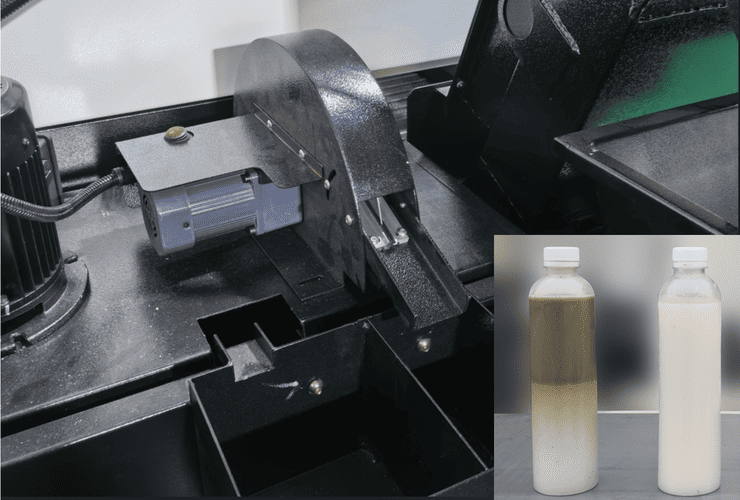
Coolant is the most neglected consumable in the shop and the cause of some of the most expensive damage: corroded ways, blocked lubrication points, seized covers and failed pumps.
Never top up a contaminated coolant tank — measure concentration with a refractometer, remove tramp oil, and recharge the tank on a schedule rather than when the smell becomes obvious. An oil-water separation device, standard on HIRUNG vertical machining centers, keeps tramp oil out of circulation, but it does not replace tank cleaning.
Chip management belongs in the same conversation. Chips carry heat into the casting, hold coolant against unprotected surfaces and jam conveyors. Chip removal configuration should match the material: screw, scraper, hinge, magnetic filter and compound types each suit different chip forms, and the wrong choice guarantees a daily fight. If you machine both cast iron and aluminium on the same machine, discuss a compound solution with your supplier rather than accepting a default.
Preventive Maintenance Intervals That Prevent Most Faults
Plan preventive maintenance by spindle running hours rather than calendar weeks — a machine cutting two shifts a day reaches the same wear point in half the time as a single-shift machine. The intervals below are a common starting framework; always reconcile them with the maintenance manual supplied with your machine.
| Interval | Core tasks | Failure it prevents |
|---|---|---|
| Every shift | Check lubrication reservoir and air pressure; clear chips from table, covers and conveyor; verify coolant level and flow; confirm no alarms are being reset repeatedly | Dry guideways, ATC faults, corrosion, hidden recurring faults |
| Weekly | Coolant concentration and tramp oil check; clean gripper and pot seats; inspect way covers and wipers; drain air filter bowl | Contamination-driven wear, tool change failures |
| Monthly | Log unloaded spindle temperature; reversal and circular test; inspect lubrication distribution to each point; clean cabinet filters and heat exchanger | Accuracy drift, bearing damage, electrical faults |
| Quarterly | Recharge or clean the coolant tank; inspect ball screw and guideway condition; re-torque accessible fasteners; verify safety interlocks and door lock | Screw and bearing wear, pump failure, safety non-compliance |
| Annually | Full geometry check against the installation baseline; re-check levelling; review spare parts stock; plan spindle and ATC service with the supplier | Long-term accuracy loss, unplanned major downtime |
What Your Maintenance Log Should Record
A log that only says “PM done” is worthless. Record spindle hours, the measured values (concentration, temperature, backlash, test-part deviation), parts replaced with batch or part numbers, alarm codes with the action taken, and the technician’s name. Two benefits follow: trends become visible before failure, and warranty or service discussions are based on data instead of memory.
Repair, Rebuild or Replace: A Simple Decision Framework
Maintenance decisions eventually become capital decisions. The framework below helps production and procurement reach the same conclusion.
| Situation | Indicators | Reasonable action |
|---|---|---|
| Isolated component failure | Machine otherwise holds tolerance; downtime is occasional | Repair with genuine or equivalent-specification parts |
| Progressive accuracy loss | Geometry drifting against baseline; scrap rate creeping up | Planned rebuild of screws, guides and spindle; re-qualify geometry |
| Chronic unplanned downtime | Repeated faults across different subsystems; parts hard to source | Cost the downtime, then compare against replacement |
| Capability gap | New parts need more travel, table load, speed or a 4th axis | Replace or add capacity rather than modify beyond design intent |
Spare Parts Worth Keeping on the Shelf
Air-freighting a small part is cheap; waiting three weeks for it is not. A minimal shelf stock for a production VMC usually includes lubrication and coolant filters, air filter elements, pull studs, a spare set of grippers or clamping components, common sensors and proximity switches, way wipers, and the coolant pump seal kit. Agree the list with your supplier at the time of purchase, when parts are easiest to specify.
How Machine Design Reduces the Maintenance Load
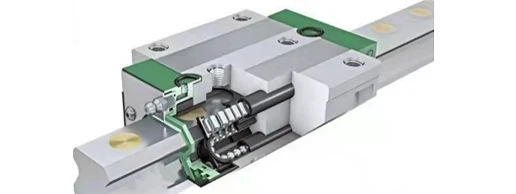
Some machines are simply easier to keep healthy, and that shows up in the maintenance budget rather than the purchase order. Features that genuinely lower maintenance effort on the EV Series vertical machining centers include a central auto-lubrication system and spindle oil cooling device as standard equipment, three-axis roller-type linear guideways, an oil-water separation device, a heat exchanger for the electrical cabinet, and air blast through the spindle.
Structural choices matter over the long term too. German Meehanite FC30 cast iron, FEM-optimised structures, a patented heat treatment process and more than 150 mm of column-to-base contact length exist to keep the machine dimensionally stable — which is another way of saying they reduce how often you have to chase accuracy back.
Serviceability is often overlooked at the quotation stage. Electrical components labelled in Chinese, English and Russian, plus a phase sequence protection switch that confirms a correct power connection at first start-up, make a measurable difference for teams that install and maintain equipment themselves. If you are comparing configurations, the published EV Series specifications and standard accessories are a useful reference point for what should be included rather than optional.
Mistakes That Shorten VMC Service Life
- Resetting the same alarm every day. A silenced alarm is an unrecorded fault. Log it and find the cause.
- Skipping warm-up on the first job of the day. The fastest way to lose both accuracy and bearing life.
- Using compressed air to blow chips into the machine. It drives swarf past wipers and into guideways and the spindle taper.
- Manual greasing of components fed by a central system. Mixing incompatible lubricants blocks lines and starves points downstream.
- Buying the lowest-cost consumables. Off-specification coolant and filters transfer cost to the machine.
- No documented baseline. Without installation data, degradation is invisible until parts fail inspection.
What to Confirm With Your Supplier Before You Buy
Maintenance cost is decided at purchase, not after commissioning. Before you sign, get written answers to the following:
- Which lubrication, cooling and filtration systems are standard, and which are optional?
- What is the recommended maintenance schedule, and is the manual supplied in your working language?
- What geometry and accuracy data is provided at acceptance, and can it be repeated on site?
- What is the lead time and pricing for wear parts, spindle service and control components?
- What technical support is available for remote diagnosis, and in which time zones?
- How is chip removal configured for your specific materials?
A supplier that answers these clearly is easier to live with for the next decade. HIRUNG CNC machine tools have been supplied to 33 countries and regions since the brand was established in January 2015, and design priorities are stated openly in terms of easier maintenance and stable equipment — which is the right conversation to have before a purchase order, not after a breakdown.
Frequently Asked Questions
How often should a CNC vertical machining center be serviced?
Basic checks belong in every shift — lubrication, air pressure, coolant and chip clearance. Weekly, monthly, quarterly and annual tasks build on that, and intervals should be scaled to spindle running hours rather than calendar time. A two-shift machine needs roughly twice the frequency of a single-shift machine.
What are the most common CNC vertical machining center problems?
Accuracy drift caused by thermal growth, spindle noise or overheating, tool change alarms, poor surface finish from tool or holder runout, coolant contamination and corrosion, and intermittent electrical faults from cabinet overheating or loose terminals. Most are traceable to lubrication, cleanliness, air quality or coolant condition.
Why is my VMC losing accuracy over time?
Common causes are loss of ball screw preload, worn or poorly lubricated guideways, foundation settlement, thermal instability, and tool holder or taper wear. Compare a machined test part against your installation baseline to separate machine geometry from tooling and process variation.
How do I stop tool change alarms on a machining center?
Verify air pressure and air dryness first, then clean the spindle taper, gripper faces and tool pots. Inspect pull studs for wear, and re-teach magazine and arm positions after any collision or service. Consistent tool data and correct tool weight limits also prevent a large share of ATC faults.
What maintenance keeps a CNC spindle healthy?
A stepped warm-up routine before heavy cutting, a clean and undamaged taper, a serviced spindle oil cooling device, balanced tooling, and monthly temperature logging so that trends are visible early. Spindle bearing service should be planned with the manufacturer rather than attempted improvised.
How long does a CNC vertical machining center last?
With disciplined preventive maintenance, industrial VMCs commonly remain in productive service for many years, and accuracy-critical components can typically be rebuilt rather than replaced. Service life depends far more on lubrication, cleanliness and load discipline than on the machine’s age.
Is preventive maintenance cheaper than repair?
In most machine shops, yes. Preventive tasks are short, planned and predictable, while failures consume spindle or screw components, scrap parts and delivery dates at the same time. The cost comparison becomes obvious once downtime is priced properly.
Turn Maintenance Into a Habit, Not a Reaction
Reliable CNC vertical machining center maintenance is not complicated: read symptoms methodically, protect the spindle and lubrication system, keep coolant and chips under control, log measured values, and choose machines that are designed to be serviced. Do that and the machine keeps the accuracy you paid for.
If you are specifying a new machine or standardising maintenance across a group of them, our engineers can help you match configuration, chip removal and accessories to the parts you actually make — start from the HIRUNG vertical machining center range and tell us your workpiece, material and tolerance requirements for a tailored recommendation.