What Is a CNC Machining Center?
A CNC machining center is a computer-controlled machine tool that performs milling, drilling, tapping, boring and other cutting operations automatically, changing tools from an onboard magazine without operator intervention. The defining difference from a basic CNC mill is the automatic tool changer and a control system that runs a full multi-operation program in one setup, which is what makes a machining center the workhorse of modern component production.
For a procurement team, the practical question is not “what is a machining center” but “which configuration matches the parts we actually run.” That answer depends on workpiece size, geometry, material, tolerance and production volume, and it is the foundation of every sound buying decision.
Why Choosing the Right Machine Matters
The cost of a mismatched machine shows up long after the invoice is paid. A center that is too small forces multiple setups and fixtures; one that is too large ties up capital and floor space while delivering no extra accuracy. Wrong spindle or guideway choices lead to poor surface finish, short tool life and scrap. In a B2B production environment these losses compound across every shift, so the selection work done before purchase is among the highest-return engineering effort in the whole project.
Beyond scrap and rework, the wrong machine also constrains future work. A center sized only for today’s parts may not accept the larger fixtures or heavier materials of next year’s orders, while an over-specified machine leaves budget that could have gone to automation or a second process.
Main Types of CNC Machining Centers
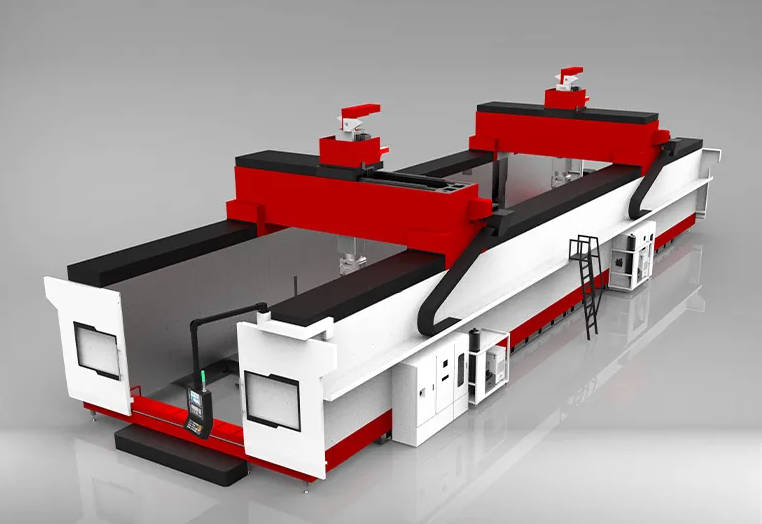
Most buyers narrow the field to four structural families. Each trades envelope, rigidity and cost against the parts it handles best.
Vertical Machining Center (VMC)
The spindle is vertical; the table is fixed or moves in X/Y while the head moves in Z. VMCs are the default for prismatic parts, molds, plates and fixtures. The HIRUNG EV Series vertical machining centers cover X-axis travel from roughly 600 mm to 1800 mm with table loads up to 2000 kg, which suits compact to medium-sized production workpieces.
Horizontal Machining Center (HMC)
The spindle is horizontal, with the table typically rotating or indexing. Chip evacuation is better and multi-face machining is easier, which raises productivity for high-volume prismatic parts, though the capital cost is usually higher than a comparable VMC.
5-Axis Machining Center
Two rotational axes let the tool approach the part from almost any angle in one setup. This is the right choice for complex contours, deep cavities, angled features and parts where eliminating re-clamping protects tolerance. The HIRUNG 5-axis CNC machining centers (DV, DU and DC series) are used for aerospace, medical and automotive components that demand tight tolerances and smooth surfaces. Within 5-axis machines, a trunnion (dual-rotary table) suits smaller, high-precision parts where rigidity matters most, while a swivel or articulating head keeps the table stationary for larger, heavier workpieces — so the right 5-axis configuration also depends on your part size and weight, not only on the axis count.
Gantry / Double-Column Machining Center
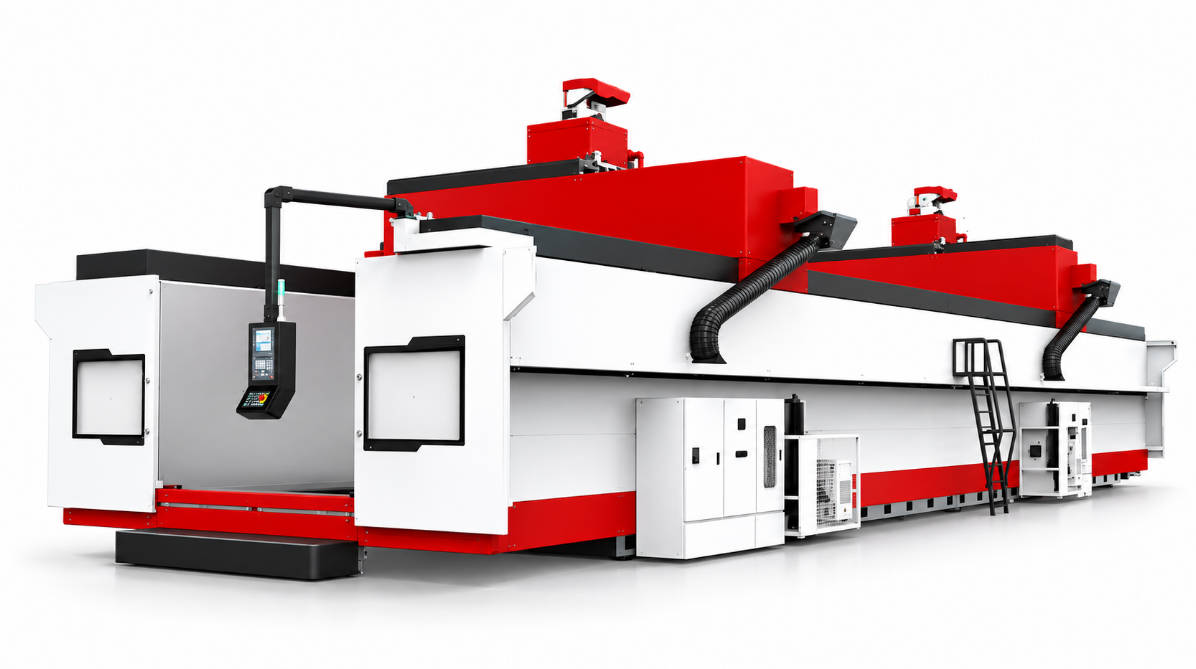
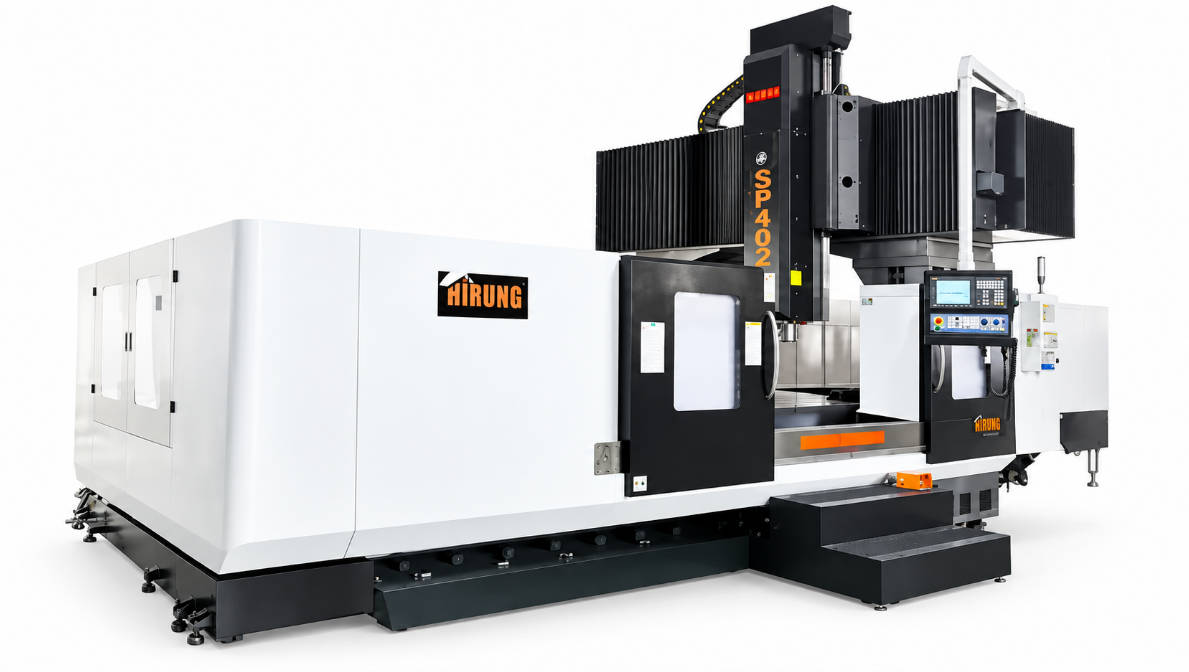
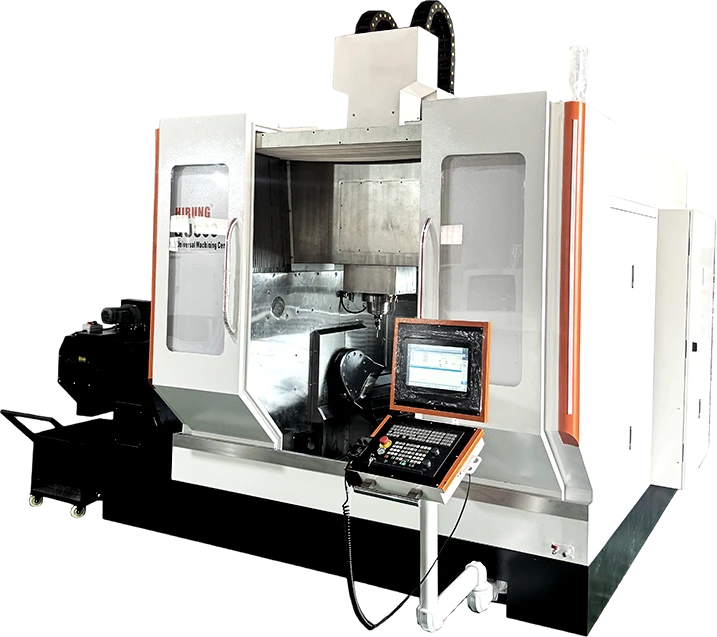
A bridge-style structure carries the spindle across a wide, fixed or moving table. Gantries are the natural answer for very large or very heavy workpieces — structural parts, dies, energy and marine components — where a standard VMC simply cannot span the part.
| Type | Typical axes | Best for | Workpiece size | Typical table load |
|---|---|---|---|---|
| Vertical (VMC) | 3 (4/5 optional) | Prismatic parts, molds, fixtures | Compact to medium | Up to ~2000 kg |
| Horizontal (HMC) | 3+ (indexing table) | High-volume prismatic parts | Medium | Medium to high |
| 5-axis | 3 linear + 2 rotary | Complex contours, one-setup parts | Small to large | Varies by config |
| Gantry | 3+ (moving bridge) | Oversized / heavy parts | Very large | Up to ~30,000 kg |
Figures are typical ranges drawn from common machine classes; confirm exact values against the specific model and configuration you are quoting.
Key Specifications to Compare
Once the family is chosen, the shortlist is separated by numbers. The checklist below covers the fields that most affect day-to-day results. Compare machines on the values that change throughput and quality — verified accuracy, real cutting feed and torque at your material — rather than the largest headline number on the brochure.
| Specification | What it decides | What to verify |
|---|---|---|
| X / Y / Z travel | Maximum part envelope | Part fits with fixture margin |
| Table size & load | Part weight and clamping area | Static and dynamic load rating |
| Spindle speed / power / taper | Material and tooling match | Torque curve, not just max rpm |
| Tool magazine | Process mix per setup | Capacity and tool-change time |
| Feed & rapid traverse | Cycle time | Real cutting feed, not peak |
| Positioning / repeatability | Achievable tolerance | Verified test report |
| Control system | Usability & options | Brand, options, training |
| Thermal management | Accuracy over a shift | Spindle cooling, compensation |
Accuracy, Rigidity and Thermal Stability
Two machines with identical travel can still produce very different parts, because accuracy comes from the structure and how it is controlled. A rigid, thermally stable base is what lets a machining center hold tolerance across a full production shift rather than only on the first part.
In well-built centers, look for a stress-relieved cast-iron base, hand-scraped joints and precision ball screws with roller or linear guideways. Documented examples from HIRUNG’s own gantry and vertical lines include positioning accuracy around 0.010 mm, repeatability near ±0.003 mm, and spindle oil cooling that keeps thermal displacement below 0.005 mm. Machines are commonly verified with laser interferometer and ballbar testing before delivery. Ask for that verification data — a number on a brochure is not the same as a measured machine.
How to Match the Machine to Your Workpiece
Use a part-driven method instead of a spec-sheet method. Six steps keep the selection grounded in reality.
Step 1 — Define the part envelope
Record maximum length, width, height and fixture footprint. Add clearance for the spindle head and any rotary table.
Step 2 — Weigh material and cutting forces
Steel and titanium need more spindle torque and rigidity than aluminum. Match spindle power and structure to the hardest material you will run, not just the average.
Step 3 — Set the tolerance and surface finish
Tight tolerances and fine finishes demand verified accuracy, good guideways and thermal control. Looser requirements can free budget for travel or speed.
Step 4 — Map the process mix
Count the operations per part. More operations mean a larger tool magazine and, for complex geometry, rotary or 5-axis capability. You can compare the EV Series vertical machining centers against your operation list to see which model fits.
Step 5 — Plan volume and automation
High mix / low volume favors flexibility; high volume favors pallet changers, robotics and faster tool changes. Decide this early, because it changes the configuration.
Step 6 — Validate with the supplier
Send the part drawing, dimensions, weight, material, tolerance and quantity. A competent supplier returns a configuration reasoned from your part — not just a price for the biggest machine on the floor.

Common Mistakes When Buying a CNC Machining Center
| Mistake | Why it costs you | Better approach |
|---|---|---|
| Buying maximum travel “just in case” | Wasted capital, slower axes, more floor space | Size to the 90th-percentile part plus fixture margin |
| Chasing highest spindle rpm | Low torque on hard materials, poor finish | Read the torque curve at your cutting speed |
| Ignoring table load | Deflection, poor accuracy, safety risk | Confirm load against your heaviest fixture + part |
| Skipping accuracy verification | Tolerance drift you discover in production | Request laser / ballbar test reports |
| Weak after-sales plan | Long downtime when something fails | Check spare parts, training, response time |
How to Evaluate and Choose a Supplier
The machine and the supplier are bought together. A supplier who recommends a configuration from your part drawing — rather than a catalog — is the single best signal that the machine will fit your work. Before committing, ask for machine verification records, references in your industry, spare-parts availability and lead times, installation and commissioning support, and operator training. For complex parts, it is worth reviewing 5-axis machining center configurations with the supplier so the rotary-axis and control options are matched to your geometry.

Frequently Asked Questions
How do I choose the right CNC machining center for my parts?
Start from your largest and heaviest part: match X/Y/Z travel and table load first, then pick spindle power and accuracy for your material and tolerance. Let the part drive the configuration instead of a fixed budget for the biggest machine.
What is the difference between a vertical and a horizontal machining center?
A VMC has a vertical spindle and suits most prismatic parts; an HMC has a horizontal spindle with better chip flow and easier multi-face access, which raises productivity for high-volume work but costs more.
When should I consider a 5-axis CNC machining center?
Choose 5-axis when parts have complex contours, deep cavities, angled features or tight tolerances that would otherwise need several setups. Machining in one setup protects tolerance and cuts handling time.
How much table load do I need for a CNC machining center?
Add your heaviest fixture to the part weight, then include a safety margin for dynamic cutting forces. Underestimating table load causes deflection and accuracy loss, so confirm the rated load, not just the catalog number.
What accuracy can a good CNC machining center hold?
In well-built centers, positioning accuracy around 0.010 mm and repeatability near ±0.003 mm are commonly documented and verified by laser and ballbar testing. Always ask for the measured report for the exact machine you are buying.
Which CNC machining center is best for large workpieces?
For very large or heavy components, a gantry (double-column) machining center is the practical choice because its bridge structure spans parts a standard VMC cannot. Match column-moving or table-moving gantry design to whether envelope or finishing rigidity matters more.
Conclusion
The right CNC machining center is the one matched to your actual parts — envelope, weight, material, tolerance and volume — not the one with the biggest travel or the highest rpm on paper. Define the part first, compare the specifications that affect your results, verify accuracy with real test data, and choose a supplier who reasons from your drawing. To see how these principles map to real machines, explore HIRUNG’s full range of CNC machine tools or send your part drawing for a configuration recommendation.