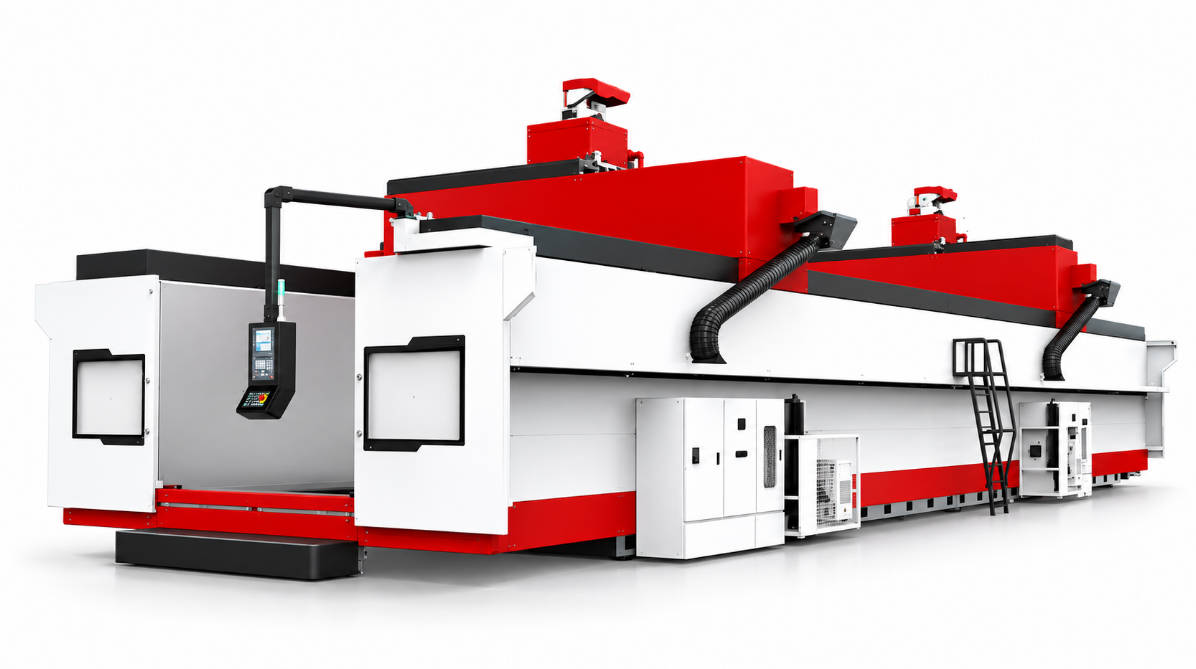
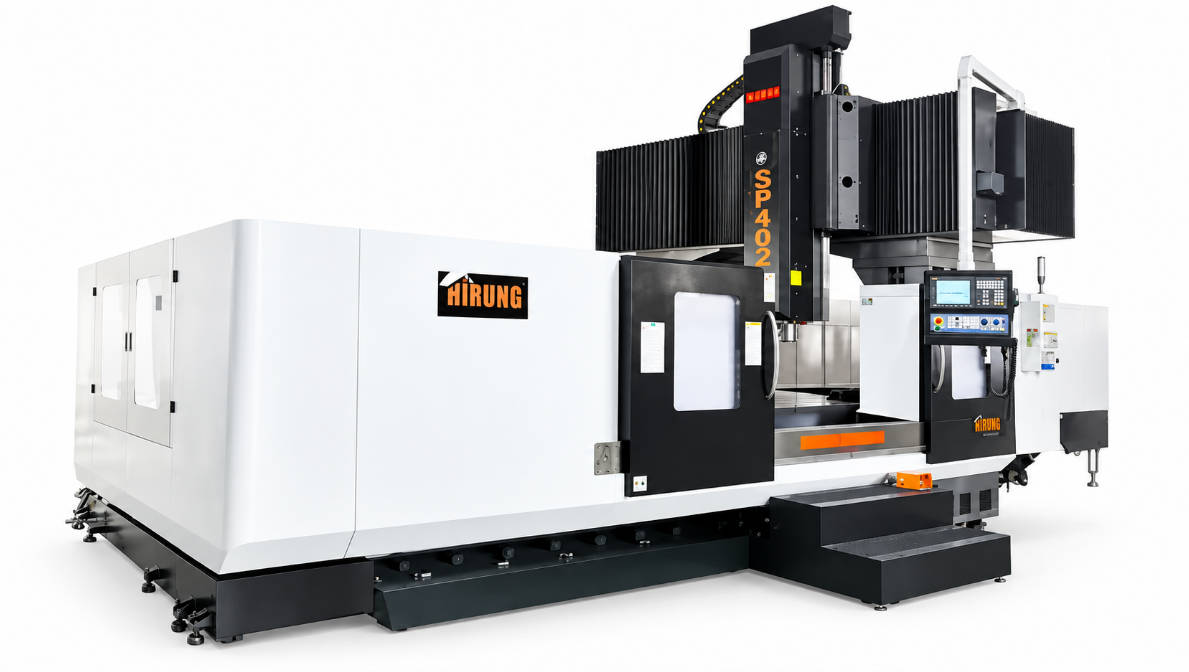
The price of a CNC machine is determined by its machine type, size and travel, table load, spindle power and speed, structural rigidity, accuracy class, CNC control system, axis count, tooling and automation, and the level of after-sales support — not by a single fixed list price. Because every machine is configured around a specific workpiece and production target, two machines that carry the same series name can differ substantially in cost.
For a B2B buyer, the useful question is not “what is the cheapest CNC machine price?” but “which configuration can safely, accurately and repeatedly machine my parts at a cost that makes sense over its working life?” This guide explains how CNC machine cost is built up, which factors move the number the most, and how to compare quotations without overpaying or underbuying.
A CNC machine is a long-term production asset. In many applications it runs for a decade or more, so the purchase price is only one part of the total cost of ownership. Understanding what you are actually paying for helps a procurement team separate genuine value from a low headline number that hides missing capability.
Why CNC Machine Cost Varies So Widely
Two machines can both be described as “CNC machining centers” and still sit in completely different price brackets, because the name describes a family, not a specification. A compact 3-axis vertical machining center for small parts and a large 5-axis gantry-style machine share a control principle but almost nothing else in structure, spindle, travel or tooling.
Price variation comes from four broad sources: the machine platform (structure and size), the performance package (spindle, accuracy and control), the options (axes, automation and tooling), and the commercial package (brand, shipping, commissioning, warranty and service). Each of these is examined below.
The Main Factors That Affect CNC Machine Price
1. Machine Type and Axis Configuration
The machine type sets the starting point for cost. A CNC lathe, a vertical machining center, a horizontal machining center, a 5-axis machining center and a large gantry machine are built on different structures and serve different part families, so their cost profiles are not directly comparable.
Axis count is one of the biggest single jumps. Moving from 3 axes to 4 axes adds a rotary table and its control integration; moving to 5 axes adds two rotational axes, more complex kinematics, more advanced control functions and generally more rigid, more precisely built assemblies. In many markets a 5-axis capability carries a large premium over an equivalent 3-axis platform, because the additional axes multiply both the mechanical complexity and the accuracy requirement.
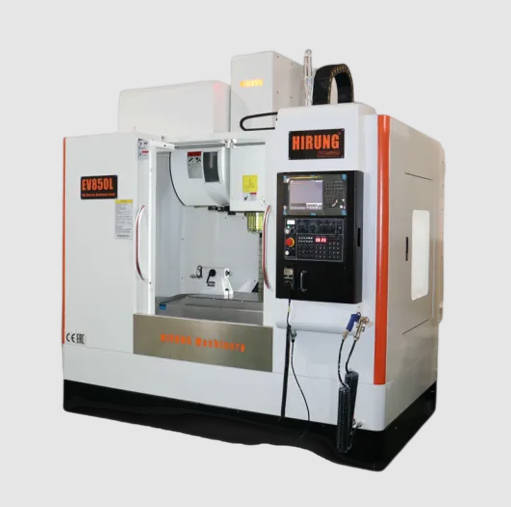
Vertical machining centers remain the most common and cost-efficient choice for prismatic parts, molds, plates and fixtures. HIRUNG EV Series vertical machining centers, for example, cover a range of envelope and table-load options so a buyer can match the machine to the workpiece instead of over-specifying the platform.
2. Size, Travel and Table Load
Travel and table size determine how large a workpiece can be machined, and table load determines how heavy it can be. Increasing travel requires a larger, heavier base and a structure that must hold accuracy across a longer distance, so cost rises with size — often faster than linearly.
Guideways, ball screws, drive motors and the machine frame all scale with travel. In many applications the difference between a compact machine and the next size up is a different platform rather than a simple option. Table load capacity becomes decisive for mold plates, heavy fixtures and multiple-part setups, where an under-sized table forces extra setups and additional fixtures.
3. Spindle Power and Cutting Capability
The spindle is one of the most expensive and most performance-critical components of a machine. Its price reflects power, maximum speed, torque, taper type, bearing class, cooling method and whether it is belt-driven, direct-drive or built-in. Different spindle designs are engineered for different jobs, and each carries a different cost.
Spindle specifications should be matched to the material and to the heaviest cut the machine will realistically take, because an underpowered spindle leads to poor surface finish, short tool life and slow cycle times. A high-speed spindle for light, fast finishing and a high-torque spindle for heavy roughing in steel are built differently and priced accordingly. In many configurations, spindle type alone accounts for a meaningful share of the machine’s cost.
4. Structure, Guideways and Accuracy
The machine’s cast structure and guideway system determine rigidity, vibration damping and long-term accuracy — and they are a major cost driver. A heavier, stress-relieved cast base with hand-scraped mating surfaces and precision guideways costs more than a light frame, but it is what allows tight tolerances to be held under load, shift after shift.
Machine builders cost structures by material, weight and the machining and heat-treatment processes applied to them. Higher accuracy classes of ball screws, thermal management of the spindle and structure, and documented geometric verification all add cost while directly protecting the accuracy the buyer is paying for. Documented accuracy testing — such as laser interferometer and ballbar verification — should be treated as part of what the buyer is paying for, because it is what turns a specification sheet into a repeatable result.
5. CNC Control System
The control system influences both price and long-term usability. A machine may be offered with different controls that differ in cost, available functions, multi-axis handling, networking and the local support available for programming and maintenance. The control also affects operator training and how easily the machine integrates into existing production.
For multi-axis and complex work, control capability is not a minor upgrade — it is central to whether the machine can execute the required toolpaths at the required accuracy. Buyers should confirm the exact control model and its included functions in the quotation, because “CNC control” on its own is not a specification.
6. Tooling, Automation and Options
Tool magazine capacity, automatic tool-change speed, rotary tables, chip management, coolant systems, probing and automation such as pallet changers all add to the price. These options are often the difference between a machine that runs one shift and one that supports efficient multi-shift production.
Options should be justified by workload. A shop running many small parts benefits from more tools and faster tool changes, while an operation machining heavy fixtures may value rigidity and chip evacuation more. Each option adds cost, so buyers should decide which ones pay back through productivity and which are simply nice to have.
7. Brand, Origin and After-Sales Support
Brand, country of origin and the depth of after-sales support all influence price. Two machines with similar specifications can differ because of distribution, spare-part availability, commissioning, training, warranty terms and how quickly service can respond when production is stopped.
Support is not free — it is priced into the machine, and it is often what separates a low quotation from a lower total cost. A machine that is idle for want of a spare part can lose far more value than the price difference between two suppliers, so engineering support and response capability belong in the price comparison, not in an afterthought.
CNC Machine Price by Type: How Costs Compare
Absolute prices depend on configuration, market and specification, and every quotation is built to the part. The table below shows how the main machine families typically compare in relative cost and what drives each one. The cost indicators are relative — they show typical ordering in many markets, not fixed figures.
| Machine type | Relative cost | Main cost drivers | Typical fit |
|---|---|---|---|
| CNC lathe / turning center | Entry to mid | Chuck size, spindle bore, turret and live tooling, bar feeder | High-volume turned parts such as shafts and discs |
| 3-axis vertical machining center | Mid | Travel, table load, spindle, tool magazine, control | Prismatic parts, molds, plates and fixtures |
| Horizontal machining center | Mid to high | Pallet changer, rotary B-axis, tool capacity, chip handling | High-volume boxy parts, multi-face machining |
| 5-axis machining center | High | Two rotary axes, head or trunnion design, control functions, accuracy | Complex contoured parts in aerospace, medical and mold work |
| Large gantry machining center | High to very high | Envelope, table load, gantry structure, spindle torque, foundation | Very large and heavy workpieces, molds and energy components |
Turning machines are usually the lower-capital entry point, prismatic machining sits in the middle, and multi-axis and large gantry platforms command the highest investment. CNC vertical machining centers are often the first machining center a growing shop adds, while 5-axis and gantry machines are chosen when part complexity or workpiece size demands them.
Why 5-Axis CNC Machines Cost More
The step from 3-axis to 5-axis is the single biggest configuration jump in most machine ranges. Two additional rotary axes mean more moving assemblies, more mass to control, and kinematic relationships the control system must compute continuously. The machine must hold accuracy while the tool is oriented at an angle, which raises the requirement on every element in the chain.
Beyond the mechanics, 5-axis work demands more capable controls, more advanced programming and often simulation software to avoid collisions — all of which carry cost. In return, 5-axis machines reduce the number of setups, hold tighter geometric relationships and reduce or eliminate secondary finishing. For complex parts, the higher purchase price of a 5-axis machine is often recovered through fewer setups, less scrap and broader part capability, so it should be judged on total cost rather than purchase price alone.
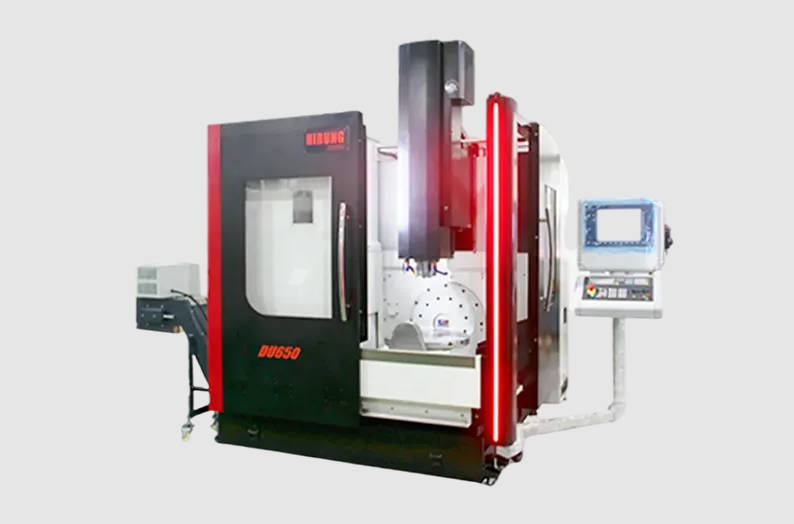
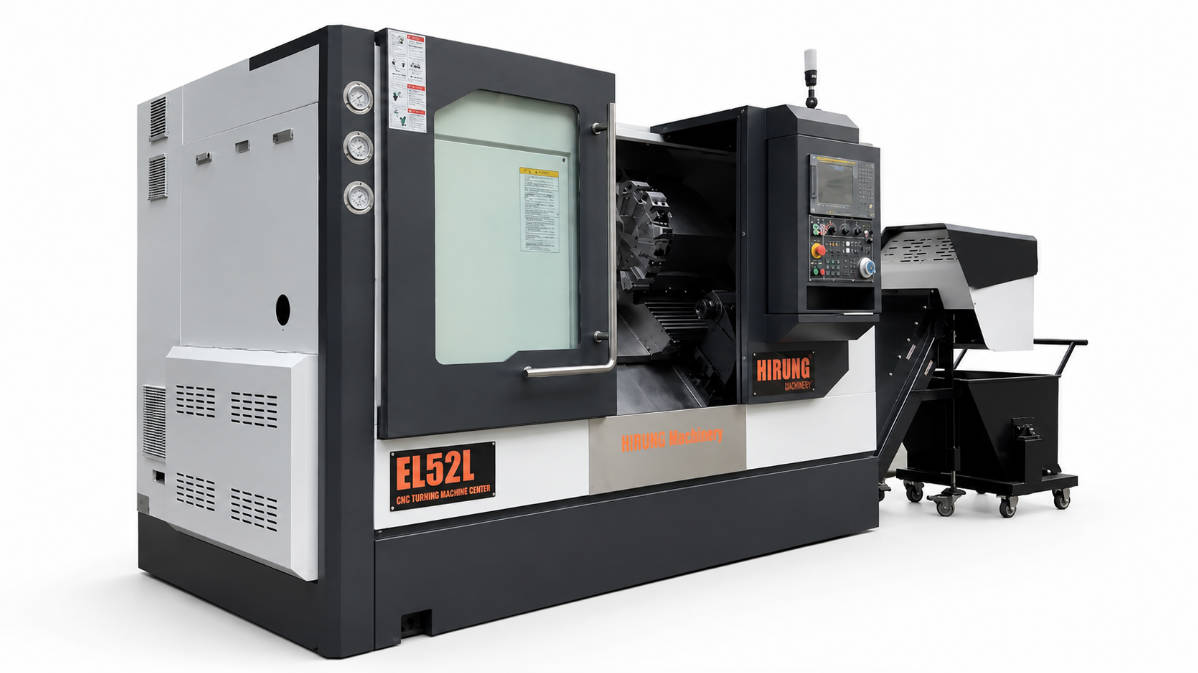
HIRUNG builds 5-axis machining centers in different structural configurations, so the machine can be matched to the part rather than the other way around.
New vs Used CNC Machines: What Changes the Cost
A used machine can lower the entry price, but the savings come with trade-offs that affect the total cost. Used machines may have worn guideways, outdated controls, limited spare-part availability and unknown maintenance history, any of which can translate into unexpected downtime.
A new machine typically offers current control technology, documented accuracy testing, warranty coverage and long-term parts support. The right choice depends on risk tolerance and the criticality of the parts. For production work that must hold tolerances and run predictably, a new machine with documented verification is often the lower-risk investment; for secondary or non-critical operations, a used machine can be a reasonable starting point.
Hidden Costs That Buyers Often Overlook
The purchase price is not the whole project. Several cost categories sit outside the machine price but still belong in the decision, because they change the real cost of owning and running the equipment.
| Cost category | What it covers | Why it matters |
|---|---|---|
| Installation and foundation | Foundation, leveling, power supply, compressed air, lifting | Larger machines may need a specific foundation and a suitable location |
| Commissioning and training | Alignment, test cuts, operator and programmer training | Affects how quickly the machine reaches full production |
| Tooling and workholding | Tool holders, cutters, vises, fixtures, rotary tables | Can be a significant share of the total project budget |
| Software and programming | CAM post-processors, simulation, software seats | Essential for complex and multi-axis toolpaths |
| Consumables and maintenance | Coolant, lubricants, filters, wear parts | Recurring cost that runs across the machine’s working life |
| Spare parts and service | Response time, part availability, warranty terms | Directly affects uptime and total cost of ownership |
How to Compare CNC Machine Quotations
Quotations are easier to compare when they are normalized. Instead of comparing headline numbers, place each offer against the same project definition so the differences are visible.
- Define the part first: maximum workpiece dimensions, weight, material and required tolerance.
- Fix the specification: travel, table load, spindle, axes, tool capacity, control model and options.
- Confirm what is included: tooling, commissioning, training, documentation and warranty.
- Check verification: which accuracy tests are performed and how results are documented.
- Compare support: spare-part availability, response time and engineer access.
- Compare total cost, not purchase price: include installation, tooling, software and expected maintenance.
Common Mistakes When Buying a CNC Machine on Price
- Buying on headline price alone and discovering missing capability after delivery.
- Under-sizing travel or table load, which forces extra setups and limits future work.
- Specifying a spindle that does not match the material, leading to poor finish and short tool life.
- Ignoring total cost of ownership, including installation, tooling, software and service.
- Over-optioning the machine with automation or capacity that the workload does not justify.
- Leaving verification undefined, so accuracy is assumed rather than demonstrated.
Choosing the Right CNC Machine Supplier
A machine is only as good as the supplier behind it. The right partner helps define the specification from the part drawing, explains the trade-offs honestly, and supports the machine through installation, training and its working life. That combination is what protects the investment after the quotation is signed.
HIRUNG manufactures CNC machine tools including vertical machining centers, 5-axis machining centers, CNC lathes and large gantry machining centers, and has supplied machines to customers in 33 countries and regions. HIRUNG CNC machine tools are built around matching the configuration to the workpiece, so buyers can compare options on engineering rather than on price alone.
FAQ
What factors affect CNC machine cost the most?
The largest drivers are usually machine type and axis count, size and travel, table load, spindle specification, structural rigidity and accuracy class, the control system, and the options fitted. After-sales support and the brand’s service network also influence the price, because they are part of what the buyer receives.
How much does a CNC machining center cost?
There is no single figure. A compact 3-axis vertical machining center sits at a lower investment level than a 5-axis or large gantry machine, and the final quotation depends on travel, table load, spindle, control and options. The practical approach is to define the part and required processes first, then request a configuration-based quotation.
Why is a 5-axis CNC machine more expensive than a 3-axis machine?
Two additional rotary axes add mechanical assemblies, more complex kinematics, more advanced control functions and usually higher accuracy requirements across the machine. Programming and simulation needs also rise. In return, 5-axis machines cut setups and handle complex geometry that 3-axis machines cannot complete in one operation.
Is a cheaper CNC machine a worse investment?
Not automatically, but a low price is only meaningful if the machine meets the requirement. If a low-cost machine cannot hold tolerance, cannot handle the workpiece size or weight, or cannot be serviced quickly, the savings can be outweighed by scrap, rework and downtime. The relevant comparison is total cost against capability.
What is the price difference between a CNC lathe and a CNC machining center?
They serve different part families, so they are not directly interchangeable. Turning machines are generally the lower-capital entry point for rotational parts, while machining centers handling prismatic and multi-face work usually require a higher investment that grows with travel, spindle and axis count.
How can I reduce CNC machine cost without sacrificing quality?
Match the specification to the parts you actually run. Avoid over-sizing travel and table load, choose a spindle that fits the material and heaviest cut, and add automation only where it pays back through productivity. Requesting a configuration built to your drawing, rather than a machine with unused capacity, is usually the most effective way to control cost.
Conclusion: Price Is a Configuration, Not a Number
CNC machine price is not a single figure — it is the sum of a platform, a performance package, a set of options and a support commitment, all matched to your parts. Buyers who define the workpiece first and compare total cost instead of headline price make more reliable decisions and avoid the expensive surprises that follow a poorly specified machine.
To get an accurate figure for your application, share the part drawing, workpiece size and weight, required tolerance, machining operations and production quantity. HIRUNG’s 5-axis machining centers and other machine platforms can be configured to the actual requirement, and a quotation built from your drawing is the most useful first step.