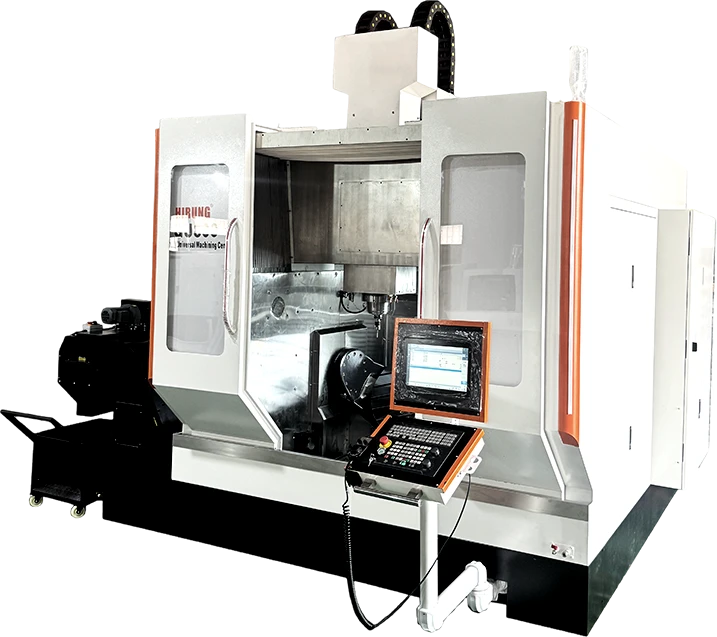
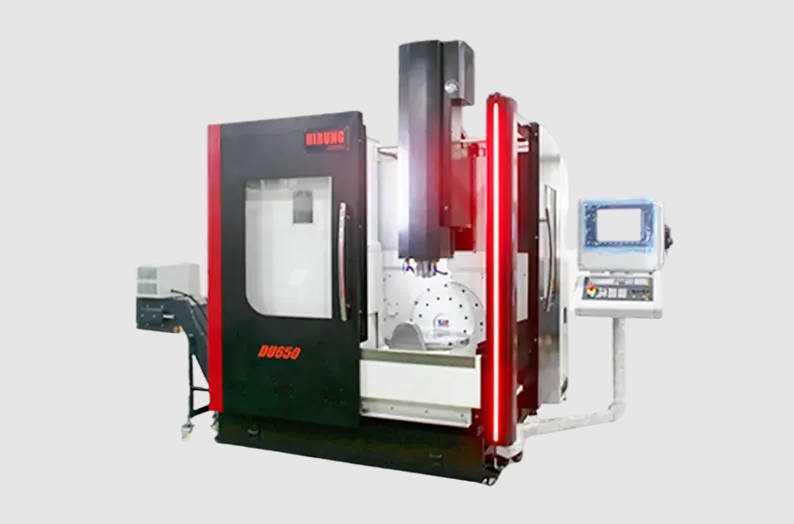
Investing in 5-axis technology is often viewed primarily as an equipment purchase, but from an operational standpoint, it is a labor and process-consolidation strategy. By executing multiple milling, drilling, and contouring operations in a single clamping, done-in-one manufacturing fundamentally alters cost accounting on the shop floor. Evaluating the true capital return requires looking beyond machine-hour rates: the real justification stems from eliminating manual fixture setups, eliminating work-in-progress (WIP) buffer queues, cutting scrap from datum-shift errors, and freeing skilled machinists from repetitive part handling.
This guide outlines how one-setup machining directly drives operational cost reduction, details the mathematical formula required to calculate 5-axis CNC ROI, and highlights how advanced 5-axis CNC machining balances capital expenditure against long-term shop labor savings.
The CapEx Hesitation: Why Labor and Setup Bottlenecks Redefine 5-Axis ROI
Many machine shop managers hesitate to transition from 3-axis mills to 5-axis centers due to higher upfront machine acquisition costs. Traditional accounting evaluates this decision through a single lens: machine-hour shop rate. On paper, a 5-axis center carries a higher hourly rate than an entry-level vertical machining center (VMC).
However, this traditional metric overlooks the biggest cost drivers on modern shop floors:
- Shortage of Skilled Set-Up Personnel: When an intricate component requires four to six separate setups on 3-axis machines, an experienced technician must manually align, dial in, and verify coordinates for every operation. Machine spindle time ends up waiting on labor availability.
- WIP Floor Stagnation: Parts routed through multiple machines spend up to 80% of their total factory lead time sitting in staging bins between operations, tying up working capital.
- Compounding Setup Scrappage: Every additional clamp cycle introduces human positioning error and fixture variability, increasing cumulative scrap rates as the part nears completion.
When these indirect overhead expenses are properly factored into total piece-part cost, one-setup machining frequently yields a shorter payback timeline than adding multiple 3-axis machines to handle the same capacity.
How “Done-in-One” Machining Converts Workholding into Direct Labor Savings
“Done-in-One” machining refers to completing multi-faceted, complex parts from raw stock to finished geometry within a single workholding fixture. Consolidating prismatic and angular features into one continuous program converts non-productive setup tasks into productive spindle utilization.
Eliminating Dedicated Fixturing and Soft Jaws
On standard 3-axis lines, multi-sided components typically require dedicated soft jaws, custom angle plates, or modular tombstone fixtures for each cut face. Each dedicated fixture demands:
- CAD/CAM engineering and toolpath programming time.
- Machine time and raw tooling material to fabricate the fixture.
- Physical storage, cataloging, and maintenance between production runs.
By utilizing multi-axis spindle orientation and tilting rotary tables, 5-axis setups use standardized, low-profile self-centering vises or dovetail clamps. Machining five exposed faces in one operation reduces dedicated tooling libraries and cuts dedicated fixture preparation time significantly.
Mitigating Datum Shift and Quality Rework
Every time an operator releases a part, deburrs locating surfaces, and clamps it into a secondary fixture, reference alignment degrades. Small chips, irregular torque on vise jaws, or operator fatigue introduce datum shift (tolerance stacking across operations).
| Process Step & Variable | Sequential 3-Axis Multi-Setup Workflow | Done-in-One 5-Axis Single-Setup Workflow |
| Material Intake & Prep | Raw stock squared and sawed to size | Raw stock prepped (standardized dovetail or clean vise grip) |
| Machining Sequence | Op 10 (Top) ➔ Re-clamp ➔ Op 20 (Side A) ➔ Re-clamp ➔ Op 30 (Side B) | Continuous single setup (Ops 10, 20, and 30 completed in one program) |
| Datum Coordinate System | Multiple mechanical reference shifts across setups | Single primary coordinate origin for all 5 exposed faces |
| Cumulative Alignment Risk | Compound tolerance stacking ($\pm 0.03\text{ mm}$ to $\pm 0.08\text{ mm}$ variance) | High true positional accuracy referenced to one origin |
| Scrap Exposure Point | Scrap risk escalates on late operations (Op 20/Op 30) | Scrap risk minimized; datum integrity locked from start |
Eliminating intermediate part repositioning preserves GD&T relationships (such as true position, perpendicularity, and concentricity) directly from the machine’s initial coordinate system, substantially lowering rework and scrap costs on high-value billets.
Operational Comparison: Multi-Setup 3-Axis vs. Done-in-One 5-Axis
| Operational Parameter | Sequential 3-Axis Operations | Done-in-One 5-Axis Machining |
| Number of Clamping Operations | Typically 3 to 6 setups per part | 1 to 2 setups (including final tab-off) |
| Fixture Requirements | Custom soft jaws, angle plates, indexing jigs | Standardized vises, dovetail clamps, zero-point systems |
| Operator Intervention | High: frequent loading, unloading, deburring, and re-zeroing | Low: single load/unload cycle per component |
| Tolerance Stacking Risk | High: errors compound with each manual refixture | Minimal: features relate back to a single primary coordinate datum |
| WIP Queue Times | Multi-day staging between distinct machine operations | Single station processing, reducing staging bottlenecks |
| Spindle Utilization Rate | Moderate: frequently paused for manual fixture setups | High: continuous cutting across multiple faces |
Step-by-Step ROI Formula: Quantifying Labor, Tooling, and Scrap Reductions
To evaluate whether a 5-axis machine center investment makes financial sense for your specific part mix, use an objective cost comparison formula rather than generalized assumptions.
The Annual Production Cost Equation
The comparative annual manufacturing cost between production methods is expressed as:
$$\Delta C = C_{\text{3-Axis}} – C_{\text{5-Axis}}$$
Where each method’s annual operating cost ($C$) is calculated by:
$$C = (N \times t_c \times R_m) + (N \times t_s \times R_l) + C_f + (N \times C_{\text{mat}} \times S_r)$$
- $N$: Total annual part production volume (units/year).
- $t_c$: Machine cutting cycle time per unit (hours).
- $R_m$: Machine-hour rate (depreciation, power, floor footprint, maintenance).
- $t_s$: Total manual setup, handling, and re-clamping time per unit (hours).
- $R_l$: Fully burdened labor rate for setup personnel and operators ($/hour).
- $C_f$: Total annual tooling and fixture design/fabrication cost ($).
- $C_{\text{mat}}$: Raw material cost per blank ($).
- $S_r$: Scrap rate percentage (expressed as a decimal).
Calculating Payback Period
Once you calculate the annual operational savings ($\Delta C$), determine the net payback period against capital expenditure:
$$\text{Payback Period (Years)} = \frac{\text{Net Capital Investment Difference (Machine, Tooling, Software)}}{\text{Net Annual Operational Savings } (\Delta C)}$$
Representative Cost Model: Batch Production of 1,200 Complex Housings
Note: The following figures represent a realistic, production-modeled scenario for machining complex, multi-sided aluminum industrial valve housings. Actual parameters depend on specific part geometry, cutting parameters, and regional wage rates.
- Annual Production Volume ($N$): 1,200 units
- Raw Material Blank Cost ($C_{\text{mat}}$): $85 per unit
- Fully Burdened Labor Rate ($R_l$): $45/hour
Operating Variable Inputs
- 3-Axis Workflow (Requires 4 Separate Setups):
- Manual setup and part flipping time ($t_s$): 0.75 hours (45 min total)
- Dedicated fixture design and soft jaws fabrication ($C_f$): $6,500 annually
- Historic scrap rate ($S_r$): 4.5% (losses compound on later setups)
- Direct Annual Labor Cost: $1,200 \times 0.75 \times \$45 = \$40,500$
- Annual Scrap Material Loss: $1,200 \times \$85 \times 0.045 = \$4,590$
- Baseline Combined Annual Labor, Tooling & Scrap Overhead: $51,590
- 5-Axis Done-in-One Workflow (Single Clamping):
- Manual setup and handling time ($t_s$): 0.15 hours (9 min total)
- Standardized dovetail/zero-point fixturing ($C_f$): $1,200 annually
- Scrap rate ($S_r$): 0.8%
- Direct Annual Labor Cost: $1,200 \times 0.15 \times \$45 = \$8,100$
- Annual Scrap Material Loss: $1,200 \times \$85 \times 0.008 = \$816$
- 5-Axis Combined Annual Labor, Tooling & Scrap Overhead: $10,116
Annual Direct Savings Summary
- Annual Labor Savings: $\$40,500 – \$8,100 = \mathbf{\$32,400}$
- Annual Fixture Reduction Savings: $\$6,500 – \$1,200 = \mathbf{\$5,300}$
- Annual Scrap Reduction Savings: $\$4,590 – \$816 = \mathbf{\$3,774}$
- Total Annual Operational Savings on This Part Family: $41,474
Consolidating workpieces into a single setup recovers over $41,000 annually on a single production line, before factoring in lead time compression and freed floor space.
3-Axis Multi-Machine Line vs. Single 5-Axis Center: Operational Footprint
The decision to adopt done-in-one machining extends beyond the individual workpiece into overall facility utilization. A common operational crossroad involves deciding whether to install three 3-axis VMCs or a single 5-axis CNC machining center to meet growing production demand.
Manufacturing Cell Layout and Asset Comparison
| Architecture Feature | 3-Axis Multi-Machine Cell (3 Spindles) | 5-Axis Done-in-One Cell (1 Spindle) |
| Cell Configuration | 3 separate VMCs arranged sequentially (VMC 1 ➔ VMC 2 ➔ VMC 3) | 1 integrated 5-axis machining center executing Ops 10, 20, & 30 |
| Material Routing | Staged transit pallets and WIP buffer carts between machines | Direct delivery from single station to final inspection |
| Staffing Allocation | 2 to 3 dedicated operators required for staggered part swaps | 1 single operator (easily paired with automation/pallet pools) |
| Shop Floor Area | High footprint (multiple maintenance perimeters and pallet lanes) | 40% to 50% less physical floor area required |
| Ancillary Utilities | 3 independent chip conveyors, coolant tanks, and power drops | 1 consolidated filtration, mist collection, and power line |
| Factory Throughput | Linear bottleneck risk; machine downtime stalls the whole line | Autonomous cycle run; no intra-operation queue times |
Factory Floor Footprint and Ancillary Load
Three vertical machining centers require distinct machine safety zones, chip conveyors, coolant sumps, and dedicated clearance areas for incoming and outgoing pallet carts. A single high-efficiency 5-axis center occupies roughly 40% to 50% less physical floor area than an equivalent three-machine line, cutting lighting, HVAC, and power-drop distribution demands.
Balancing Operator Allocation
Running parts across three separate machines requires continuous operator attendance to transfer, deburr, and reload parts. A single 5-axis center reduces handling to one loading and unloading cycle per finished part, enabling a single operator to manage secondary tasks or oversee multiple automated spindles.
Hidden Friction in 5-Axis Adoption: CAM Programming, Tool Collision, and Operator Readiness
Achieving full done-in-one efficiency requires realistic preparation for new technical demands. Understanding these prerequisites ensures operational transitions proceed smoothly without costly production downtime:
1. CAM Programming Complexity and Post-Processing
Programming simultaneous 5-axis toolpaths or multi-axis 3+2 positional cutting requires capable CAM software and post-processors tailored to the machine’s specific kinematics. Programming cycles take longer up front than basic 3-axis programming, making robust software post-processors and verified digital machine simulation non-negotiable.
2. Digital Twin Collision Verification
With tilting tables and tool holders moving close to fixtures, the cost of an unverified collision is substantially higher on 5-axis machines. Adopters must implement solid-model digital twin simulation to verify clearances for spindles, workholding, cutting tools, and workpiece stock before running programs on the shop floor.
3. Workholding and Tool Clearance Strategy
Traditional vises obstruct cutting tool access to side faces. Done-in-One machining typically requires upgrading to compact self-centering vises, dovetail stock preparation, or pneumatic zero-point clamping bases. Tooling strategies must also shift toward shorter, more rigid tooling holders (such as shrink-fit or hydraulic chucks) to maximize rigidity when cutting at compound angles.
Conclusion & Action Plan: Justifying Your Next Machining Investment
Done-in-one manufacturing fundamentally alters machine shop economics. While 5-axis machining centers require a higher initial equipment investment, they consistently deliver lower cost-per-part on complex geometries by eliminating setup hours, manual handling, custom fixture fabrication, and tolerance-stacking scrap.
To determine if done-in-one manufacturing aligns with your component mix, assess candidate parts using this straightforward protocol:
- Identify High-Touch Parts: Target components that currently require three or more separate setups or hold tight positional tolerances across opposing faces.
- Audit Labor and Fixture Costs: Calculate your real historical fixture fabrication expenses and the manual setup hours spent on those parts over the past 12 months.
- Run the ROI Equation: Use the formulas outlined in Section 3 to compare current multi-machine costs against a single-clamping workflow.
Key Takeaways
- Done-in-One Definition: Done-in-one machining completes multi-sided parts in a single clamping setup, replacing sequential machine handoffs with continuous 5-axis indexing or contouring.
- Primary Savings Drivers: Labor reduction and fixture elimination generate larger operational savings than cutting speed alone, directly addressing operator shortages and idle spindle time.
- Accuracy Preservation: Machining five accessible faces from one reference coordinate system eliminates datum shift, protecting tight geometric tolerances and reducing scrap.
- Total Cost Perspective: Evaluating 5-axis equipment strictly by hourly machine rates misses significant overhead reductions in WIP inventory, floor space, and secondary deburring.
- Implementation Essentials: Achieving target ROI requires budgeting for multi-axis CAM software, digital twin collision simulation, and low-profile workholding.
FAQ
How does one-setup machining reduce labor costs if the machine still requires an operator?
One-setup machining eliminates intermediate part transfers. Instead of an operator standing by to unclamp, deburr, re-fixture, and re-zero a workpiece four to six times across different machines, they handle the raw stock once and retrieve a completed part. This frees up operator hours to manage adjacent machines or handle inspection duties.
Can 3+2 positional machining deliver done-in-one savings, or is full 5-axis simultaneous motion required?
3+2 positional machining (where rotary axes lock into position while the three linear axes cut) delivers the vast majority of done-in-one labor and fixturing savings. Full 5-axis simultaneous contouring is specifically required for complex curved surfaces like impellers or turbine blades, but 3+2 positioning is sufficient for machining five flat faces of a prismatic part in one clamping.
What part characteristics yield the highest ROI on 5-axis machining centers?
Parts with features on five sides, tight cross-hole perpendicularity requirements, compound angles, or high raw material costs deliver the highest return. On these components, eliminating multiple setups directly avoids costly scrap errors and eliminates several complex dedicated fixtures.
How long does it typically take to recoup the capital cost of a 5-axis CNC?
Depending on part complexity, batch volumes, and current labor rates, shops transitioning multi-operation components to 5-axis centers frequently see payback periods between 14 and 28 months. Shorter payback periods occur when expensive manual fixture builds and high scrap rates are eliminated.
What workholding methods are most effective for 5-axis one-setup machining?
Dovetail fixtures, compact self-centering vises, and modular zero-point clamping systems are the most effective. These systems grip minimal stock material at the base of the blank, leaving maximum clearance for the cutting tool and spindle to reach all five remaining faces without collision.