CNC gantry machine applications include large mold machining, aerospace structural parts, heavy machinery components, energy equipment, shipbuilding parts, automotive tooling, large plates, industrial frames, and high-precision oversized workpieces. A CNC gantry machine is selected when the part is too large, too heavy, or too demanding for a standard vertical machining center.
In mold, aerospace, and machinery manufacturing, many workpieces require long travel, high rigidity, large table capacity, stable spindle performance, and accurate machining over a wide working area. A CNC gantry machine uses a bridge-type structure to support the spindle and cutting axes above the workpiece, allowing manufacturers to perform milling, drilling, boring, tapping, roughing, finishing, and surface machining on large components.
The main value of a gantry CNC machine is not only its size. It helps manufacturers combine large workpiece capacity, structural rigidity, heavy cutting capability, and controlled machining accuracy in one machine platform. This makes it especially important for mold and die factories, aerospace suppliers, machinery manufacturers, energy equipment producers, and large precision machining workshops.
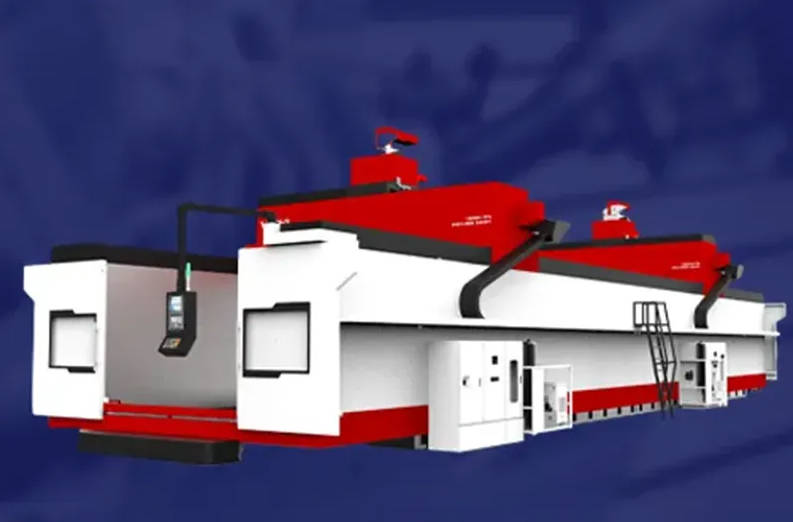
What Makes a CNC Gantry Machine Suitable for Large-Part Manufacturing?
A CNC gantry machine, also called a CNC gantry milling machine or gantry machining center, uses a bridge-like structure supported by columns. The spindle moves across the gantry beam and vertical axis, while the workpiece is placed on a large table, fixed platform, or floor-type work area.
Compared with smaller machining centers, the gantry structure provides:
- Larger X/Y/Z travel
- Wider working area
- Higher table load or stationary workpiece capacity
- Better support for large molds and structures
- Stronger heavy-cutting capability
- More stable machining over long travel
- Better suitability for oversized fixtures and tooling
- Optional angle head, tool magazine, probing, and chip removal systems
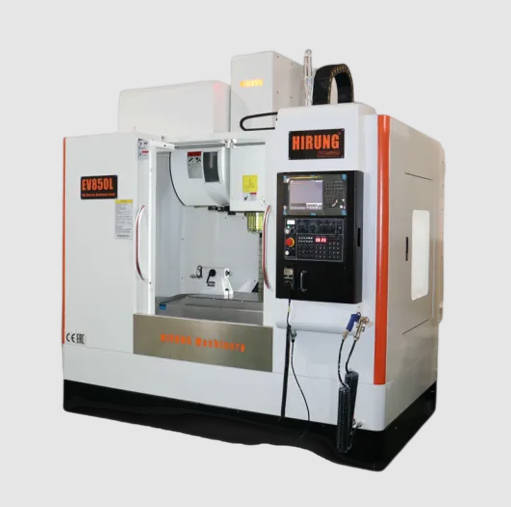
A CNC gantry machine is usually chosen when the workpiece size, weight, or required machining area exceeds the practical capacity of a standard vertical machining center.
This makes it a practical solution for industries where workpieces are large, high-value, and difficult to reposition.
Core Machining Processes Performed on CNC Gantry Machines
CNC gantry machines are not used for only one type of machining. They can perform multiple operations on large workpieces.
| Machining Process | Typical Use in Large-Part Manufacturing |
| Face milling | Large flat surfaces on molds, plates, bases, and frames |
| Rough milling | Removing heavy stock from castings, forgings, or welded structures |
| Finish milling | Achieving smoother surfaces and tighter dimensional control |
| Drilling | Creating large hole patterns on plates, frames, and structural parts |
| Boring | Machining accurate holes, bearing seats, and alignment features |
| Tapping | Producing threaded holes for assembly and fastening |
| Contour milling | Machining curved profiles and complex mold surfaces |
| Pocket machining | Removing material from large mold cavities or lightweight structures |
| Angle head machining | Processing side faces or angled surfaces when configured |
For large workpieces, reducing repositioning is important. Each time a large mold or structural part is moved, the manufacturer must re-locate, re-clamp, re-check, and re-align the workpiece. This increases labor time and may introduce accuracy risk. A gantry machine helps process more areas in one setup when the working envelope and machine configuration are suitable.
CNC Gantry Machine Applications in Mold and Die Manufacturing
Mold and die manufacturing is one of the most common application areas for CNC gantry machines. Large molds often require wide travel, high rigidity, heavy roughing, accurate finishing, and stable surface machining.
Large Injection Mold Bases
Injection mold bases can be large and heavy, especially for automotive, appliance, packaging, and industrial product molds. A gantry CNC machine can machine large surfaces, pockets, guide pin holes, mounting holes, cooling channels, and structural features.
Key requirements include:
- Large table size
- Strong spindle power
- Stable roughing capability
- Accurate hole position control
- Good surface finishing performance
- Tool magazine capacity for multi-process machining
For large mold bases, machine rigidity is critical because cutting force can be high during roughing. The machine must also maintain accuracy during finishing operations.
Automotive Molds and Dies
Automotive tooling often includes large stamping dies, forming dies, die casting molds, trim dies, and checking fixtures. These components require machining over large surfaces and sometimes complex 3D profiles.
A gantry machining center can be used for:
- Stamping die surfaces
- Die casting mold bases
- Automotive panel molds
- Structural tooling plates
- Large fixture bases
- Forming die components
- Trim die machining
For mold manufacturing, a CNC gantry milling machine is valuable because it can combine heavy roughing and large-surface finishing in one large working envelope.
Complex Mold Cavities and 3D Surfaces
Mold cavities may require curved surfaces, smooth transitions, and high surface quality. Depending on the machine configuration, a gantry machine with suitable spindle speed, rigidity, control system, and optional angle head can improve machining access and finishing efficiency.
For complex molds, buyers should evaluate spindle performance, guideway configuration, tool magazine, thermal stability, and whether the machine supports high-quality finishing toolpaths.
CNC Gantry Machine Applications in Aerospace Manufacturing
Aerospace manufacturing often involves large aluminum structures, precision frames, lightweight panels, tooling plates, and high-value components. Many aerospace parts require both size capacity and accuracy stability.
Aerospace Structural Components
Aerospace structures may include large plates, ribs, frames, brackets, and lightweight pocketed components. These parts often require extensive material removal while maintaining dimensional relationships across long distances.
A gantry CNC machine can support:
- Large aluminum structural parts
- Aircraft frame components
- Aerospace ribs and plates
- Lightweight pocketed structures
- Assembly tooling plates
- Large fixture components
- Aerospace mold and forming tools
In aerospace machining, workpiece value is high, so process stability matters. The machine must provide reliable cutting, repeatable positioning, and stable thermal behavior during long cycles.
Aerospace Tooling and Fixtures
Aerospace manufacturing requires many fixtures, jigs, inspection tools, forming tools, and assembly aids. These parts can be large and dimensionally demanding.
Typical gantry applications include:
- Assembly fixtures
- Checking fixtures
- Aerospace tooling plates
- Drilling templates
- Composite mold tooling
- Large aluminum or steel fixture bases
For tooling and fixtures, the machine must maintain flatness, hole location accuracy, and surface consistency over a large area.
Large Aluminum Plate and Panel Machining
Aerospace aluminum plates and panels may require pocketing, drilling, contour milling, and weight reduction. A CNC gantry machine can process large plates with long travel and stable support.
Important factors include:
| Aerospace Requirement | Machine Selection Focus |
| Large aluminum structures | High-speed spindle, chip evacuation, long travel |
| High-value components | Accuracy inspection, calibration, process stability |
| Lightweight pocketed parts | Rigidity, vibration control, toolpath stability |
| Fixture plates | Flatness, hole accuracy, table support |
| Long-cycle machining | Thermal stability, coolant, chip removal |
| Large tooling | Table load, gantry span, spindle torque |
For aerospace structural parts, CNC gantry machines are selected when manufacturers need large travel, stable precision, and reliable machining of high-value workpieces.
CNC Gantry Machine Applications in Machinery Manufacturing
Machinery manufacturing includes many large castings, welded frames, equipment bases, gearbox housings, industrial plates, and structural components. These parts often need roughing, finishing, drilling, boring, and surface machining.
Heavy Machinery Frames
Heavy machinery frames are often made from castings or welded structures. After fabrication, key mounting surfaces, holes, and alignment features must be machined.
CNC gantry machines are used for:
- Machine tool beds
- Industrial equipment frames
- Press machine bases
- Construction machinery frames
- Large welded structures
- Equipment mounting surfaces
- Structural steel components
For these parts, rigidity and table load are important. The workpiece may be too heavy to move frequently, so a column moving or floor-type gantry structure may be suitable.
Gearbox Housings and Large Mechanical Components
Large gearbox housings and mechanical bases require accurate holes, bearing seats, mounting surfaces, and flatness. A gantry machine can provide the working area and cutting stability needed for these features.
Typical operations include:
- Face milling
- Boring
- Drilling
- Tapping
- Slot machining
- Datum surface machining
- Large hole finishing
For machinery parts, the machine must support both rough machining and precise finishing.
Energy and Industrial Equipment Parts
Energy and industrial equipment manufacturing often requires large workpieces with high weight and complex machining surfaces.
Common applications include:
- Generator bases
- Wind power components
- Turbine-related housings
- Pump and valve bodies
- Large flanges
- Industrial mounting plates
- Heavy equipment bases
These parts often require strong spindle torque, stable structure, and careful workpiece loading planning.
CNC Gantry Machine Applications by Industry
| Industry | Typical Workpieces | Why Gantry Machine Is Used |
| Mold and die | Large mold bases, stamping dies, die casting molds | Large working area, rigidity, roughing and finishing |
| Aerospace | Structural parts, frames, ribs, tooling plates | Long travel, high-value precision, large aluminum machining |
| Machinery manufacturing | Frames, bases, housings, gearbox parts | Heavy workpieces, large surfaces, boring and drilling |
| Energy equipment | Generator bases, wind power parts, turbine housings | Large size, heavy load, strong spindle needs |
| Shipbuilding | Marine equipment bases, large plates, welded structures | Oversized parts and heavy-duty machining |
| Automotive tooling | Forming dies, checking fixtures, panel molds | Large mold surfaces and precise tooling |
| Rail and transportation | Long profiles, chassis parts, structural plates | Large travel and long workpiece machining |
Column Moving vs Table Moving Gantry Machines for Different Applications
CNC gantry machine applications are closely related to machine structure. Two important structures are column moving and table moving.
Column Moving Type
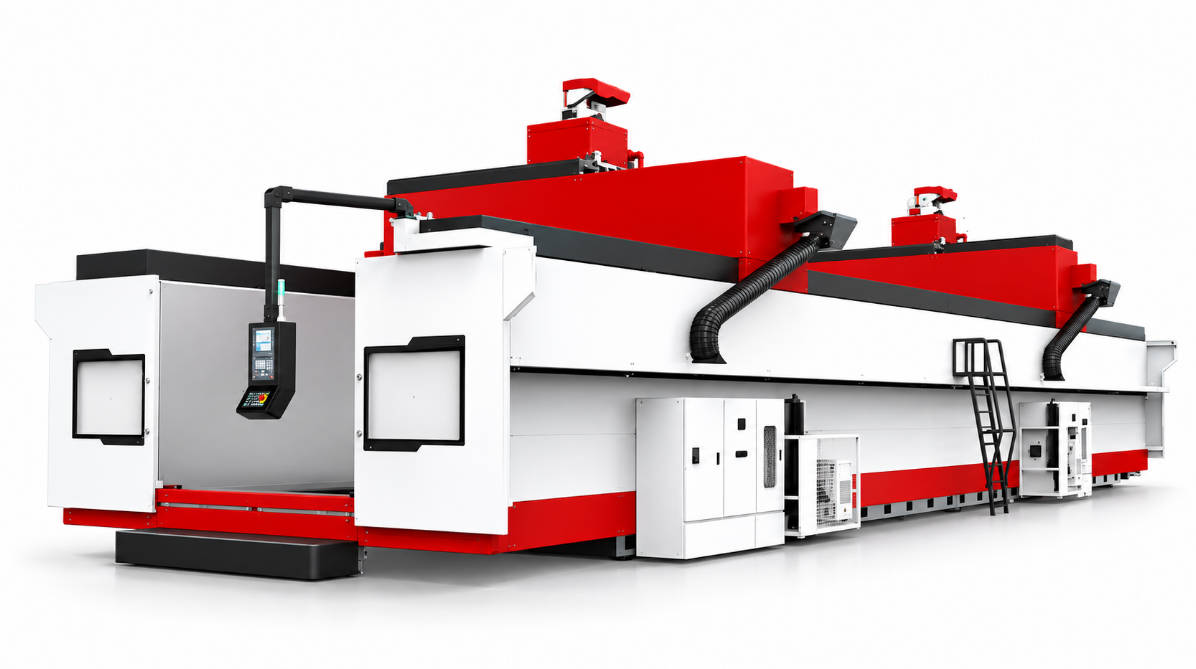
In a column moving gantry machine, the workpiece remains stationary while the gantry or column system moves. This is useful for very heavy workpieces because the machine does not need to move the full workpiece weight during machining.
The HPG Series column moving gantry machine is relevant for applications involving extra-large or heavy-duty workpieces.
Typical applications include:
- Heavy machinery frames
- Energy equipment parts
- Shipbuilding components
- Very large welded structures
- Oversized industrial bases
- Large heavy molds
Table Moving Type
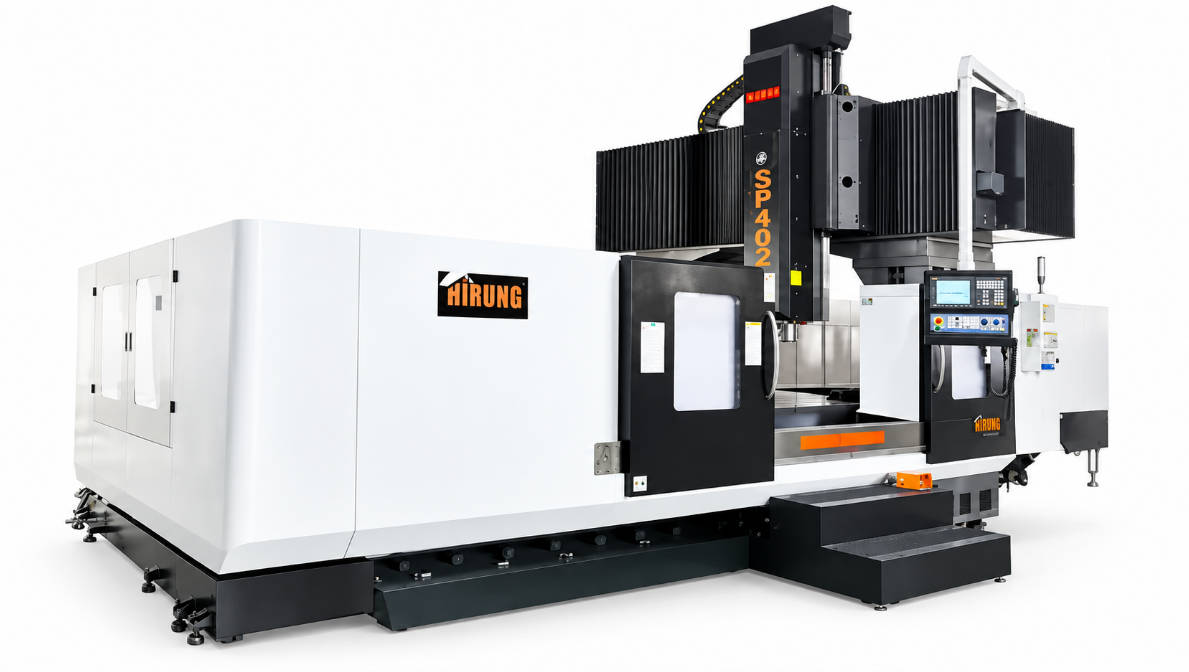
In a table moving gantry machine, the worktable moves with the workpiece. This structure is often considered for precision large parts, mold machining, plates, aerospace components, and structured workpieces where table movement is practical.
The SP Series CNC gantry machining center is relevant for buyers who need table moving type gantry machining for precision large-part production.
Typical applications include:
- Large mold bases
- Aerospace plates
- Automotive tooling
- Precision machinery plates
- Large structural parts
- High-rigidity finishing applications
| Application Need | More Suitable Direction |
| Extremely heavy stationary workpieces | Column moving gantry machine |
| Large mold finishing | Table moving gantry machining center |
| Energy equipment and shipbuilding | Column moving direction |
| Aerospace plates and structural parts | Table moving or custom gantry solution |
| Heavy roughing | Column moving or heavy-duty gantry structure |
| Precision large-surface machining | Table moving or high-rigidity gantry structure |
| Large custom production | Evaluate with drawings and loading method |
Key Benefits of CNC Gantry Machines in Industrial Applications
1. Large Workpiece Capacity
The gantry structure is designed for parts that exceed the capacity of standard machining centers. This is the core reason manufacturers choose gantry machines.
2. Heavy-Duty Cutting Capability
Large molds, castings, and welded structures often require heavy roughing. A gantry machine with suitable spindle power, torque, and rigidity can support demanding material removal.
3. Stable Machining Across Long Travel
Large parts require accuracy across wide working areas. A gantry machine is designed to maintain controlled movement over longer travel ranges.
4. Reduced Workpiece Repositioning
Large workpieces are difficult to move. A gantry machine can process more surfaces in one setup when the working range and tool access are suitable.
5. Flexible Configuration Options
Depending on the application, a gantry machine can be configured with different spindles, guideways, tool magazines, angle heads, measuring systems, chip conveyors, and control systems.
The main advantage of a CNC gantry machine is its ability to handle large, heavy, and high-value workpieces with a stable machining structure.
Important Specifications for CNC Gantry Machine Applications
Before buying a gantry machine, manufacturers should evaluate specifications based on their workpieces.
| Specification | Why It Matters |
| X/Y/Z travel | Determines machining range |
| Gantry span | Determines workpiece width and tool access |
| Distance between columns | Affects usable machining width |
| Table size | Determines workpiece and fixture capacity |
| Table load | Critical for heavy molds and machinery parts |
| Spindle taper | Affects tool size and cutting rigidity |
| Spindle power and torque | Important for heavy milling and hard materials |
| Spindle speed | Affects finishing and material removal |
| Guideway structure | Affects rigidity, damping, speed, and accuracy |
| Tool magazine | Supports multi-process machining |
| Angle head option | Helps side machining or complex access |
| Coolant and chip removal | Important for long-cycle production |
| Control system | Affects programming and machine operation |
| Measuring options | Supports setup and accuracy verification |
| Foundation requirement | Critical for machine stability |
| Installation support | Important for large equipment commissioning |
Common Mistakes When Selecting a CNC Gantry Machine for Applications
Mistake 1: Choosing Only by Machine Travel
A large travel range does not guarantee machining performance. Buyers also need to check rigidity, spindle power, table load, guideways, thermal stability, and accuracy.
Mistake 2: Ignoring Workpiece Weight
The workpiece may fit within the machine range but exceed the table load or movement capability. Always calculate workpiece weight plus fixture and clamping weight.
Mistake 3: Not Considering Loading Method
Large workpieces may require crane loading, forklift access, open working space, or special fixtures. Loading method should be considered before machine purchase.
Mistake 4: Underestimating Foundation Requirements
A large gantry machine needs proper foundation, leveling, and installation conditions. Poor foundation can reduce machining accuracy and long-term stability.
Mistake 5: Comparing Prices Without Configuration Details
Two gantry machines may have similar travel but different spindle, control system, guideways, tool magazine, accuracy inspection, chip removal, and optional accessories.
How to Choose a CNC Gantry Machine for Mold, Aerospace or Machinery Parts
Start by defining your main application.
| Question | Why It Matters |
| What is the largest workpiece size? | Determines travel and gantry span |
| What is the maximum workpiece weight? | Determines table load or column moving structure |
| What materials will be machined? | Determines spindle power, torque, and rigidity needs |
| Is roughing or finishing more important? | Affects spindle and guideway selection |
| What tolerance is required? | Determines accuracy and measuring needs |
| Does the part require drilling, boring, or tapping? | Determines tool magazine and spindle capability |
| Are side surfaces or angled features needed? | May require angle head or multi-axis options |
| How will the part be loaded? | Affects machine layout and workshop planning |
| Is batch production or custom machining required? | Affects automation and tooling needs |
| What future parts may be produced? | Prevents buying a machine that is too limited |
For buyers unsure about the right structure, the safest approach is to send workpiece drawings, material details, size, weight, tolerance, and process requirements to the supplier for configuration review.
How to Evaluate a CNC Gantry Machine Supplier
A reliable supplier should not only quote a model. It should help evaluate your workpiece, process, and workshop conditions.
Ask these questions:
| Supplier Question | Why It Matters |
| Which structure fits my application: column moving or table moving? | Prevents wrong structure selection |
| What travel and gantry span do I need? | Confirms workpiece compatibility |
| What table load is suitable? | Important for heavy molds and machinery parts |
| What spindle taper, power, and torque are recommended? | Affects cutting capability |
| What guideway configuration is suitable? | Affects rigidity, speed, and damping |
| Is a tool magazine required for my parts? | Determines machining-center functionality |
| Do I need an angle head? | Supports side machining and complex surfaces |
| What foundation should be prepared? | Reduces installation risk |
| What inspection and calibration are provided? | Supports accuracy verification |
| What after-sales service and spare parts support are available? | Reduces downtime risk |
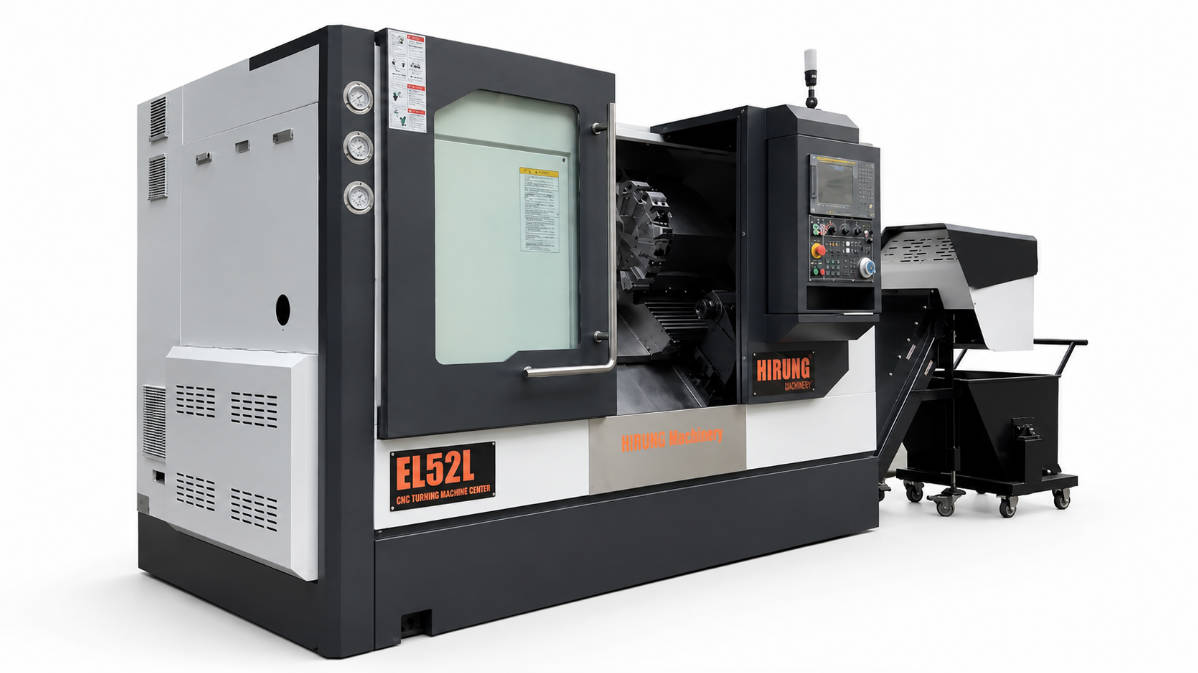
You can also visit the HIRUNG official website to compare other CNC machine categories and evaluate whether a gantry machine, vertical machining center, 5-axis machining center, or CNC lathe better fits your production plan.
When to Consider HIRUNG CNC Gantry Machines
HIRUNG CNC Gantry Machines can be considered by manufacturers processing large molds, aerospace structures, heavy machinery parts, energy equipment, shipbuilding components, precision plates, and large industrial frames.
The HIRUNG CNC Gantry Machine range is relevant when your production requires:
- Large workpiece machining
- High table load or stationary heavy workpiece setup
- Large mold and die machining
- Aerospace structural part machining
- Heavy machinery frame machining
- Energy and shipbuilding component machining
- High-rigidity roughing and finishing
- Long travel and wide gantry span
- Optional tool magazine, angle head, measuring, and chip removal systems
- Column moving or table moving structure comparison
For extra-large and heavy-duty workpieces, the HPG Series can be reviewed as a column moving gantry direction. For table moving type high-rigidity gantry machining, the SP Series can be evaluated based on workpiece size, accuracy needs, and production process.
FAQ
1. What are the main CNC gantry machine applications?
CNC gantry machine applications include large mold machining, aerospace structural parts, heavy machinery frames, energy equipment, shipbuilding components, automotive tooling, large plates, industrial bases, and precision oversized workpieces.
2. Why is a gantry CNC machine used for mold manufacturing?
A gantry CNC machine is used for mold manufacturing because it provides large travel, strong rigidity, heavy cutting capability, and stable surface machining for large mold bases, stamping dies, die casting molds, and automotive tooling.
3. Is a CNC gantry machine suitable for aerospace parts?
Yes. A CNC gantry machine can be suitable for aerospace structural parts, large aluminum plates, ribs, frames, fixture plates, and aerospace tooling when the machine offers sufficient travel, rigidity, accuracy, and spindle performance.
4. What machinery parts can be machined on a CNC gantry machine?
Machinery parts suitable for CNC gantry machining include heavy frames, machine tool beds, gearbox housings, industrial equipment bases, welded structures, large mounting plates, pump and valve bodies, and energy equipment components.
5. What is the difference between column moving and table moving gantry machines?
In a column moving gantry machine, the workpiece stays stationary while the gantry or columns move, which is useful for very heavy parts. In a table moving gantry machine, the table moves with the workpiece, which is often suitable for precision molds, plates, and structural parts.
6. What specifications matter most for CNC gantry machine selection?
Important specifications include X/Y/Z travel, gantry span, distance between columns, table size, table load, spindle taper, spindle power, spindle torque, guideway structure, tool magazine, angle head options, control system, chip removal, accuracy, and foundation requirements.
7. When should I choose a CNC gantry machine instead of a vertical machining center?
Choose a CNC gantry machine when your workpiece is too large or heavy for a vertical machining center, or when large-area machining, high table load, wide travel, heavy cutting, and large precision surface machining are required.
Conclusion
CNC gantry machine applications are concentrated in industries that require large workpiece capacity, stable rigidity, heavy cutting capability, and precision over long travel. Mold manufacturing, aerospace, machinery manufacturing, energy equipment, shipbuilding, transportation, and automotive tooling are all important application areas.
For mold manufacturers, gantry machines support large mold bases, die casting molds, stamping dies, and complex surface machining. For aerospace suppliers, they support large aluminum structures, tooling plates, and precision structural components. For machinery manufacturers, they help machine frames, bases, gearbox housings, welded structures, and heavy industrial parts.
The right gantry CNC solution should be selected based on real workpiece drawings, material, size, weight, tolerance, machining process, loading method, foundation, and future production needs. If your factory is machining large molds, aerospace structures, or heavy machinery parts, HIRUNG CNC Gantry Machines can be evaluated according to your application and configuration requirements.