CNC lathe machine applications include turning, facing, boring, threading, grooving, drilling, parting, and precision machining of round or rotational metal parts used in automotive and machinery industries. Typical parts include shafts, bushings, sleeves, pins, flanges, hydraulic fittings, gear blanks, bearing seats, connectors, rollers, pulleys, threaded parts, and many precision components that require stable diameter control and repeatable production.
In automotive and machinery manufacturing, CNC lathes are used because many critical parts have cylindrical features, concentric surfaces, threads, grooves, shoulders, holes, and tight dimensional requirements. A CNC lathe machine can process these parts efficiently by rotating the workpiece while cutting tools remove material according to a programmed path.
For manufacturers, the value of a CNC lathe is not only that it can “turn round parts.” The real value is repeatability, process stability, reduced manual operation, better batch consistency, and the ability to integrate automation such as bar feeders, parts catchers, automatic doors, and robot loading when production volume increases.
This article explains the major CNC lathe machine applications in automotive and machinery industries, the types of parts commonly produced, the key process advantages, and how buyers can choose a suitable CNC lathe for their production requirements.
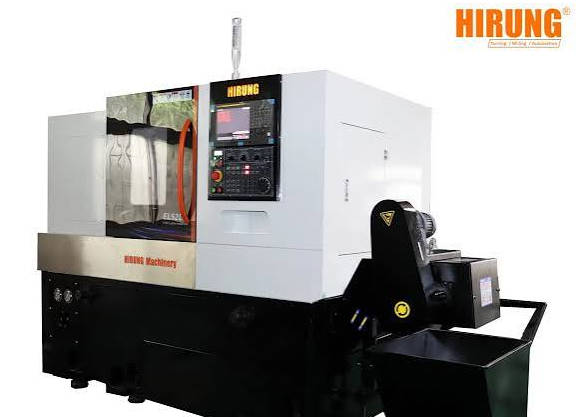
What Is a CNC Lathe Machine Used For?
A CNC lathe machine is mainly used to machine rotational parts. The workpiece is clamped in a chuck or collet and rotates around the spindle axis. Cutting tools mounted on a turret or tool post move along the X and Z axes to remove material.
Common CNC lathe operations include:
| Operation | What It Does | Typical Part Feature |
| Turning | Reduces outside diameter | Shafts, pins, sleeves |
| Facing | Machines the end surface | Flanges, bushings, caps |
| Boring | Enlarges or finishes internal holes | Sleeves, bearing seats |
| Drilling | Creates center or axial holes | Connectors, fittings |
| Threading | Cuts external or internal threads | Fastening parts, hydraulic fittings |
| Grooving | Produces grooves or relief cuts | Seal grooves, retaining ring grooves |
| Parting | Separates finished parts from bar stock | Small batch or bar-fed parts |
| Chamfering | Removes sharp edges | Assembly-ready components |
A CNC lathe is most suitable for parts where the main geometry is round, cylindrical, conical, threaded, or symmetrical around a central axis.
In automotive and machinery industries, this makes CNC lathes essential for high-volume and precision production.
Why CNC Lathe Machines Matter in Automotive and Machinery Manufacturing
Automotive and machinery industries both require parts that must fit, rotate, seal, support, transmit force, or connect with other components. Small dimensional errors can create assembly problems, vibration, leakage, premature wear, or unstable machine performance.
CNC lathe machines help manufacturers improve:
- Dimensional repeatability
- Surface finish stability
- Concentricity control
- Thread consistency
- Shaft and hole accuracy
- Batch production efficiency
- Tool change efficiency
- Process automation
- Labor cost control
- Production traceability
For automotive suppliers, repeatability is especially important because parts are often produced in batches and must meet consistent assembly requirements. For machinery manufacturers, CNC turning supports both standard components and customized parts for equipment, pumps, hydraulic systems, conveyors, gearboxes, agricultural machinery, and industrial production lines.
CNC Lathe Machine Applications in the Automotive Industry
Automotive manufacturing includes many rotational, threaded, and precision metal parts. CNC lathes are widely used by suppliers producing components for engines, transmissions, chassis systems, steering systems, braking systems, suspension systems, electric vehicles, and general automotive assemblies.
1. Shafts and Pin-Type Components
Shafts and pins are among the most common CNC lathe applications in automotive production. These parts often require accurate outer diameters, shoulders, grooves, chamfers, threads, and end-face machining.
Typical automotive shaft and pin parts include:
- Transmission shafts
- Motor shafts
- Gear shafts
- Pivot pins
- Guide pins
- Steering-related pins
- Brake system pins
- Suspension pins
- EV motor-related shafts
For shaft production, key machine requirements include spindle stability, tailstock support, machining length, chuck capacity, and tool rigidity. Long or slender shafts may require tailstock support to reduce vibration and deflection.
2. Bushings, Sleeves, and Bearing-Related Parts
Bushings and sleeves are used in rotating or sliding assemblies. They often require good internal and external diameter control, concentricity, surface finish, and sometimes oil grooves or chamfers.
Common parts include:
- Bearing sleeves
- Spacer sleeves
- Guide bushings
- Shock absorber bushings
- Transmission sleeves
- Motor housing sleeves
- Suspension bushings
- Precision cylindrical spacers
For bushings and sleeves, spindle bore, boring accuracy, tool stability, and surface finish control are critical because both internal and external diameters may affect assembly fit.
If the parts are produced from bar stock, maximum bar feeding diameter becomes an important specification.
3. Flanges and Disc-Type Components
Automotive flange and disc-type components may require facing, turning, grooving, drilling, boring, and chamfering. Some parts may also require secondary milling or drilling operations.
Typical components include:
- Hub-related blanks
- Pulley blanks
- Coupling flanges
- Mounting flanges
- Spacer discs
- Brake-related turned blanks
- Round covers
For these parts, chuck size, maximum turning diameter, spindle torque, and machine rigidity are important. Larger flanges may require stronger clamping force and stable cutting performance.
4. Threaded Automotive Parts
Threaded parts are common in automotive assemblies. CNC lathes can cut both internal and external threads with good repeatability when properly programmed and tooled.
Examples include:
- Threaded connectors
- Fastening sleeves
- Sensor fittings
- Hydraulic adapters
- Brake line fittings
- Fuel system fittings
- EV cooling system fittings
Thread quality depends on spindle control, feed synchronization, tool condition, material behavior, coolant, and inspection. For high-volume threaded parts, automation may improve consistency and reduce manual handling.
5. Electric Vehicle and New Energy Vehicle Components
Electric vehicles and hybrid systems also use many precision turned parts. These may include motor shafts, aluminum sleeves, connectors, cooling system fittings, battery-related cylindrical components, and precision spacers.
Compared with conventional automotive components, EV parts may involve lighter materials, tighter assembly requirements, and higher expectations for surface quality and dimensional stability.
A suitable CNC turning solution may include bar feeding, automatic parts catching, servo turret, tool setter, and chip management to support repeat production.
CNC Lathe Machine Applications in the Machinery Industry
The machinery industry covers a broad range of equipment, including industrial machines, agricultural equipment, hydraulic systems, pumps, gearboxes, conveyors, construction machinery, packaging machinery, textile machinery, and automation equipment.
CNC lathes are used to produce both standard parts and customized mechanical components.
1. Machinery Shafts
Shafts are used to transmit rotation, support bearings, locate components, or connect mechanical assemblies. CNC lathes are widely used for shaft turning because they can control diameters, shoulders, grooves, tapers, threads, and end faces.
Common machinery shaft parts include:
- Drive shafts
- Motor shafts
- Gearbox shafts
- Pump shafts
- Conveyor shafts
- Roller shafts
- Spindle shafts
- Agricultural machinery shafts
For longer shafts, tailstock configuration and machining length are essential. For high-precision shafts, spindle runout, guideway stability, and tool rigidity should be evaluated carefully.
2. Hydraulic and Pneumatic Components
Hydraulic and pneumatic parts often require accurate threads, sealing surfaces, grooves, internal bores, and smooth finishes. CNC lathes are commonly used for these components because many of them are rotational parts.
Typical parts include:
- Hydraulic fittings
- Valve bodies
- Pistons
- Cylinder rods
- End caps
- Connectors
- Sleeves
- Sealing components
- Pneumatic fittings
For hydraulic parts, surface finish and dimensional accuracy can affect sealing performance. Tool wear, burr control, thread quality, and groove accuracy should be controlled during production.
3. Bushings, Spacers, and Coupling Parts
Machinery assemblies often use bushings, spacers, collars, and couplings to locate or connect rotating elements.
CNC lathes are suitable for these parts because they can efficiently machine:
- OD and ID diameters
- Shoulders
- Chamfers
- Grooves
- Threads
- End faces
- Internal bores
These components may be produced in small batches for custom machinery or in larger quantities for standard equipment manufacturing.
4. Rollers and Cylindrical Components
Rollers are used in conveyors, printing equipment, packaging machines, textile machinery, and industrial automation systems. Depending on the application, they may require straightness, surface finish, diameter consistency, and end machining.
For roller machining, workpiece length, tailstock support, chuck stability, and cutting strategy are important. If the roller is long and heavy, machine bed length and rigidity must be evaluated carefully.
5. Gear Blanks and Pulley Blanks
Before gear cutting or pulley finishing, blanks often need turning operations. CNC lathes can machine the outer diameter, bore, face, chamfer, and hub features.
Typical applications include:
- Gear blanks
- Pulley blanks
- Sprocket blanks
- Timing pulley blanks
- Coupling blanks
- Wheel-type parts
These parts may later go through milling, gear hobbing, broaching, grinding, or other secondary processes. CNC turning helps prepare the geometry for downstream operations.
Automotive vs Machinery CNC Lathe Applications
Although automotive and machinery industries both use CNC lathes, their production priorities may differ.
| Factor | Automotive Industry | Machinery Industry |
| Production volume | Often medium to high | Small batch to medium batch; sometimes high volume |
| Part variety | Many standardized part families | More customized and varied parts |
| Accuracy focus | Repeatability and assembly consistency | Function, fit, durability, and customization |
| Common parts | Shafts, bushings, fittings, sleeves, connectors | Shafts, rollers, hydraulic parts, spacers, couplings |
| Automation need | Often higher for batch production | Depends on part variety and volume |
| Machine priority | Bar feeding, turret efficiency, repeatability | Flexibility, length capacity, rigidity, tailstock |
| Cost concern | Cycle time and per-part cost | Versatility and workpiece range |
Automotive suppliers often prioritize repeatable batch production, while machinery manufacturers often prioritize flexibility across different part sizes and part types.
This difference should influence machine selection.
Key CNC Lathe Specifications for Automotive and Machinery Parts
When selecting a CNC lathe for automotive or machinery applications, buyers should evaluate several key parameters.
| Specification | Why It Matters |
| Swing over bed | Defines maximum rotating clearance |
| Maximum turning diameter | Determines practical part diameter capacity |
| Maximum machining length | Important for shafts, rods, and rollers |
| Chuck size | Affects clamping capacity and workpiece range |
| Spindle bore | Critical for bar-fed production |
| Maximum bar feeding diameter | Determines automatic bar stock compatibility |
| Spindle speed | Affects productivity and surface finish |
| Spindle power | Affects heavy cutting and difficult materials |
| X/Z-axis travel | Determines tool movement and part coverage |
| Y-axis option | Supports off-center drilling or milling in some models |
| Turret tool stations | Affects process flexibility and cycle efficiency |
| Tailstock travel | Supports long and slender workpieces |
| Control system | Affects operation, programming, and serviceability |
| Chip conveyor | Important for continuous production |
| Parts catcher and bar feeder | Useful for automated batch turning |
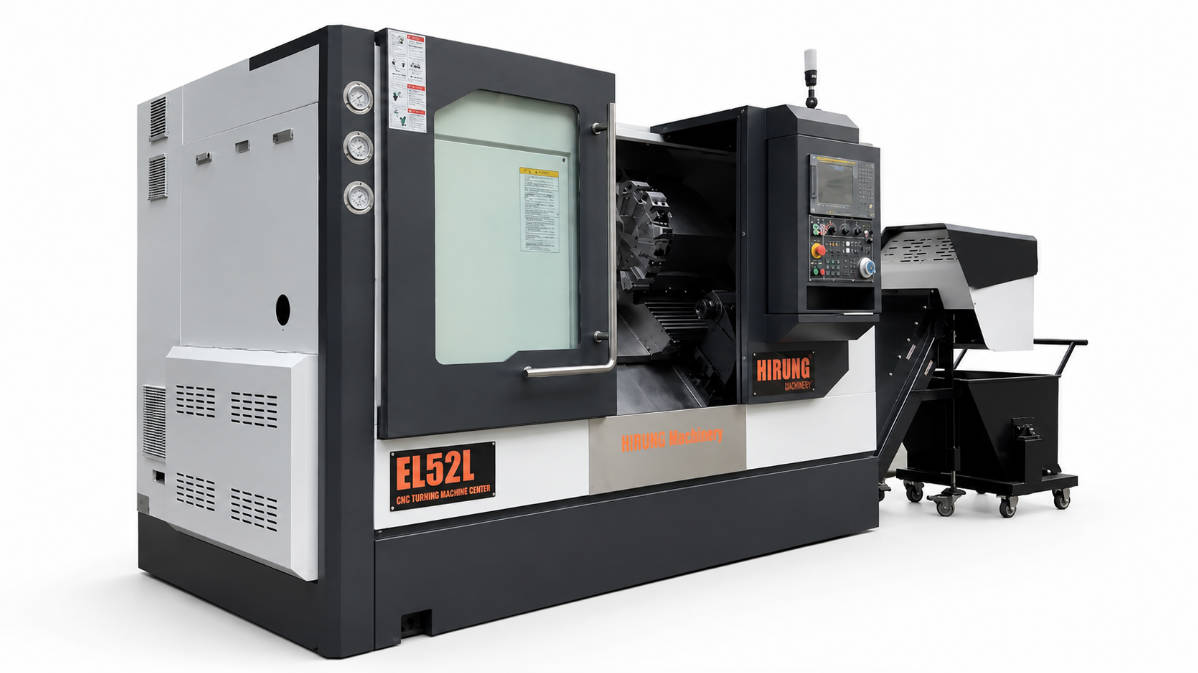
The HIRUNG CNC Lathe Machine EL Series provides multiple model options with different turning capacities, chuck sizes, spindle bores, bar feeding diameters, tool stations, tailstock configurations, and optional automation accessories.
How CNC Lathe Machines Improve Production Efficiency
CNC lathe machines improve efficiency in several ways.
Stable Programmed Machining
Once a process is programmed and verified, the machine can repeat the same operations with consistent tool movements. This reduces dependence on manual skill and improves repeatability.
Multi-Tool Turret Machining
A turret allows multiple tools to be prepared in the machine. The machine can switch between turning, drilling, boring, threading, grooving, and chamfering tools during one cycle.
This reduces manual tool changes and improves cycle efficiency.
Bar Feeding for Batch Production
For small and medium turned parts, a bar feeder can improve production continuity. The machine can process parts from bar stock, cut off finished components, and continue production with less manual loading.
Parts Catching and Automation
Automatic parts catchers, automatic doors, and robot loading can reduce manual handling and support higher-volume production.
For automotive and machinery parts produced in batches, automation options can reduce labor intensity and improve production consistency when the part design and volume justify the investment.
Better Process Control
CNC machining allows manufacturers to control cutting parameters, tool offsets, threading cycles, and inspection routines. This supports stable production of parts with repeated features.
Choosing a CNC Lathe for Automotive Parts
When choosing a CNC lathe for automotive parts, focus on repeatability, automation, bar capacity, turret efficiency, and process stability.
Important questions include:
| Question | Why It Matters |
| Are the parts produced from bar stock? | Determines spindle bore and bar feeder needs |
| What is the maximum turning diameter? | Determines machine size and chuck selection |
| Are there many threaded features? | Affects threading control and tool requirements |
| Is high-volume production expected? | Supports automation investment |
| Are parts short or long? | Determines tailstock and machining length needs |
| Are secondary milling operations required? | May require Y-axis, C-axis, or live tooling |
| What tolerance is required? | Affects accuracy and inspection needs |
| What material is used? | Affects spindle power, torque, coolant, and tooling |
For automotive suppliers, reducing cycle time and maintaining stable quality are often major goals.
Choosing a CNC Lathe for Machinery Parts
Machinery parts may vary more in size, length, and batch quantity. Therefore, flexibility is often important.
Important questions include:
| Question | Why It Matters |
| Do you machine long shafts or rollers? | Determines Z-axis travel and tailstock need |
| Do part sizes vary frequently? | Requires flexible chuck and tooling setup |
| Are parts heavy or difficult to clamp? | Affects spindle, chuck, and machine structure |
| Do you produce hydraulic components? | Requires thread, groove, and sealing surface control |
| Do you produce custom parts? | Requires flexible programming and setup |
| Is automation needed? | Depends on part repeatability and volume |
| What materials are used? | Affects cutting strategy and spindle selection |
For machinery manufacturers, a CNC lathe should provide enough flexibility for both standard production and customized components.
Common Mistakes When Selecting CNC Lathes for These Industries
Mistake 1: Choosing Only by Price
A low-cost machine may not have enough spindle power, turning length, bar capacity, turret stations, or automation support. This can limit production and increase long-term cost.
Mistake 2: Ignoring Spindle Bore
For automotive fittings, connectors, bushings, and small turned parts, bar feeding may be important. If the spindle bore is too small, automation becomes limited.
Mistake 3: Forgetting Tailstock Requirements
Long shafts and slender machinery components may require tailstock support. Without it, vibration and deflection can reduce part quality.
Mistake 4: Underestimating Tool Station Needs
Complex parts may require turning, boring, drilling, threading, grooving, chamfering, and parting tools. Too few tool stations can increase manual intervention.
Mistake 5: Not Planning for Future Automation
If production volume grows, bar feeders, parts catchers, automatic doors, or robot loading may become useful. Buyers should consider whether the machine can support future upgrades.
How to Evaluate a CNC Lathe Supplier
A reliable supplier should help match the machine to your part drawings and production goals. Before purchasing, ask practical questions.
| Supplier Question | Why It Matters |
| Which CNC lathe model fits my part drawings? | Prevents wrong machine selection |
| What turning diameter and machining length are recommended? | Confirms part compatibility |
| What spindle bore and bar capacity do I need? | Important for batch production |
| Do I need a tailstock? | Important for shafts and long parts |
| How many turret stations are suitable? | Affects process flexibility |
| Should I consider Y-axis or live tooling? | Reduces secondary operations when needed |
| What chip conveyor and coolant options are available? | Supports continuous production |
| What automation options are available? | Helps plan productivity upgrades |
| What accuracy inspection is provided? | Supports quality verification |
| What after-sales support and spare parts service are available? | Reduces downtime risk |
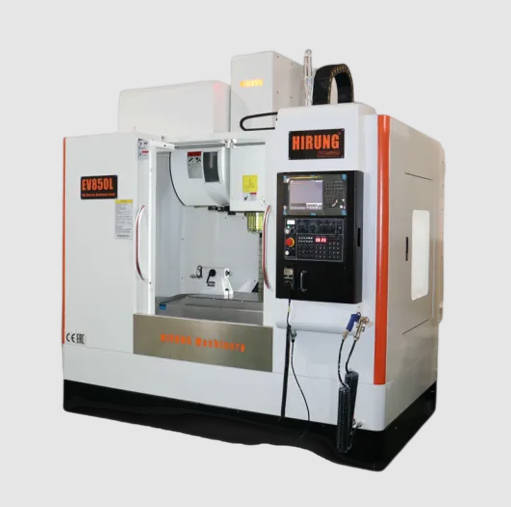
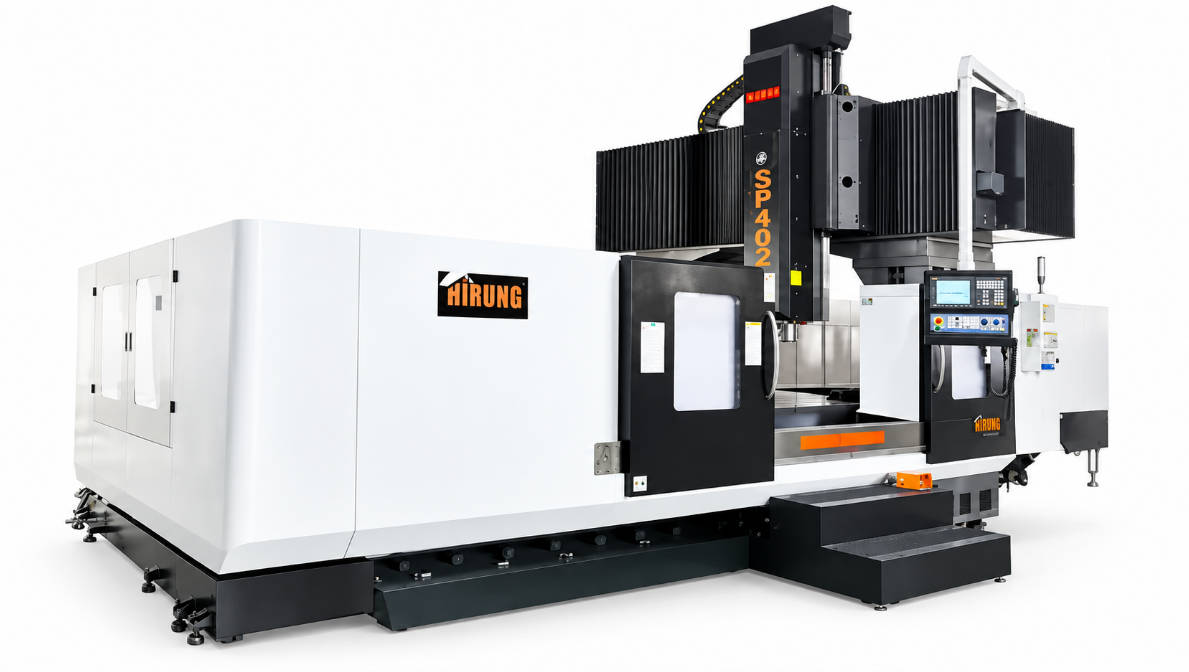
You can also visit the HIRUNG official website to review broader CNC machine categories and compare whether a CNC lathe, vertical machining center, 5-axis machine, or gantry machining center is more suitable for your production plan.
When to Consider HIRUNG EL Series CNC Lathe Machines
HIRUNG EL Series CNC Lathe Machines can be considered by manufacturers producing automotive components, machinery parts, shafts, bushings, sleeves, pins, hydraulic fittings, flanges, connectors, rollers, and precision turned parts.
The HIRUNG EL Series CNC Lathe Machine is relevant when your production requires:
- Multiple model options for different part sizes
- Suitable turning diameter and machining length
- Chuck size options for different workpieces
- Spindle bore and bar feeding diameter for bar stock production
- Spindle speed and spindle power matched to materials
- Tool stations for multi-process turning
- Tailstock support for long workpieces
- FANUC control system option
- Linear guideway and ball screw configuration
- Cooling, lubrication, oil-water separation, and chip management
- Optional bar feeder, parts catcher, automatic door, robot arm, or FMS planning
Before requesting a quotation, prepare your part drawings, material information, maximum diameter, maximum length, bar diameter, tolerance requirements, batch size, and automation expectations. This allows the supplier to recommend a more suitable model and configuration.
FAQ
1. What are the main CNC lathe machine applications?
CNC lathe machine applications include turning shafts, bushings, sleeves, pins, flanges, hydraulic fittings, threaded connectors, rollers, pulleys, gear blanks, bearing seats, and other round or rotational metal parts.
2. How is a CNC lathe used in automotive manufacturing?
A CNC lathe is used in automotive manufacturing to produce shafts, pins, bushings, sleeves, threaded fittings, flanges, pulleys, connectors, and EV-related cylindrical parts that require repeatable diameter control and stable batch production.
3. What machinery parts can be made on a CNC lathe?
Machinery parts made on a CNC lathe include drive shafts, pump shafts, rollers, hydraulic fittings, pistons, bushings, spacers, coupling parts, gear blanks, pulley blanks, sleeves, and custom cylindrical components.
4. What CNC lathe specifications matter for automotive parts?
Important specifications include turning diameter, machining length, chuck size, spindle bore, bar feeding diameter, spindle speed, spindle power, turret tool stations, tailstock support, control system, accuracy, and automation options.
5. Is a CNC lathe suitable for shaft production?
Yes. A CNC lathe is suitable for shaft production because it can machine outer diameters, shoulders, grooves, threads, chamfers, and end faces. Long shafts may require sufficient Z-axis travel and tailstock support.
6. Do CNC lathes support automated production?
Yes. CNC lathes can support automated production with bar feeders, parts catchers, automatic doors, robot loading, chip conveyors, and other options when production volume and part design justify automation.
7. How do I choose a CNC lathe for machinery parts?
Choose a CNC lathe for machinery parts based on part diameter, length, material, tolerance, surface finish, batch size, spindle bore, chuck size, tailstock need, tool station number, chip management, and automation requirements.
Conclusion
CNC lathe machine applications are essential in both automotive and machinery industries because many industrial components are round, threaded, grooved, bored, or shaft-like. A CNC lathe can produce parts such as shafts, bushings, sleeves, pins, flanges, hydraulic fittings, connectors, rollers, pulleys, and precision turned components with repeatable quality.
For automotive manufacturers, the main value of CNC turning is stable batch production, bar-fed efficiency, repeatability, and integration with automation. For machinery manufacturers, the main value is flexibility across shafts, rollers, hydraulic components, custom parts, and different material types.
The right CNC lathe should be selected based on real part requirements, including diameter, length, material, tolerance, batch size, bar feeding needs, tailstock support, turret tool capacity, spindle power, control system, and future automation plan. If your company is evaluating a CNC lathe for automotive or machinery parts production, reviewing the HIRUNG EL Series can help you match machine specifications with your manufacturing goals.