Selecting a cost-effective CNC machine for your workshop comes down to one discipline: match the machine type, working envelope, accuracy class and control system to the parts you actually produce, and then judge every option on total cost of ownership rather than on the price tag alone. A cost-effective CNC machine is not the cheapest machine on the market — it is the machine that delivers the lowest cost per good part over its working life. For workshops across Europe and Australia, where energy, labor and freight costs run high, that distinction often decides whether a new machine pays for itself quickly or quietly drains the budget for years.
This guide walks through the selection process step by step: defining what cost-effectiveness really means, matching machine architecture to your workpieces, sizing the machine correctly, evaluating accuracy and build quality, and accounting for the costs that continue long after delivery.
What “Cost-Effective” Actually Means for a CNC Machine
In machine-tool purchasing, the invoice is only one component of what a machine costs. In many workshop purchases the initial price is just one part of a ten-year ownership picture that includes installation, tooling, energy, spares and downtime. A genuinely cost-effective CNC machine balances four elements:
- Purchase price — the machine itself, standard accessories, freight and installation.
- Capability fit — travel, table load, spindle power and accuracy matched to the real parts you run, with no expensive surplus.
- Running costs — electricity, tooling, consumables, maintenance and spare parts.
- Reliability and support — uptime, spare-part availability and service response in your region.
When any one of these is ignored, a “cheap” machine frequently turns into an expensive one. A machine that is undersized for your fixtures forces extra setups on every job; one with weak regional support can idle a workshop for weeks while a part ships from overseas.
Step 1: Match the Machine Type to Your Workpieces
The first and largest cost decision is architectural. Buying the wrong family of machine — at any price — is never cost-effective. The table below summarizes how the main CNC machine types compare for a typical workshop portfolio:
| Machine type | Best suited for | Typical capacity (HIRUNG range) | Why it is cost-effective |
|---|---|---|---|
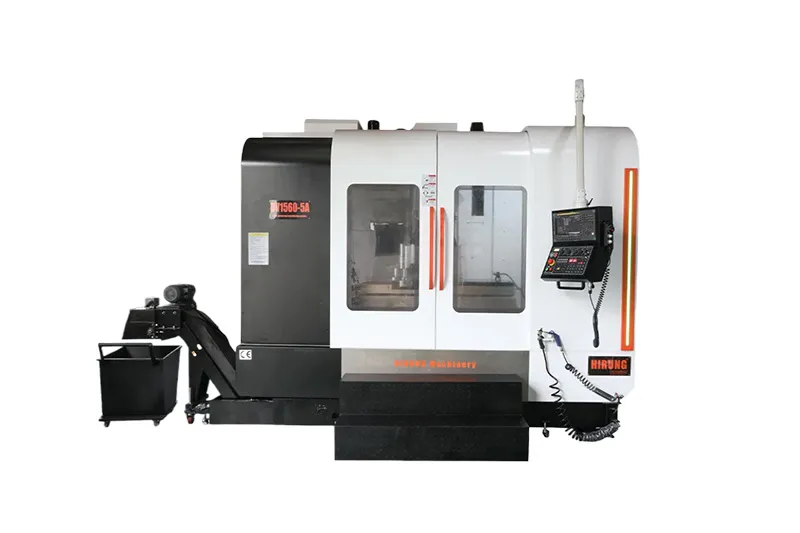
| Vertical machining center (VMC) | Prismatic parts, molds, plates, fixtures, small-to-medium batches | EV Series: X-axis travel ≈ 600–1,800 mm; table load 350–2,000 kg | The default all-rounder; lowest cost per prismatic part |
| CNC gantry machine | Large, heavy workpieces | SP Series table load up to 30,000 kg; HPG column-moving travels beyond 12,000 mm | Rigidity for oversized parts that a VMC cannot hold |
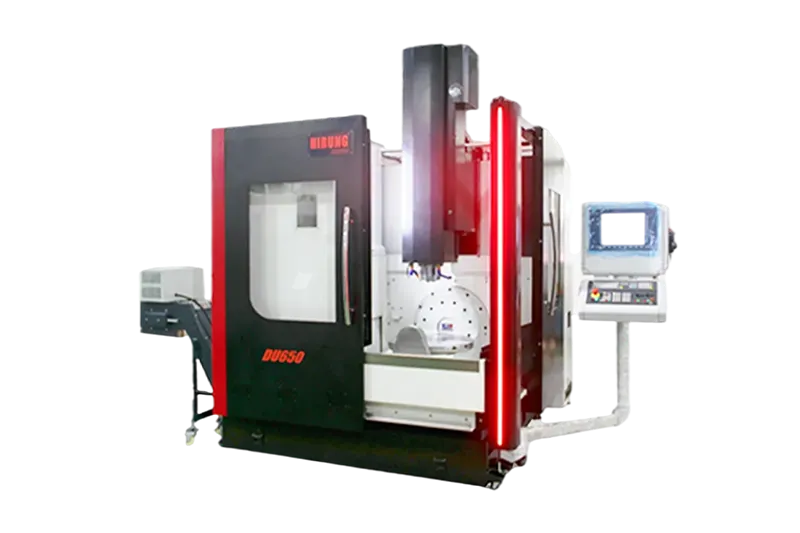
| 5-axis machining center | Complex multi-face parts (aerospace, automotive, medical geometry) | DU / DV / DC series configurations | Consolidates multiple setups, cutting fixture cost and cumulative error |
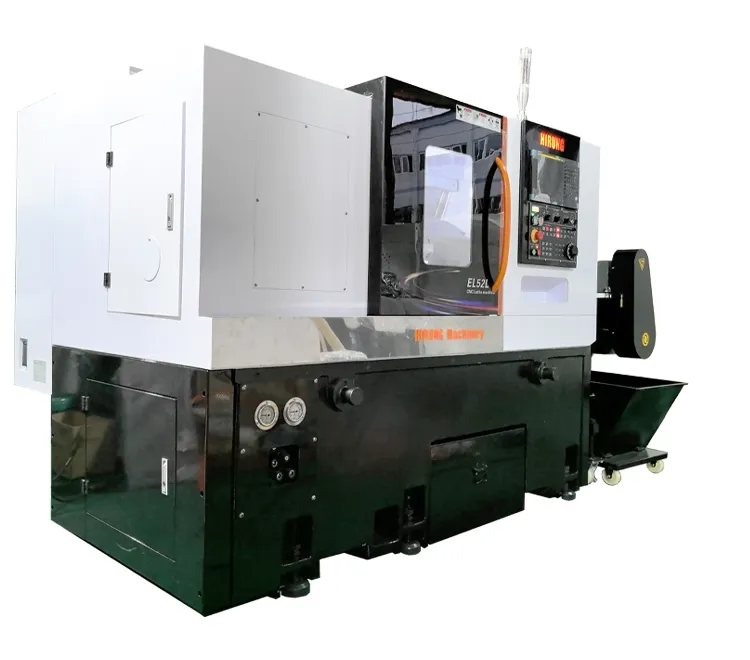
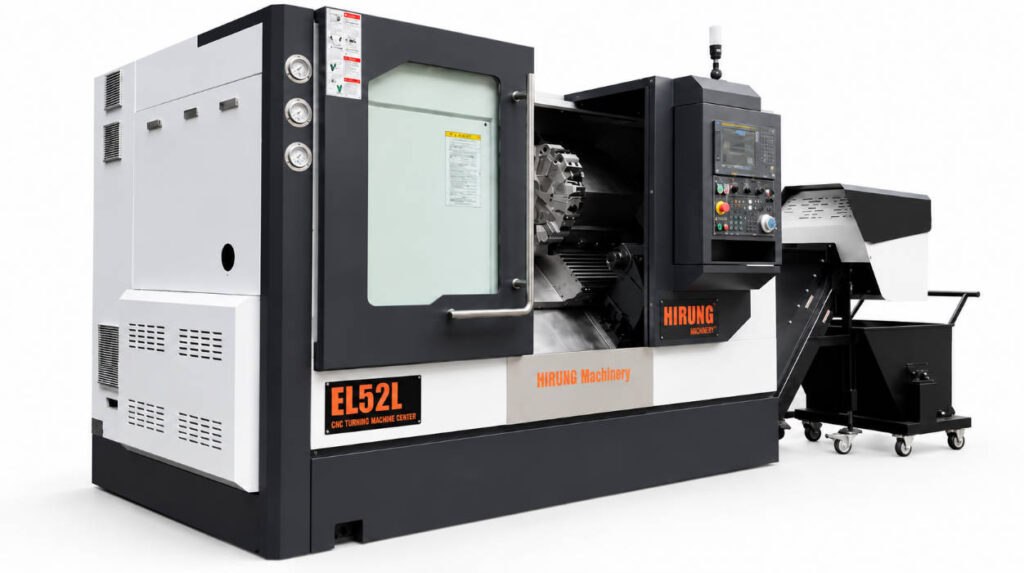
| CNC lathe / turning center | Shafts, bushings, flanges, discs and other rotational parts | EL Series turning centers | The fastest, cheapest route to rotationally symmetric parts |
For most small and medium workshops, a vertical machining center is the workhorse: one machine covers milling, drilling, tapping and boring in a single setup, with a 24-tool arm-type automatic tool changer (optional up to 32) and a choice of FANUC, SIEMENS or MITSUBISHI controls. If your parts are prismatic and fit inside roughly a 600–1,800 mm envelope, this is usually where the budget works hardest.
When workpieces outgrow a VMC — large weldments, base plates, machinery beds — a CNC gantry machine becomes the cost-effective answer. The fixed-bridge or column-moving structure carries heavy cutting loads with far better damping than an extended VMC, and with SP-series table loads of up to 30 tons, one machine can replace several smaller ones that would otherwise struggle with the same parts.
Shops machining complex parts that currently need four or five separate setups should compare a 5-axis machining center. The machine itself costs more, but consolidating operations removes fixtures, handling and re-clamping error — and in many aerospace, automotive and medical applications the result is a lower cost per finished part, not a higher one.
Finally, if your order book is dominated by shafts, pins, bushings and flanges, an EL Series CNC lathe will out-produce any milling machine on those geometries. Turning rotationally symmetric parts is inherently faster and cheaper; forcing them onto a machining center is a common and avoidable waste of capacity.
Step 2: Size the Machine Correctly
Oversizing wastes capital, floor space and energy; undersizing strangles production. Four practical rules keep the sizing honest:
- Travel: X-axis travel should exceed your largest regular part plus a fixture allowance. In the HIRUNG EV series, travel spans roughly 600 mm to 1,800 mm, so most workshop parts are covered by one of eight models.
- Table load: keep your working loads comfortably below the rated maximum — the rating includes fixtures, clamps and work-holding, not just the part.
- Spindle: match power and speed to your materials. Spindle options of 6,000–12,000 rpm and 7.5–18.5 kW across the EV range cover everything from aluminum plates to steel molds.
- Tool magazine: count the tools your typical part family actually needs. A 24-tool arm-type ATC handles most mixed production without manual intervention.
The most expensive capacity is the capacity you never use. Buying the next size up “just in case” ties up budget that could fund tooling, a second shift of work, or simply cash reserves — while buying too small multiplies setups and fixes nothing.
Step 3: Evaluate Accuracy and Build Quality
Two machines with identical travels can differ enormously in what they hold over a full production shift. Accuracy that collapses with heat or wear is the hidden cost in a “bargain” machine. When comparing offers, look past the brochure and inspect the construction:
- Base material and treatment: a stress-relieved, high-grade cast iron base is the foundation of long-term accuracy. HIRUNG machines use Mehanite cast iron with controlled heat treatment and hand-scraped critical interfaces.
- Drive components: Class C3 double-nut ball screws and premium linear guides or hardened box ways, depending on the duty of the machine.
- Verified accuracy figures: HIRUNG gantry-class machines are documented at positioning accuracy ≤ 0.010 mm and repeatability of ± 0.003 mm; the EV series specification tables quote ± 0.005 mm positioning and ± 0.002 mm repeatability (ISO 230-2).
- Thermal stability: active spindle oil cooling keeps thermal displacement below 0.005 mm — the difference between parts that pass inspection at 4 p.m. and parts that do not.
- Independent verification: every HIRUNG machine is checked with a Renishaw laser interferometer and ballbar system before shipment.
Ask every supplier for the actual inspection record of the machine you are buying, not a generic brochure number. A manufacturer that tests each machine individually and can show you the report is a manufacturer whose accuracy claims you can plan a production schedule around.
Step 4: Choose a Control System Your Team Can Run
FANUC, SIEMENS and MITSUBISHI controls — the systems offered across the HIRUNG range — are all proven, widely supported platforms. For a workshop buyer, the cost-effective choice is usually the system your programmers already know: retraining costs, scrapped first articles and recruitment difficulty are real money. All three enjoy mature spare-part and service networks in Europe and Australia, so there is rarely a reason to accept an unfamiliar control to save a marginal amount on the quotation.
Step 5: Calculate the Costs That Continue After Delivery
Total cost of ownership is where cost-effectiveness is truly decided. Before signing, put numbers against the following:
| Cost item | Why it matters | What to check before you buy |
|---|---|---|
| Energy | Runs every hour the spindle turns; significant where power prices are high | Spindle power rating, rapid traverse rates (up to 48 m/min on selected EV models shorten non-cutting time) |
| Tooling and holders | Consumed continuously in production | Spindle taper (BT40 / BT50 in the EV range), what tooling is included |
| Spare parts and service | Downtime is the most expensive item of all | Regional parts stock, service response in Europe / Australia, component commonality |
| Maintenance design | Modular machines are faster to service | Accessibility of wear parts, quality of documentation |
| Training and programming | Productivity depends on the operator, not just the machine | Post-processors for your control, onboarding support |
| Freight and installation | Heavy machines need proper foundations and rigging | Foundation requirements, machine weight (EV net weights run 4,500–15,500 kg) |
Energy prices in much of Europe and freight distances within Australia make these line items larger than many buyers expect. A machine engineered for maintenance convenience — modular components and durable wear parts, as HIRUNG designs across its range — reduces both the frequency and the duration of service stops, which is precisely what cost per part depends on.
Common Mistakes Workshops Make When Buying on a Budget
| Mistake | Typical consequence | How to avoid it |
|---|---|---|
| Buying on purchase price alone | Poor surface finish, early wear, high scrap rates | Judge offers on cost per good part, not invoice value |
| Ignoring thermal stability | Accuracy drifts through the working day | Require spindle oil cooling and thermal test data |
| Underspecified tool magazine | Frequent manual tool changes interrupt unattended runs | Size the ATC to the whole part family, not one job |
| No local service plan | Weeks of downtime waiting for parts | Confirm regional spare-part availability before signing |
| Buying capability you do not need | Capital and floor space tied up for years | Size the machine to the parts you actually run |
A Quick Selection Checklist
- List your five most common part families with material, size, weight and tolerance.
- Match each family to a machine type using the table in Step 1.
- Determine the travel, table load, spindle power and tool count that cover them with a modest margin.
- Shortlist machines whose accuracy is documented and independently tested.
- Build a five-year running-cost estimate: energy, tooling, spares and service.
- Confirm regional support and spare-part availability in your market.
- Compare finalists on cost per good part — never on price alone.
Frequently Asked Questions
What is the most cost-effective CNC machine for a small workshop?
For most small workshops producing prismatic parts, a vertical machining center with roughly 600–1,000 mm of X-axis travel, a 24-tool ATC and a mainstream FANUC, SIEMENS or MITSUBISHI control is the most cost-effective starting point. It covers milling, drilling, tapping and boring in one setup at the lowest cost per part; add a lathe or a gantry machine only when your part mix demands them.
Is it worth paying more for tighter accuracy specifications?
Usually, yes — if you machine tolerance-critical work. A machine with ± 0.003 mm repeatability and verified thermal stability produces fewer scrapped parts and less rework, and scrap is a cost that repeats on every batch. For general fabrication with loose tolerances, however, paying for accuracy you will never inspect against is not cost-effective.
Which CNC control system should a workshop choose?
The one your team can already program productively. FANUC, SIEMENS and MITSUBISHI are all mature platforms with strong parts and service support across Europe and Australia, so switching systems for a small discount rarely pays off once training and transition losses are counted.
Do I need a 5-axis machine, or is a 3-axis VMC enough?
If your parts can be finished in one or two setups on a VMC, a 3-axis machine remains the more cost-effective choice. If parts currently need four or more setups, or have features that are inaccessible from a single direction, a 5-axis machining center often lowers the real cost per part by eliminating fixtures, handling and cumulative positioning error.
What ongoing costs should I budget for after buying a CNC machine?
Plan for energy, cutting tools and holders, coolant and lubricants, periodic maintenance, occasional spare parts, and operator training. As a practical matter, many workshops find these running costs approach a meaningful share of the purchase price over the first years of ownership — which is why machine reliability and service support matter as much as the original quotation.
How can I verify a machine’s quality before it ships?
Ask for the individual machine’s inspection records — laser interferometer positioning tests and ballbar circularity tests are the industry standard. Every HIRUNG machine is verified with Renishaw laser interferometer and ballbar testing before delivery, and any reputable manufacturer should be able to provide equivalent documentation for the serial number you are buying.
Conclusion: Buy for Cost per Part, Not Price per Machine
A cost-effective CNC machine for your workshop is the one whose type, size, accuracy and support all match the work you do — and whose total cost of ownership you have calculated, not guessed. Workshops in Europe and Australia that select this way consistently end up with machines that hold tolerance for years and pay for themselves on schedule.
If you would like a deeper walkthrough of evaluating machining centers specifically, our CNC machining center buying guide covers travel, table load, spindle and accuracy selection in detail. And if you would like a recommendation matched to your own drawings, contact HIRUNG — our engineers will help you size a machine that is cost-effective for the parts you actually run.