A CNC machine for automotive parts manufacturing is typically a combination of vertical machining centers, CNC lathes, and 5-axis machining centers, chosen according to whether the part is prismatic, round, or contoured. Engine blocks, transmission housings, brake calipers, suspension arms, and EV power-train housings are milled on VMCs, while shafts, hubs, and threaded bodies are turned on lathes; complex dies and contoured components often need 5-axis or gantry machines. The right mix determines your throughput, scrap rate, and unit cost on the line.
This guide explains which CNC machines make which automotive parts, the factors that should drive your selection, and how to evaluate a supplier before you invest. It is written for automotive parts manufacturers, Tier 1 and Tier 2 suppliers, and procurement teams specifying equipment for production or prototyping. The shift toward electrification is also reshaping demand: EV powertrains replace many engine and transmission parts with battery enclosures, motor housings, and power electronics, which changes the dominant part mix and, with it, the machine configuration that makes sense. If you are new to the equipment itself, our overview of what a CNC machining center is covers the basics first.
What Automotive Parts Are Made on CNC Machines?
CNC machining touches nearly every subsystem of a vehicle because it delivers the dimensional consistency that safety-critical and high-volume parts demand. The categories below account for the bulk of outsourced and in-house automotive machining:
- Engine and drivetrain: cylinder heads, intake and exhaust manifolds, transmission and transfer cases, oil pans, and the many mounting brackets that hold them in place.
- Braking and suspension: brake calipers, steering knuckles, control arms, suspension brackets, and wheel hubs.
- Body and chassis: door and seat structures, hinges, mounts, and the structural brackets that tie modules together.
- Electrification (EV): battery enclosures, motor and inverter housings, busbar and cooling-plate components—a fast-growing share of new machining demand.
- Tooling: stamping dies, die-casting dies, and injection molds used to form both exterior and interior parts.
Most of these parts are aluminum, cast iron, or steel, and many must hold their dimensions across thousands—or millions—of cycles. That repeatability is exactly the regime where CNC equipment replaces manual methods, and where machine rigidity and calibration stop being abstract specs and start driving scrap rate.
Which CNC Machines Are Used in Automotive Parts Manufacturing?
Four machine families do the bulk of automotive machining. Understanding what each does best is the first step to avoiding a costly mismatch.
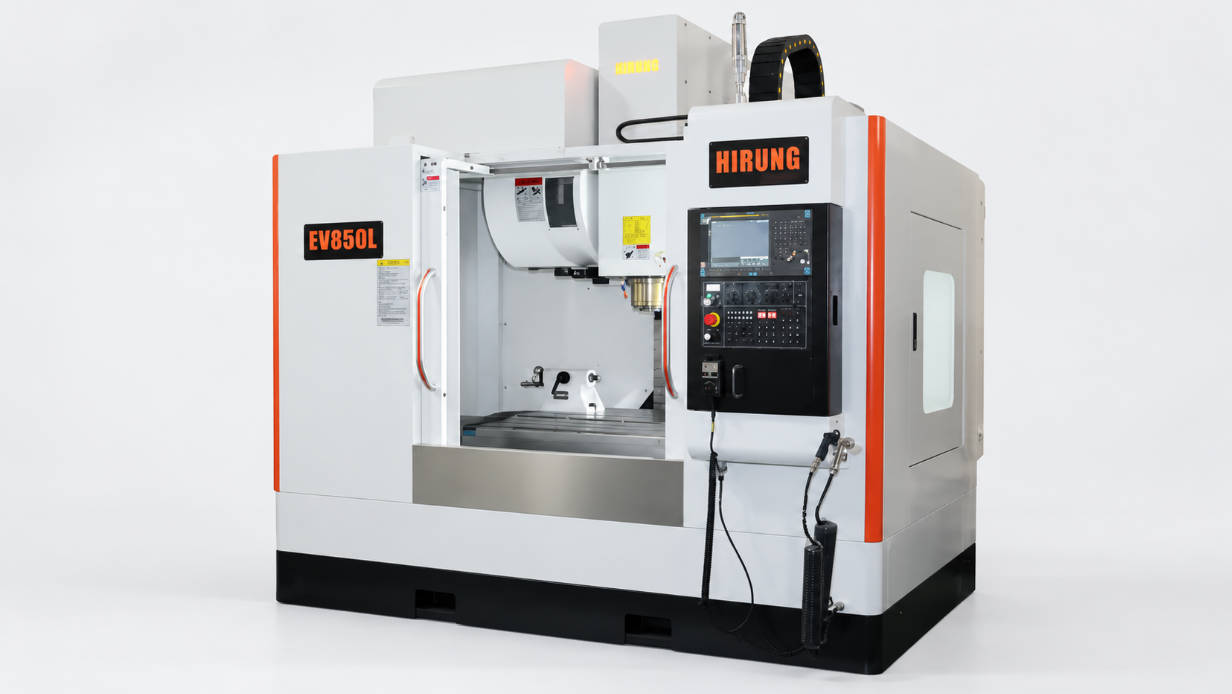
Vertical Machining Centers (VMC)
The VMC is the workhorse of automotive component machining. Its vertical spindle suits flat and prismatic parts—housings, plates, and brackets—that are loaded from above. For high-volume automotive work, the VMC is frequently paired with pallet changers, 4th-axis rotary tables, and robotic loading to run unattended. Shops already running this type can go deeper into the specifics in our article on CNC vertical machining centers in automotive parts manufacturing.
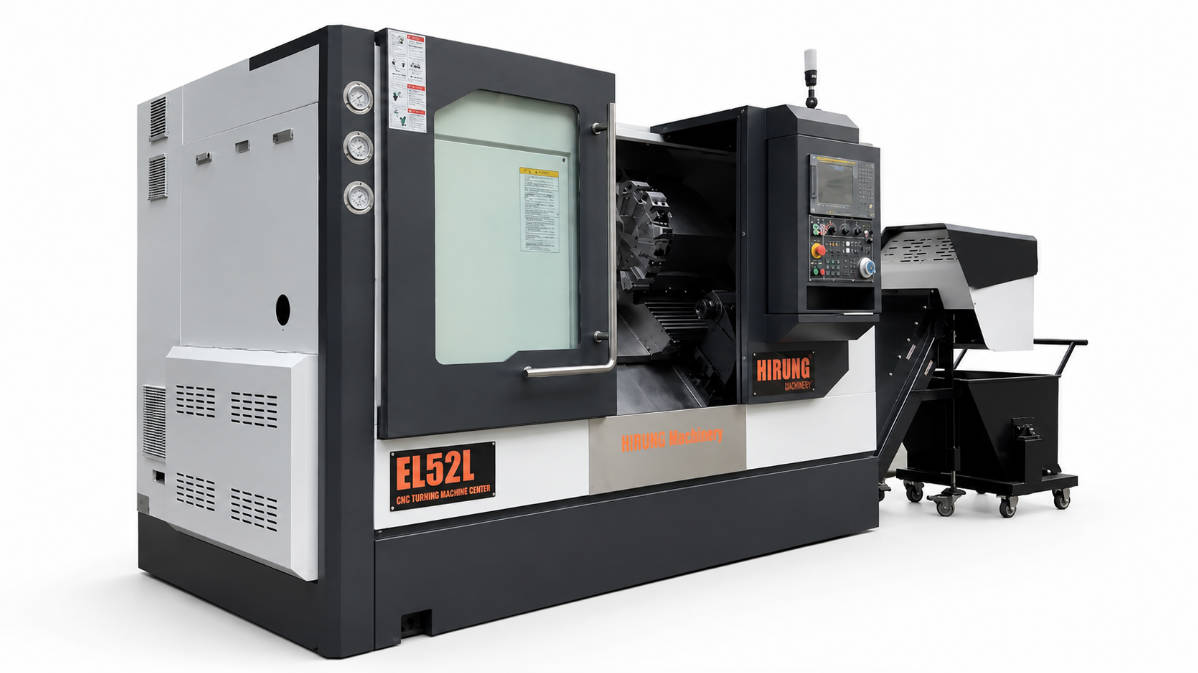
CNC Lathes and Turning Centers
Rotationally symmetric parts—shafts, hubs, pulleys, wheel studs, and brake rotors—are turned rather than milled. A CNC lathe is widely used across automotive and machinery production because it removes material efficiently on round stock and can combine turning, drilling, and tapping in a single chucking. Modern turning centers with live tooling and a Y-axis can also mill cross-holes and flats without a second setup, which is valuable for parts that are mostly round but need a few milled features.
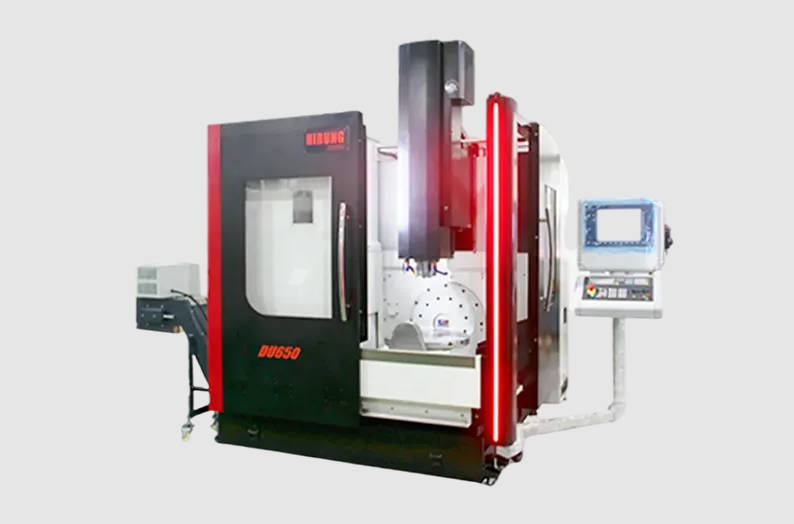
5-Axis Machining Centers
When a part has contoured surfaces, deep undercuts, or features on many faces, simultaneous 5-axis machining reduces setups and fixture cost. Simultaneous 5-axis machining reduces setups and fixture cost on contoured automotive parts such as turbo components and die inserts. In automotive work this shows up in turbocharger and turbo-compressor components, complex die inserts, and EV parts with compound geometry. A focused reference is our 5-axis CNC machining center buying guide for precision manufacturers.
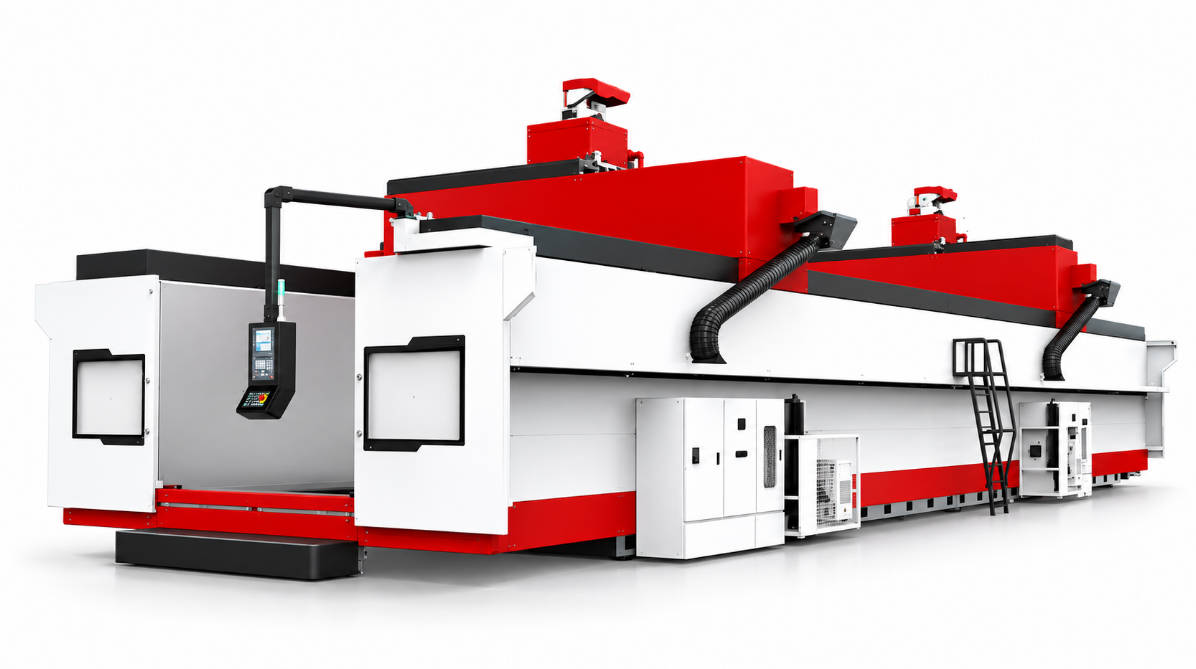
Gantry and Double-Column Machining Centers
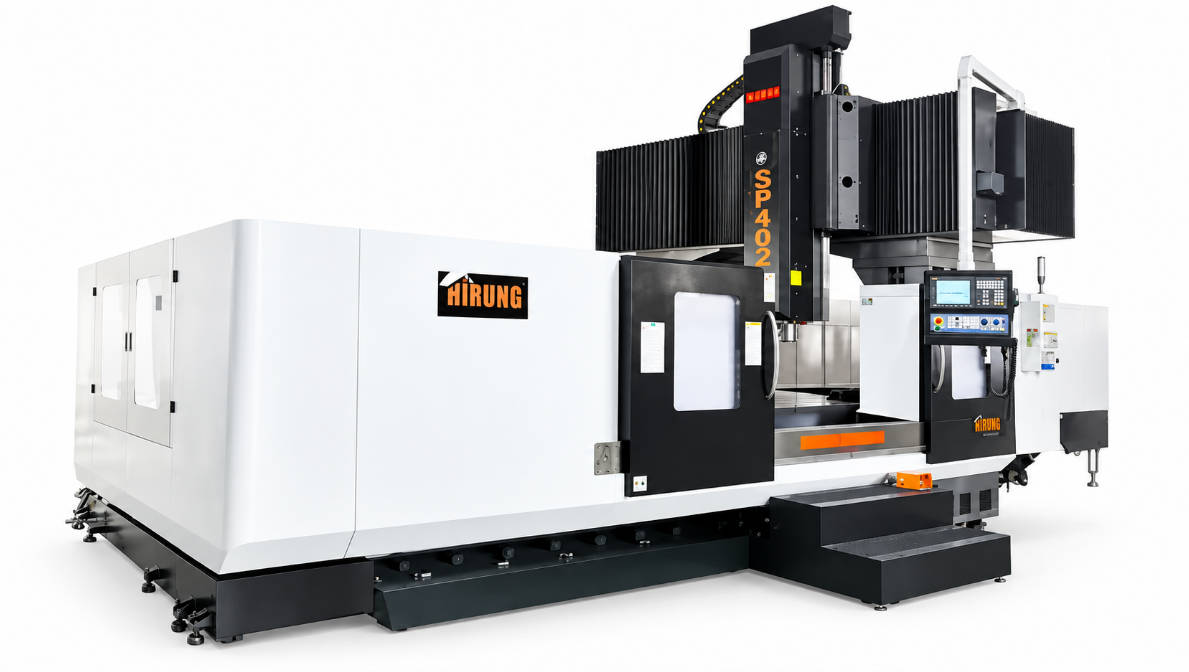
Large stamping dies, die-casting dies, and mold bases for body panels are too big and heavy for a standard VMC. Gantry machines provide the travel, rigidity, and table load to finish these tools accurately. They sit at the top of the size range and complement, rather than replace, the VMCs and lathes on the production floor.
Matching Machine Type to Automotive Part
| Machine type | Typical automotive parts | Why it fits |
|---|---|---|
| Vertical Machining Center | Housings, brackets, plates, manifolds | Flexible, compact, strong for high-mix prismatic work |
| CNC Lathe / Turning Center | Shafts, hubs, rotors, fasteners | High efficiency on round, axially symmetric parts |
| 5-Axis Machining Center | Die inserts, contoured parts, turbo components | Multi-angle access, fewer setups, tighter accuracy |
| Gantry / Double-Column | Large stamping dies, mold bases | Large envelope, high table load, rigidity |
How Production Scale Shapes the Machine Mix
For prototyping and low-volume service parts, a flexible VMC and a lathe with manual or light automation are usually enough; the priority is quick changeover and short lead time rather than raw throughput. As volume rises, the constraint shifts from flexibility to cycle time, and pallet changers, 4th-axis rotary tables, bar feeders, and robotic loading become the differentiators that decide whether a cell can hold takt. Very high-volume programs may justify dedicated or transfer-line-style layouts, where a general machining center is paired with automation rather than replaced by it.
A related decision is in-house machining versus outsourcing. Many Tier 2 and Tier 3 suppliers start by outsourcing complex or low-volume parts and bring them in-house once volumes stabilize, because owning the process protects lead time, quality control, and intellectual property. A compact VMC or turning cell is often the first step, with 5-axis and gantry capacity added only when part geometry or tooling actually demands it. This staged approach limits capital risk while building internal capability, and it keeps the machine list aligned with the parts you truly run.
Key Factors When Choosing a CNC Machine for Auto Parts
Selection should start from the parts you actually run, not from a brochure. The variables below usually settle the decision:
- Production volume and mix. Steady, high volume rewards automation such as pallet changers, robots, and bar feeders; variable, low-volume work favors a flexible VMC or lathe that can switch jobs quickly.
- Tolerance and surface finish. Critical mating features may require positional accuracy around 0.01 mm or better and low repeatability drift, which points to a rigid, well-calibrated machine rather than the cheapest option.
- Material. Aluminum rewards high spindle speed and good chip evacuation; cast iron is abrasive and demands rigidity and coolant control; high-strength steel raises cutting forces and tool-wear considerations.
- Automation and uptime. Automotive schedules leave little tolerance for downtime, so spare parts, service response, and tool-change reliability matter as much as the base specification.
- Floor space and budget. A gantry or a multi-pallet cell needs planning; balance capital cost against throughput and scrap reduction rather than comparing sticker prices.
Typical Materials and Tolerances in Automotive Machining
| Material | Common auto parts | Machining note |
|---|---|---|
| Aluminum (e.g., A380, 6061, 7075) | Housings, brackets, EV enclosures | High-speed cutting; manage chips and heat |
| Cast iron (e.g., GG25) | Engine blocks, brake discs | Abrasive; requires rigid structure and coolant |
| Steel and alloys | Shafts, gears, structural parts | Higher cutting force; watch tool life |
As a practical benchmark, many automotive machined features hold tolerances in the range of 0.01–0.05 mm, while critical sealing or bearing surfaces are held tighter. HIRUNG states positioning accuracy of 0.010 mm or better and repeatability of ±0.003 mm across its machining-center lines, with per-machine Renishaw laser and ballbar verification—figures worth requesting proof of from any supplier. Requesting that evidence is one of the simplest ways to separate suppliers who calibrate from those who only claim to.
Common Mistakes When Equipping an Automotive Machine Shop
- Mismatching machine to geometry. Forcing a round part onto a VMC, or a large die onto a small VMC, raises cost and hurts accuracy.
- Under-specifying automation. High-volume lines without pallet changers or bar feeders become labor-bound and cannot hold takt time.
- Ignoring chip and coolant management. At automotive volumes, chip buildup and thermal load directly affect dimensional stability and surface finish.
- Underestimating tooling capacity. A small automatic tool changer forces manual intervention and stops the line at the worst moment.
- Choosing on price alone. Throughput, scrap, and uptime usually outweigh a lower purchase price over the machine’s service life.
How to Evaluate a CNC Machine Supplier for Automotive Work
Automotive programs are unforgiving on consistency, so supplier selection deserves the same rigor as the machine itself. Beyond the spec sheet, a few checks separate capable partners from box-movers:
- Ask for calibration evidence—laser interferometer and ballbar reports—rather than accepting a printed number.
- Inspect the structure: a stress-relieved cast-iron base and hand-scraped joints correlate with long-term accuracy retention under shift work.
- Confirm control options (FANUC, SIEMENS, MITSUBISHI are common) and that your programmers already support them.
- Request automotive or high-volume references; a supplier with relevant experience shortens your ramp-up and de-risks the process.
- Clarify spare-parts stock, response time, and training, because a line stop costs far more than the machine payment.
FAQ
What CNC machine is most used for automotive parts?
Most automotive machine shops combine vertical machining centers and CNC lathes, because together they cover the majority of prismatic and round parts. 5-axis and gantry machines are added for contoured components and large tooling.
Can a CNC lathe produce automotive shafts and hubs?
Yes. CNC lathes and turning centers are the standard choice for shafts, hubs, pulleys, and brake rotors, and live tooling lets them mill cross-holes and flats in the same chucking.
Do I need a 5-axis machine for automotive parts?
Only for parts with contoured surfaces, deep undercuts, or features on many faces—such as die inserts and turbo components. Simple prismatic or round parts rarely need it.
What materials are common in automotive CNC machining?
Aluminum, cast iron, and steel dominate. Aluminum is used for weight-saving housings and brackets, cast iron for engine and brake components, and steel alloys for shafts and structural parts.
How accurate are CNC machines for automotive parts?
Typical machined features hold tolerances in the 0.01–0.05 mm range, with critical surfaces held tighter. Machine capability depends on structure and calibration; request documented accuracy reports before purchase.
Should I choose a VMC or a CNC lathe for auto parts?
Let the part geometry decide: prismatic and flat parts go on a VMC, while round, axially symmetric parts are turned on a lathe. Many shops run both, often with automation, to cover a full component family.
Conclusion
Equipping for automotive parts manufacturing is less about buying one “automotive CNC machine” and more about assembling the right mix—VMCs for prismatic parts, lathes for round parts, 5-axis for contoured work, and gantry machines for large tooling. Start from your part list, volumes, and tolerances, then match machines to those requirements instead of the other way around. A staged, volume-driven approach limits capital risk and keeps the equipment aligned with the parts you actually run. Our broader CNC machining center buying guide walks through the trade-offs in detail, and our team can review your drawings to recommend a configuration. Contact our engineering team to discuss your automotive machining application.