CNC machining centers are used across nearly every modern manufacturing industry because they combine programmable accuracy with the flexibility to produce both one-off prototypes and high-volume production parts. From aerospace brackets and automotive transmission housings to injection molds, medical implants, and energy-sector components, a CNC machining center converts digital models into precise metal and plastic parts with repeatable tolerance. The right configuration—vertical, horizontal, gantry, 5-axis, or a CNC lathe—depends on the part geometry, material, batch size, and accuracy your application demands.
This matters because the machine you choose sets your ceiling on part complexity, throughput, and unit cost for years. A machining center is rarely a generic purchase; it is a commitment to a way of making parts. This guide maps the most common CNC machining center applications to the machine types that handle them best, so manufacturing engineers and procurement teams can shortlist the right equipment before requesting a quote.
What Is a CNC Machining Center?
A CNC machining center is a computer-controlled machine tool that removes material from a workpiece using rotating cutting tools, following toolpaths generated from a CAD model. Unlike a manual mill, it changes tools automatically from a magazine, runs unattended cycles, and holds tight, repeatable tolerances. The family includes vertical machining centers (VMC), horizontal machining centers (HMC), gantry (double-column) machining centers, 5-axis machining centers, and turning centers (CNC lathes). If you want the full definition and anatomy of the machine, see our guide on what a CNC machining center is.
Why Application Should Drive Your Machine Selection
The single most expensive mistake in equipment sourcing is choosing a machine type first and forcing the application to fit it. A machining center is an investment measured in throughput, scrap rate, setup time, and total cost of ownership—not just the sticker price. Before comparing models, define the parts you will run most often: their size, material, tolerance, surface finish, and annual volume. Those variables determine whether a 3-axis VMC, a 5-axis center, or a gantry machine is the economical choice. A machine that is wrong for your parts either costs too much for what you need or cannot hold the accuracy your customers require.
Key Manufacturing Industries That Use CNC Machining Centers
Across the industrial economy, several sectors depend on CNC machining centers as core production equipment. Each places different demands on the machine, and understanding those demands is the first step toward a confident purchase.
Aerospace and Aviation
Aerospace is one of the most demanding applications of 5-axis CNC machining. Structural brackets, fuselage fittings, hydraulic manifolds, turbine and impeller components, and lightweight airframe parts are typically cut from aluminum, titanium, and high-temperature alloys such as Inconel. These parts feature thin walls, compound curves, and tight tolerances that are difficult to hold with multiple setups—exactly where simultaneous 5-axis machining earns its keep by reducing fixtures and repositioning error.
Automotive and Transportation
The automotive sector runs some of the highest volumes in the industry. Engine blocks, cylinder heads, transmission housings, brake calipers, suspension arms, and the growing family of EV battery and power-train housings are routinely produced on vertical machining centers, often integrated with pallet changers and robotic loading. Vertical machining centers in automotive parts manufacturing are valued for their compact footprint, fast rapid feeds, and mature automation ecosystem that supports lights-out production.
Mold, Die, and Tooling
Injection molds, die-casting dies, stamping dies, and precision fixtures require excellent surface finish and geometric accuracy, because any defect in the tool is reproduced in every molded part. Mold making leans on VMCs for smaller cavities and gantry machining centers for large mold bases and long, heavy plates. A rigid cast-iron structure and effective thermal control directly affect how long a tool maintains its dimensional quality between recuts.
Medical and Precision Instruments
Medical manufacturing produces implants, surgical instruments, and orthopedic components from stainless steel, titanium, and cobalt-chrome, often in small batches with strict traceability. These parts are typically small, complex, and biocompatible-sensitive. 5-axis machining centers are commonly selected here because they can reach difficult angles in a single setup, reducing handling of delicate parts and the risk of contamination or marking.
Energy and Heavy Equipment
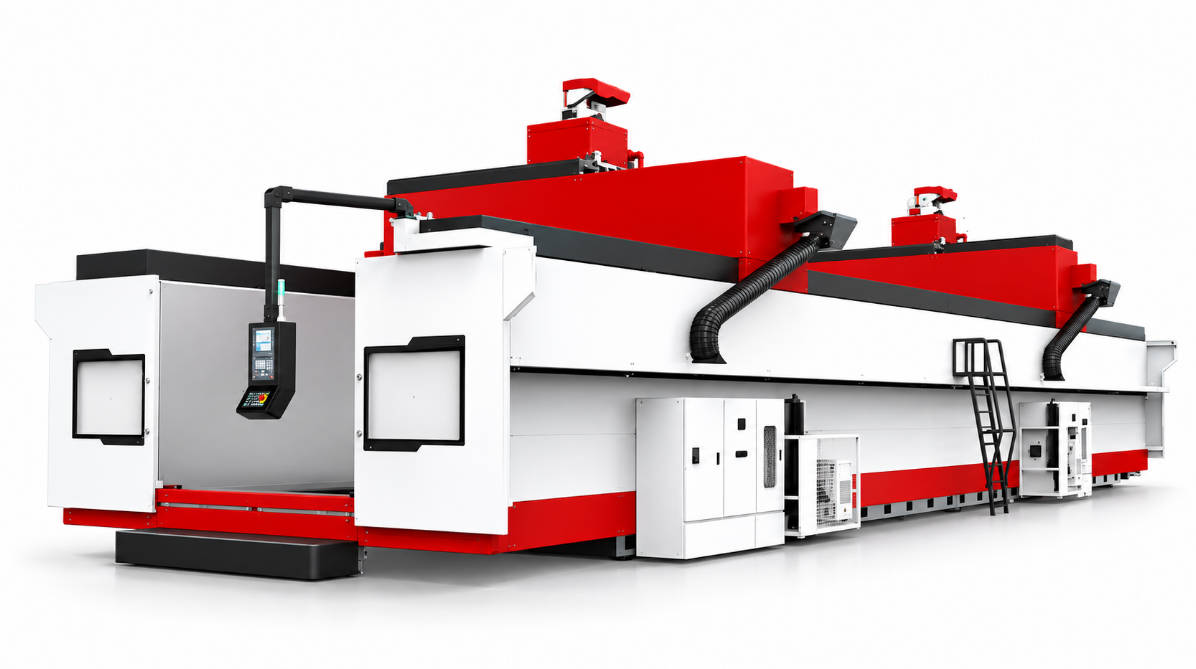
Oil and gas valves, pump bodies, turbine components, and the frames and housings for agricultural and construction machinery are large, heavy, and often cast. These are the natural domain of gantry machining centers for heavy equipment, where a fixed bridge and high table load let a single machine finish workpieces that would not fit or would deflect on a standard VMC.
Electronics and General Precision Parts
Enclosures, heat sinks, connectors, sensor brackets, and countless consumer and industrial components are produced in flexible, fast-turnaround batches. Here a VMC or compact machining center paired with quick-change fixturing supports rapid prototyping and low-to-medium production, often with aluminum and engineering plastics.
CNC Lathes and Turning Applications
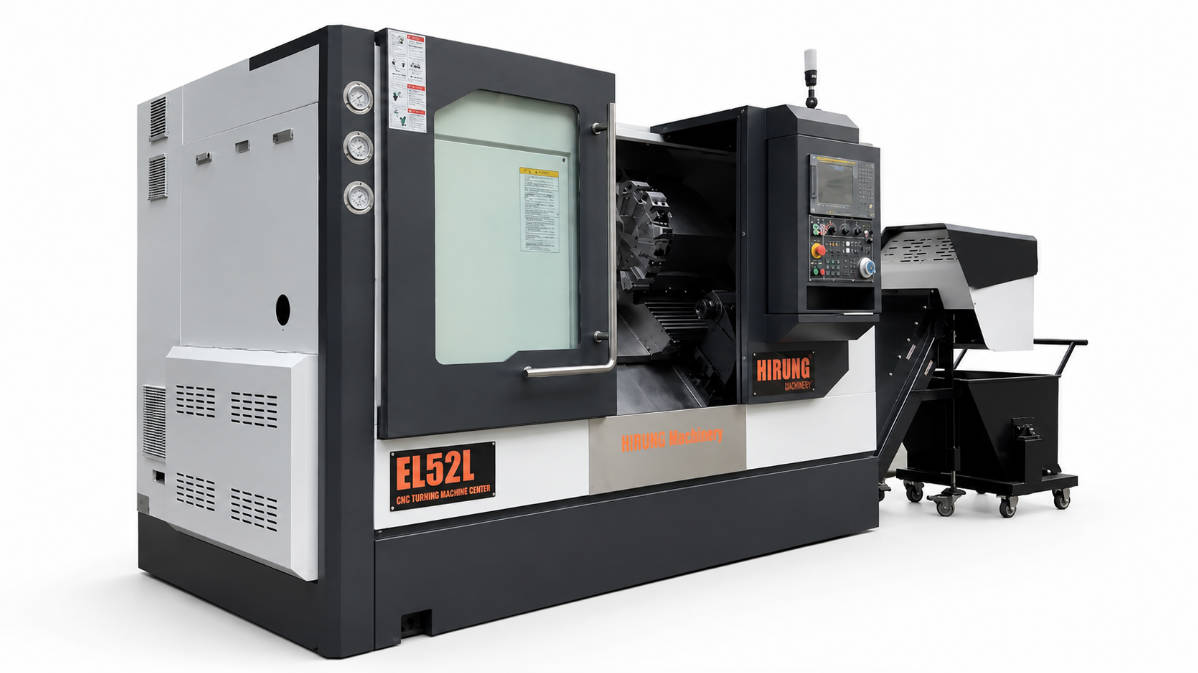
Not every precision part is milled. Rotationally symmetric components—shafts, spindles, discs, couplings, threaded bodies, and bushings—are turned rather than milled, and a CNC lathe is widely applied across automotive and machinery production. Turning centers complement machining centers on the same shop floor: mills handle prismatic and contoured features, while lathes efficiently produce round parts to tight diameter and surface tolerances.
Matching Machine Type to Application
The table below summarizes how the main machining-center types line up with typical applications.
| Machine type | Typical applications | Common part examples | When it fits best |
|---|---|---|---|
| Vertical Machining Center (VMC) | Molds, fixtures, general precision parts, automotive components | Brackets, housings, plates, cavities | Small-to-medium parts; limited floor space; high mix |
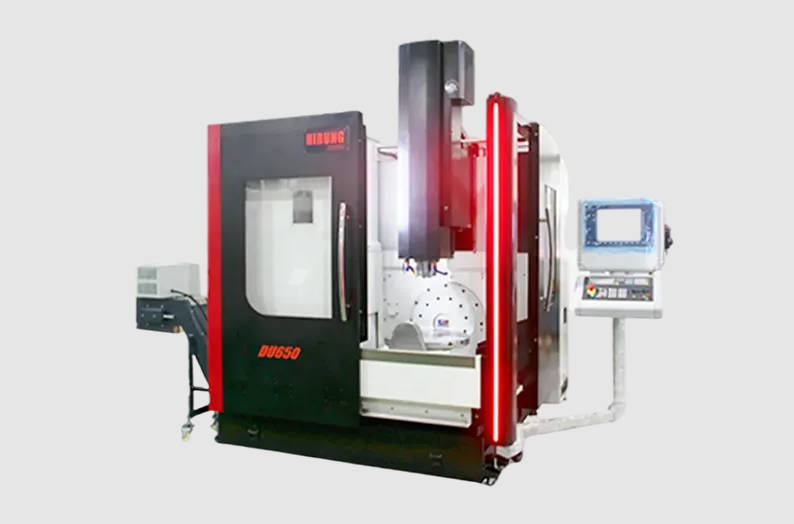
| 5-Axis Machining Center | Aerospace, medical, impellers, complex curved surfaces | Turbine blades, implants, manifolds | Multi-angle geometry; fewer setups; tight tolerance |
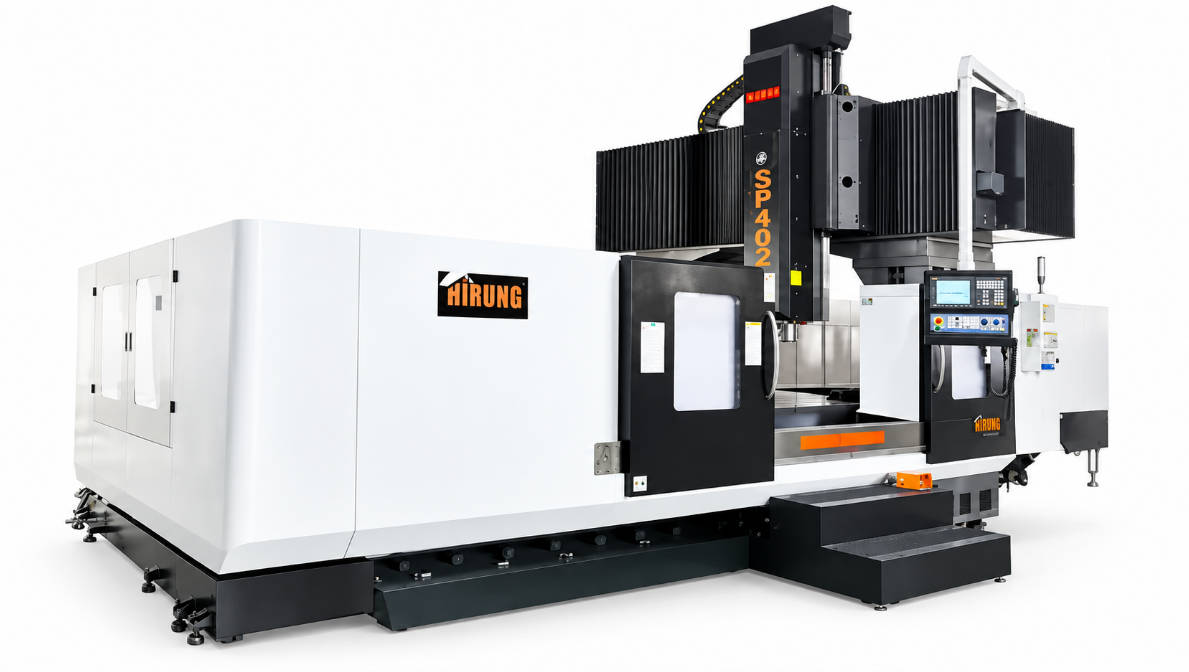
| Gantry Machining Center | Large workpieces, heavy equipment, large molds | Beams, valve bodies, mold bases | Long or heavy parts; high table load required |
| CNC Lathe / Turning Center | Rotational parts across most industries | Shafts, discs, cylinders, threaded parts | Axially symmetric geometry; high efficiency on rounds |
| Horizontal Machining Center | High-volume prismatic parts | Engine parts, multi-face boxes | 4th-axis pallet work; unattended volume production |
How to Choose the Right Machining Center for Your Application
A practical selection process keeps the decision grounded in parts rather than brochures:
- Define the part envelope. Maximum length, width, height, and weight set the travel and table-load requirement, which immediately separates gantry machines from standard VMCs.
- Set the tolerance and surface finish. If you need positional accuracy in the range of 0.005–0.010 mm and low repeatability drift, prioritize a machine with a stress-relieved cast-iron base and verified calibration.
- Count your setups. Parts with features on five or more faces usually justify 5-axis machining, because each added setup adds fixturing cost and repositioning error.
- Match volume to automation. High, steady volume rewards pallet changers and horizontal configurations; variable, low-volume work favors a flexible VMC.
- Weigh total cost, not just price. Throughput, scrap rate, energy, tooling, and service access often outweigh a lower purchase price over the machine’s life.
For context on HIRUNG’s own lines, the EV Series covers vertical machining centers, the DU/DV/DC families cover 5-axis centers, the HPG and SP ranges cover gantry machines, and the EL Series covers CNC lathes. Across these, HIRUNG states positioning accuracy of 0.010 mm or better, repeatability of ±0.003 mm, a Mehanite cast-iron base with hand-scraped interfaces, and per-machine Renishaw laser and ballbar verification—specifications worth requesting proof of for any supplier you evaluate.
Common Mistakes When Matching a Machine to an Application
- Over-buying 5-axis. If your parts are essentially prismatic, a well-specified 3-axis VMC delivers the same result at lower cost and simpler programming.
- Ignoring workpiece size and table load. A part that overhangs the table or exceeds the load rating will deflect and ruin accuracy—this is where a gantry machine is the correct answer.
- Underestimating 5-axis programming. The machine is only as good as the CAM post-processor and operator skill behind it.
- Comparing only machine price. Two machines at the same price can differ enormously in throughput and uptime.
- Forgetting tool capacity. A small tool magazine forces more manual changes and stops; check the automatic tool changer capacity against your process.
How to Evaluate a CNC Machine Supplier
Beyond the spec sheet, a few checks separate capable suppliers from box-movers:
- Ask for calibration evidence—laser interferometer and ballbar reports—rather than accepting a printed number.
- Inspect the structure: a heavy, stress-relieved cast-iron base and hand-scraped joints correlate with long-term accuracy retention.
- Confirm control options (FANUC, SIEMENS, MITSUBISHI are common) and whether your programmers support them.
- Clarify spare-parts availability, response time, and training, because downtime cost usually dwarfs the machine payment.
- Look for demonstrated experience in your industry; a supplier who has solved a similar application can shorten your ramp-up.
FAQ
What industries use CNC machining centers the most?
Aerospace, automotive, mold and die, medical devices, energy, and general precision-parts manufacturing are the heaviest users. Among these, automotive and electronics run the largest volumes, while aerospace and medical demand the tightest tolerances and most complex geometry.
Which CNC machining center is commonly used for aerospace parts?
5-axis machining centers are commonly selected for aerospace components such as impellers, manifolds, and structural brackets, because they machine complex curves in fewer setups. Larger airframe and engine structures may also use gantry machines for size and stiffness.
Can a vertical machining center handle mold making?
Yes. A rigid VMC is widely used for smaller injection molds and die cavities, especially when paired with fine finishing tools and effective thermal control. Very large mold bases are better suited to gantry machines, which provide the rigidity and table size that big plates require.
When should I choose a gantry machining center instead of a VMC?
Choose a gantry machine when the workpiece is long, wide, or heavy enough to exceed a VMC’s table size or load rating, or when you need maximum rigidity on a large envelope. Gantry machines also suit large mold bases and structural components in heavy equipment.
What materials can CNC machining centers process?
In typical industrial use they cut aluminum, steel, stainless steel, titanium, Inconel and other high-temperature alloys, cast iron, and engineering plastics. Material choice affects tooling, coolant, and spindle power requirements more than the basic machine type.
How do I know if my parts need 5-axis machining?
If a part has features on five or more faces, deep undercuts, compound curves, or tight tolerance that currently requires multiple setups, 5-axis machining is usually worth evaluating. A simple prismatic part rarely needs it.
Conclusion
CNC machining centers are the backbone of modern manufacturing because a single platform can serve aerospace, automotive, mold, medical, energy, and electronics production simply by changing the program and tooling. The key is to start from your parts—their size, geometry, tolerance, and volume—and let that dictate the machine type, rather than the other way around. If you are narrowing down options, our CNC machining center buying guide walks through the selection trade-offs in more detail, and our team can review your drawings to recommend a configuration. Contact our engineering team to discuss your application.